

Quick Summary: AI tools for Instagram ads optimization have evolved from basic automation to sophisticated platforms that analyze creative performance, predict outcomes, and optimize campaigns in real-time. The best tools in 2026 combine creative generation, audience targeting, budget optimization, and performance forecasting to help advertisers cut costs, boost ROI, and scale campaigns without manual intervention. Choosing the right tool depends on campaign scale, creative needs, and whether the focus is on automation, analytics, or full-funnel optimization.
The Instagram advertising landscape has shifted dramatically. What worked two years ago—manual audience testing, spreadsheet tracking, and gut-feel creative decisions—now leaves advertisers buried in data with no clear path to profitability.
AI tools have evolved from simple automation scripts to intelligent platforms that analyze thousands of data points, predict campaign performance, and optimize budgets in real-time. The right tool can cut manual work by hours each week while improving return on ad spend.
But here’s the thing though—not every AI tool delivers what it promises. Some focus exclusively on creative generation. Others prioritize budget optimization or audience insights. The challenge isn’t finding an AI tool; it’s finding the one that matches specific campaign needs.
This guide covers the best AI tools for Instagram ads optimization in 2026, what each does well, and how to choose based on campaign scale and objectives.
Why AI Matters for Instagram Advertising in 2026
Meta reported 3.29 billion monthly active users across its family of apps in Q4 2025, with $46.8 billion in quarterly advertising revenue. Competition for attention is fierce, and creative quality is the single biggest lever for performance.
According to the Interactive Advertising Bureau (IAB), U.S. Digital Video Ad Spend is projected to surpass $80 billion in 2026, growing 20% faster than the total ad market. Digital Ad Revenue overall is expected to climb to nearly $300 billion in 2026. The scale of investment means even small efficiency gains translate to massive dollar savings.
AI tools address three core challenges: creative fatigue, audience fragmentation, and budget waste. They test creative variations at scale, identify winning audience segments without manual rules, and shift budgets toward high-performing campaigns automatically.
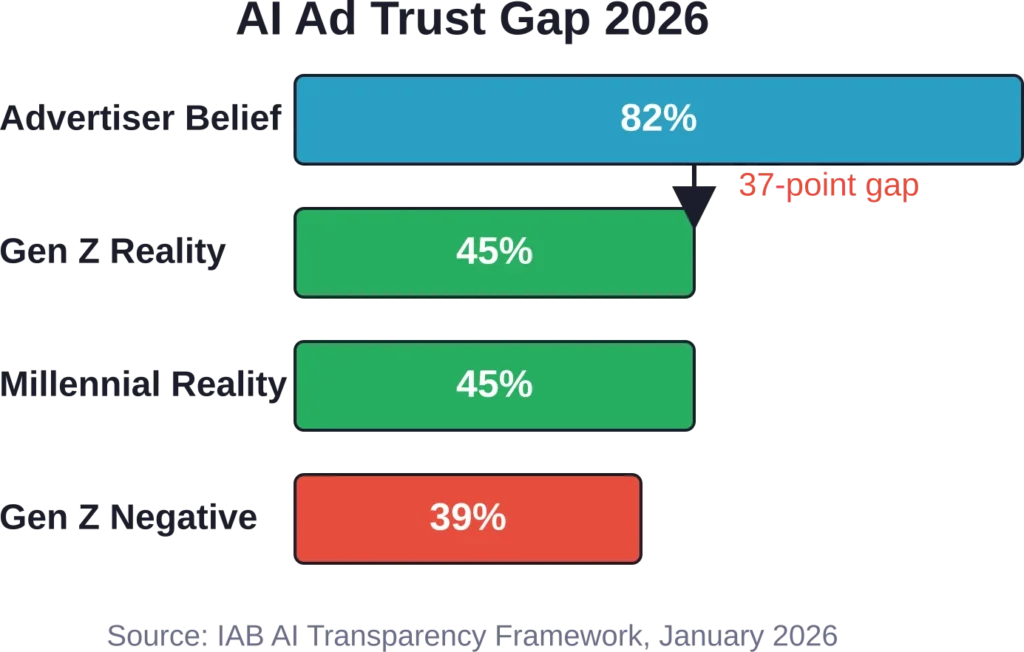
Real talk: according to IAB research released in January 2026 on the AI Ad Gap, advertiser optimism about AI-generated ads significantly outpaces consumer sentiment, with a notable disconnect between executive beliefs and actual Gen Z and Millennial consumer perceptions.
The short answer? Transparency and quality matter. AI tools that help ads feel natural and relevant perform better than those that churn out generic content at scale.
What to Look for in Instagram Ads AI Tools
Not every AI tool is built for Instagram ads optimization. Some platforms focus on social media management—post scheduling, content calendars, analytics—but lack the Meta-specific features advertisers need.
Here’s what actually matters:
- Meta-specific optimization: Tools should integrate directly with Meta Ads Manager, support all placement formats (Feed, Stories, Reels), and understand Meta’s algorithm nuances.
- Creative intelligence: The best tools analyze which creative elements (colors, copy, hooks) drive performance and suggest variations based on real data, not templates.
- Audience segmentation: AI should identify high-value audience segments, exclude low performers, and adjust targeting without manual rule-building.
- Budget automation: Tools should shift spend toward winning ad sets in real-time, pause underperformers, and prevent budget waste on tests that aren’t working.
- Performance forecasting: Predictive models that estimate CTR, CPC, and ROAS before launching campaigns help prioritize creative and audience tests.
Tools that cover the full spectrum—creative, audience, budget, and forecasting—offer the most value for advertisers running multiple campaigns simultaneously.
Top AI Tools for Instagram Ads Optimization in 2026
The following tools represent the best options available in 2026, based on feature depth, Meta integration, and real-world performance reports from community discussions and industry comparisons.
1. Extuitive
Extuitive is an AI-powered predictive platform that lets advertisers generate, validate, and optimize Instagram (and Meta) ads before spending a single dollar on traffic. It connects directly to Shopify stores, automatically pulls product data, generates ad concepts (visuals, copy, Reels, hooks), and then tests them with AI consumer avatars modeled on 150,000+ real buyer profiles. The system forecasts performance metrics like CTR, purchase intent, and ROAS, classifying creatives as High/Medium/Low potential and highlighting weak concepts early.
The platform emphasizes validation-first workflows — reducing guesswork and wasted testing budget while accelerating creative throughput for Reels, Stories, and Feed ads.
Who this fits: Ecommerce brands and Shopify merchants (especially direct-to-consumer) running Instagram and Meta ads who want to cut down on expensive trial-and-error testing. Ideal for teams and agencies that launch multiple creative variations weekly and need reliable pre-launch predictions instead of waiting for live campaign data.
Note: Pricing starts in the mid-to-high hundreds per month depending on plan (Starter/Professional tiers available; Enterprise custom). Check Extuitive’s official website for current pricing, exact limits, and integration details.
Contact Information:
- Website: extuitive.com
- Email: [email protected]
- LinkedIn: www.linkedin.com/company/extuitive
- Twitter: x.com/Extuitive_Inc
- Instagram: www.instagram.com/extuitiveinc
2. AdStellar

AdStellar is a Meta-focused AI platform that combines creative generation, performance forecasting, and budget optimization in one interface. It’s designed specifically for Instagram and Facebook ads, with auto-sizing for all five Meta placements.
The platform generates ads automatically in Feed (1:1), Stories (9:16), Reels (9:16), Portrait (4:5), and Landscape (16:9) formats. AI predicts CTR, CPC, and ROAS for Meta campaigns before launch, helping advertisers prioritize tests.
Who this fits: Advertisers managing multiple Meta campaigns who need creative, audience, and budget tools in one platform. Particularly valuable for teams testing dozens of variations weekly and needing AI to identify patterns across historical data.
Note: Pricing information for AdStellar was not independently verified in provided source materials. Check AdStellar’s official website for current subscription tiers and feature availability.
3. Smartly.io

Smartly.io is an enterprise-grade platform that automates creative production and campaign optimization at scale. It’s built for brands and agencies running hundreds of ad variations across Meta, with advanced workflow automation.
The platform includes dynamic creative templates, A/B testing frameworks, and real-time budget reallocation. Smartly.io integrates with data warehouses and CRM systems, making it ideal for brands with complex attribution needs.
Who this fits: Large brands and agencies managing multi-channel campaigns with high creative volume. Best for teams that need custom automation beyond Meta’s native rules.
Verify current Smartly.io pricing on the official website, as subscription tiers vary based on ad spend and features.
4. Revealbot

Revealbot is a rule-based automation tool that focuses on budget optimization and performance monitoring. It connects to Meta Ads Manager and executes automated actions based on custom rules.
Advertisers can set rules to pause underperforming ad sets, increase budgets on winners, or adjust bids based on real-time metrics. Revealbot also includes Slack and email alerts for campaign performance changes.
Who this fits: Performance marketers who want granular control over automation rules without writing code. Ideal for scaling profitable campaigns quickly while minimizing waste.
Pricing varies by ad spend and account volume—check Revealbot’s website for current plans.
5. Madgicx

Madgicx combines AI audience targeting, creative insights, and budget optimization with a focus on e-commerce brands. The platform analyzes Meta ad account data to identify hidden audience segments and predict which will scale.
Creative analytics show which ad elements (headlines, images, calls-to-action) perform best, and the autonomous budget optimizer shifts spend across campaigns automatically.
Who this fits: E-commerce brands running product-focused Instagram ads at scale. Particularly useful for direct-to-consumer brands with large product catalogs.
Check Madgicx’s official site for current pricing and feature tiers.
6. AdCreative.ai

AdCreative.ai is a creative-first AI tool that generates ad visuals, headlines, and copy variations based on conversion data. It’s designed to produce high-performing creative assets quickly, without design skills.
The platform learns from past campaign performance and suggests variations optimized for Meta’s algorithm. It supports Feed, Stories, and Reels formats with automatic resizing.
Who this fits: Solo advertisers and small teams that need fresh creative at scale without hiring designers. Best for testing creative variations rapidly.
According to verified source material, pricing includes a Hobby plan at $49/month, Pro at $129/month, and Ultra at $499/month, with a 7-day free trial available.
7. Pencil
Pencil is an AI-powered creative platform that generates unlimited ad variations and predicts which will perform best on Meta. It combines generative AI for visuals and copy with predictive analytics.
The platform integrates directly with Meta Ads Manager, pulling performance data to train its models. Pencil’s predictions are based on historical campaign data, not generic templates.
Who this fits: Brands that need high creative velocity and want AI to predict winners before spending on tests. Ideal for performance marketers focused on creative iteration.
Verify current pricing and feature availability on Pencil’s official website.
8. Trapica

Trapica uses machine learning to optimize audience targeting and budget allocation across Meta campaigns. The platform analyzes thousands of audience combinations to find high-value segments automatically.
Trapica’s AI adjusts bids, budgets, and targeting in real-time based on campaign performance. It’s designed for advertisers who want hands-off optimization without manual rule-building.
Who this fits: Advertisers who struggle with audience targeting and want AI to identify profitable segments automatically. Best for campaigns with diverse audience profiles.
Check Trapica’s official site for current subscription options.
9. Socioh

Socioh is a catalog-focused AI tool built for e-commerce brands running dynamic product ads on Instagram. It automates creative generation from product feeds and optimizes for Meta’s dynamic ad formats.
The platform creates personalized ad variations for each product, optimizing images, headlines, and descriptions based on conversion data. Socioh integrates with Shopify, WooCommerce, and major e-commerce platforms.
Who this fits: E-commerce brands with large product catalogs who want to automate dynamic ad creation. Particularly useful for retargeting campaigns.
Pricing varies by catalog size—verify current rates on Socioh’s website.
10. Adzooma

Adzooma is a cross-platform advertising tool that includes AI-powered optimization for Meta, Google, and Microsoft ads. It focuses on budget efficiency and performance monitoring across channels.
The platform provides automated recommendations, performance alerts, and budget reallocation suggestions. Adzooma is less Meta-specific than other tools on this list but works well for advertisers managing multi-channel campaigns.
Who this fits: Small businesses and agencies managing ads across multiple platforms who want a single dashboard for performance tracking.
Check Adzooma’s official site for current pricing and features.
Meta-Specific Placement Optimization
Instagram ads run across multiple placements—Feed, Stories, Reels, Explore—and each has different format requirements and performance characteristics. AI tools that understand these nuances deliver better results.
| Placement | Aspect Ratio | Recommended Size | Format | Max File Size |
|---|---|---|---|---|
| Feed (FB & IG) | 1:1 | 1080 x 1080 px | JPG, PNG | 30 MB |
| Stories (FB & IG) | 9:16 | 1080 x 1920 px | JPG, PNG, MP4 | 30 MB |
| Reels | 9:16 | 1080 x 1920 px | MP4, MOV | 4 GB |
| Portrait | 4:5 | 1080 x 1350 px | JPG, PNG | 30 MB |
| Landscape | 16:9 | 1200 x 628 px | JPG, PNG | 30 MB |
Tools that auto-generate assets for all five placements save hours of manual resizing and reformatting. AdStellar, Smartly.io, and AdCreative.ai all support multi-format generation, while others require manual adjustments.
Reels represent a significant format in 2026 advertising. Vertical video content optimized for 9:16 format is designed to perform better than horizontal content on this placement. AI tools that understand this format’s unique creative requirements—fast hooks, captions, music—deliver higher engagement rates.
The Trust Gap: AI-Generated Ads and Consumer Sentiment
Here’s where it gets interesting. Advertisers are significantly more optimistic about AI-generated ads than consumers are.
According to IAB research released in January 2026, a significant disconnect exists between advertiser beliefs about consumer sentiment toward AI-generated ads and actual consumer sentiment.
Research indicates generational differences in sentiment toward AI-generated advertising, with younger consumers expressing more skepticism than older cohorts.
What does this mean for AI tools?
Transparency matters. The IAB released its first-ever AI Transparency and Disclosure Framework in January 2026, providing guidance on when and how to disclose AI use in advertising. The framework balances transparency with operational efficiency, helping advertisers avoid disclosure fatigue while building credibility.
AI tools that help ads feel natural and relevant—rather than obviously machine-generated—perform better. This is why creative intelligence features that analyze winning human-created ads and suggest similar variations outperform pure generative AI that creates content from scratch.
How to Choose the Right AI Tool for Instagram Ads
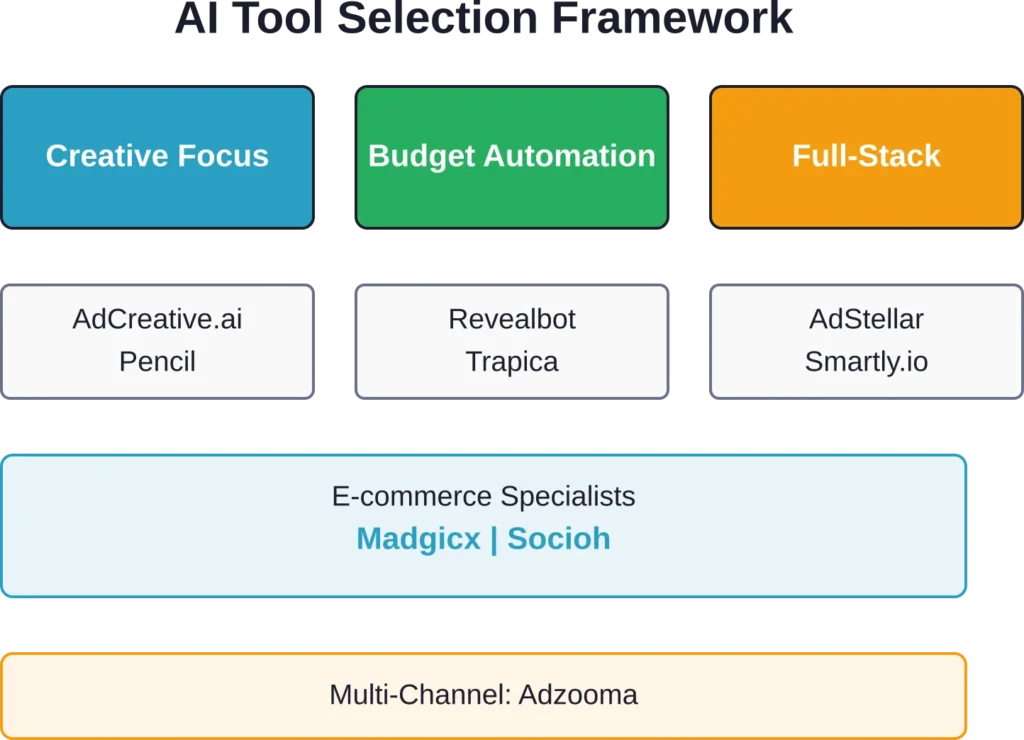
Choosing the right tool depends on campaign scale, creative resources, and optimization priorities. Here’s a decision framework:
For small businesses and solo advertisers: Start with creative-focused tools like AdCreative.ai or Pencil. These platforms generate ad variations quickly without design skills, and pricing starts at accessible tiers. Focus on testing creative before investing in full-stack platforms.
For e-commerce brands with product catalogs: Madgicx and Socioh are built specifically for dynamic product ads and catalog optimization. They integrate with e-commerce platforms and automate creative generation from product feeds.
For performance marketers focused on scaling: Revealbot and Trapica offer granular budget automation and audience optimization without creative features. These tools work well for advertisers with strong creative teams who need better optimization.
For agencies and enterprise brands: Smartly.io and AdStellar provide full-stack solutions that cover creative, audience, budget, and forecasting. They’re designed for high-volume campaigns and complex workflows.
For multi-channel advertisers: Adzooma works across Meta, Google, and Microsoft ads, offering a single dashboard for performance tracking. It’s less Meta-specific but useful for advertisers managing diverse campaigns.
The decision also depends on budget. Tools with full feature sets typically cost more than single-purpose platforms. For advertisers testing AI for the first time, starting with a creative or budget tool and adding capabilities later makes sense.
Generative AI and the Future of Ad Creative
Generative AI is transforming how advertisers approach creative production. According to the IAB’s Generative AI Playbook for Advertising released in January 2025, AI technology that creates text, images, audio, and video from learned patterns enables advertisers to streamline workflows, deliver personalized customer experiences, and optimize campaigns with unprecedented precision.
The playbook provides practical guidance on leveraging generative AI across the campaign lifecycle—from concept development to execution and measurement.
In practice, generative AI tools work best when combined with human oversight. AI excels at producing variations at scale, but human judgment is still needed to ensure brand consistency, cultural sensitivity, and strategic alignment.
The most effective approach in 2026 combines AI-generated variations with human-curated direction. Advertisers set creative parameters—brand voice, visual style, messaging priorities—and AI generates dozens of variations within those constraints. This hybrid approach delivers both scale and quality.
Budget Optimization Strategies with AI Tools
Budget waste is one of the biggest challenges in Instagram advertising. Without real-time optimization, campaigns overspend on underperforming ad sets while underfunding winners.
AI tools address this through automated budget reallocation. They monitor performance metrics—CTR, CPC, ROAS—and shift spend toward high-performing segments automatically.
Revealbot, Trapica, and Smartly.io all offer budget automation features, but the implementation differs. Revealbot uses rule-based logic: advertisers define conditions (e.g., pause ad sets with CPA above $50) and the tool executes automatically. Trapica and Smartly.io use machine learning to predict optimal budget allocation without manual rule-building.
For campaigns with consistent performance patterns, rule-based automation works well. For campaigns with fluctuating performance or complex audience segments, machine learning-based tools adapt faster.
The key metric is incremental ROAS—how much additional return the AI tool generates compared to manual optimization. Tools that deliver consistent incremental ROAS above 15-20% typically justify their cost.
Performance Forecasting and Predictive Analytics
Predictive analytics help advertisers prioritize tests before spending budget. Tools like AdStellar, Madgicx, and Pencil use historical campaign data to forecast which creative, audience, and placement combinations will perform best.
Forecasting models analyze thousands of past campaigns to identify patterns. They predict CTR, CPC, and ROAS based on creative elements, audience characteristics, and placement types.
This capability is particularly valuable for advertisers testing multiple variations simultaneously. Instead of launching all tests with equal budgets and waiting for results, predictive models allocate more budget to high-probability winners upfront.
The accuracy of forecasts depends on data volume. Tools trained on thousands of campaigns across diverse verticals deliver more reliable predictions than those trained on limited datasets.
Advertisers should validate forecast accuracy by comparing predicted metrics to actual results. Tools with consistent accuracy within 10-15% are reliable enough to inform budget allocation decisions.
Integration with Meta Ads Manager and Attribution
The best AI tools integrate directly with Meta Ads Manager, pulling real-time campaign data and executing optimization actions automatically. Standalone tools that require manual data uploads or CSV exports add friction and delay.
Direct API integration enables real-time optimization. When performance drops, the tool adjusts bids or pauses campaigns immediately, not hours later after manual review.
Attribution is another critical consideration. Tools that connect to attribution platforms like HubSpot, Salesforce, or custom data warehouses provide better visibility into full-funnel performance.
According to the 2025 Gartner Magic Quadrant for B2B Marketing Automation Platforms, HubSpot is recognized as a Leader in B2B Marketing Automation Platforms for the fifth consecutive year, reflecting the importance of integrated marketing platforms that connect advertising, attribution, and customer data.
For advertisers focused on conversion tracking beyond Meta’s native attribution, tools with flexible integration options deliver more value than those locked into Meta’s pixel-only tracking.
Common Mistakes When Using AI Tools for Instagram Ads
AI tools are powerful, but they’re not foolproof. Advertisers make several common mistakes that limit results:
Over-relying on AI without strategic direction. AI optimizes within the parameters provided, but it doesn’t set strategy. Advertisers need to define objectives, target audiences, and brand guidelines before expecting AI to deliver results.
Ignoring creative quality. AI can generate variations at scale, but if the core creative concept is weak, no amount of optimization will fix it. Start with strong creative fundamentals, then use AI to scale what works.
Not validating AI recommendations. AI tools sometimes suggest counterintuitive optimizations. Advertisers should test recommendations on small budgets before scaling, rather than blindly following every suggestion.
Using too many tools simultaneously. Tool sprawl fragments data and creates conflicting optimizations. Choose one or two tools that cover core needs and integrate well, rather than stacking multiple platforms.
Expecting instant results. AI tools need time to learn. Most require 2-4 weeks of data collection before optimization algorithms deliver meaningful improvements. Patience is critical.
Measuring ROI from AI Optimization Tools
The value of an AI tool is straightforward: does it generate more revenue than it costs?
Calculate ROI by comparing performance before and after implementing the tool. Key metrics include:
- Incremental ROAS: Additional return generated by AI optimization
- Time saved: Hours per week no longer spent on manual optimization
- Creative velocity: Number of ad variations tested per month
- Budget efficiency: Reduction in wasted spend on underperforming campaigns
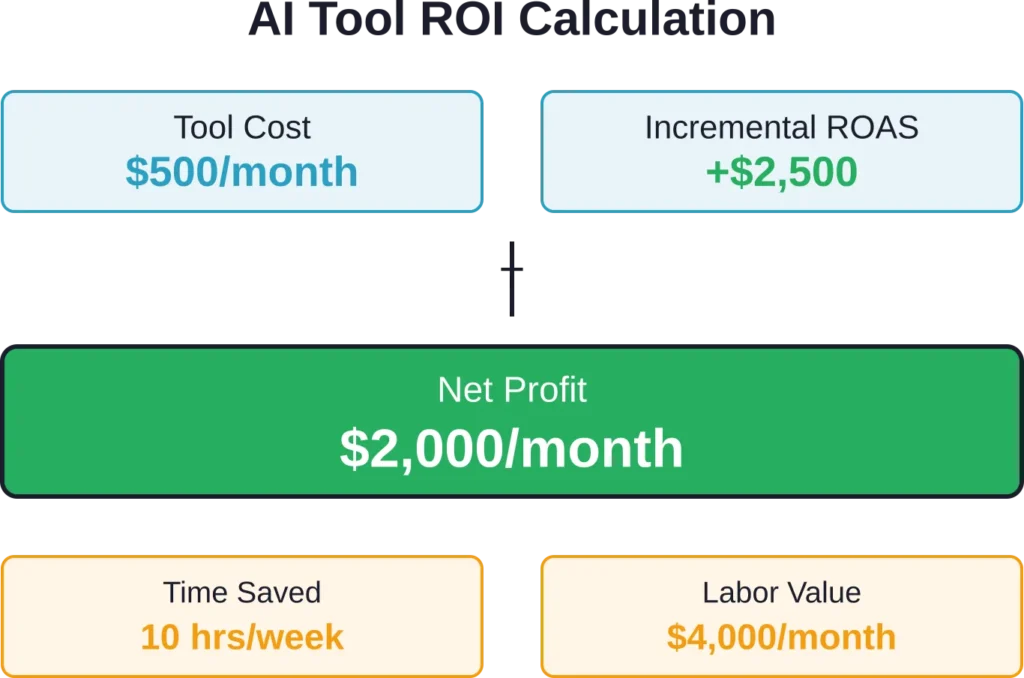
For tools with subscription fees, the breakeven point is when incremental ROAS exceeds the monthly cost. A tool that costs $500/month needs to generate at least $500 in additional revenue to justify the investment—though most advertisers target 3-5x ROI.
Time savings also matter. If a tool saves 10 hours per week and the advertiser’s time is valued at $100/hour, that’s $4,000 per month in labor savings—far exceeding most tool costs.
Track these metrics monthly and adjust tool usage based on results. If incremental performance declines, revisit strategy, test new creative approaches, or consider alternative tools.
Frequently Asked Questions
The best tool depends on campaign needs. AdStellar and Smartly.io offer comprehensive feature sets covering creative, audience, budget, and forecasting. AdCreative.ai and Pencil excel at creative generation. Revealbot and Trapica focus on budget automation. E-commerce brands benefit most from Madgicx or Socioh. Choose based on whether the priority is creative, optimization, or full-stack capabilities.
Pricing varies widely. Entry-level tools like AdCreative.ai start at $49/month for hobby plans. Mid-tier platforms range from $99 to $500/month depending on ad spend and features. Enterprise solutions like Smartly.io use custom pricing based on campaign volume. Most tools offer free trials—test before committing to ensure the platform fits workflow and delivers results.
When used correctly, AI tools improve performance by automating optimization tasks that would otherwise require manual analysis. They identify winning creative elements, reallocate budgets toward high-performing campaigns, and predict outcomes before spending. Advertisers typically see 15-30% improvement in ROAS after implementing AI optimization, though results vary by industry and campaign maturity.
No. AI tools automate repetitive tasks and optimize within defined parameters, but they don’t replace strategic thinking, creative judgment, or brand understanding. The most effective approach combines AI automation with human oversight. Advertisers set strategy and creative direction; AI handles execution and optimization at scale.
Most AI tools require 2-4 weeks to collect sufficient data and optimize campaigns effectively. During the learning phase, performance may fluctuate as algorithms test variations and identify patterns. After the initial period, optimization becomes more consistent. Advertisers should avoid making major changes during the learning phase to allow algorithms to stabilize.
Transparency is increasingly important. According to the IAB’s AI Transparency and Disclosure Framework released in January 2026, advertisers should disclose AI use when it materially affects content authenticity or consumer decision-making. The framework balances transparency with operational efficiency, avoiding disclosure fatigue. Tools that help ads feel natural and relevant perform better than those producing obviously AI-generated content.
The trust gap refers to the disconnect between advertiser optimism and consumer sentiment. According to IAB research released in January 2026, a significant disconnect exists between advertiser beliefs about consumer sentiment toward AI-generated ads and actual consumer sentiment. Additionally, research indicates generational differences in sentiment toward AI-generated advertising, with younger consumers expressing more skepticism than older cohorts. Transparency and quality help close this gap.
Conclusion
AI tools for Instagram ads optimization have matured significantly in 2026. The best platforms combine creative intelligence, budget automation, audience targeting, and performance forecasting to deliver measurable improvements in ROAS and efficiency.
Choosing the right tool depends on campaign scale, creative resources, and optimization priorities. Solo advertisers and small businesses benefit most from creative-focused tools like AdCreative.ai or Pencil. E-commerce brands with product catalogs should consider Madgicx or Socioh. Performance marketers focused on scaling need budget automation from Revealbot or Trapica. Agencies and enterprise brands get the most value from full-stack platforms like AdStellar or Smartly.io.
The trust gap between advertiser optimism and consumer sentiment is real. Transparency, quality, and authenticity matter more than ever. AI tools that help ads feel natural and relevant outperform those that produce generic machine-generated content.
Start by identifying the biggest bottleneck in current campaigns—creative production, budget waste, or audience targeting—and choose a tool that addresses that specific challenge. Test on small budgets, measure incremental ROAS, and scale what works.
Ready to optimize Instagram ads with AI? Evaluate the tools covered in this guide, take advantage of free trials, and implement the one that best fits campaign needs and budget.