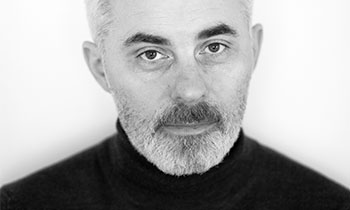
One of the favourite books of our columnist Vadim Dymov, well-known businessman and friend of the town of Suzdal, is Man’s Search for Meaning by Viktor Frankl, based on the experience of living in a concentration camp. We thought it would be important to mention, as one of the major discoveries in our lives, whether we realise it or not, is finding a reason for our existence. Frankl devoted his life to promoting the existential approach to psychotherapy, having discovered that man is able to survive through any conditions, if he sees the point to life. Vadim Dymov has devoted his time and resources to bettering the parts of the world for which he has the strength to do so. Not for personal profit, but in order to fulfil his destiny.All my revelations and disappointments concern people. In my life, I’ve tried to help many people and I do not regret it, even if some of them did not appreciate my help. The review process is very complicated, as it involves many personal issues. It happens that it is hard for a person to be thankful; he thinks he is not cool enough if he has received help. And sometimes we do not share the same values — for me, it is import- ant not only that I benefit from the projects, but that also other people do; some live only for themselves and do not care about others. There is nothing good or bad in it, it is just his mentality. People are the most exciting part of life. My children, my wife, people around me — they have all helped me to fulfil myself, and I am extremely grateful to everyone. I am in touch with many different people, I talk a lot with them because I am curious to know about their work, their life, what is important to them. My wife often says that I act like a child at times, and it is true.Recently my wife and I were taking the Strizh (meaning “Swift”, it is a high speed express train which travels from Moscow, through Vladimir, to Nizhny Novgorod). I got talking to a conductor and my wife wondered aloud: “Why did you question her? What normal person wastes half an hour to learn about a conductor’s life in detail?” I said honestly that, first of all, I had spent a very nice time on the train; that secondly, my wife had been managing to read the book without distracting me; and third, I now understood how a conductor’s life is arranged, and many issues that I have had about it have been closed. And also, flaws existing on the railway have now become clear to me. And I have friends with whom I will share these insights when we meet, so that some obvious stupidities can be corrected. Whatever I have begun, whatever the project at hand was, the first thing I have needed in order to move from a dead centre is people. Specialists, enthusiasts, associates. When I became interested in the Russian traditions of ceramics, I saw that not only had some skills been lost, but also that national applied art, traditional forms and technologies that had existed since the 15th century had been completely forgotten. I wanted to retrieve them, to restore them. I understood that I had neither the experience, nor the sufficient knowledge. I visited Italy and found out what I needed to get started. I found several enthusiasts and asked them to do research, retracing the history of traditional Russian ceramics. It is labour-intensive, with complex shapes, with real fuming, and it turned out great. Initially, it was a non-commercial project. I just wanted this tradition to exist, so that it would be accessible to people, so that they could come and be around it. It is an absolute joy to see how different forms appear from clay, how clay is baked, how masters work. And when I see how people are excited about it, that entire families come, bringing their children, I understand that it wasn’t for nothing. Money has never been my aim in and of itself — it’s more like a way to change something, to do something better. For me, the appreciation of society is very important, more important than making a profit. Nowadays ceramics has become a completely independent business, as we work for almost all the restaurants in Moscow. The best chefs of Moscow work with us, every chef wants something of his own, individual. They want an exclusive design and, fortunately, we can do it. To be perfectly honest, we did not do anything special, we did not do any promotion. At a certain point, they came to us on their own. I suppose, the sanctions and the devaluation of the ruble must have been the trigger, but it would never have worked if we had no technology, capabilities, or quality.And we began to produce very serious pottery for restaurants, and now I am building a new factory. This big factory will be quite a cogent response to the West- ern manufacturers that have formed over the centuries. Then a plan for the development of Suzdal appeared. And it was necessary to comprehend, most of all for us, what should never happen to Suzdal — we should not allow the destruction of the heritage our forefathers left us. Since Soviet times, Suzdal has always been fortunate enough to have people willing to dedicate their lives to preserving its architectural and historical environment and heritage. They kept the town safe even during the war; they succeeded in adopting a height restriction law and preserved the landscape of the historic centre. They also succeeded in creating a development plan for the next forty years, thinking ambitiously. But now, those forty years have ended, and it is necessary to implement new measures to help keep the vibrant town to progressing harmoniously, without harming its historical heritage. Mikhail Kusnirovich, Yermolai Solzhenitsyn, and I have discussed this question for a long time and finally decided to tackle this issue. We hired urbanists and jointly with them created such a project, a vision for the development of the town, so that on the basis of it, serious scientists, researchers, and institutions can make a master plan of the city, an urban plan. In all this, I see myself as a friend of Suzdal, who, having the chance, has helped the town to resolve some issues. For example, the water-supply problem. The town itself cannot solve it; it does not have the resources, and requires federal assistance. I managed to draw attention to this issue, and the government has taken the appropriate actions. I am a friend of this town and I am interested in that I, and my friends, and everyone who lives or comes to Suzdal feel good and comfortable in it. I would really like Suzdal to have associates, confederate towns, so that Yuryev-Polsky, Gorokhovets, and Gavrilov Posad can emerge from oblivion and abandonment; they have everything necessary to flourish, to become attractive for tourism, to revive traditional crafts. Now all this is in demand by people who miss things that are real and genuine. Life is very pleasant, beautiful and fascinating in such places. On weekdays you live in Moscow, you do business and all along you want to return as soon as possible, home, to Suzdal. Besides, there is something to do here on weekdays, and this concrete, creative job brings immense satisfaction.I never thought of myself as a special person and I never will, though I believe that I was lucky in life due to some inborn traits. Maybe social skills, maybe something else. There may have been some kind of randomness that has guided me, but this chain of events has not been mere coincidence, because many things were definitely predetermined in my life. I am good at inspiring people. I can get others to carry out tasks, so they can do things for themselves. In my youth, I told myself that I had to square the circle, to attempt the truly impossible. This was right for that period of life, because at that time many things seemed incredible, and now I understand that those impossibilities have transformed into opportunities for me. I have put attainable goals before myself. The targets may be ambitious, but still they are achievable. I do not believe in fate, but I believe in destiny. It is very difficult to find it, but you must try to reveal what the creator has put into you. You are endowed with a certain character, certain traits, particular potential and you either realise it or you don’t. If you do, then you can enjoy a better life, because you are not disappointed with yourself and you never live up to your potential. You realise yourself in the way God has planned for you. In this regard, you come closer to God, to your reflection in Him, and all your life you look for your reflection in the divine.