

Quick Summary: While women typically ovulate once per menstrual cycle, multiple eggs can be released during a single ovulation event (hyperovulation), not through multiple separate ovulations in one month. Research shows that follicles develop in waves throughout the cycle, but this doesn’t mean ovulation occurs multiple times. True double ovulation happens within 24 hours during one ovulatory event.
The idea that women might ovulate twice in one month has sparked plenty of confusion and debate. Community discussions are full of people wondering if those extra ovulation test positives mean something more is happening.
Here’s the thing though—the conventional understanding of ovulation is more nuanced than many realize. And what feels like multiple ovulations might actually be something entirely different.
Let’s break down what really happens during the menstrual cycle and whether it’s truly possible to ovulate more than once in a single month.
Understanding the Normal Ovulation Process
In a typical menstrual cycle, one mature egg is released from the ovaries. According to ACOG, the median age for menarche is 12.43 years, with the mean cycle interval in the first gynecologic year being 32.2 days.
The process works like this: follicles in the ovaries begin to mature, one becomes dominant, and that follicle releases an egg. This usually happens once per cycle, around mid-cycle.
But wait. What about fraternal twins?
That’s where hyperovulation comes in—and it’s not what most people think it means.
What Is Hyperovulation?
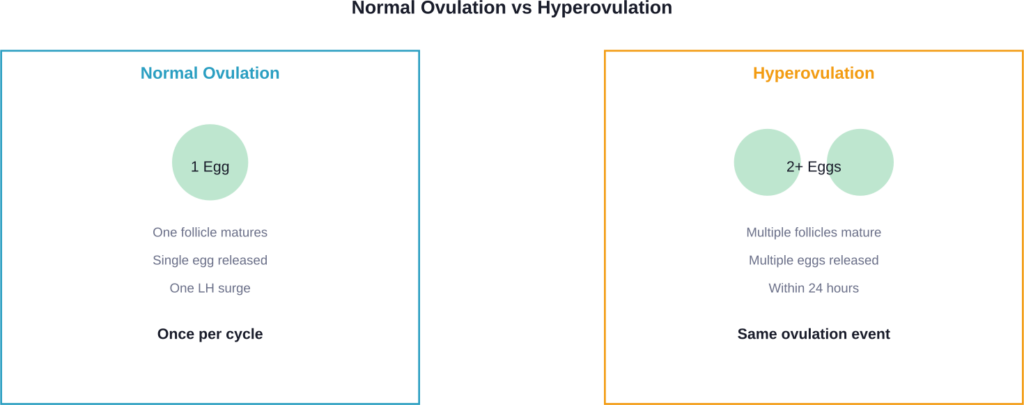
Hyperovulation refers to the release of multiple eggs during a single ovulation event. The critical detail here is that these eggs are released within a 24-hour window, not at different times throughout the month.
This is how fraternal twins happen. Two separate eggs get fertilized by two different sperm during the same cycle. The eggs were released at roughly the same time, not weeks apart.
Some people assume that because two eggs were released, they must have ovulated twice. However, a singular ovulation event can result in multiple eggs being released within 24 hours of each other.
Key Characteristics of Hyperovulation
- Multiple eggs released during one ovulatory event
- All eggs released within a 24-hour timeframe
- Results from a single LH surge
- Can lead to fraternal multiples if fertilization occurs
Can You Actually Ovulate Twice in One Month?
The short answer? Not in the way most people think.
Research published by Canadian researchers challenged the conventional belief that women ovulate once a month. But here’s what they actually found—and it’s been widely misunderstood.
According to research that followed follicular growth using ultrasounds, many women (approximately 68%) had two separate waves of follicle development, and nearly a third had three waves during their cycle.
Sound confusing? Here’s the crucial distinction.
Follicular Waves vs. Actual Ovulation
Having multiple follicular waves doesn’t mean multiple ovulations. Follicle counts going up and down throughout the cycle is normal—but only one wave typically results in actual ovulation and egg release.
Think of it like this: multiple follicles start the race, but only one (or occasionally more during hyperovulation) crosses the finish line during a single ovulation event.
Experts didn’t find that women ovulated more than once a month. Instead, they discovered multiple follicular waves throughout the cycle—waves of follicle development that don’t necessarily lead to ovulation.
What Causes Hyperovulation?
Several factors can increase the likelihood of releasing multiple eggs during one ovulation event.
Fertility Treatments
Fertility treatments are the most common cause of hyperovulation. Medications that stimulate the ovaries can cause multiple follicles to mature and release eggs simultaneously.
According to NICHD research on women with polycystic ovary syndrome (PCOS), 739 women with PCOS seeking pregnancy were randomized to treatment with two different ovulation-inducing drugs.
These treatments deliberately increase the chances of multiple egg release to improve pregnancy odds—but all eggs are still released during the same ovulation window.
Genetics and Family History
Hyperovulation can run in families. Women with a family history of fraternal twins have a higher likelihood of releasing multiple eggs.
This genetic predisposition affects how the ovaries respond to hormonal signals during the menstrual cycle.
Age and Hormonal Changes
As women approach their late 30s and early 40s, hormonal fluctuations can increase the chance of hyperovulation. The body sometimes releases higher levels of follicle-stimulating hormone (FSH), which can stimulate multiple follicles to mature.
Environmental factors, including socioeconomic conditions, nutrition, and access to preventive health care, may influence the timing and progression of reproductive changes.
Other Contributing Factors
- Body composition and height
- Stopping hormonal birth control
- Certain medical conditions affecting hormone levels
| Factor | Effect on Hyperovulation | Mechanism |
|---|---|---|
| Fertility treatments | High increase | Stimulates multiple follicles to mature |
| Family history | Moderate increase | Genetic predisposition to release multiple eggs |
| Age (35+) | Moderate increase | Higher FSH levels stimulate more follicles |
| Stopping birth control | Temporary increase | Hormonal rebound effect |
Why Home Ovulation Tests Show Multiple Positives
One of the biggest sources of confusion comes from ovulation predictor kits showing multiple positive results throughout a cycle.
Does this mean multiple ovulations? Not quite.
Understanding LH Surges
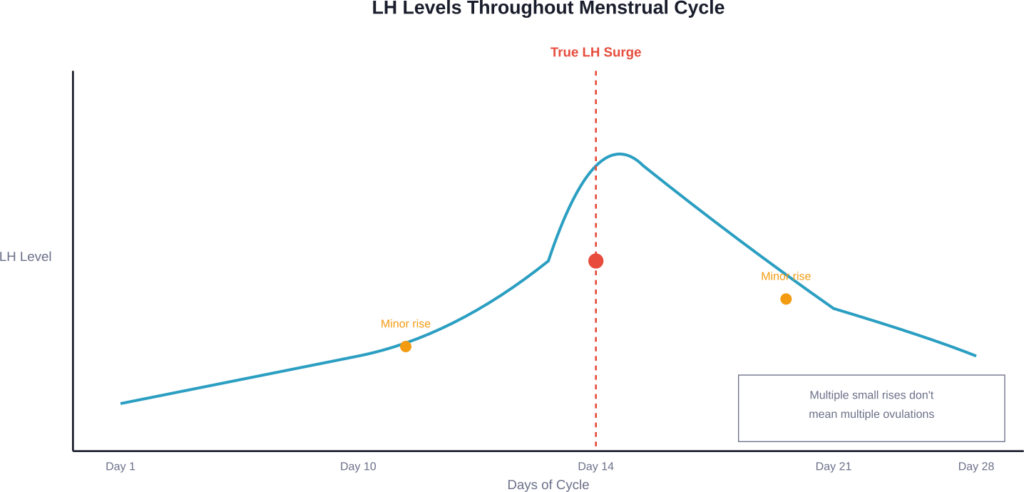
Ovulation tests detect luteinizing hormone (LH) in urine. The LH surge triggers ovulation—but here’s the catch. LH can fluctuate throughout the cycle for various reasons that don’t involve actual ovulation.
Some women experience multiple smaller LH rises that don’t result in egg release. The follicle starts to mature, LH begins to rise, but ovulation doesn’t occur. Then the process starts over.
False Positive Causes
Several conditions can cause false-positive ovulation tests:
- PCOS, which can cause elevated baseline LH levels
- Certain medications that affect hormone levels
- Perimenopause, when hormones fluctuate unpredictably
- Testing at the wrong time of day
- Diluted urine affecting test accuracy
According to NICHD genetic analysis of PCOS, a reproductive subtype, affecting about 23%, shows higher levels of luteinizing hormone and sex hormone binding globulin—which can interfere with standard ovulation testing.
Symptoms of Hyperovulation
Hyperovulation itself doesn’t cause distinctly different symptoms than regular ovulation. Most women won’t know they released multiple eggs unless they conceive fraternal multiples.
That said, some symptoms during the ovulation window might be slightly more intense:
- Increased cervical mucus production
- More pronounced abdominal or pelvic cramping
- Heightened breast tenderness
- Stronger mittelschmerz (ovulation pain)
- More significant bloating
According to NICHD, the primary signs of menstruation and ovulation-related changes include abdominal or pelvic cramping, lower back pain, and bloating—all of which can vary in intensity.
Real talk: these symptoms overlap so much with normal ovulation that they’re not reliable indicators of hyperovulation on their own.
What About Superfetation?
There’s another concept that occasionally gets confused with ovulating twice: superfetation. This is when a woman ovulates and conceives while already pregnant, resulting in two fetuses at different developmental stages.
But here’s the thing—superfetation is extraordinarily rare in humans. Like, we’re talking a handful of documented cases worldwide.
The pregnant body produces hormones that prevent ovulation. For superfetation to occur, ovulation would need to happen despite these hormonal blocks, sperm would need to travel through a closed cervix, and a second embryo would need to implant in an already-occupied uterus.
Twins measuring different sizes usually has other explanations, like variations in placental function or nutrient supply—not superfetation.
Multiple Pregnancy and Ovulation
According to ACOG, if more than one egg is released during the menstrual cycle and each egg is fertilized by a sperm, more than one embryo may implant and grow in the uterus. This type of pregnancy results in fraternal twins or more.
When a single fertilized egg splits into two embryos, identical twins result. The key difference is that fraternal multiples come from hyperovulation—multiple eggs released during one ovulation event.
For women undergoing fertility treatments, the chance of multiple pregnancy increases significantly because medications stimulate multiple follicles to mature and release eggs simultaneously.
| Type of Twins | Cause | Genetic Similarity |
|---|---|---|
| Fraternal (dizygotic) | Two eggs released and fertilized | Like regular siblings |
| Identical (monozygotic) | One egg splits after fertilization | Genetically identical |
Tracking Your Cycle Accurately
Understanding when ovulation actually occurs matters for both conception and contraception purposes.
Most Reliable Methods
Basal body temperature tracking combined with cervical mucus observation provides the most comprehensive picture of what’s happening during the cycle. Temperature rises after ovulation occurs, confirming that it happened.
Ovulation predictor kits can help identify the fertile window, but they predict ovulation rather than confirming it. The LH surge typically occurs 24-36 hours before egg release.
Ultrasound monitoring, while not practical for most people outside fertility treatment, remains the gold standard for confirming follicle development and egg release.
What Cycle Tracking Reveals
Research suggests that follicular phase duration can vary among women, with some studies finding consistency in certain populations. Common fluctuations in menstrual cycle length mainly result from variations in other phases, not from multiple ovulations.
According to ACOG data, the mean cycle interval stabilizes over time, though environmental factors can influence patterns.
When to Talk to a Healthcare Provider
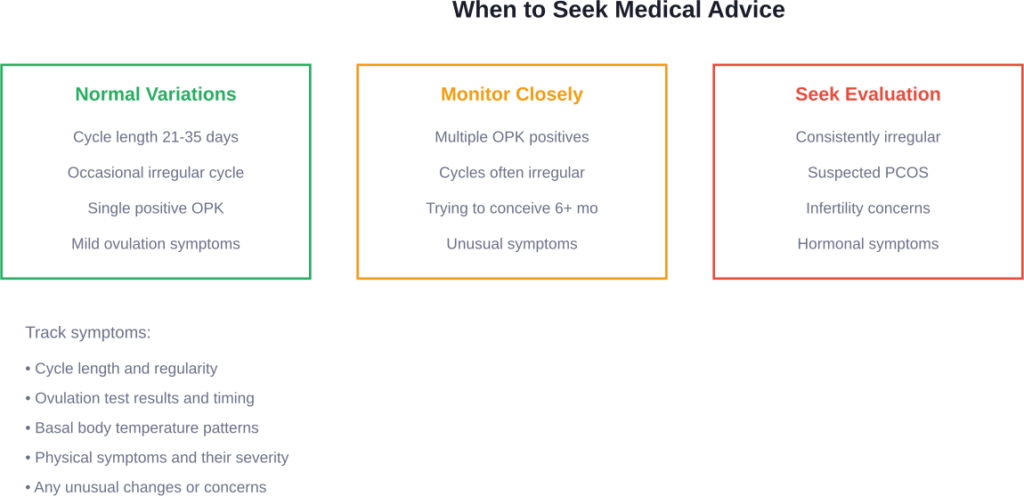
Certain situations warrant professional evaluation:
- Consistently irregular cycles with unpredictable ovulation patterns
- Multiple positive ovulation tests without clear pattern
- Symptoms suggesting hormonal imbalance (excessive acne, unexpected weight changes, unusual hair growth)
- Difficulty conceiving after six months to a year of trying
- Suspected PCOS or other reproductive conditions
For women with PCOS seeking pregnancy, research involving 739 women showed that treatment with ovulation-inducing drugs could help regulate ovulation patterns. Additionally, the study found that insulin resistance was associated with lower conception and live birth rates.
Frequently Asked Questions
No. If multiple eggs are released, they’re released within a 24-hour window during the same ovulation event. The body doesn’t ovulate at two separate times during one menstrual cycle. What appears to be multiple ovulations is usually follicular waves—normal development patterns that don’t result in egg release.
Hyperovulation (releasing multiple eggs during one ovulation) increases the chance of fraternal twins if both eggs are fertilized. But releasing multiple eggs doesn’t guarantee pregnancy or multiples—fertilization still needs to occur, and both embryos must successfully implant.
Multiple positive ovulation tests throughout a cycle usually indicate LH fluctuations rather than multiple ovulations. Conditions like PCOS can cause elevated baseline LH levels. Follicles may start to mature and trigger LH rises without completing ovulation, then the process restarts. This shows follicular waves, not separate ovulation events.
Fertility treatments stimulate multiple follicles to mature and release eggs simultaneously during one ovulation event—this is hyperovulation. The medications don’t cause separate ovulations at different times in the month. All stimulated eggs are released within the same 24-hour ovulation window.
Exact rates are difficult to determine since most women don’t know they’ve released multiple eggs unless they conceive fraternal multiples. Genetics, age, and fertility treatments significantly increase the likelihood. Women over 35 and those with family histories of fraternal twins have higher rates.
Yes. Ovulation can occur without menstruation in certain situations, particularly during breastfeeding or with certain hormonal conditions. Conversely, bleeding can occur without ovulation (anovulatory cycles). Tracking ovulation signs separately from menstruation provides a clearer picture of what’s happening.
Follicular waves refer to the natural pattern of follicles growing and regressing throughout the cycle. Research shows many women have two follicular waves per cycle. But only one wave typically results in actual ovulation—the release of a mature egg. Multiple waves of follicle development don’t equal multiple ovulations.
The Bottom Line
So, can you ovulate twice in a month? The evidence says no—not in the sense of two separate ovulation events weeks apart.
What is possible is hyperovulation: releasing multiple eggs during a single ovulation event within a 24-hour window. This happens in one ovulatory cycle, triggered by one LH surge.
The confusion often stems from misunderstanding follicular waves—the normal pattern of follicles developing throughout the cycle—and mistaking them for multiple ovulations. Research that revealed these waves didn’t prove multiple ovulations; it showed how complex the menstrual cycle really is.
For anyone tracking fertility or concerned about cycle irregularities, focus on confirming ovulation through temperature tracking and cervical mucus observation. Multiple positive ovulation tests might indicate hormonal fluctuations rather than actual egg release.
If cycle patterns seem confusing or concerning, that’s exactly when professional guidance makes sense. Healthcare providers can use ultrasound monitoring and hormone testing to clarify what’s actually happening during the menstrual cycle.
Understanding how ovulation truly works—one event per cycle, potentially with multiple eggs released simultaneously—takes the mystery out of fertility tracking and helps make informed decisions about reproductive health.