
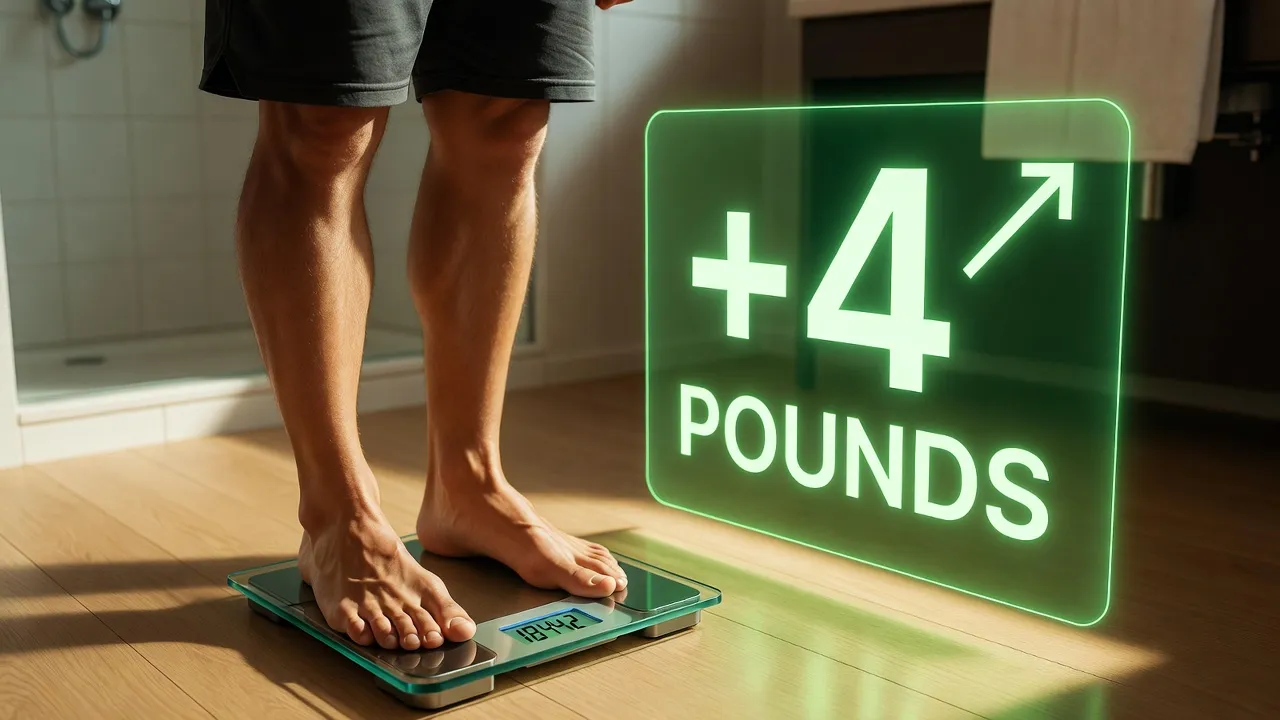
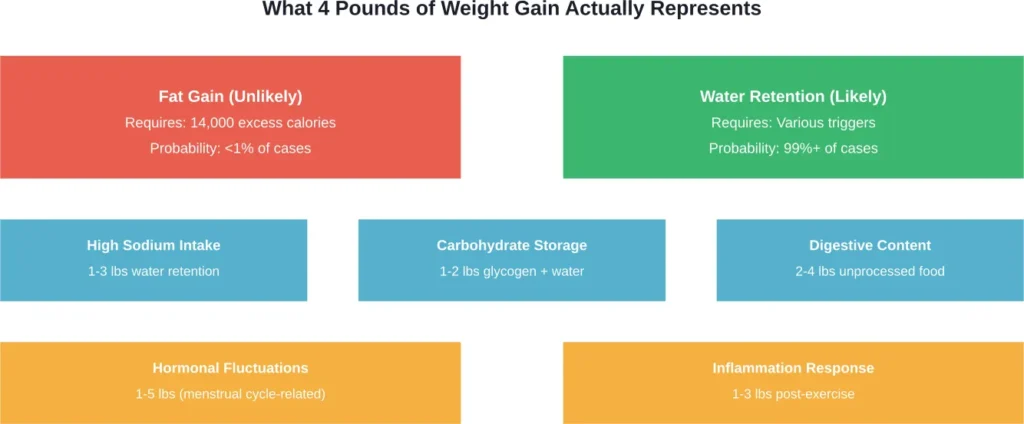
Quick Summary: Yes, gaining 4 pounds in a day is possible, but it’s almost never actual fat gain. Water retention from sodium, carbohydrates, hormonal changes, intense exercise, or digestive content typically explains rapid weight fluctuations. True fat gain requires consuming 14,000+ excess calories in one day, which is physiologically unlikely for most people.
Stepping on the scale after what felt like a normal day and seeing a 4-pound jump can trigger immediate panic. Community discussions reveal this experience is surprisingly common, with users frequently asking how they gained significant weight seemingly overnight despite staying consistent with their routines.
But here’s the thing: what appears on the scale doesn’t tell the whole story.
Weight fluctuations happen to everyone. According to HealthPartners research, body weight can fluctuate by as much as five or six pounds in a single day depending on numerous factors including food intake, physical activity, stress levels, and hormonal cycles. Understanding what drives these changes helps separate normal variation from concerning patterns.
The Math Behind Fat Gain vs. Water Weight
To gain one actual pound of body fat, the body needs to consume approximately 3,500 calories beyond what it burns. This means gaining 4 pounds of pure fat would require eating 14,000 calories above maintenance levels in a single 24-hour period.
That’s an enormous amount of food. For someone with a 2,000 calorie daily maintenance requirement, this would mean consuming 16,000 total calories in one day. While competitive eaters might approach these numbers, it’s physiologically improbable for most people.
The far more likely explanation? Water weight and digestive content.
Top Causes of Rapid 4-Pound Weight Gain
Multiple factors can trigger substantial overnight or same-day weight increases. Most involve fluid shifts rather than fat accumulation.
Sodium and Water Retention
According to the American Heart Association, more than 70% of the sodium Americans eat comes from packaged, prepared and restaurant foods. When sodium intake spikes, the body retains extra water to maintain proper sodium-to-water balance in the bloodstream.
This mechanism pulls water into blood vessels, increasing total blood volume. Within 30 minutes of eating excess salt, blood vessels’ ability to dilate is impaired, according to the American Heart Association.
A single restaurant meal can contain 3,000-5,000 milligrams of sodium, while the American Heart Association recommends 1,500 milligrams for ideal heart health. This massive sodium surplus can trigger 2-4 pounds of temporary water retention that typically resolves within 24-48 hours as the kidneys process and excrete the excess.
Carbohydrate Intake and Glycogen Storage
Carbohydrates get stored in muscles and the liver as glycogen. Here’s what makes this relevant: every gram of glycogen binds to approximately 3-4 grams of water.
After a low-carb period followed by a carbohydrate-rich meal, the body rapidly replenishes depleted glycogen stores. Consuming 300-400 grams of carbohydrates can add 1-2 pounds of glycogen plus the associated water weight.
This explains why people following low-carb diets often see dramatic weight drops initially, then equally dramatic rebounds when they reintroduce carbohydrates. The weight change reflects glycogen and water storage, not fat loss or gain.
Food Volume and Digestive Transit
Food doesn’t instantly vanish after consumption. The digestive process takes 24-72 hours from ingestion to elimination, meaning multiple meals can be present in the digestive system simultaneously.
A large meal can weigh 2-4 pounds on its own. When someone eats more than usual or consumes high-fiber foods that slow digestion, the physical weight of unprocessed food contributes to scale numbers until it’s fully digested and eliminated.
This is particularly noticeable after large dinners or all-day eating events. The scale reflects not just what the body has absorbed, but what’s still being processed.
Menstrual Cycle and Hormonal Changes
Research on fluid retention over the menstrual cycle (published in Obstetrics & Gynecology International, 2011) documented significant variations in fluid retention throughout different cycle phases. Hormonal fluctuations, particularly increases in estrogen and progesterone before menstruation, trigger water retention in many women.
Research on menstrual cycle fluid retention documents fluid retention during the premenstrual phase as measured by validated instruments on a 0-4 scale for intensity. This typically resolves as hormone levels shift after menstruation begins.
Mid-cycle ovulation can also trigger temporary fluid retention, though typically less dramatic than premenstrual changes.
Exercise-Induced Inflammation
Intense workouts, particularly strength training or new exercise routines, create micro-tears in muscle tissue. This triggers an inflammatory response as part of the normal repair and strengthening process.
Inflammation brings fluid to damaged tissues, which can add 2-4 pounds of temporary water weight. This response is actually a positive sign that muscles are adapting and growing stronger, but it masks fat loss on the scale.
The weight increase typically peaks 24-48 hours post-workout and gradually resolves over 3-5 days as inflammation subsides.
Medication Effects
Certain medications cause fluid retention as a known side effect. Common culprits include:
- Corticosteroids (prednisone, cortisone)
- Non-steroidal anti-inflammatory drugs (NSAIDs)
- Some blood pressure medications
- Antidepressants (certain SSRIs)
- Diabetes medications (insulin, thiazolidinediones)
- Hormone replacement therapy
Research published in the Journal of Athletic Training on creatine supplementation found that it increases total body water without altering fluid distribution. Athletes using creatine commonly see 2-5 pound increases in the first week, entirely from water storage in muscle cells.
Medical Conditions That Cause Rapid Weight Gain
While most 4-pound daily fluctuations stem from benign causes, certain medical conditions can trigger concerning rapid weight gain through fluid accumulation.
Heart Failure and Fluid Overload
According to research on fluid retention and cardiovascular health, patients with chronic conditions can experience dangerous fluid accumulation. When the heart can’t pump effectively, fluid backs up in tissues, causing edema in the legs, abdomen, and lungs.
Medical case reports document patients accumulating 40 kilograms of fluid retention in severe cases of heart dysfunction, though this develops over extended periods.
Kidney Disease
Kidneys regulate fluid balance by controlling sodium and water excretion. When kidney function declines, the body can’t eliminate excess fluid properly, leading to rapid weight gain from accumulation.
Research on hemodialysis patients found that over 85% of patients gained >1.5 kg between dialysis sessions, with interdialytic weight gain measured in 0.5 kg increments up to >=4.0 kg.
Thyroid Disorders
Hypothyroidism slows metabolism and can cause fluid retention. While thyroid-related weight gain typically occurs gradually, severe cases can trigger more rapid accumulation, particularly when combined with reduced activity and increased appetite.
Refeeding Syndrome
Medical research on weight fluctuations during early refeeding in anorexia nervosa found that insulin-induced sodium retention causes substantial edema and weight gain during the initial refeeding period.
When someone severely restricts food intake then suddenly increases consumption, the body’s response can trigger dramatic fluid shifts as insulin levels spike and promote sodium retention in kidney tubules.
| Cause Category | Typical Weight Gain Range | Time to Resolve | Concern Level |
|---|---|---|---|
| High sodium meal | 2-4 pounds | 24-48 hours | Low |
| Carbohydrate refeed | 1-3 pounds | 48-72 hours | Low |
| Menstrual cycle | 2-5 pounds | 3-7 days | Low |
| Intense exercise | 2-4 pounds | 3-5 days | Low |
| New medication | 2-6 pounds | Varies | Medium |
| Persistent daily gain | 4+ pounds | Does not resolve | High |
When 4-Pound Gains Signal a Problem
According to Cleveland Clinic, if you gain 2 to 3 pounds a day, or 5 pounds a week, you should see your healthcare provider.
Similarly, gaining 5% or more of total body weight within a month represents a significant change that deserves evaluation. For a 150-pound person, this translates to 7.5 pounds in 30 days.
Red flags that distinguish concerning weight gain from normal fluctuation include:
- Progressive daily increases without resolution
- Swelling in legs, ankles, or abdomen
- Shortness of breath, especially when lying down
- Rapid weight gain accompanied by extreme fatigue
- Changes in urination frequency or volume
- Sudden weight gain with no dietary or activity changes
A case report published in Frontiers in Nutrition (2021) documented a patient with alcohol dependency and Type 2 Diabetes Mellitus who developed severe edema and marked weight gain induced by marginal thiamine deficiency. This illustrates how multiple factors can compound to create serious fluid retention requiring medical intervention.
How Weight Naturally Fluctuates Throughout the Day
Body weight isn’t static. Normal daily variation follows predictable patterns based on eating, drinking, exercise, and elimination cycles.
Most people weigh least first thing in the morning after using the bathroom and before eating or drinking. As the day progresses, weight increases with food and fluid intake, typically peaking in the evening.
According to HealthPartners, body weight can go up or down by as much as five or six pounds in a single day. These variations reflect:
- Water and beverage consumption (1 liter = 2.2 pounds)
- Food intake (meals can weigh 1-2 pounds each)
- Bowel and bladder elimination
- Perspiration and respiratory water loss
- Physical activity timing
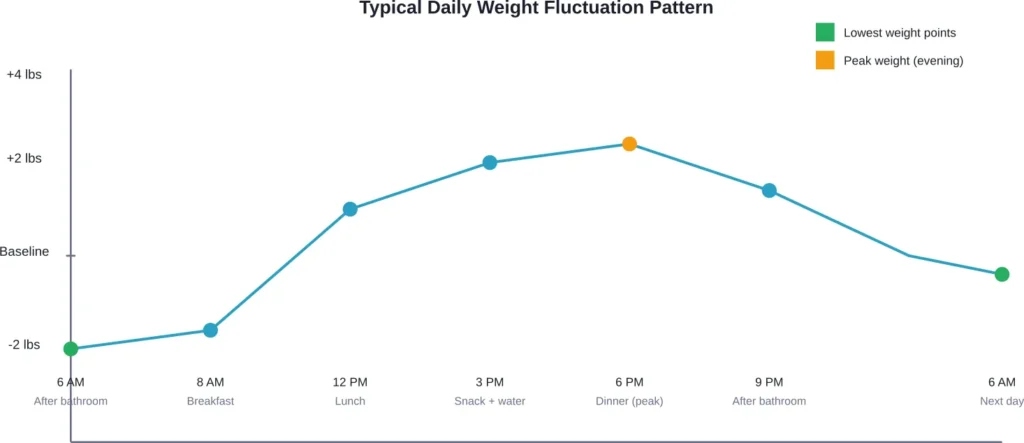
This explains why weigh-ins should happen at the same time under consistent conditions for meaningful comparison. Morning weight after using the bathroom provides the most consistent baseline.
What to Do After Seeing a 4-Pound Increase
Discovering a sudden weight spike doesn’t require immediate action in most cases. Here’s what actually helps:
Don’t Panic or Restrict Dramatically
Overreacting with extreme calorie restriction or excessive exercise often backfires. Severe restriction can trigger additional water retention as cortisol levels rise from stress. It can also lead to eventual overeating that perpetuates the cycle.
Review Recent Intake and Activity
Consider what happened in the previous 24-48 hours. Did sodium intake spike with restaurant food? Was there a high-carb meal after several low-carb days? Did an intense workout happen? For women, where does this fall in the menstrual cycle?
Identifying the likely cause helps contextualize the gain as temporary rather than alarming.
Resume Normal Patterns
Return to regular eating and activity patterns. Consistency allows the body to process excess sodium, rebalance fluids, and eliminate digestive content naturally.
Drinking adequate water, contrary to intuition, helps reduce water retention by signaling the body it doesn’t need to conserve fluids.
Give It Time
Most water-weight gains resolve within 2-5 days without intervention. Tracking weight over weeks rather than days provides more meaningful data about actual trends versus noise from daily fluctuations.
Monitor for Patterns
If 4-pound gains happen repeatedly without resolution, or if weight continues climbing daily, medical evaluation becomes warranted. Progressive, unexplained weight gain differs fundamentally from temporary spikes.
Preventing Unnecessary Weight Fluctuations
While some variation is inevitable and healthy, certain strategies minimize dramatic swings:
- Moderate sodium intake consistently (avoid wild swings from very low to very high)
- Maintain relatively stable carbohydrate intake rather than cycling between extremes
- Stay adequately hydrated daily
- Progress exercise intensity gradually rather than shocking the system
- Track weight as a weekly average rather than daily numbers
According to the CDC, adults need at least 150 minutes a week of moderate-intensity aerobic activity for overall health. Healthy lifestyles include being mindful of calories, ensuring adequate nutrition, and being physically active.
Managing weight contributes to better health outcomes and reduces risk for type 2 diabetes, high blood pressure, heart disease, and stroke.
The Role of Accurate Tracking
For people tracking weight at home, it’s important to understand that the scale measures total body weight, not body composition. It can’t distinguish between fat, muscle, water, or digestive content.
More meaningful metrics include:
- Weekly weight averages
- Measurements of waist, hips, and other body areas
- How clothing fits
- Energy levels and physical performance
- Progress photos taken monthly
Daily weigh-ins can provide data points for calculating averages, but individual readings carry limited significance given normal variation.
Frequently Asked Questions
No, gaining 4 pounds of actual fat in one day is virtually impossible. This would require consuming 14,000 calories beyond maintenance needs. The 4-pound increase seen on the scale represents water retention, food volume in the digestive system, or a combination of factors rather than fat accumulation.
Water retention from high sodium intake typically resolves within 24-48 hours as the kidneys process and excrete the excess sodium. Staying hydrated and returning to normal sodium intake helps the body rebalance fluids more quickly. Some people may retain water slightly longer depending on individual kidney function and overall health.
Exercise, particularly intense or unfamiliar workouts, causes muscle inflammation as part of the normal repair process. This inflammatory response brings fluid to muscle tissues, which can add 2-4 pounds temporarily. This weight increase actually indicates positive muscle adaptation and typically resolves within 3-5 days as inflammation subsides.
Yes, hormonal fluctuations related to the menstrual cycle can trigger significant water retention. Research documents fluid retention during the premenstrual phase as estrogen and progesterone levels shift. This typically resolves after menstruation begins and hormone levels change again.
According to Cleveland Clinic, gaining 2-3 pounds daily, 5 pounds weekly, or 5% of body weight in a month warrants medical evaluation. Additional red flags include progressive gains without resolution, swelling in extremities, shortness of breath, or fatigue accompanying weight changes. These patterns may indicate underlying heart, kidney, or thyroid conditions requiring treatment.
Counterintuitively, yes. When adequately hydrated, the body doesn’t conserve water as aggressively. Dehydration triggers water retention as a protective mechanism. Drinking enough water throughout the day helps maintain proper fluid balance and can actually reduce retention caused by dehydration or high sodium intake.
Daily fluctuations of 5-6 pounds fall within normal range for most adults. Over a week, seeing weight vary by 3-5 pounds is common and doesn’t reflect fat gain or loss. True fat changes occur more gradually. Tracking weekly averages rather than daily numbers provides more accurate information about actual trends versus normal variation.
Final Thoughts on Rapid Weight Changes
Seeing a 4-pound weight increase in a day triggers understandable concern, particularly when someone is working toward health goals. But the scale only tells part of the story.
Understanding that daily weight reflects multiple variables—water retention, food volume, hormonal cycles, inflammation, and yes, body fat—helps contextualize those numbers appropriately. The vast majority of rapid gains stem from temporary fluid shifts that resolve naturally within days.
Real talk: obsessing over daily scale fluctuations creates unnecessary stress. Body weight isn’t meant to be static. Normal physiological processes create variation that has nothing to do with actual fat gain or the effectiveness of health efforts.
Focus on consistent healthy behaviors rather than daily scale readings. Track trends over weeks and months. Pay attention to how the body feels, performs, and functions rather than fixating on a single metric that changes hourly.
That said, persistent unexplained weight gain deserves medical attention. Progressive daily increases, significant swelling, or rapid gains accompanied by other symptoms may signal conditions requiring treatment. Trust the body’s signals and seek evaluation when patterns seem concerning rather than transient.
The scale is just one tool among many. Use it wisely, interpret it accurately, and remember that sustainable health comes from long-term consistency, not daily perfection.