

Quick Summary: Losing 10 pounds in 2 weeks is technically possible but not recommended for most people. According to the CDC, healthy weight loss occurs at a rate of 1-2 pounds per week. Rapid weight loss exceeding this rate typically involves loss of water weight and muscle rather than fat, and research shows it may lead to dehydration, metabolic disruption, and difficulty maintaining results long-term.
The promise of dropping 10 pounds in just 14 days sounds tempting. It’s the kind of quick fix that appeals when a big event is coming up or motivation is running high.
But here’s the thing—what’s technically possible isn’t always what’s medically advisable.
Medical organizations like the CDC recommend a weight loss rate of 1 to 2 pounds per week for good reason. That pace allows the body to shed fat while preserving muscle mass and metabolic function. Anything significantly faster typically means losing water and muscle, not the fat most people actually want to eliminate.
So what does the research actually say? And what happens when someone tries to drop weight that quickly?
What Medical Guidelines Say About Rapid Weight Loss
The CDC’s position is clear: gradual, steady weight loss of about 1 to 2 pounds per week supports long-term success. According to their published guidelines from January 2025, this rate allows for sustainable lifestyle changes including healthy eating patterns, regular physical activity, adequate sleep, and stress management.
The National Library of Medicine defines rapid weight loss as losing more than 2 pounds per week over several weeks. To achieve this, caloric intake must be drastically reduced—often to levels that don’t provide adequate nutrition.
Research examining rapid versus slow weight loss found that rapid weight loss can produce quick results but often comes with metabolic consequences.
Even modest weight loss provides health benefits. The CDC notes that for someone weighing 200 pounds, losing just 5% of body weight—that’s 10 pounds—can improve blood pressure, cholesterol, and blood sugar levels. But they recommend achieving this over a longer timeframe than two weeks.
What Actually Happens During Rapid Weight Loss
When someone creates an extreme caloric deficit to lose weight quickly, the body doesn’t just burn fat. Multiple things happen simultaneously.
First, glycogen stores deplete. Glycogen is how the body stores carbohydrates in muscles and the liver. Each gram of glycogen binds with 3-4 grams of water. So when glycogen depletes, significant water weight disappears—sometimes 5-7 pounds in the first week alone.
This explains why initial weight loss feels dramatic, then slows considerably.
Second, research on rapid weight loss in elite judo athletes found effects on hydration status and cardiovascular responses during exercise.
Third, muscle tissue breaks down alongside fat. The body needs protein for various functions, and when caloric intake drops too low, it breaks down muscle tissue to get amino acids. This is problematic because muscle tissue burns calories at rest—losing muscle means a slower metabolism.
The Japan Society for the Study of Obesity recommends a weight loss of 3% of body weight over a period of 3–6 months.
Who Might Actually Lose 10 Pounds in 2 Weeks
While not ideal, certain individuals may experience 10-pound losses in two weeks under specific circumstances.
People with significant amounts of weight to lose—particularly those starting from obesity—often experience faster initial weight loss. Someone weighing 250-300 pounds might naturally lose weight faster than someone weighing 160 pounds, even with the same caloric deficit.
The first week or two of any diet typically shows exaggerated results due to water weight loss. This is especially true when cutting carbohydrates, which causes glycogen depletion and the associated water loss.
Those under medical supervision may follow very low-calorie diets (VLCDs) that produce rapid weight loss. According to the National Library of Medicine, these approaches require medical monitoring because they involve eating very few calories and carry specific risks.
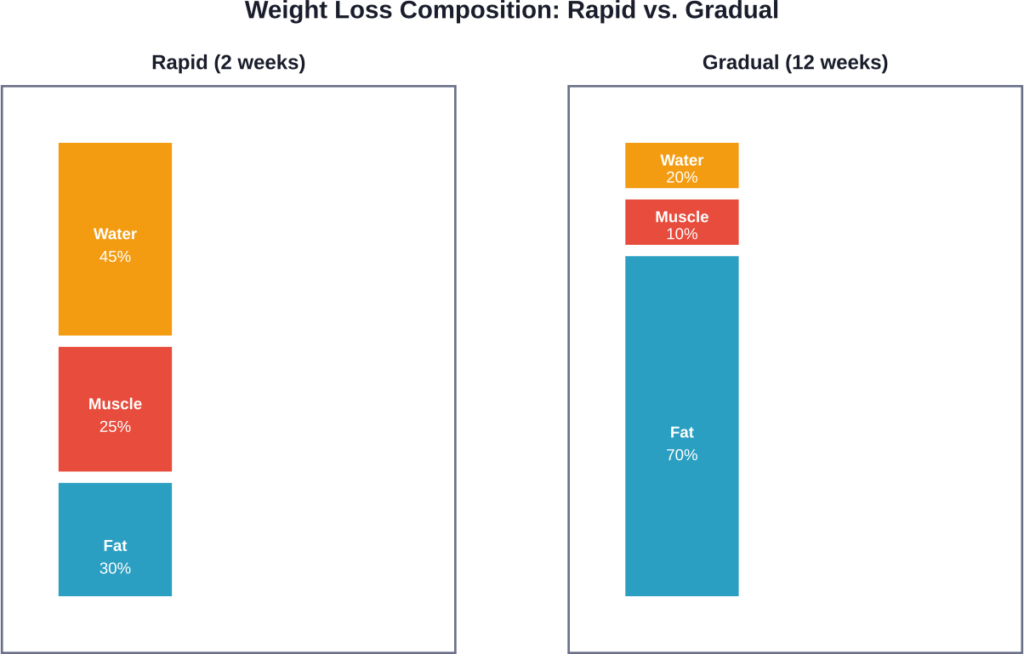
Real talk: most of that initial 10-pound loss isn’t fat. For someone starting a weight loss program, perhaps 3-4 pounds might be actual fat tissue, with the remainder being water and some muscle tissue.
The math is straightforward. One pound of fat contains approximately 3,500 calories. To lose 10 pounds of pure fat in two weeks would require a deficit of 35,000 calories—that’s 2,500 calories per day. For most people, that would mean eating almost nothing while maintaining high activity levels, which isn’t sustainable or safe.
The Metabolic Consequences Research Shows
Rapid weight loss doesn’t just affect the scale. It triggers metabolic adaptations that make further weight loss harder and weight regain more likely.
Research on metabolic consequences of weight reduction emphasizes that weight management strategies should target at least 5% weight loss to maintain healthy metabolism. The focus is on the timeframe—gradual loss preserves metabolic function better than crash approaches.
When caloric intake drops dramatically, the body interprets this as starvation. Metabolic rate slows to conserve energy. This adaptive thermogenesis means the body burns fewer calories at rest than it did before the diet began.
A review in the International Journal of Endocrinology and Metabolism compared rapid and slow weight loss effects on metabolic risk factors. Both groups lost weight, but the metabolic profiles differed significantly. The rapid weight loss group experienced more pronounced metabolic disruption.
Additionally, rapid weight loss affects hormones that regulate hunger and satiety. Ghrelin, the hunger hormone, increases. Leptin, which signals fullness, decreases. This hormonal shift makes maintaining weight loss exceptionally difficult once normal eating resumes.
Research indicates that metabolic adaptations following rapid weight loss may persist beyond the immediate post-weight loss period, contributing to the well-documented pattern of weight regain.
Practical Strategies for Faster (But Safer) Weight Loss
For those who want to lose weight more quickly than the standard 1-2 pounds per week—perhaps aiming for 1.5-2.5 pounds weekly—certain strategies can accelerate results while minimizing risks.
Create a Moderate Caloric Deficit
A daily deficit of 500-750 calories typically produces weight loss of 1-1.5 pounds per week. Increasing this to 750-1,000 calories might yield 1.5-2 pounds weekly, which could approach 10 pounds over 5-6 weeks rather than two.
This still requires eating enough to meet basic nutritional needs—generally not dropping below 1,200 calories for women or 1,500 for men without medical supervision.
Reduce Refined Carbohydrates
Cutting bread, pasta, sugary foods, and processed carbs reduces both calories and the glycogen-water weight. This produces noticeable results on the scale within the first week while supporting fat loss over time.
The reduction in water weight shouldn’t be confused with fat loss, but it does provide motivating early feedback.
Increase Protein Intake
Higher protein consumption (25-30% of total calories) helps preserve muscle mass during caloric restriction. Protein also increases satiety, making it easier to maintain a deficit without constant hunger.
Research consistently shows that adequate protein intake supports muscle retention during weight loss.
Incorporate Regular Physical Activity
The CDC recommends at least 30 minutes of physical activity daily. Increasing this to 45-60 minutes can enhance caloric expenditure without requiring extreme dietary restriction.
High-intensity interval training (HIIT) is particularly effective for burning calories in shorter timeframes. Even 20-minute HIIT sessions can increase post-exercise calorie burn for hours afterward.
Manage Water Retention
Reducing sodium intake, staying well-hydrated, and managing stress can all reduce water retention. While this doesn’t affect fat loss, it does affect scale weight and how clothing fits.
Research published in Frontiers in Nutrition suggests that increased hydration can be associated with weight loss through decreased feeding and increased lipolysis (fat breakdown).
| Approach | Expected Weekly Loss | Sustainability | Muscle Preservation |
|---|---|---|---|
| Extreme deficit (1,500+ cal/day) | 3-5 lbs | Very Low | Poor |
| Large deficit (1,000 cal/day) | 2-2.5 lbs | Low-Moderate | Fair |
| Moderate deficit (750 cal/day) | 1.5-2 lbs | Moderate-High | Good |
| Conservative deficit (500 cal/day) | 1-1.5 lbs | High | Excellent |
What About Popular Rapid Weight Loss Diets?
Several diet plans claim to produce 10-pound losses in a week or two. The most frequently mentioned is the military diet.
The military diet—which has no actual connection to the military—involves three days of very restricted eating (around 1,000-1,400 calories) followed by four days of somewhat normal eating. Proponents claim it produces losses up to 10 pounds per week.
But the restriction is severe. The three-day meal plan includes specific combinations like half a grapefruit, one slice of toast, two tablespoons of peanut butter, and similar small portions. While this creates a significant caloric deficit, it’s nutritionally incomplete and difficult to sustain.
Other rapid weight loss approaches include juice cleanses, extreme low-carb diets, and meal replacement programs. These share common features: dramatic caloric restriction, significant initial water weight loss, and difficulty with long-term adherence.
Medical authorities note that while rapid weight loss is possible, it is not sustainable and the lost weight is primarily water and muscle, not fat.
The Weight Regain Problem Nobody Talks About
Here’s what often gets overlooked in discussions of rapid weight loss: what happens after.
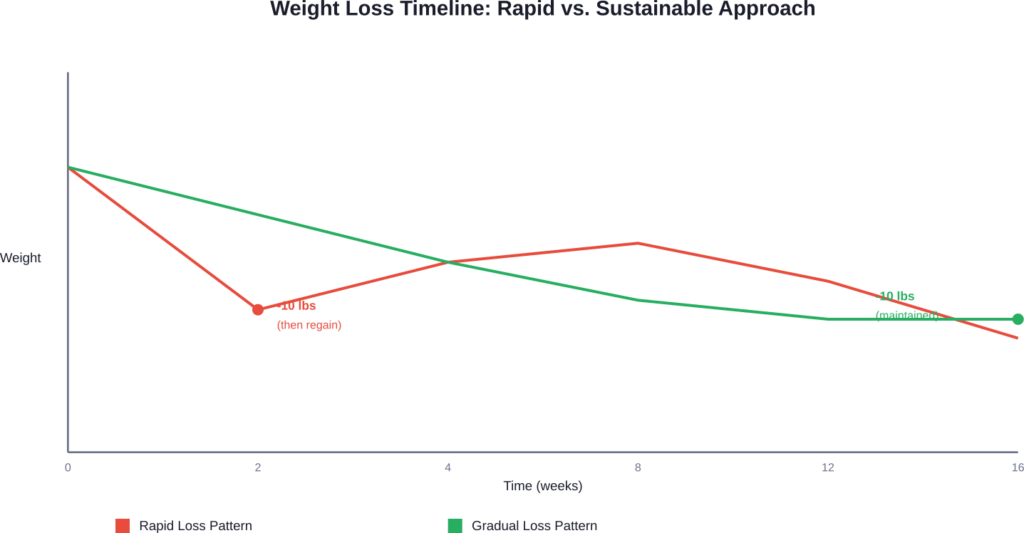
Research on weight loss maintenance shows that people who lose weight rapidly are more likely to regain it—and often regain more than they lost. This isn’t about willpower or motivation. It’s about biology.
The metabolic adaptations triggered by rapid weight loss persist. The body continues burning fewer calories at rest. Hunger hormones remain elevated. The biological drive to restore lost weight is powerful.
Research on behavioral weight loss programs found that weight loss was associated with decreased risk factors for cardiovascular disease for at least five years—even if some weight was regained. But these programs focused on gradual lifestyle changes, not rapid weight loss.
The American Heart Association emphasizes that even if someone loses as few as 10 pounds through gradual methods, they gain health benefits. They specifically recommend approaches that don’t rely on extreme restriction because sustainability matters more than speed.
Real talk: losing 10 pounds in two weeks, then regaining 15 pounds over the next month, produces worse outcomes than losing 5 pounds over two months and maintaining that loss.
When Medical Support Makes Sense
Sometimes rapid weight loss is medically necessary. Certain surgical candidates need to lose weight quickly before procedures. Some metabolic conditions respond better to faster initial weight loss under supervision.
In these cases, medical professionals may recommend very low-calorie diets (VLCDs) that provide 800 calories or less per day. According to the National Library of Medicine, these require medical monitoring to manage risks including gallstone formation, electrolyte imbalances, and nutritional deficiencies.
Some medical weight loss programs incorporate medications, meal replacements, or other interventions that produce faster results than diet and exercise alone. These approaches differ from self-directed crash diets because they include professional oversight and nutritional adequacy.
The key difference: medical support means regular monitoring of blood work, hydration status, lean muscle mass, and overall health markers. It’s not just about hitting a number on the scale.
Better Questions Than “How Fast Can I Lose Weight?”
The fixation on speed often misses more important considerations.
Instead of asking “Can I lose 10 pounds in 2 weeks?” better questions include:
- What rate of weight loss can I sustain for 3-6 months?
- How can I lose primarily fat while preserving muscle?
- What eating pattern can I actually maintain long-term?
- How do I prevent the weight from coming back?
- What lifestyle changes will improve my health regardless of the scale?
These shift focus from short-term results to long-term success.
Research from behavioral weight loss programs consistently shows that people who set process goals (“I’ll exercise 4 times this week”) rather than outcome goals (“I’ll lose 5 pounds this week”) maintain weight loss better over time.
The CDC emphasizes that weight loss is about establishing patterns: healthy eating, regular activity, adequate sleep, and stress management. These components don’t lend themselves to two-week timelines.
What 10 Pounds of Real Fat Loss Looks Like
When someone does lose 10 pounds of actual fat tissue—not water, not muscle—the timeframe is longer but the results are more dramatic.
Ten pounds of fat represents a significant volume. It changes how clothes fit, reduces strain on joints, improves cardiovascular function, and often produces visible changes in body composition.
At a rate of 1-2 pounds per week, reaching a 10-pound fat loss takes 5-10 weeks. That might feel slow compared to crash diet promises, but consider: 10 weeks is still less than three months. And the results actually stick.
Research on cardiovascular risk factors found that weight losses limited to just 5-10% of body weight—which for many people is around 10-20 pounds—produced measurable improvements in blood pressure, cholesterol, and other health markers. These benefits appeared even when weight loss was gradual.
The visual difference between 10 pounds lost rapidly (mostly water) versus 10 pounds of fat lost over time is substantial. The former might show up on the scale but not in the mirror. The latter produces actual body composition changes.
Frequently Asked Questions
For most people, no. The CDC recommends 1-2 pounds per week as a safe rate. Losing 10 pounds in two weeks (5 pounds weekly) requires extreme caloric restriction that typically leads to muscle loss, dehydration, and metabolic disruption. Medical supervision is necessary for anyone attempting such rapid weight loss.
Probably only 3-4 pounds at most. The remainder is water weight from glycogen depletion and some muscle tissue. One pound of fat contains roughly 3,500 calories, so 10 pounds of pure fat would require a 35,000-calorie deficit over 14 days—that’s 2,500 calories daily, which isn’t sustainable for most people.
The body interprets severe caloric restriction as starvation and slows metabolic rate to conserve energy. This adaptive thermogenesis persists even after normal eating resumes, making weight regain likely. Research indicates that metabolic adaptations following rapid weight loss may persist beyond the immediate post-weight loss period.
While short-term water weight reduction might help clothes fit better for an event, expecting 10 pounds of fat loss in two weeks isn’t realistic. Reducing sodium, managing carbohydrate intake, and staying hydrated can reduce bloating and water retention by several pounds, providing temporary improvements without extreme restriction.
Following CDC guidelines of 1-2 pounds weekly, losing 10 pounds safely takes 5-10 weeks. This allows for primarily fat loss while preserving muscle mass and metabolic function. Even at the faster end (2 pounds weekly), reaching 10 pounds requires about 5 weeks of consistent effort.
These diets produce short-term scale changes through severe caloric restriction and water loss, but research shows rapid approaches lead to higher rates of weight regain. The restriction is difficult to sustain, and most weight returns once normal eating resumes. Gradual approaches produce more sustainable results.
Yes, rapid weight loss typically includes significant muscle loss. When caloric intake is very low, the body breaks down muscle tissue for amino acids. Slower weight loss combined with adequate protein intake and resistance training helps preserve lean muscle mass during fat loss.
The Bottom Line on Losing 10 Pounds in 2 Weeks
Can someone lose 10 pounds in two weeks? Technically, yes. Should they? For most people, no.
The weight that comes off that quickly is primarily water and muscle, not the fat most people want to lose. The metabolic consequences—slower metabolism, hormonal changes, muscle loss—make maintaining results exceptionally difficult.
Health organizations including the CDC, NIH, and American Heart Association consistently recommend gradual weight loss of 1-2 pounds weekly because this rate supports sustainable lifestyle changes. Research shows that even modest weight loss of 5-10% of body weight improves health markers significantly when achieved gradually.
Rather than chasing rapid results that don’t last, focusing on sustainable changes produces better outcomes. Losing 10 pounds over 5-10 weeks through moderate caloric deficit, increased activity, and adequate protein creates body composition changes that actually stick.
The goal isn’t just to see a smaller number on the scale two weeks from now. It’s to weigh less six months from now, a year from now, and beyond. That requires patience, consistency, and approaches that preserve health rather than compromise it.
Real, lasting change takes time. But unlike rapid weight loss that rebounds, gradual fat loss builds habits and metabolic health that support long-term success.