

Quick Summary: Losing 30 pounds in 3 months is technically possible but requires losing 2.5 pounds per week, which exceeds the CDC-recommended safe rate of 1-2 pounds weekly. While some achieve this through aggressive calorie restriction and exercise, health authorities warn this pace increases risks of muscle loss, nutritional deficiencies, and weight regain. A more sustainable approach targets 12-24 pounds over three months.
The promise of rapid transformation appeals to anyone carrying extra weight. Thirty pounds lighter in just three months sounds achievable, especially when social media shows dramatic before-and-after photos.
But does the math actually support this goal? And more importantly, what does your body go through when weight drops this quickly?
Here’s the thing though—what’s technically possible and what’s medically advisable aren’t always the same. The number on the scale tells only part of the story.
The Math Behind Losing 30 Pounds in 3 Months
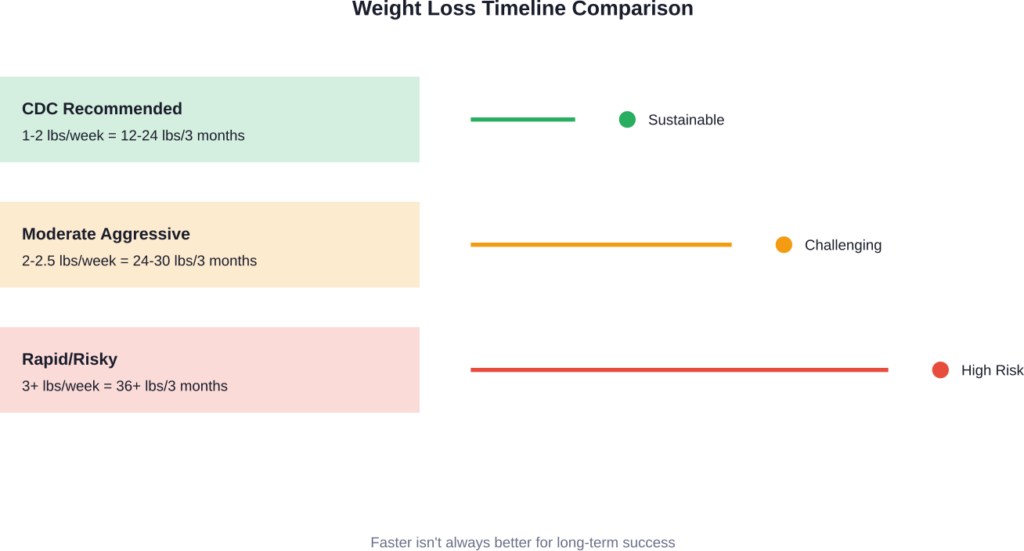
Losing 30 pounds over 90 days breaks down to approximately 2.5 pounds per week. Since one pound of fat contains roughly 3,500 calories, that weekly goal requires a deficit of 8,750 calories—or 1,250 calories daily.
For someone burning 2,500 calories per day through normal activity and metabolism, hitting that deficit means consuming just 1,250 calories. That’s substantially lower than what most bodies need for basic function.
According to the CDC, healthy weight loss occurs at a gradual, steady pace of about 1 to 2 pounds per week. By that standard, three months should yield 12 to 24 pounds of loss, not 30.
The difference matters. Pushing past recommended rates doesn’t just require discipline—it demands your body to adapt in ways that often backfire.
What Health Authorities Actually Recommend
The CDC emphasizes that even modest weight loss brings health benefits. For someone weighing 200 pounds, losing just 5% (10 pounds) can improve blood pressure, cholesterol, and blood sugar levels.
According to CDC guidelines, sustainable weight loss includes:
- Healthy eating patterns that create a reasonable calorie deficit
- At least 150 minutes of moderate-intensity physical activity weekly
- Adequate sleep and stress management
- Gradual pace allowing the body to adapt
The National Institutes of Health notes that while weight loss exceeding 10% of body weight is considered “large,” losing more than recommended rates may improve some health markers but increases the possibility of health risks.
Real talk: organizations setting these guidelines aren’t being overly cautious. They’re responding to decades of research on what actually works long-term.
The Health Risks of Losing Weight Too Quickly
When the body sheds weight rapidly, it doesn’t distinguish between fat and other tissues. Muscle mass often gets sacrificed alongside fat stores.
According to MedlinePlus, rapid weight loss—defined as more than 2 pounds per week over several weeks—typically requires eating very few calories. This approach brings several documented risks:
| Risk Category | What Happens | Why It Matters |
|---|---|---|
| Muscle Loss | Body breaks down muscle tissue for energy | Slows metabolism, making future weight loss harder |
| Nutritional Deficiencies | Insufficient vitamins and minerals | Impacts immune function, bone health, energy levels |
| Gallstones | Rapid weight changes affect bile composition | Can require surgical intervention |
| Metabolic Adaptation | Body reduces calorie burn to conserve energy | Creates weight loss plateau and increases regain risk |
Research published by the NIH shows that more than half of lost weight typically returns within two years. The faster it comes off, the more likely it comes back.
Now, this is where it gets interesting. The body interprets rapid weight loss as a threat—essentially a famine. Hormones shift to increase hunger and decrease energy expenditure.
Can Anyone Actually Lose 30 Pounds in 3 Months?
Some people do achieve this goal. Community discussions show individuals who’ve lost 30 pounds over three months, though their experiences reveal important patterns.
According to community discussions, some individuals report losing 30 pounds over three months through strict dietary and exercise approaches through strict rules: cutting carbs by 80-90%, lifting weights three times weekly, and maintaining consistent calorie restriction. They emphasized needing deep motivation “in the head and the heart.”
Some reported cases involve 25 minutes of daily cardiovascular exercise combined with caloric deficits with a caloric deficit, crediting much of her success to a “mind shift” as much as the physical changes.
But wait. These success stories share common elements often overlooked in the headline numbers:
- Higher starting weights (where initial loss happens faster)
- Complete lifestyle overhauls, not just diet tweaks
- Significant time devoted to planning, tracking, and exercise
- Strong psychological motivation or external accountability
For someone starting at 250 pounds, losing 30 pounds represents 12% of body weight—challenging but more physiologically feasible than the same loss for someone at 160 pounds.
Building a Realistic Weight Loss Plan
Instead of fixating on 30 pounds in 90 days, a more effective approach focuses on sustainable habits that produce lasting results.
Set Clear Expectations
According to the CDC, people who lose weight at a gradual, steady pace—about 1 to 2 pounds a week—are more likely to keep the weight off. Over three months, that’s 12-24 pounds—still a significant transformation.
Even smaller losses bring measurable health improvements. Losing 5-10% of body weight can reduce risk factors for chronic diseases including diabetes and heart disease.
Create a Manageable Calorie Deficit
Rather than slashing intake dramatically, a moderate deficit of 500-750 calories daily supports steady loss without triggering extreme hunger or metabolic slowdown.
Track intake honestly for a few days to establish a baseline. Many people underestimate consumption by 20-30%, which explains why weight doesn’t budge despite perceived restriction.
Prioritize Protein and Whole Foods
Protein preserves muscle mass during weight loss while increasing satiety. Aim for lean sources at each meal: chicken, fish, legumes, Greek yogurt, eggs.
Whole foods—vegetables, fruits, whole grains, nuts—provide volume and nutrients that processed foods can’t match. They keep energy stable and reduce cravings.
Include Resistance Training
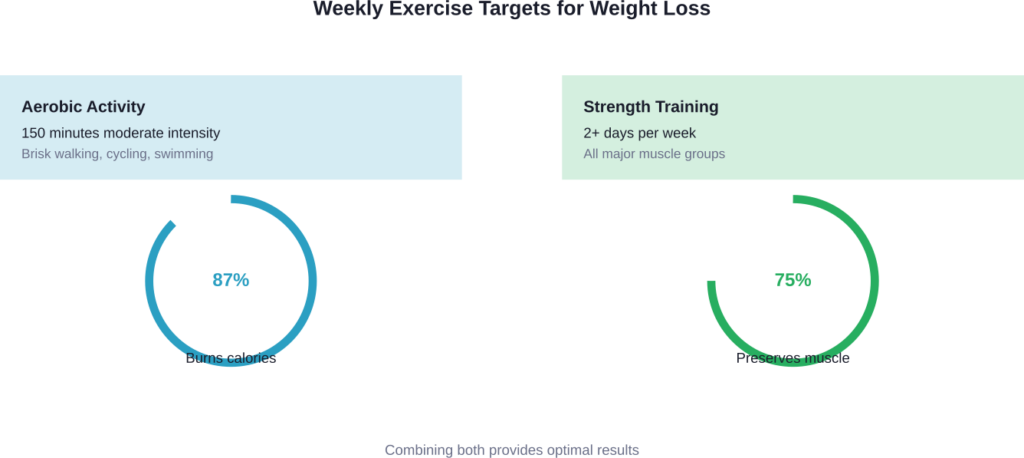
The CDC recommends at least 150 minutes of moderate-intensity aerobic activity weekly, which breaks down to 30 minutes daily for five days or 22 minutes every day.
But cardio alone isn’t enough. Strength training twice weekly protects muscle mass and supports metabolism. As muscle tissue burns more calories at rest than fat tissue, preserving it matters for long-term weight management.
Exercise helps preserve muscle mass, supports metabolism, and allows for more food while maintaining a calorie deficit. A mix of cardio for calorie burn and strength training for muscle protection creates the best results.
Don’t Neglect Sleep and Stress
Sleep deprivation disrupts hunger hormones ghrelin and leptin, increasing appetite and cravings. Aim for 7-9 hours nightly.
Chronic stress elevates cortisol, which promotes fat storage particularly around the midsection. Stress management—through meditation, yoga, or simply regular breaks—supports weight goals as much as diet and exercise.
Strategies That Support Sustainable Loss
The approaches that work long-term differ from quick-fix tactics. Based on available data and expert recommendations, several strategies consistently appear in successful weight management.
Track Without Obsessing
Monitoring food intake increases awareness of portions and patterns. Apps make this easier, but the goal isn’t perfection—it’s honest assessment.
Weight fluctuates daily due to water retention, sodium intake, and digestive timing. Weekly averages matter more than individual readings.
Find Activities That Feel Good
Exercise shouldn’t be punishment. Dancing, hiking, group fitness classes, or recreational sports all count toward activity goals.
The best workout is the one that gets done consistently. If spending 60 minutes at the gym feels miserable, three 10-minute walks might work better psychologically and logistically.
Build a Support System
Accountability increases success rates. Whether through friends, family, online communities, or professional support, having people who understand the journey makes hard days more manageable.
Community discussions show that sharing struggles and victories helps maintain motivation when willpower alone flags.
Plan for Plateaus
Weight loss rarely follows a straight downward line. Plateaus happen as the body adjusts to new set points.
When progress stalls, resist the urge to slash calories further. Instead, reassess portions, increase movement slightly, or focus on non-scale victories like improved energy or how clothes fit.
What About Weight Loss Medications?
The FDA has approved several medications that support weight reduction when combined with diet and exercise. These medications somewhat enhance weight-loss maintenance according to NIH research.
Options exist, but they’re not magic bullets. Medications work best as part of comprehensive lifestyle changes, not replacements for them. Anyone considering pharmaceutical intervention should discuss options with healthcare providers who can assess individual health status and potential interactions.
The Weight Regain Problem
NIH research on weight maintenance shows a sobering reality: sustaining lost weight proves much more challenging than losing it initially.
Obesity interventions typically result in early rapid weight loss followed by a plateau and progressive regain. More than half of lost weight often returns within two years.
Why does this happen? The body defends against weight loss through multiple mechanisms:
- Decreased metabolic rate (fewer calories burned at rest)
- Increased hunger signaling
- Reduced energy expenditure during activity
- Hormonal changes that promote fat storage
These adaptations don’t mean weight maintenance is impossible, but they do mean it requires ongoing attention. The habits that produced weight loss must largely continue indefinitely.
That’s precisely why starting with sustainable practices matters more than achieving the fastest possible loss.
A More Effective Approach
Rather than asking “Can I lose 30 pounds in 3 months?” consider reframing the goal entirely.
What if the question became: “How can I lose weight in a way that improves my health and stays off?”
That shift in perspective changes everything. The timeline becomes less important than the process. Twelve pounds lost sustainably outperforms 30 pounds lost and regained.
According to the American Heart Association, losing even small amounts of weight—as little as 10 pounds—can improve health markers. Blood pressure drops. Cholesterol improves. Diabetes risk decreases.
The body doesn’t need dramatic transformation to experience real benefits.
| Approach | Typical Results (3 months) | Sustainability | Health Impact |
|---|---|---|---|
| Aggressive Restriction | 25-35 pounds | Low – high regain risk | Mixed – initial improvements but potential deficiencies |
| Moderate Deficit | 12-24 pounds | High – maintainable habits | Positive – gradual health marker improvements |
| Slow and Steady | 8-15 pounds | Very High – lifestyle integration | Very Positive – sustainable health gains |
Frequently Asked Questions
According to the CDC, safe weight loss occurs at 1-2 pounds weekly, which equals 12-24 pounds over three months. Losing 30 pounds in that timeframe requires 2.5 pounds weekly—exceeding recommended rates and increasing risks of muscle loss, nutritional deficiencies, and metabolic slowdown. While some achieve this under medical supervision, it’s not considered the safest approach for most people.
Losing 30 pounds in 90 days requires a daily calorie deficit of approximately 1,250 calories, totaling 8,750 calories weekly. This substantial deficit is difficult to maintain and may trigger metabolic adaptations that make continued weight loss harder. A more moderate deficit of 500-750 daily calories supports steadier, more sustainable loss.
Health authorities including the CDC recommend 1-2 pounds per week as the healthy rate. This pace allows the body to adjust, preserves muscle mass, reduces nutritional deficiency risks, and increases the likelihood of maintaining lost weight long-term. Faster rates may show quicker scale changes but often lead to regain.
Rapid weight loss increases the risk of muscle tissue loss because the body breaks down both fat and muscle for energy during significant calorie restriction. Strength training at least twice weekly and adequate protein intake help preserve muscle during weight loss. Slower loss rates naturally protect muscle better than aggressive approaches.
Exercise supports weight loss by burning additional calories, preserving muscle mass, and boosting metabolism. The CDC recommends at least 150 minutes of moderate-intensity aerobic activity weekly plus two days of strength training. Exercise alone rarely produces dramatic weight loss without dietary changes, but combining both creates optimal results. A mix of cardio and resistance training works best.
Weight loss fundamentally requires a calorie deficit, which can technically be achieved through diet alone. However, exercise provides benefits beyond calorie burn—it preserves muscle, supports metabolism, improves insulin sensitivity, and enhances mood. While possible to lose weight without formal exercise, incorporating movement makes the process healthier and more sustainable.
Weight regain is common, with NIH research showing more than half of lost weight typically returns within two years. Cycling between loss and regain may impact metabolism and make future weight loss more difficult. Focus on building lasting habits rather than temporary restrictions to reduce regain risk. Maintaining lost weight requires ongoing attention to the behaviors that produced the loss.
The Bottom Line on Losing 30 Pounds in 3 Months
Is it possible? For some people, yes. Is it advisable? That’s where the answer gets complicated.
The CDC, NIH, and other health authorities consistently recommend gradual weight loss for good reasons. The body responds better to steady changes than dramatic shocks. Muscle stays protected. Nutrients remain adequate. Metabolism doesn’t crash.
And perhaps most importantly, sustainable habits get built—the kind that last beyond the initial three months into years of healthier living.
If rapid weight loss feels necessary for health reasons, work with healthcare providers who can monitor progress and adjust approaches safely. Medical supervision changes the risk-benefit equation significantly.
For everyone else, patience delivers better results than speed. Twelve pounds lost and maintained beats 30 pounds lost and regained every single time.
The scale tells a story, but not the whole story. Energy levels, how clothes fit, improved lab markers, better sleep, reduced joint pain—these victories matter just as much as the number between your feet.
Ready to start? Focus on one sustainable change this week. Add a daily walk. Swap processed snacks for whole foods. Drink more water. Track portions honestly.
Small steps compound. And compounding beats sprinting, especially when the goal is reaching a destination and actually staying there.