

Quick Summary: Losing 50 pounds in 3 months requires shedding over 4 pounds weekly, which is more than double the CDC-recommended safe rate of 1-2 pounds per week. While technically possible through extreme calorie restriction, this aggressive approach carries health risks and often leads to unsustainable results. According to the CDC, even modest weight loss of 5-10% of body weight can significantly improve health outcomes.
The idea of dropping 50 pounds in just three months sounds tempting. Scrolling through social media, you’ll find transformation stories and promises of rapid results. But here’s the thing—what’s technically possible isn’t always what’s safe or sustainable.
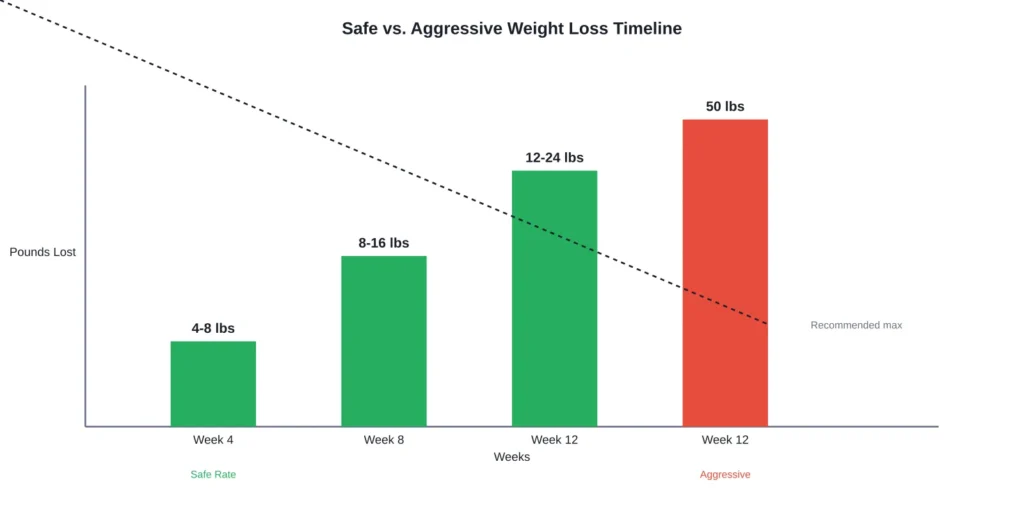
According to the CDC, healthy weight loss happens at a gradual, steady pace of about 1 to 2 pounds per week. Do the math on 50 pounds in 3 months, and that’s roughly 4.2 pounds weekly. That’s more than double the recommended rate.
So what does that mean for anyone considering this goal? Let’s break down the science, the risks, and what actually works for lasting results.
What Health Authorities Actually Recommend
The CDC has been pretty clear about safe weight loss rates. Their guidelines emphasize that people who lose weight gradually—about 1 to 2 pounds per week—are more successful at keeping it off long-term.
Here’s what that looks like over 12 weeks:
| Rate of Loss | Pounds per Week | Total in 3 Months | Status |
|---|---|---|---|
| Recommended Minimum | 1 pound | 12 pounds | Safe |
| Recommended Maximum | 2 pounds | 24 pounds | Safe |
| 50-Pound Goal | 4.2 pounds | 50 pounds | Excessive |
Research from StatPearls (NCBI) indicates that weight loss exceeding 10% of body weight can be considered “large” weight loss. For someone weighing 250 pounds, 50 pounds represents a 20% reduction—a significant change that puts considerable stress on the body when compressed into such a short timeframe.
The CDC also notes that even modest weight loss helps. A 5% to 10% reduction in body weight can improve blood pressure, cholesterol, and blood sugar levels. For a 200-pound person, that’s just 10 to 20 pounds—far less than 50, but still meaningful for health.
The Math Behind Extreme Weight Loss
Weight loss boils down to calories in versus calories out. To lose one pound of fat, there’s a general consensus around needing a deficit of roughly 3,500 calories.
To lose 50 pounds in 12 weeks, here’s what the numbers look like:
- 50 pounds × 3,500 calories = 175,000 total calorie deficit needed
- 175,000 ÷ 84 days = approximately 2,083 calorie deficit per day
That’s massive. For context, many adults have a total daily energy expenditure of 2,000 to 2,500 calories. Achieving a 2,083-calorie daily deficit would require either eating almost nothing or combining severe calorie restriction with hours of intense exercise daily.
Neither approach is sustainable or healthy. The Physical Activity Guidelines for Americans recommend at least 150 minutes of moderate-intensity cardio weekly and two days of strength training. For weight loss, research suggests gradually increasing activity toward 250 minutes weekly—but even that level of activity won’t create a 2,000+ calorie daily deficit without dangerous dietary restriction.
What Actually Happens with Rapid Weight Loss
Community discussions reveal a mixed picture. Some individuals report losing close to 50 pounds in three months, particularly those starting at higher weights. But the experiences shared highlight important patterns.
People who achieved rapid initial weight loss often:
- Started at significantly higher body weights (250+ pounds)
- Experienced a large initial drop from water weight
- Followed extremely restrictive eating patterns
- Struggled to maintain the pace beyond the first few weeks
- Found the loss rate naturally slowed over time
Real talk: the first two weeks of any weight loss effort often show dramatic results. That’s largely water weight and glycogen stores depleting, not fat loss. As the body adapts, weight loss typically slows to more moderate rates regardless of how aggressive the approach remains.
Health Risks Worth Considering
Medical research from StatPearls identifies several concerns with excessive weight loss rates. While no single definition of “excessive” exists, losing more than 5-10% of body weight over six months is where health professionals start paying closer attention.
Potential risks associated with very rapid weight loss include:
- Muscle loss alongside fat loss
- Nutrient deficiencies from restricted food intake
- Gallstone formation
- Metabolic adaptation (reduced resting metabolic rate)
- Fatigue and reduced energy levels
- Hair loss and skin changes
Research published in medical journals also highlights the “yo-yo” effect. Studies demonstrate that sustaining weight loss after aggressive interventions is often challenging. The body appears to defend against large, rapid weight changes through hormonal and metabolic adaptations that make regain more likely.
A More Realistic Approach
So what’s actually achievable in three months? For most people following evidence-based guidelines, 12 to 24 pounds represents a healthy, sustainable target.
That might not sound as exciting as 50 pounds. But consider this: research shows that losing 5% to 10% of body weight over six months significantly improves metabolic health markers. The benefits don’t require massive weight loss—they come from consistent, moderate progress.
Focus on These Fundamentals
Instead of chasing an extreme number, health authorities recommend building sustainable habits:
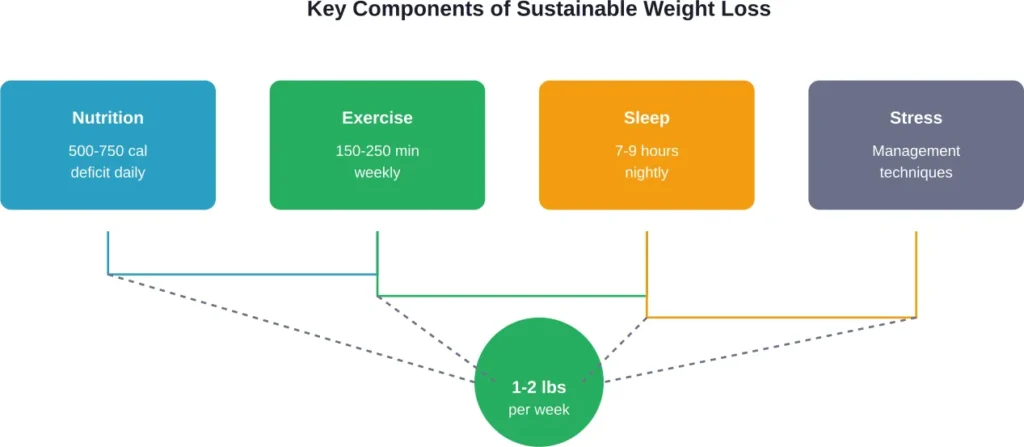
Nutrition: The CDC emphasizes healthy eating patterns over strict dieting. Create a calorie deficit of 500 to 750 calories daily through balanced food choices. That deficit supports 1 to 1.5 pounds of loss weekly without requiring starvation-level restriction.
Mayo Clinic guidance suggests focusing on nutrient-dense foods while still allowing flexibility. Completely eliminating food groups or favorite foods makes long-term adherence nearly impossible.
Physical Activity: The Physical Activity Guidelines recommend 150 minutes of moderate-intensity cardio weekly plus two strength-training sessions. For weight loss, gradually increasing activity toward 250 minutes weekly shows better results.
Strength training matters more than many people realize. Building or maintaining muscle mass during weight loss helps preserve metabolic rate and improves body composition beyond what the scale shows.
Sleep and Stress: The CDC identifies adequate sleep and stress management as factors supporting healthy weight. Poor sleep disrupts hunger hormones, while chronic stress can drive behaviors that undermine weight loss efforts.
When Faster Loss Might Happen
There are specific circumstances where more rapid initial weight loss occurs safely under medical supervision:
- Individuals with very high starting body weights (BMI over 40) may lose weight faster initially
- Medically supervised programs using meal replacements or medications
- Bariatric surgery patients following post-operative protocols
But even in these cases, health professionals monitor closely for the complications that rapid loss can cause. It’s not a DIY situation.
The National Heart, Lung, and Blood Institute notes that treatments for obesity vary widely in their approaches and outcomes. Medical weight loss programs may prescribe calorie goals based on a 500-1000 calorie deficit from baseline, with the goal of gradual, sustainable reduction rather than dramatic drops.
What the Timeline Really Looks Like
Setting a weight loss goal benefits from realistic timeframe expectations. Here’s what sustainable progress looks like over different periods:
| Timeframe | Expected Loss (Safe Rate) | Cumulative Total |
|---|---|---|
| 1 month | 4-8 pounds | 4-8 pounds |
| 3 months | 12-24 pounds | 12-24 pounds |
| 6 months | 24-48 pounds | 24-48 pounds |
| 9 months | 36-72 pounds | 36-72 pounds |
| 12 months | 48-96 pounds | 48-96 pounds |
Notice that 50 pounds becomes achievable somewhere between six and nine months for many people. Doubling or tripling that timeline might not sound appealing, but the body adapts better to gradual changes.
Weight loss also isn’t linear. Most people experience plateaus, temporary gains from water retention, and weeks where the scale barely moves despite consistent effort. That’s normal physiology, not failure.
Questions to Ask Before Starting
Before embarking on any weight loss effort—especially an aggressive one—consider these questions:
Why this timeline? Is there a specific event or deadline driving the three-month goal? Sometimes adjusting expectations around the timeline makes more sense than forcing the body into an unrealistic pace.
What’s driving this goal? Health improvements can start with much smaller weight changes. If health is the primary concern, focusing on sustainable habit changes matters more than rapid scale movement.
Have you consulted a healthcare provider? Anyone considering significant weight loss should discuss plans with a doctor, particularly those with existing health conditions or taking medications.
Frequently Asked Questions
Generally speaking, losing 50 pounds in 3 months isn’t recommended by health authorities like the CDC, which advises 1-2 pounds weekly. This aggressive rate may only be appropriate under close medical supervision for individuals with very high starting weights or specific health conditions requiring rapid intervention.
Based on the common estimate of 3,500 calories per pound, a 50-pound loss requires approximately 175,000 total calorie deficit, or about 2,083 calories daily over 12 weeks. This level of restriction is difficult to achieve safely and sustainably without medical supervision.
Following CDC guidelines of 1-2 pounds weekly, a realistic three-month goal ranges from 12 to 24 pounds. This pace allows for adequate nutrition, preserves muscle mass, and establishes sustainable habits rather than temporary restriction.
Rapid weight loss typically results in greater muscle loss compared to gradual approaches. Preserving muscle mass requires adequate protein intake, strength training, and a moderate calorie deficit—difficult to achieve with aggressive restriction aimed at 4+ pounds weekly.
Weight loss commonly slows as the body adapts to lower calorie intake and reduced body weight. Metabolic adaptation means the body becomes more efficient, requiring ongoing adjustments to maintain a calorie deficit. This natural plateau effect makes sustained rapid loss increasingly difficult.
Medically supervised programs may use meal replacements, FDA-approved medications, or bariatric surgery to achieve faster results under professional monitoring. These interventions include safeguards and medical oversight not present in self-directed extreme dieting.
Research indicates that rapid weight loss followed by regain—the yo-yo effect—may create metabolic changes making future weight loss more challenging. Gradual loss with sustainable habit changes shows better long-term maintenance rates according to medical literature.
The Bottom Line
Is it possible to lose 50 pounds in 3 months? Technically, perhaps for some individuals under specific circumstances. But possible doesn’t mean advisable, safe, or sustainable.
Health authorities consistently recommend 1 to 2 pounds weekly for good reason. This pace allows the body to adapt, preserves muscle mass, provides adequate nutrition, and establishes habits that last beyond the initial weight loss phase.
Even modest weight loss delivers meaningful health benefits. The CDC notes that losing just 5% to 10% of body weight improves blood pressure, cholesterol, and blood sugar levels. For someone weighing 250 pounds, that’s 12.5 to 25 pounds—achievable in three to six months at safe rates.
Rather than fixating on dropping 50 pounds in 90 days, consider what three months of consistent, healthy habits could establish. Build a foundation of balanced nutrition, regular physical activity, adequate sleep, and stress management. The scale will reflect those changes at whatever pace is right for each individual body.
And here’s something worth remembering: the goal isn’t just reaching a number. It’s creating a lifestyle that supports long-term health and well-being. That’s never achieved through extreme restriction or unsustainable efforts, regardless of how impressive the initial results might look.
Ready to start a sustainable weight loss journey? Talk with a healthcare provider about realistic goals tailored to individual circumstances, health status, and needs. That conversation beats any one-size-fits-all timeline found online.