

Quick Summary: Yes, hair regrowth is possible depending on the type and cause of hair loss. FDA-approved treatments like minoxidil and finasteride show proven results, while emerging therapies including platelet-rich plasma (PRP) and stem cell-based approaches demonstrate promising outcomes in clinical trials. The key to successful regrowth lies in early intervention and identifying the underlying cause.
Losing hair can feel devastating. Whether it’s a widening part, a receding hairline, or noticeable thinning, millions of people wonder if there’s actually any hope for regrowth.
The short answer? It depends on what’s causing the hair loss and how quickly treatment begins.
But here’s the thing—hair regrowth isn’t one-size-fits-all. Some types of hair loss respond incredibly well to treatment. Others prove more stubborn. Understanding which category applies makes all the difference between realistic expectations and disappointment.
Understanding Why Hair Loss Happens
Hair doesn’t just fall out randomly. Every strand goes through a natural growth cycle involving growth, transition, and resting phases. When something disrupts this cycle, problems begin.
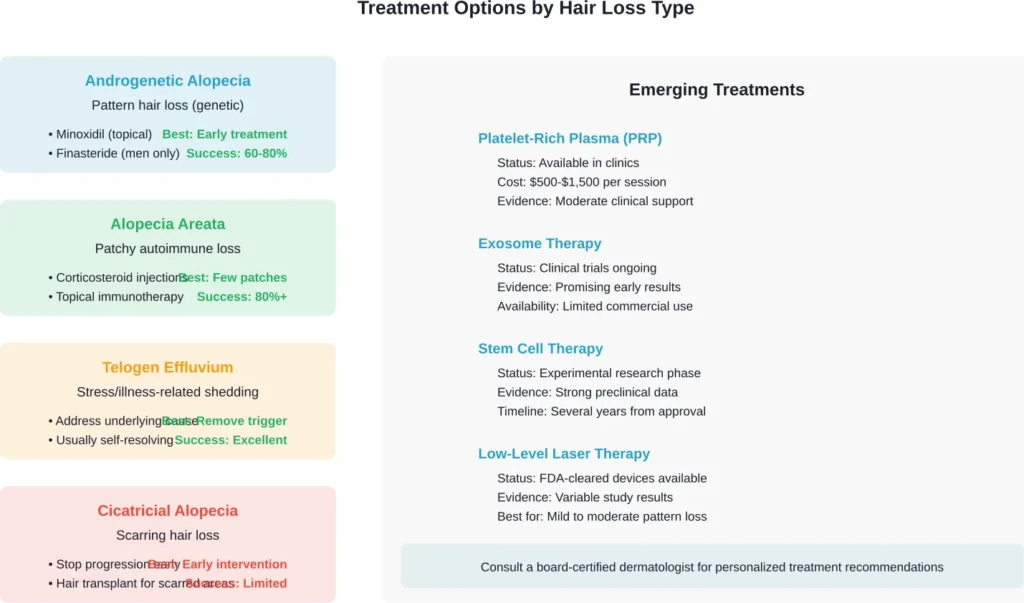
Androgenetic alopecia—commonly called male or female pattern hair loss—affects up to 80% of white men and 40% of women according to research published in Stem Cells Translational Medicine (2015). This hereditary condition causes progressive thinning as hair follicles gradually shrink.
Alopecia areata, an autoimmune condition, creates patchy bald spots when the immune system mistakenly attacks hair follicles. Cicatricial alopecia involves scarring that permanently damages follicles, comprising approximately 5% of all alopecia cases.
Temporary causes include stress, nutritional deficiencies, hormones, medications, and illness. Harvard researchers confirmed in a 2021 Nature study that chronic stress puts hair follicle stem cells into extended resting phases, preventing regeneration.
The Role of Hair Follicle Miniaturization
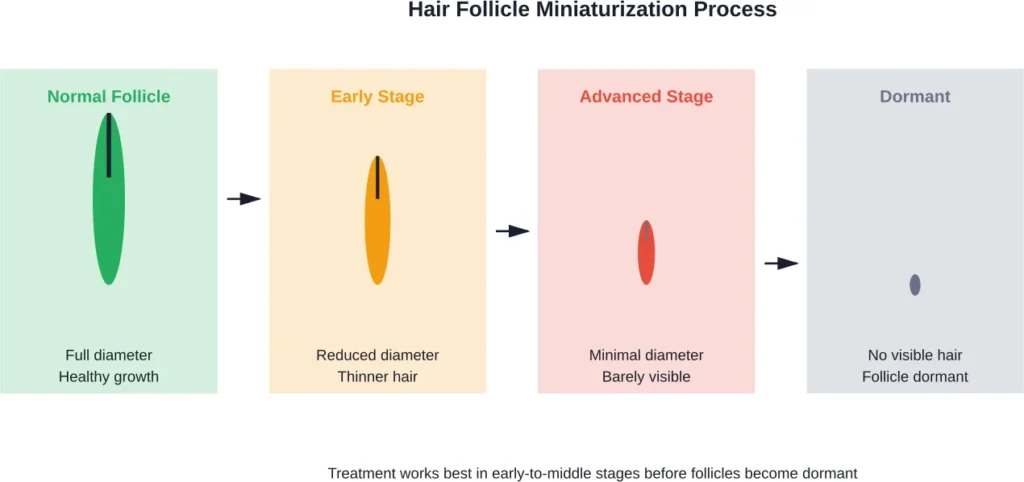
Pattern hair loss happens through a process called miniaturization. Hair follicles progressively shrink with each growth cycle. The hairs become finer, shorter, and lighter until eventually the follicle stops producing visible hair.
This matters because miniaturized follicles aren’t dead—they’re dormant. That’s why treatment can sometimes wake them back up, especially when started early.
FDA-Approved Treatments That Actually Work
Only two medications have FDA approval for treating pattern hair loss: minoxidil and finasteride. Both have substantial clinical evidence backing their effectiveness.
Minoxidil: The Topical Growth Stimulator
Minoxidil (brand name Rogaine) works by stimulating dermal papilla cell proliferation and promoting vascular endothelial growth factor (VEGF) expression according to research published in the International Journal of Molecular Sciences (2025). It’s available over-the-counter in 2% and 5% formulations.
Clinical data from the American Academy of Dermatology shows men with mild to moderate hereditary hair loss who used 5% minoxidil twice daily, combined with weekly microneedling, saw significantly better results after 12 weeks compared to minoxidil alone.
Both men and women can use minoxidil, though formulation strength recommendations differ. It requires consistent application—stopping treatment typically results in losing any regrown hair within months.
Finasteride: The Hormonal Blocker
Finasteride is a prescription oral medication that blocks the conversion of testosterone to dihydrotestosterone (DHT), the hormone responsible for follicle miniaturization in pattern hair loss.
According to the American Academy of Dermatology, finasteride has been shown to slow down further hair loss in about 80% to 90% of men taking it. Some men experience actual regrowth, particularly when starting treatment early in the hair loss process.
The FDA has recently issued alerts regarding compounded topical finasteride products due to adverse event reports. Only FDA-approved oral finasteride products are currently recommended for safe use.
| Treatment | Type | Success Rate | Best For | Key Considerations |
|---|---|---|---|---|
| Minoxidil 5% | Topical | Moderate to good | Men and women with pattern hair loss | Requires twice-daily application; results take 3-6 months |
| Finasteride | Oral prescription | 80-90% stop further loss | Men with androgenetic alopecia | Daily pill; not for women of childbearing age |
| Corticosteroid injections | Injection | 80%+ regrow hair | Alopecia areata (patchy loss) | Requires office visits; can be painful |
| Low-level laser therapy | Device | Variable evidence | Mild to moderate pattern loss | Requires consistent home use; expensive devices |
Emerging Therapies Showing Promise
Medical research continues advancing beyond traditional treatments. Several newer approaches demonstrate encouraging results in clinical trials.
Platelet-Rich Plasma (PRP) Therapy
PRP involves drawing the patient’s blood, concentrating the platelets, and injecting the platelet-rich plasma into the scalp. Research published in Stem Cells Translational Medicine examined 20 men who received PRP on half their scalp and placebo on the other half.
After three treatments spaced 30 days apart, participants showed measurable improvement in the PRP-treated areas. The study included a two-year follow-up period because research shows PRP effects may diminish by 14 months after the last treatment.
According to Harvard Health reporting, each PRP treatment can cost from $500 to $1,500. Patients typically need three monthly sessions followed by annual maintenance treatments.
Stem Cell-Based Approaches
Research into stem cell therapy for hair regeneration has accelerated dramatically. Studies show stem cells can potentially trigger dormant follicles and even generate new ones.
University of California San Francisco researchers discovered that regulatory T cells (Tregs) directly trigger skin stem cells to promote healthy hair growth in mice. Without these immune cells, hair follicle stem cells couldn’t regenerate properly.
Mesenchymal stem cell (MSC)-derived exosomes represent another promising avenue. A systematic review published in Clinical, Cosmetic and Investigational Dermatology in 2025 examined exosome therapy across multiple alopecia types, finding consistent evidence of their potential as a cell-free treatment option.
Novel Hair Restoration Technologies
A blinded clinical trial published in the Journal of Clinical Medicine (2023) tested a novel hair restoration technology on patients with androgenetic alopecia. Results showed improvements in hair thickness (+7.2%), hair density (+14.3%), and shine and elasticity (+20.3%).
Another study evaluated an exosome formulation containing extracts from Ecklonia cava and Thuja orientalis—two plants known for hair-regenerating properties. This pilot randomized controlled trial with 20 male participants (Norwood grade 2–3 androgenetic alopecia) demonstrated measurable efficacy.
Natural Methods and Lifestyle Modifications
While prescription treatments show the strongest evidence, certain natural approaches and lifestyle changes may support hair health.
Scalp Massage and Microneedling
Regular scalp massage increases blood flow to hair follicles. Though evidence remains limited, some studies suggest it may help when combined with other treatments. Scalp massagers are available online for under $20.
Microneedling creates tiny punctures in the scalp, potentially enhancing absorption of topical treatments. Men with mild to moderate hereditary hair loss treated with 5% minoxidil twice a day plus weekly microneedling had significantly more hair growth after 12 weeks compared to minoxidil alone, according to research cited by the American Academy of Dermatology.
Essential Oils and Natural Compounds
Certain essential oils—including rosemary, peppermint, lavender, and cedarwood—are known for hair-strengthening properties. While community discussions frequently mention these remedies, clinical evidence supporting their effectiveness remains less robust than pharmaceutical options.
That said, they’re generally safe when properly diluted and may complement medical treatments.
Nutritional Support
Deficiencies in iron, vitamin D, biotin, and protein can contribute to hair loss. Addressing underlying nutritional gaps through diet or supplementation makes sense, though supplements won’t reverse genetic pattern baldness on their own.
Testing nutrient levels before supplementing helps avoid unnecessary expense and potential overconsumption of certain vitamins.
When Hair Regrowth Isn’t Possible
Real talk: not all hair loss can be reversed.
Cicatricial (scarring) alopecia permanently destroys hair follicles. Once scarring occurs, those follicles cannot regenerate with current treatments. This condition comprises about 5% of alopecia cases and requires early intervention to prevent progression.
Advanced pattern baldness that’s progressed for years also presents challenges. When follicles have remained dormant for extended periods, reactivating them becomes increasingly difficult.
For these situations, hair transplantation offers an alternative. Surgical techniques have improved dramatically, with follicular unit extraction (FUE) and follicular unit transplantation (FUT) providing natural-looking results by relocating follicles from donor areas.
The Importance of Early Intervention
Here’s where timing becomes critical.
Treatment works best when follicles are miniaturized but not completely dormant. Starting finasteride or minoxidil early in the hair loss process significantly improves the likelihood of regrowth.
Board-certified dermatologists can diagnose hair loss causes using specialized tools like dermatoscopes to examine the scalp closely. Accurate diagnosis matters because different types of hair loss require different treatment approaches.
For alopecia areata patients, corticosteroid injections showed remarkable results in clinical studies. Research cited by the American Academy of Dermatology found more than 80% of patients with patchy hair loss (in one study of 127 patients) had at least half their hair regrow within 12 weeks when treated with corticosteroid injections.
Setting Realistic Expectations
Treatment success varies considerably between individuals. Genetics, age, extent of hair loss, and underlying health conditions all influence outcomes.
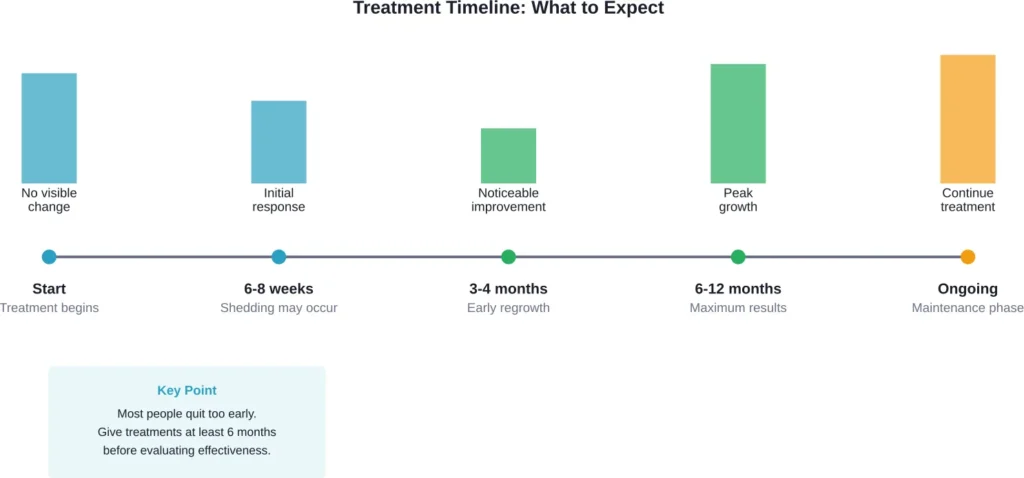
Most treatments require months before producing visible results. Many people abandon treatment prematurely, assuming it’s not working when they simply haven’t given it enough time.
Even successful treatment typically slows progression and produces modest regrowth rather than complete restoration to teenage hair density. For many people, stabilizing hair loss and regrowing some lost hair represents a significant win.
Stopping treatment usually means losing any regained hair. Both minoxidil and finasteride require ongoing use to maintain benefits.
Future Directions in Hair Regeneration Research
The field of hair restoration continues evolving rapidly. Researchers at Penn State, UC Irvine, and National Taiwan University (published January 23, 2025) identified a potential molecular “switch” that controls scalp hair length, suggesting future therapies might simply activate this mechanism.
UC Irvine-led researchers (published June 21, 2023) discovered how senescent (aged) pigment cells in skin moles cause significant hair growth through osteopontin and CD44 molecules, potentially offering insights into androgenetic alopecia treatment.
Bioengineered hair follicle germs represent another frontier. Research published in Signal Transduction and Targeted Therapy describes transplantation of bioengineered follicles that develop proper structures, connect with surrounding tissue, and show restored hair cycling and piloerection.
These advances remain largely experimental, but they point toward more effective treatments becoming available in coming years.
Frequently Asked Questions
Most treatments require 3-6 months before producing noticeable results. Maximum benefits typically appear at 6-12 months of consistent use. The hair growth cycle takes time, and follicles that have been dormant need multiple cycles to regenerate visible hair. Patience remains critical—many people quit too early and miss potential benefits.
Yes, telogen effluvium (stress-induced shedding) usually resolves once the underlying stressor is removed. Hair typically begins regrowing naturally within several months after stress levels normalize. This type of temporary hair loss has an excellent prognosis without requiring medical intervention, though addressing nutritional deficiencies and managing chronic stress helps.
Supplements can help if hair loss stems from nutritional deficiencies in iron, vitamin D, biotin, or protein. However, they won’t reverse genetic pattern baldness. Testing nutrient levels before supplementing makes sense to avoid wasting money on unnecessary vitamins. Many heavily marketed hair supplements lack strong clinical evidence supporting their effectiveness beyond correcting deficiencies.
Yes, transplanted hair follicles taken from donor areas resistant to pattern baldness typically continue growing permanently in their new location. Modern techniques like follicular unit extraction (FUE) provide natural-looking results. However, transplantation doesn’t prevent ongoing hair loss in non-transplanted areas, so many surgeons recommend combining surgery with medical treatments like finasteride or minoxidil.
Initial shedding when starting minoxidil actually indicates the treatment is working. The medication shifts follicles from resting phase into active growth phase, causing old hairs to shed so new, healthier hairs can grow. This temporary increase in shedding typically occurs 6-8 weeks after starting treatment and resolves as new growth emerges.
Finasteride is not recommended for women of childbearing age due to potential birth defect risks. However, some dermatologists prescribe it off-label for postmenopausal women with pattern hair loss under specific circumstances. Women have different hormonal profiles than men, making minoxidil the more common first-line treatment for female pattern hair loss.
Temporary hair loss (like telogen effluvium from stress, illness, or nutritional deficiencies) affects the hair growth cycle but doesn’t destroy follicles. Hair regrows once the trigger is addressed. Permanent hair loss (cicatricial alopecia) involves scarring that destroys follicles, preventing regrowth. Pattern baldness falls between these—follicles miniaturize but aren’t destroyed, making early treatment key to preventing permanent dormancy.
Taking Action: What to Do Next
So, is it possible to regrow hair? Absolutely—for many types of hair loss, with the right approach.
But success depends on accurate diagnosis, early intervention, appropriate treatment selection, and realistic expectations. The worst thing to do is nothing, allowing potentially reversible hair loss to progress unnecessarily.
Start by seeing a board-certified dermatologist who can examine the scalp using specialized diagnostic tools, identify the specific type of hair loss, and recommend evidence-based treatments.
For pattern hair loss, beginning FDA-approved treatments like minoxidil or finasteride early provides the best chance of slowing progression and achieving regrowth. For other types like alopecia areata, targeted treatments like corticosteroid injections show excellent success rates.
The field continues advancing rapidly with promising new therapies on the horizon. What seems impossible today may become routine treatment tomorrow.
Don’t let hair loss progress while waiting for perfect solutions that may never arrive. Current treatments, while imperfect, offer real benefits for millions of people when used consistently and started early.
Take the first step. Get an accurate diagnosis. Explore treatment options suited to your specific situation. And give those treatments adequate time to work before deciding they’re ineffective.
Hair regrowth is possible—but only if action happens before follicles reach the point of no return.