

Quick Summary: Yes, drinking too much water is possible and can lead to water intoxication or hyponatremia, a dangerous condition where sodium levels in the blood become critically diluted. While rare, it most commonly affects athletes during intense exercise and people with certain medical conditions. Most healthy adults can avoid overhydration by drinking according to thirst rather than forcing excessive amounts.
Water keeps every system in the body functioning. According to research published by the National Institutes of Health, water comprises from 75% body weight in infants to 55% in elderly, making it essential for cellular homeostasis and life itself.
But here’s the thing — you can absolutely have too much of a good thing.
Water intoxication, medically known as hyponatremia, occurs when excessive water intake dilutes sodium levels in the bloodstream to dangerous concentrations. While dehydration gets most of the attention, overhydration presents its own serious health risks that warrant understanding.
What Happens When You Drink Too Much Water?
When water intake exceeds the kidneys’ ability to excrete it (approximately 800-1000 mL per hour), the excess fluid dilutes electrolytes in the blood. Sodium plays a critical role in maintaining fluid balance between cells and the bloodstream.
As sodium levels drop below normal ranges, water moves into cells through osmosis, causing them to swell. This cellular swelling becomes particularly dangerous in the brain, where the rigid skull leaves no room for expansion. Brain swelling from hyponatremia can lead to confusion, seizures, coma, and in severe cases, death.
According to the NIH, the condition develops when blood sodium concentration falls below normal physiological levels, disrupting the delicate electrolyte balance required for nerve signaling, muscle contraction, and other vital functions.
Who’s at Risk for Water Intoxication?
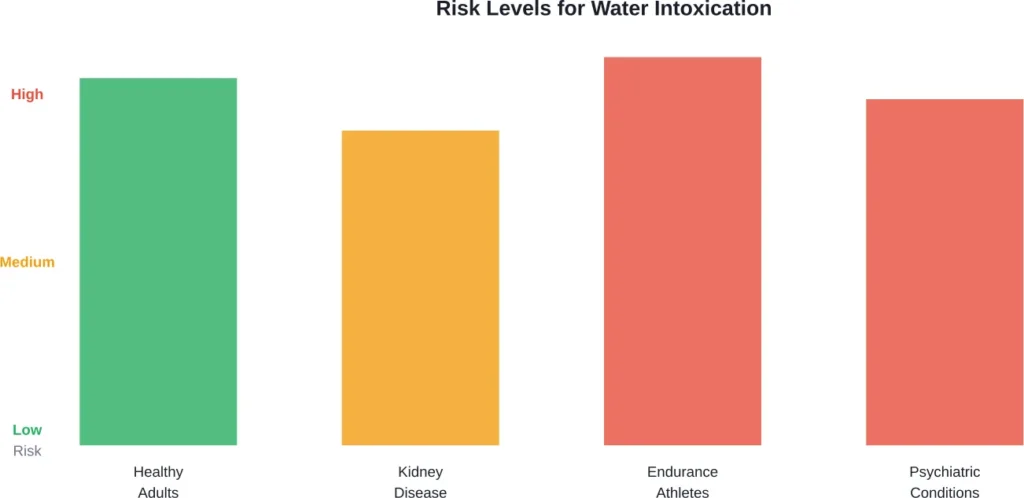
Water toxicity doesn’t strike randomly. Certain groups face significantly elevated risk:
Endurance Athletes
Marathon runners, triathletes, and other endurance athletes represent the highest-risk group. During prolonged intense exercise, some athletes drink water excessively while losing sodium through sweat, creating a perfect storm for hyponatremia.
Research documented in medical literature shows that athletes who consume large volumes of water without adequate electrolyte replacement during events lasting several hours face particular danger.
People with Certain Medical Conditions
According to NIH research, individuals with kidney disease have reduced capacity to excrete excess fluid. Those with heart failure or liver disease may also retain water abnormally.
Psychiatric conditions can trigger compulsive water drinking (psychogenic polydipsia). Medical case studies document patients consuming 6 liters or more daily, leading to severe hyponatremia requiring emergency treatment.
MDMA Users
The drug MDMA (ecstasy) impairs the body’s ability to regulate fluid balance and can trigger excessive thirst. Combined with dancing in hot environments, this creates conditions where users may drink dangerous amounts while their bodies struggle to process it.
Recognizing the Symptoms of Overhydration
Early detection matters. Water intoxication symptoms often mirror other conditions, making recognition challenging.
Early Warning Signs
The body sends signals when water intake becomes excessive:
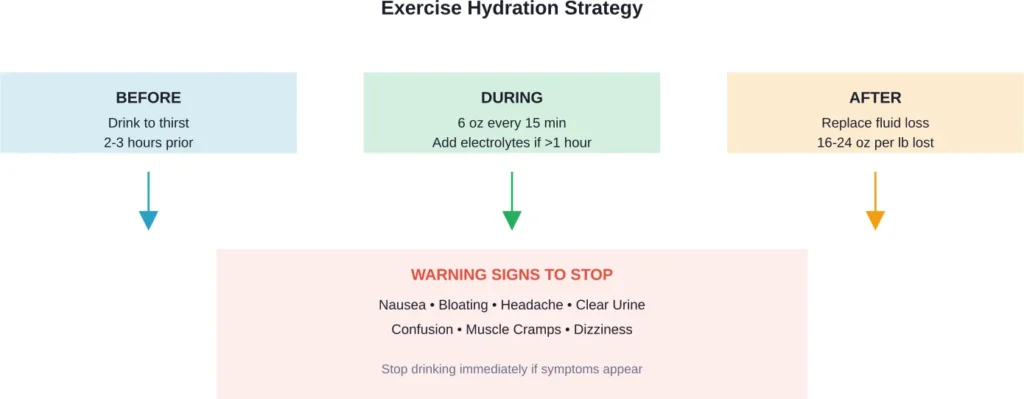
- Nausea and vomiting
- Headache
- Bloating and abdominal discomfort
- Clear or colorless urine (pale yellow indicates healthy hydration)
- Frequent urination beyond normal patterns
If these symptoms appear during or after heavy water consumption, stop drinking immediately.
Severe Symptoms Requiring Emergency Care
As hyponatremia worsens, symptoms escalate:
- Confusion and disorientation
- Muscle weakness or cramping
- Seizures
- Loss of consciousness
- Difficulty breathing
These signs indicate dangerously low sodium levels requiring immediate medical intervention. According to NIH case studies, severe hyponatremia constitutes a medical emergency with potential for permanent brain damage.
How Much Water Is Actually Too Much?
The kidneys of healthy adults can process approximately 800-1000 mL of water per hour. Consuming more than this exceeds the body’s excretion capacity, creating conditions for water intoxication.
However, there’s no universal danger threshold. Individual tolerance depends on body size, kidney function, activity level, climate, and overall health status.
According to the National Kidney Foundation, healthy hydration means having the right amount of water in the body — not too little (dehydration) and not too much (fluid overload). About 60-70% of your body weight is water, essential for every cellular function.
| Scenario | Approximate Safe Intake | Key Considerations |
|---|---|---|
| Normal Daily Activity | Drink to thirst | Body self-regulates effectively |
| Moderate Exercise | 6-8 oz every 15-20 min | Replace fluid lost through sweat |
| Intense Endurance Exercise | 12 oz every 30 min with electrolytes | Sodium replacement critical |
| Hot Climate | Increase moderately, monitor urine color | Pale yellow indicates good hydration |
The Role of Electrolytes in Preventing Water Toxicity
Water alone doesn’t maintain proper hydration during periods of heavy fluid loss. Electrolytes — particularly sodium — must be replaced alongside water.
According to research in medical journals, drinking fluids containing sodium helps retain fluids and maintain electrolyte balance. During exercise, a hydrating drink has both carbohydrates and some electrolytes—specifically sodium.
Sports drinks, electrolyte tablets, or even a pinch of salt in water provide the sodium necessary to prevent dilutional hyponatremia during prolonged activity. According to the American College of Sports Medicine’s position stand, fluids containing sodium should be slowly ingested leading up to activity to help retain fluids, so that athletes maintain euhydration with normal electrolyte levels.
Safe Hydration Guidelines
Most healthy people can trust their thirst mechanism. The body’s thirst response evolved over millennia to maintain optimal hydration — it’s remarkably accurate when not overridden.
For Daily Life
Drink when thirsty. Check urine color as a simple hydration indicator. Pale yellow suggests adequate hydration. Clear or colorless may indicate excessive intake.
About 20 percent of your daily fluid intake comes from foods. Fruits, vegetables, soups, and other foods contribute significantly to hydration needs, meaning plain water requirements are lower than often assumed.
During Exercise
For activities under one hour, water typically suffices. For longer duration or intense exercise, particularly in heat, include electrolyte replacement.
Weigh yourself before and after exercise. Weight loss indicates fluid deficit requiring replacement. Weight gain suggests excessive intake.
Special Populations
According to the National Kidney Foundation, people with advanced chronic kidney disease or kidney failure may need to limit fluid intake. The kidneys’ reduced filtering capacity means excess fluid accumulates in the body, potentially causing dangerous swelling and strain on the heart.
Anyone with kidney disease, heart failure, or liver disease should consult healthcare providers about appropriate daily fluid limits.
Treatment for Water Intoxication
Mild overhydration typically resolves by simply stopping water intake and allowing the kidneys to process excess fluid.
Moderate to severe hyponatremia requires medical treatment. Doctors may administer:
- Intravenous saline solution to raise sodium levels
- Diuretics to increase fluid excretion
- Medications to manage symptoms
Sodium correction must occur gradually. Rapid sodium level changes can cause additional neurological complications. According to medical research published in NIH journals, treatment requires careful monitoring to avoid overcorrection.
FAQ: Common Questions About Drinking Too Much Water
Yes, though it’s uncommon. Healthy kidneys process approximately 800-1000 mL per hour. Exceeding this amount, particularly during endurance exercise without electrolyte replacement, can cause hyponatremia even in people without underlying conditions.
Watch for nausea, headache, bloating, or clear colorless urine. Pale yellow urine indicates healthy hydration. If you’re forcing yourself to drink when not thirsty, or drinking more than thirst dictates, you may be overdoing it.
There’s no universal maximum. Healthy adults can typically handle substantial intake if spread throughout the day. The danger lies in consuming excessive amounts rapidly — more than the kidneys can excrete per hour. Trust your thirst rather than forcing arbitrary daily targets.
For activities under one hour, water suffices for most people. Beyond 60-90 minutes of intense exercise, especially in heat, electrolyte replacement becomes important. Sports drinks, electrolyte tablets, or sodium-containing fluids help prevent dilutional hyponatremia during prolonged activity.
Yes. Severe hyponatremia causes brain swelling that can be fatal. Medical literature documents deaths from water intoxication, primarily among endurance athletes and individuals with psychiatric conditions causing compulsive water drinking. It remains rare but represents a genuine medical emergency when it occurs.
According to sports medicine research, athletes should drink approximately 12 ounces every 30 minutes during endurance events, choosing fluids that contain both carbohydrates and sodium. Drinking plain water alone increases hyponatremia risk during marathons and similar prolonged activities.
Symptoms can appear within hours when large volumes are consumed rapidly. The timeline depends on how quickly water is consumed relative to kidney excretion capacity and the individual’s sodium reserves. Cases documented in medical literature show hyponatremia developing within 2-4 hours of excessive intake.
The Bottom Line on Water Intake
Water sustains life. According to NIH research, humans survive only days without it, and proper hydration remains essential for cellular function, temperature regulation, and virtually every physiological process.
But balance matters.
For healthy adults, the body’s thirst mechanism provides reliable guidance. Drink when thirsty, and don’t force excessive amounts based on arbitrary rules. Athletes engaged in prolonged intense exercise should include electrolyte replacement and monitor intake carefully.
Watch for warning signs — nausea, headache, bloating, or colorless urine suggest it’s time to pause water consumption. Anyone experiencing confusion, seizures, or severe symptoms after heavy water intake needs emergency medical care.
Most people face greater risk from dehydration than overhydration. Yet understanding that water intoxication exists, recognizing the populations most vulnerable, and knowing the symptoms can prevent rare but serious complications.
Listen to your body. It evolved sophisticated systems for maintaining the precise fluid balance required for health.