
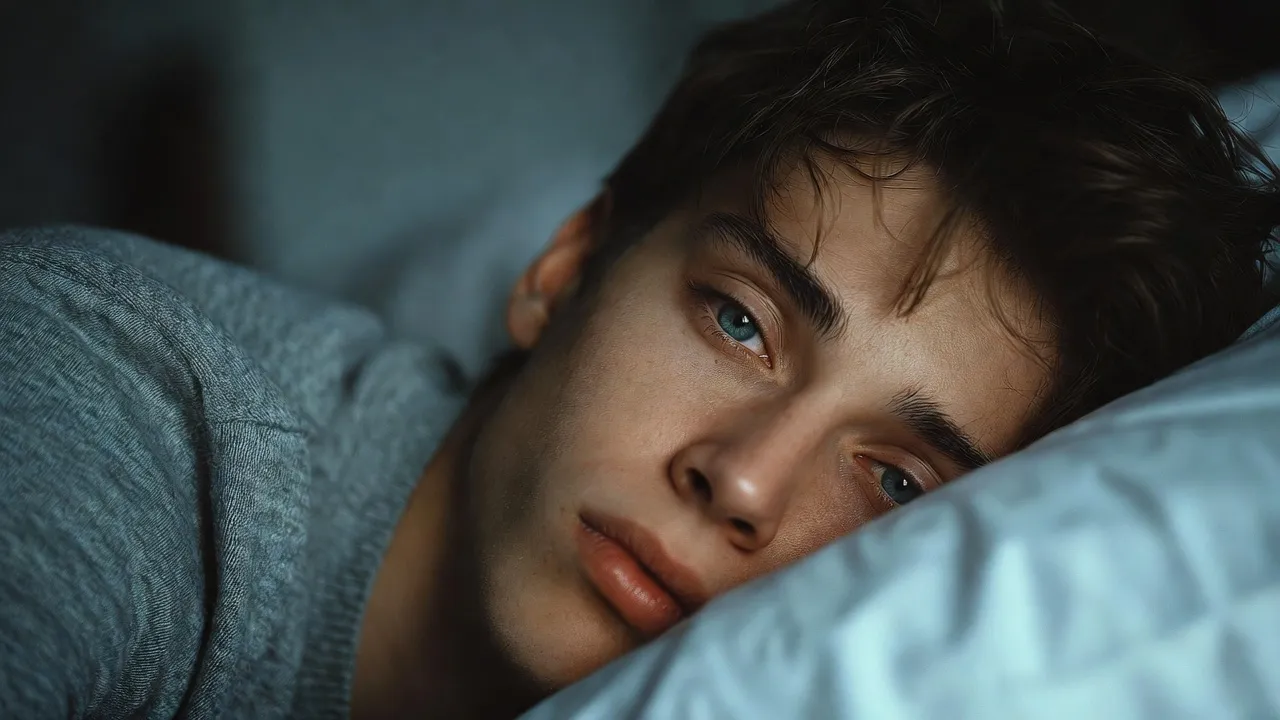
Quick Summary: Yes, it’s possible to sleep with your eyes open—a condition called nocturnal lagophthalmos affecting approximately 1 in 20 people (5%), though some sources cite rates up to 20%. The eyelids don’t fully close during sleep, which can lead to dry, red, irritated eyes and potentially damage the cornea if left untreated.
Closing your eyes seems like the most fundamental part of sleep, right? But here’s something that might surprise you: a significant number of people sleep with their eyes partially or even fully open every single night. And they often have no idea it’s happening.
This isn’t some rare medical oddity. Research indicates that approximately 1 in 20 people (5%) experience this condition, though some sources cite rates up to 20%, known medically as nocturnal lagophthalmos. The term comes from Greek—”lagôs” (hare) and “ophthalmos” (eye)—because rabbits are known for sleeping with their eyes open.
So what’s actually going on when someone sleeps with their eyes open? More importantly, should you be concerned if you’re one of these people?
What Is Nocturnal Lagophthalmos?
Nocturnal lagophthalmos refers to the inability to fully close one or both eyelids during sleep. This doesn’t necessarily mean the eyes are wide open—though in some cases they can be. More commonly, there’s just a small gap where the eyelids don’t meet completely.
That small gap matters, though. Your eyelids serve a critical protective function, keeping your cornea moist and shielded from irritants. When they don’t close properly during sleep, your eyes lose that protection for hours at a time.
According to research published by the National Institutes of Health, approximately 4.5% of the general population experiences this condition, though prevalence rates vary by demographic group. However, that number can climb significantly higher in certain groups—particularly among people with specific medical conditions or facial nerve issues.
Why Do Some People Sleep With Their Eyes Open?
The causes of nocturnal lagophthalmos vary widely. Understanding what’s behind it can help determine the right treatment approach.
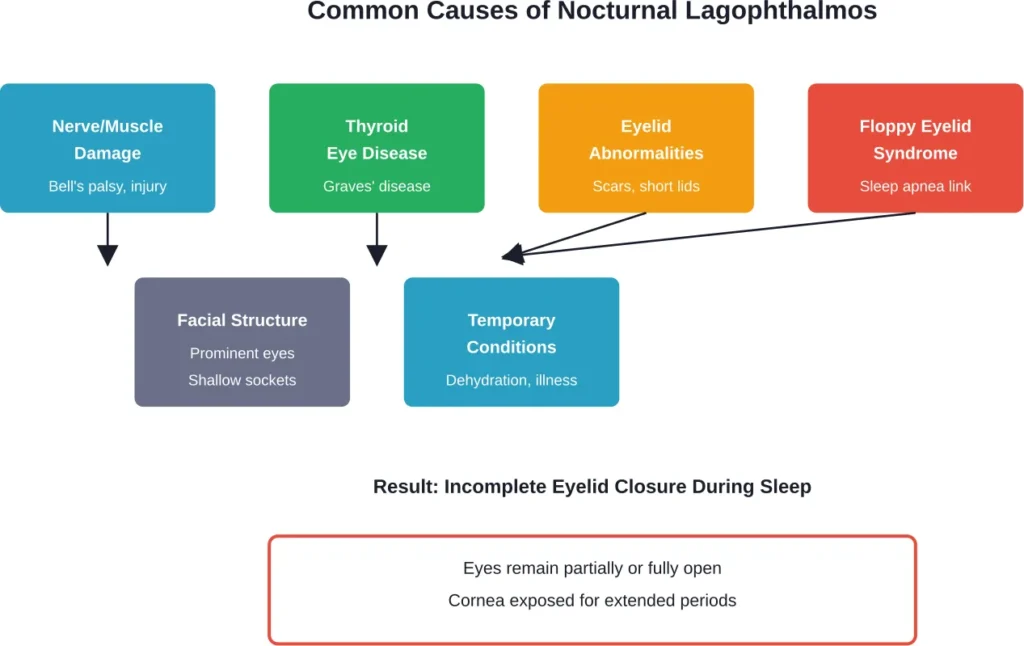
Nerve or Muscle Damage
Facial nerve damage is one of the most common culprits. Conditions like Bell’s palsy—which causes temporary facial paralysis—can prevent the eyelids from closing properly. Similarly, any injury or surgery affecting the facial muscles or nerves can interfere with normal eyelid function.
Thyroid Eye Disease
People with thyroid disorders, particularly Graves’ disease, often develop bulging eyes (exophthalmos). The eyeballs protrude forward, making it physically difficult for the eyelids to cover them completely during sleep.
Eyelid Abnormalities
Some people are born with eyelids that are simply too short to close completely. Others develop eyelid deformities due to scarring from burns, infections, or previous surgeries.
Floppy Eyelid Syndrome
This condition involves unusually elastic eyelids that easily flip up during sleep. It’s strongly associated with obstructive sleep apnea and tends to affect middle-aged, overweight men more frequently.
Structural Facial Issues
Facial structure plays a role too. People with naturally prominent eyes or shallow eye sockets may find their eyelids don’t quite reach during sleep.
Signs and Symptoms You Might Be Sleeping With Your Eyes Open
Most people with nocturnal lagophthalmos don’t realize they have it. The condition often comes to light when a partner notices or when persistent symptoms finally prompt a doctor’s visit.
Here’s what to watch for:
Morning Eye Symptoms
The most telling signs appear when you wake up. Eyes that feel dry, gritty, or sandy are classic indicators. Redness and irritation that’s worse in the morning also point to overnight exposure.
Blurred vision that improves after blinking several times suggests your cornea dried out during the night. Some people also experience a burning sensation or feel like something’s stuck in their eye.
Chronic Eye Issues
Long-term lagophthalmos can lead to more serious problems. Recurrent corneal erosions—where the surface layer of the cornea repeatedly breaks down—create intense pain and light sensitivity.
Research indicates that sleeping with eyes open can cause recurrent corneal erosions, creating eye discomfort and light sensitivity similar to other forms of corneal damage. Over time, the repeated exposure causes real damage to the eye structure.
Sleep Quality Problems
Studies have found connections between nocturnal lagophthalmos and poor sleep quality. The discomfort can cause micro-awakenings throughout the night, even if the person doesn’t fully remember them.
| Symptom Category | Specific Signs | Severity Level |
|---|---|---|
| Morning Discomfort | Dry, gritty, red eyes upon waking | Mild to Moderate |
| Visual Changes | Blurred vision, light sensitivity | Moderate |
| Pain Symptoms | Burning sensation, foreign body feeling | Moderate to Severe |
| Corneal Damage | Recurrent erosions, ulcers | Severe |
| Sleep Disruption | Poor sleep quality, frequent waking | Moderate |
Health Risks of Sleeping With Your Eyes Open
Left untreated, nocturnal lagophthalmos can cause significant damage to eye health.
The cornea—the clear front surface of your eye—needs constant moisture to stay healthy. When exposed to air for hours during sleep, it dries out. This creates tiny breaks in the corneal surface that can become infected.
Chronic exposure can lead to corneal ulcers, which are open sores on the cornea that can cause permanent vision damage if not treated promptly. In severe cases, corneal scarring may occur, potentially requiring surgical intervention.
The condition also significantly impacts quality of life. Patients with dry eye disease and nocturnal lagophthalmos report worse symptoms that affect their daily activities and overall well-being.
How Doctors Diagnose Nocturnal Lagophthalmos
Diagnosis usually starts with a comprehensive eye exam. An ophthalmologist will examine your eyelids, cornea, and tear film quality.
The “snap test” checks eyelid elasticity. The doctor gently pulls your lower eyelid away from your eye and observes how quickly it snaps back. Slow return suggests floppy eyelid syndrome.
For definitive diagnosis, a sleep study with video monitoring might be recommended. This allows doctors to directly observe whether your eyelids close completely during sleep and for how long they remain open.
Slit lamp examination reveals any corneal damage that’s already occurred. Fluorescein dye highlights areas where the corneal surface has broken down.
Treatment Options for Sleeping With Eyes Open
Treatment depends on severity and underlying cause. The good news? Most cases respond well to intervention.
Conservative Treatments
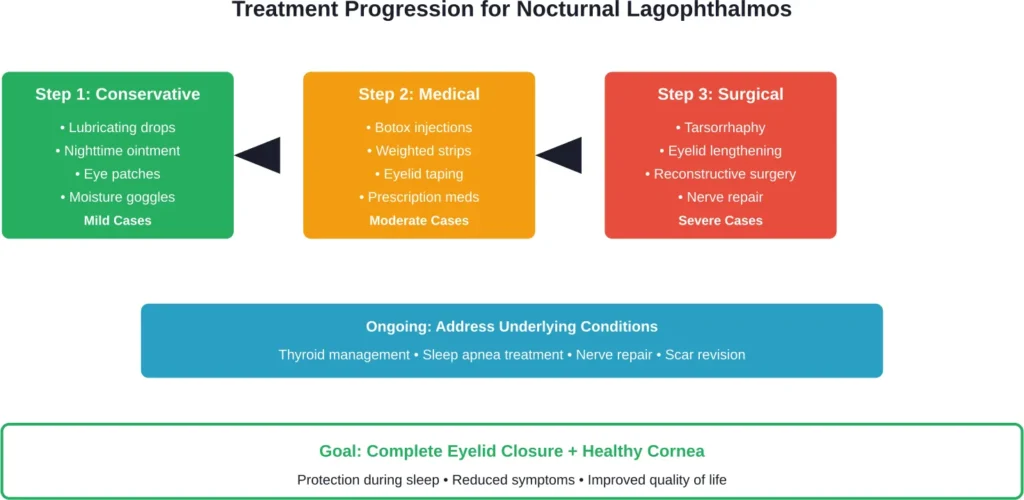
For mild cases, artificial tears and lubricating ointments work wonders. Applying thick ointment before bed creates a protective barrier that keeps the cornea moist throughout the night.
Eye patches or moisture chamber goggles physically protect the eyes during sleep. These devices trap humidity around the eye, preventing drying even when the lids don’t fully close.
Some patients benefit from weighted eyelid strips—small adhesive strips that help keep the eyelids closed through gentle pressure.
Medical Interventions
When conservative measures aren’t enough, medical procedures offer solutions. Botox injections can temporarily paralyze the muscle that lifts the upper eyelid, allowing it to rest lower and provide better coverage.
Surgical options address the root problem. Tarsorrhaphy partially sews the eyelids together, reducing the opening size. It sounds dramatic, but it’s often reversible and highly effective.
Eyelid lengthening procedures expand the eyelids so they can fully cover the eye. These surgeries have good success rates for patients whose eyelids are structurally too short.
Treating Underlying Conditions
Addressing the underlying cause is crucial. Managing thyroid disease can reduce eye bulging. Treating sleep apnea often improves floppy eyelid syndrome. Repairing nerve damage may restore normal eyelid function.
When to See a Doctor
Don’t wait if you’re experiencing symptoms. Early intervention prevents permanent damage.
See an eye doctor immediately if you notice persistent morning dryness, redness that won’t resolve, or any pain in your eyes. Sharp pain, sudden vision changes, or visible corneal damage require urgent attention.
If a sleeping partner tells you they’ve noticed your eyes don’t close completely during sleep, schedule an evaluation even without symptoms. Prevention beats treatment every time.
Frequently Asked Questions
It can be if left untreated. While not immediately dangerous, chronic exposure of the cornea leads to dryness, irritation, and potentially serious complications like corneal ulcers or infections. The key is getting proper treatment before permanent damage occurs.
Research indicates that approximately 1 in 20 people (5%) experience some degree of nocturnal lagophthalmos, though some sources cite rates up to 20%. The variation in estimates depends on whether partial or complete eyelid opening is measured. Many cases are mild and go undiagnosed.
Yes, babies and young children can sleep with their eyes partially open. In infants, this is often temporary and resolves as facial muscles develop. However, persistent cases or those causing symptoms should be evaluated by a pediatric ophthalmologist.
No. People with nocturnal lagophthalmos reach all normal sleep stages, including deep sleep and REM sleep. The eyelid position doesn’t prevent them from sleeping soundly, though eye discomfort may affect overall sleep quality.
Unfortunately, no. Nocturnal lagophthalmos results from physical limitations—the eyelids literally cannot close completely due to muscle weakness, structural issues, or nerve problems. It’s not a behavioral issue that can be corrected through willpower or training. Medical intervention is needed.
Coverage varies by plan and provider. Most insurance companies cover treatment when nocturnal lagophthalmos causes documented medical problems like corneal damage or significant symptoms. Conservative treatments like lubricating drops are typically covered. Surgical procedures may require prior authorization demonstrating medical necessity.
It depends on the cause. Temporary cases related to facial swelling, minor injuries, or certain medications may resolve when the underlying issue clears up. However, structural problems, nerve damage, and chronic conditions typically require ongoing management. In documented medical cases, children with nocturnal lagophthalmos related to severe dehydration showed resolution after proper hydration and intravenous fluid therapy.
Protecting Your Eyes While You Sleep
Sleep should be restorative, not damaging. If you suspect you’re sleeping with your eyes open—or if someone’s told you they’ve noticed it—take action.
The condition is highly treatable, especially when caught early. Simple interventions like lubricating ointments can make a massive difference in comfort and eye health. For more complex cases, modern medical and surgical treatments offer excellent outcomes.
Your eyes deserve protection around the clock. Don’t let nocturnal lagophthalmos rob you of healthy, comfortable vision. Schedule an evaluation with an ophthalmologist and explore your treatment options today.