

Quick Summary: Losing one pound per day is technically possible but requires an extreme calorie deficit of 3,500 calories daily through severe food restriction and hours of exercise. According to the CDC, safe and sustainable weight loss occurs at 1-2 pounds per week, not per day. Rapid weight loss often results in water weight loss rather than fat loss and can harm metabolism, muscle mass, and overall health.
The promise of rapid weight loss is tempting. Drop a pound every single day, and that’s 30 pounds in a month. Sounds incredible, right?
But here’s the thing—just because something is technically possible doesn’t make it safe, sustainable, or even effective. The human body doesn’t work like a simple math equation, and extreme weight loss approaches often backfire.
Let’s examine what science actually says about losing a pound per day, what it would take to achieve it, and whether there’s a better path forward.
The Math Behind Losing One Pound
The widely referenced rule states that one pound of body weight equals approximately 3,500 calories. This means creating a deficit of 3,500 calories should theoretically result in losing one pound.
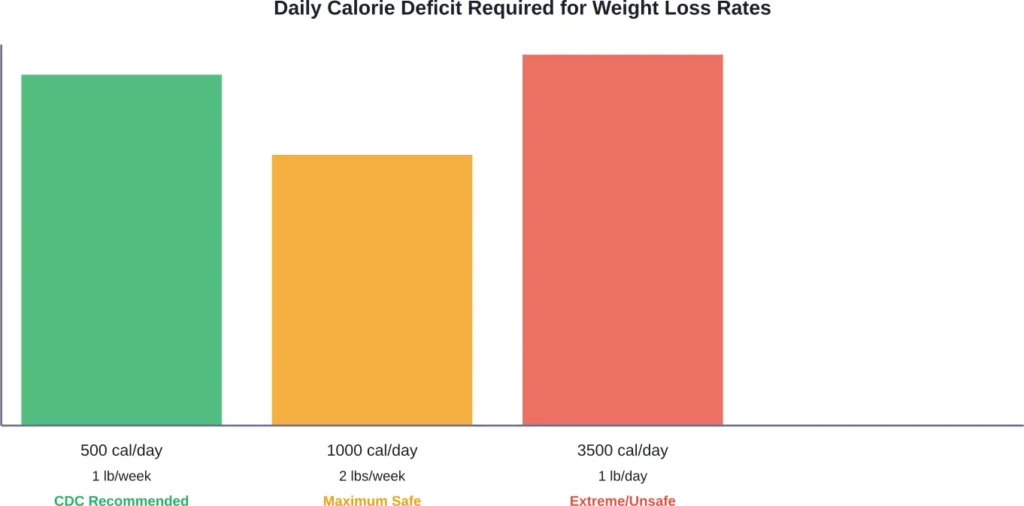
To lose a pound every single day, someone would need to create a 3,500-calorie deficit daily. That’s an enormous gap between calories consumed and calories burned.
According to the CDC, most adults need between 1,600 to 3,000 calories daily just to maintain their current weight, depending on age, sex, and activity level. Creating a 3,500-calorie deficit would require either eating almost nothing while exercising intensely for hours, or some combination that’s equally extreme.
The 3,500-Calorie Rule: Limitations
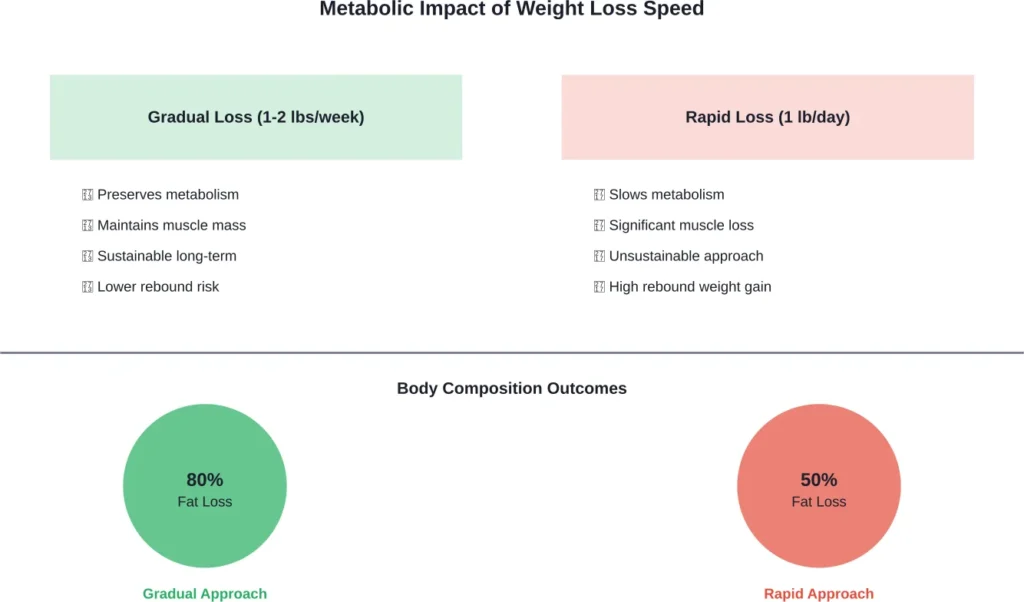
Research published in medical journals shows this rule isn’t as straightforward as it seems. The body adapts to calorie restriction by reducing energy expenditure. Metabolism slows down, making each subsequent pound harder to lose.
The 3,500-calorie rule also doesn’t account for whether weight lost is fat, muscle, or water. These distinctions matter significantly for health and body composition.
Body Fat vs. Water Weight: Understanding What You’re Losing
Not all weight loss is created equal. When people drop weight rapidly, much of it isn’t actually body fat.
The body stores carbohydrates as glycogen in muscles and the liver. Each gram of glycogen holds approximately 3-4 grams of water. When calorie intake drops significantly, glycogen stores deplete quickly, releasing that bound water.
This explains why people often see dramatic weight drops in the first few days of a new diet. They’re losing water weight, not fat. Once normal eating resumes, glycogen stores refill, and the water weight returns.
What Actual Fat Loss Requires
Burning one pound of actual body fat requires that 3,500-calorie deficit mentioned earlier. But fat loss happens more slowly than water loss because the body resists depleting its energy reserves.
Research indicates that very-low-calorie diets may cause resting metabolic rate to decrease, though the extent and permanence vary. Even with significant calorie restriction, the body burns a combination of fat and lean muscle mass. The faster the weight loss, the higher the proportion of muscle lost alongside fat.
Is Losing a Pound Daily Safe?
The short answer: No, it’s not safe for sustained periods.
According to the CDC, safe weight loss occurs at a rate of 1 to 2 pounds per week. This gradual approach allows the body to adapt without triggering metabolic damage or muscle loss.
Mayo Clinic experts note that losing 5% to 10% of total body weight produces significant health benefits. For someone weighing 200 pounds, that’s 10 to 20 pounds—but achieved over several months, not weeks.
Risks of Extreme Weight Loss
Attempting to lose a pound daily creates numerous health risks:
- Severe muscle loss alongside fat loss
- Metabolic slowdown making future weight loss harder
- Nutrient deficiencies from inadequate food intake
- Gallstone formation from rapid weight changes
- Fatigue and decreased cognitive function
- Hormonal disruptions affecting thyroid and reproductive health
- Increased risk of binge eating and weight regain
Research indicates that very-low-calorie diets may cause resting metabolic rate to decrease, though the extent and permanence vary. This makes maintaining weight loss extremely difficult once normal eating resumes.
What Would It Actually Take?
Let’s look at what losing one pound daily would require in practical terms.
For someone with a basal metabolic rate of 1,800 calories (the amount burned at rest), they’d need to create that 3,500-calorie daily deficit. This could theoretically involve:
- Eating zero calories (complete fasting)
- Plus burning 1,700 additional calories through exercise
Burning 1,700 calories through exercise means approximately 3-4 hours of intense cardio activity daily. That’s not sustainable for most people, and doing it while eating nothing would quickly lead to exhaustion and potential medical emergencies.
Another approach might involve eating 500 calories daily while burning 3,000 additional calories through activity. But this still requires extreme exercise on minimal fuel—a recipe for breakdown rather than success.
Evidence-Based Weight Loss Strategies
Rather than pursuing extreme daily weight loss, health authorities recommend sustainable approaches that work with the body’s physiology, not against it.
Create a Moderate Calorie Deficit
According to Mayo Clinic, burning 500 to 750 calories more than consumed each day creates steady weight loss of 1 to 2 pounds weekly. This deficit can come from a combination of eating less and moving more.
Tracking food intake helps many people identify where excess calories hide. Even modest reductions—eliminating sugary drinks, reducing portion sizes, choosing lower-calorie alternatives—can create the needed deficit without starvation-level restriction.
Prioritize Physical Activity
The CDC recommends adults get at least 150 to 300 minutes of moderate-intensity aerobic activity weekly. That’s 30 minutes daily, five days per week at minimum.
For weight loss specifically, more activity helps. But it doesn’t require extreme measures. Brisk walking, swimming, cycling, or dancing all count. Adding two days of strength training helps preserve muscle mass during weight loss.
Physical activity provides benefits beyond calorie burning. It improves metabolism, enhances mood, reduces disease risk, and helps maintain weight loss long-term.
Focus on Nutrition Quality
What foods are eaten matters as much as how much. The World Health Organization emphasizes diets high in whole grains, vegetables, fruits, legumes, and nuts while limiting added sugars, saturated fats, and processed foods.
Protein intake deserves special attention during weight loss. Adequate protein helps preserve muscle mass, increases satiety, and slightly boosts metabolism through its higher thermic effect.
| Strategy | Expected Weekly Loss | Sustainability | Health Impact |
|---|---|---|---|
| 500 cal/day deficit | 1 pound | High | Positive |
| 750 cal/day deficit | 1.5 pounds | Moderate | Positive |
| 1000 cal/day deficit | 2 pounds | Moderate | Generally positive |
| 3500 cal/day deficit | 7 pounds | Very low | Negative |
When Rapid Weight Loss Happens
There are situations where faster-than-usual weight loss occurs, typically under medical supervision.
Very-low-calorie diets providing 800 calories or less daily sometimes get prescribed for people with obesity-related health complications. These medically supervised programs include nutritional supplementation, regular monitoring, and professional support.
Bariatric surgery patients often experience rapid initial weight loss. But this occurs under controlled conditions with extensive medical oversight, nutritional support, and psychological counseling.
These exceptions prove the rule—rapid weight loss requires professional medical management to minimize risks and maximize success.
The Rebound Effect
Here’s what often gets missed in discussions about rapid weight loss: what happens afterward.
Evidence suggests that faster weight loss may correlate with higher rates of weight regain. The body responds to severe calorie restriction by lowering metabolic rate, increasing hunger hormones, and becoming more efficient at storing energy.
Studies of people who successfully maintain weight loss long-term reveal common patterns. According to CDC research on weight loss maintenance, successful maintainers typically:
- Continue eating fewer calories than before weight loss
- Stay physically active (often 60-90 minutes daily)
- Monitor weight regularly
- Eat breakfast consistently
- Maintain consistent eating patterns across days
None of these behaviors align with extreme, unsustainable approaches. Sustainable habits trump dramatic short-term results.
Setting Realistic Goals
The CDC notes that even modest weight loss produces significant health benefits. Losing just 5% to 10% of body weight can improve blood pressure, cholesterol levels, and blood sugar control.
For someone weighing 200 pounds, that’s 10 to 20 pounds—achievable in 10 to 20 weeks with a steady approach. That may not sound as exciting as losing a pound daily, but it’s far more likely to succeed and improve health sustainably.
Breaking larger goals into smaller milestones helps maintain motivation. Focusing on behavior changes (eating more vegetables, walking daily, cooking at home) rather than just scale numbers creates lasting transformation.
Individual Variation Matters
Weight loss doesn’t happen at identical rates for everyone. Age, sex, genetics, starting weight, hormone levels, medications, sleep quality, and stress all influence how quickly weight comes off.
Someone with more weight to lose may experience faster initial losses than someone closer to a healthy weight. Men often lose weight faster than women due to higher muscle mass and metabolic rates.
These variations are normal and don’t indicate failure. Comparing personal progress to averages or other people’s results creates unnecessary frustration.
FAQ
No, losing a pound daily isn’t safe for sustained periods. According to the CDC, safe weight loss occurs at 1 to 2 pounds per week. Faster rates increase risks of muscle loss, metabolic damage, nutrient deficiencies, and weight regain.
Losing one pound requires a 3,500-calorie deficit. Creating this deficit daily would mean eating almost nothing while exercising intensely for hours—an unsustainable and dangerous approach that medical experts strongly advise against.
Initial rapid weight loss primarily reflects water weight from depleted glycogen stores, not fat loss. As glycogen empties, bound water releases. Fat loss occurs more gradually because the body resists depleting energy reserves and adapts by lowering metabolic rate.
Severe calorie restriction can lower resting metabolic rate, with some research suggesting reductions of 20-30% in certain cases. However, research suggests this isn’t always permanent. Gradual weight loss with adequate protein and strength training helps preserve metabolic rate better than extreme approaches.
Research indicates that fat loss depends primarily on energy deficit, regardless of method. However, combining moderate calorie reduction with regular physical activity produces the best results for body composition and long-term maintenance.
Following CDC guidelines of 1 to 2 pounds weekly, realistic monthly weight loss ranges from 4 to 8 pounds. While some people may lose more initially (especially with significant water weight), sustainable fat loss occurs at this moderate pace.
Maintaining muscle during weight loss requires adequate protein intake, resistance training at least twice weekly, and avoiding excessive calorie deficits. Slower weight loss rates better preserve lean muscle mass.
The Bottom Line: Sustainable Beats Extreme
So is it possible to lose a pound a day? Technically, yes—for very short periods under extreme conditions.
But possible doesn’t mean advisable, safe, or effective long-term.
The overwhelming evidence from health authorities like the CDC, research institutions, and clinical experience points to the same conclusion: gradual, sustainable weight loss produces better health outcomes and lasting results.
Weight loss at 1 to 2 pounds weekly allows the body to adapt properly, preserves muscle mass, maintains metabolic function, and builds sustainable habits. That might mean taking six months to lose 30 pounds instead of one month—but those 30 pounds are far more likely to stay off.
Rather than chasing extreme daily weight loss, focus on creating a lifestyle that supports health: balanced nutrition, regular physical activity, adequate sleep, stress management, and realistic expectations. These fundamentals may not promise overnight transformation, but they deliver something better—lasting change.
Ready to start a sustainable weight loss journey? Begin by calculating a moderate calorie deficit, choosing physical activities that fit into daily life, and setting realistic goals based on losing 1 to 2 pounds weekly. Small consistent steps accumulate into significant transformation over time.