

Quick Summary: While IUDs are over 99% effective at preventing pregnancy, failure can occur in rare cases — less than 1 in 100 users. Pregnancy with an IUD requires immediate medical attention due to increased risks of ectopic pregnancy, miscarriage, and complications. The device should be removed if safely accessible, though some pregnancies can continue successfully with proper monitoring.
The intrauterine device stands as one of the most reliable forms of birth control available. According to the CDC, IUDs have a typical use failure rate of just 0.1-0.4%, making them more effective than most other contraceptive methods.
But here’s what many people don’t realize: no birth control method is 100% foolproof.
When pregnancy does occur with an IUD in place, it creates a unique medical situation that requires prompt attention. The combination of a developing pregnancy and a contraceptive device in the uterus can lead to complications that don’t occur in typical pregnancies.
Understanding how this happens, recognizing the warning signs, and knowing what steps to take can make a significant difference in outcomes.
How IUDs Prevent Pregnancy
Before examining failure scenarios, it helps to understand the mechanisms that make IUDs so effective in the first place.
Two main types of intrauterine devices are available in the United States: copper IUDs and levonorgestrel-releasing (hormonal) IUDs. Each works differently, though both create an inhospitable environment for pregnancy.
Copper devices trigger an inflammatory response in the uterus that’s toxic to sperm and eggs. The copper ions interfere with sperm movement, egg fertilization, and implantation. This type can remain effective for up to 10 years and serves as the most effective form of emergency contraception when inserted within 5 days of unprotected intercourse.
Hormonal IUDs release levonorgestrel, a synthetic progesterone. According to the CDC, this hormone thickens cervical mucus to block sperm, thins the uterine lining, and sometimes suppresses ovulation. These devices last between 3 to 8 years depending on the specific model (Mirena, Kyleena, Skyla, or Liletta).
The combination of these mechanisms creates multiple barriers to conception. That’s why failure is so uncommon.
When IUD Pregnancy Happens: Understanding the Numbers
Real talk: pregnancy with an intrauterine device is rare but not impossible.
With less than 1% annual failure rate, IUDs outperform nearly every other reversible contraceptive method. Research from UCSF found that IUDs work at least as well as tubal ligation at preventing pregnancy, with fewer side effects and complications.
The typical use failure rate of 0.1-0.4% translates to roughly 1-4 pregnancies per 1,000 women using an IUD each year. Over the entire duration of use, the cumulative failure rate remains remarkably low.
That said, certain situations can increase the likelihood of contraceptive failure.
Risk Factors for IUD Failure
Several scenarios can compromise effectiveness:
- Device expulsion: The IUD partially or completely dislodges from the uterus, particularly in the first few months after insertion
- Improper placement: If the device isn’t positioned correctly during insertion, it may not provide full protection
- Perforation: In rare cases, the IUD punctures through the uterine wall during insertion
- Device at end of lifespan: Using an IUD beyond its approved duration reduces effectiveness
- Pre-existing pregnancy: Conception occurred just before IUD insertion, before the device became effective
The CDC notes that postpartum placement carries higher expulsion rates compared to interval insertion, though both remain highly effective overall.
Warning Signs: Recognizing Pregnancy with an IUD
Detecting pregnancy with an intrauterine device can be tricky because some symptoms overlap with normal IUD side effects.
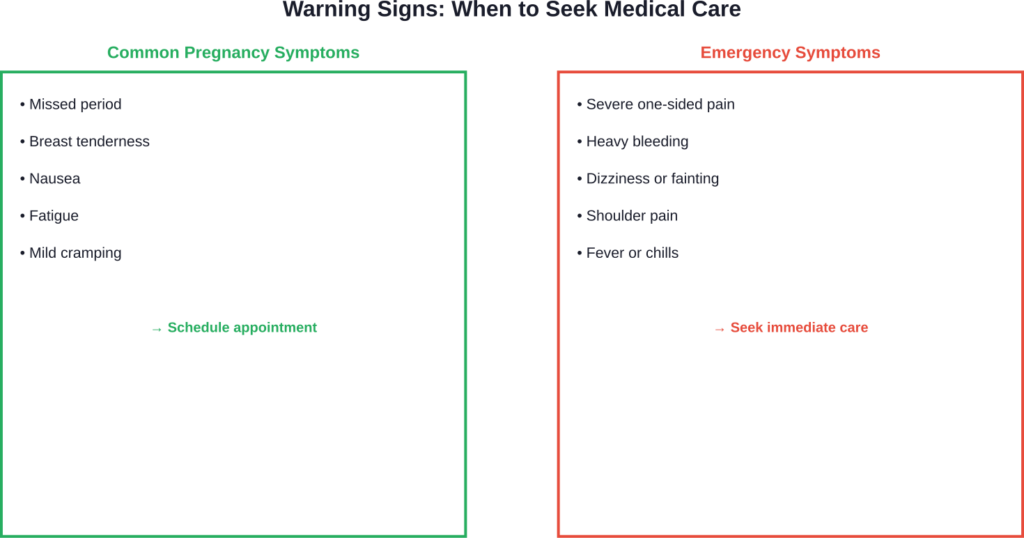
Common pregnancy symptoms include:
- Missed periods (though about 20% of hormonal IUD users stop menstruating after one year)
- Breast tenderness and swelling
- Nausea or vomiting
- Unusual fatigue
- Cramping or abdominal discomfort
Here’s where it gets concerning: certain symptoms warrant immediate medical evaluation.
Seek emergency care if experiencing:
- Severe abdominal or pelvic pain, especially on one side
- Heavy vaginal bleeding
- Dizziness, fainting, or shoulder pain (potential signs of internal bleeding)
- Fever or chills
These symptoms could indicate an ectopic pregnancy, a life-threatening condition where the embryo implants outside the uterus — typically in a fallopian tube.
The Ectopic Pregnancy Risk
This complication deserves special attention because it’s more common when pregnancy occurs with an IUD.
While IUDs dramatically reduce the overall risk of any pregnancy, they’re better at preventing intrauterine pregnancy than ectopic pregnancy. When conception does occur, a higher proportion of those pregnancies are ectopic compared to the general population.
Ectopic pregnancies can’t develop normally and pose serious health risks. The growing embryo can cause the fallopian tube to rupture, leading to internal bleeding and potential loss of life without emergency treatment.
Any positive pregnancy test with an IUD in place warrants immediate medical evaluation. Doctors typically order an ultrasound to confirm the pregnancy location and perform an examination to assess the situation.
What Happens Next: Treatment Options
Once pregnancy with an IUD is confirmed, several factors influence the next steps.
The primary concern involves whether the IUD strings are visible and the device can be safely removed. If strings are accessible, removing the IUD as soon as possible reduces complications.
IUD Removal During Pregnancy
Leaving the device in place increases risks of:
- Miscarriage (higher risk compared to typical pregnancies)
- Preterm birth
- Infection
- Placental problems
Removing the IUD early in pregnancy reduces these risks, though removal itself carries a small risk of miscarriage. Healthcare providers weigh these factors individually.
If the strings aren’t visible — meaning the device has moved up into the uterus — removal becomes more complicated. Attempting to retrieve it might cause more harm than leaving it in place. In these cases, close monitoring throughout pregnancy becomes essential.
Continuing or Ending the Pregnancy
Individuals have options regarding the pregnancy itself:
- Continuing the pregnancy: Many successful births occur even with an IUD in place, particularly if the device is removed early or if it stays in position without causing complications
- Medication or surgical abortion: Safe options for ending the pregnancy, with the IUD typically removed during the process
These decisions involve personal circumstances, medical factors, and individual values. Healthcare providers offer counseling and support regardless of the choice made.
Preventing IUD Failure: What Actually Works
While no prevention method guarantees 100% effectiveness, certain practices minimize failure risk.
Check IUD strings monthly, especially during the first few months after insertion. The strings should protrude slightly from the cervix — feeling them confirms the device remains in position. If strings feel longer or shorter than usual, or can’t be located at all, contact a healthcare provider.
Attend follow-up appointments. Most providers recommend a check-up 4-6 weeks after insertion to ensure proper positioning.
Replace the device on schedule. Each IUD type has a specific lifespan — using it beyond that window compromises effectiveness.
Recognize that emergency contraception inserted post-intercourse works differently than scheduled insertion. The CDC notes that copper IUDs serve as highly effective emergency contraception when placed within 5 days of unprotected sex, while recent research suggests hormonal IUDs may offer similar protection.
Not specified in sourcesNot specified in sourcesWithin 0.1-0.4% range
| IUD Type | Duration | Failure Rate | Key Mechanism |
|---|---|---|---|
| Copper (Paragard) | 10 years | Copper ions toxic to sperm/eggs | |
| Mirena (52mg LNG) | 8 years | Hormone thickens cervical mucus | |
| Kyleena (19.5mg LNG) | 5 years | 0.2% | Hormone thickens cervical mucus |
| Liletta (52mg LNG) | 8 years | 0.2% | Hormone thickens cervical mucus |
| Skyla (13.5mg LNG) | 3 years | Hormone thickens cervical mucus |
Real Experiences: Community Perspectives
Community discussions on platforms like Reddit reveal the emotional impact of IUD pregnancy.
Users describe the shock of positive pregnancy tests despite using reliable birth control. Many had been told IUDs were “basically foolproof,” making the reality harder to process.
Common themes from user experiences include:
- Initial disbelief and repeat testing to confirm results
- Anxiety about potential complications
- Difficulty deciding whether to continue the pregnancy given the increased risks
- Frustration with healthcare providers who initially dismissed pregnancy symptoms as normal IUD side effects
- Relief when early ultrasounds confirmed intrauterine (not ectopic) pregnancy
Some users reported experiences of successful pregnancies and healthy births despite the IUD presence, particularly when devices were removed early in the first trimester.
After Pregnancy: Fertility and Future Contraception
Questions often arise about fertility after pregnancy with an IUD.
The good news: IUDs don’t cause long-term fertility problems. The American College of Obstetricians and Gynecologists confirms that fertility returns immediately after IUD removal. Pregnancy that occurred with the device in place doesn’t indicate underlying fertility issues — it simply reflects the small statistical possibility of contraceptive failure.
Following pregnancy completion (whether through birth or termination), individuals can have a new IUD inserted immediately if desired. Postpartum insertion is safe and doesn’t increase health risks, though the CDC notes higher expulsion rates compared to interval insertion.
Some people choose different contraceptive methods after experiencing IUD pregnancy, while others opt for IUD replacement given the method’s overall effectiveness record.
Frequently Asked Questions
Hormonal IUDs become effective immediately if inserted during menstruation, or after 7 days if inserted at other times. Copper IUDs work immediately upon insertion. Pregnancy before the device becomes fully effective is possible, which is why providers often recommend backup contraception initially.
The strings don’t break from pregnancy itself, but the growing uterus can pull them up beyond reach. This is why visible strings are important for safe removal — if pregnancy occurs and strings aren’t accessible, removal becomes complicated or impossible without invasive procedures.
The IUD itself doesn’t typically sustain damage, but its presence can cause complications for the pregnancy including infection, miscarriage, and preterm birth. The device physically occupies space in the uterus that the pregnancy needs, creating mechanical and sometimes infectious risks.
Yes, standard pregnancy tests work normally with an IUD in place. The device doesn’t interfere with hormone detection. Any positive test warrants immediate medical evaluation to confirm pregnancy location and discuss IUD removal.
According to CDC data, hormonal IUDs have slightly lower failure rates (0.1-0.4%) compared to copper IUDs (0.8%). However, both remain exceptionally effective compared to other contraceptive methods. The choice between types often depends on other factors like menstrual effects and duration preferences.
Removal typically occurs as soon as pregnancy is confirmed and strings are visible, usually during the first trimester. Early removal minimizes complications. If strings aren’t accessible, the device may remain in place throughout pregnancy with careful monitoring.
No, breastfeeding doesn’t reduce IUD effectiveness. Both copper and hormonal IUDs are safe during breastfeeding and maintain their contraceptive protection. The CDC confirms that postpartum IUD insertion, whether immediate after delivery or later, provides reliable pregnancy prevention.
The Bottom Line on IUD Pregnancy
Intrauterine devices represent one of the most effective contraceptive options available, with failure rates below 1%. But “rare” doesn’t mean “impossible.”
When pregnancy does occur with an IUD, prompt medical attention makes a significant difference. Early detection, proper evaluation for ectopic pregnancy, and timely device removal (when possible) all improve outcomes.
The key takeaway? Don’t dismiss pregnancy symptoms just because an IUD is in place. Trust instincts and seek medical evaluation if something feels off.
For those using or considering an IUD, the statistics remain overwhelmingly positive. These devices prevent pregnancy more effectively than tubal ligation according to real-world data, while remaining completely reversible.
Understanding the small possibility of failure — and knowing how to respond — allows for informed decision-making and peace of mind. If pregnancy occurs, multiple safe options exist, and healthcare providers can offer guidance tailored to individual circumstances.
Check those strings monthly, attend follow-up appointments, and replace devices on schedule. These simple steps maximize the already impressive effectiveness of intrauterine contraception.