

Quick Summary: Gaining 10 pounds of actual body fat in a week is physiologically impossible—it would require consuming 35,000 extra calories above maintenance. Rapid weight gain of 10 pounds in a week is typically water retention, glycogen storage, digestive content, or hormonal fluctuations. Medical conditions, medications, and lifestyle factors can cause sudden increases on the scale.
Stepped on the scale after a weekend or vacation and saw a 10-pound jump? That panic is real. But here’s the thing—what the scale shows isn’t always what happened to your body.
The number on the scale tells a complicated story. Body weight includes fat, muscle, bones, organs, water, food in your digestive system, and glycogen stores. All these components fluctuate constantly.
According to the CDC, body weight naturally varies throughout the day and week based on multiple factors including food intake, physical activity, sleep, and stress levels. Understanding what causes these fluctuations helps separate normal variations from concerning medical issues.
The Math Behind True Fat Gain
Real talk: gaining 10 pounds of actual body fat in seven days is mathematically implausible for most people.
One pound of body fat contains approximately 3,500 calories. To gain 10 pounds of pure fat, someone would need to consume 35,000 calories beyond what their body burns for maintenance—that’s an extra 5,000 calories every single day for a week.
For context, most adults have a basal metabolic rate (BMR) that accounts for 60-70% of their daily calorie needs. If someone eats 2,000 calories daily, about 1,200-1,400 calories support basic body functions like breathing, circulation, and cell production.
Consuming 5,000 extra calories daily means eating roughly 7,000-8,000 total calories each day. That’s the equivalent of eating 30-35 full meals in a week beyond normal intake. Even during holiday binges or all-inclusive vacations, this level of overeating is extremely difficult to achieve.
Research published in PubMed shows that ultra-processed diets can cause excess calorie intake and weight gain. In a controlled study with 20 adults, participants on ultra-processed foods ate more calories than those on unprocessed diets—but even with unlimited access to highly palatable foods, the overconsumption wasn’t anywhere near 5,000 extra calories per day.
What Actually Causes Rapid 10-Pound Fluctuations
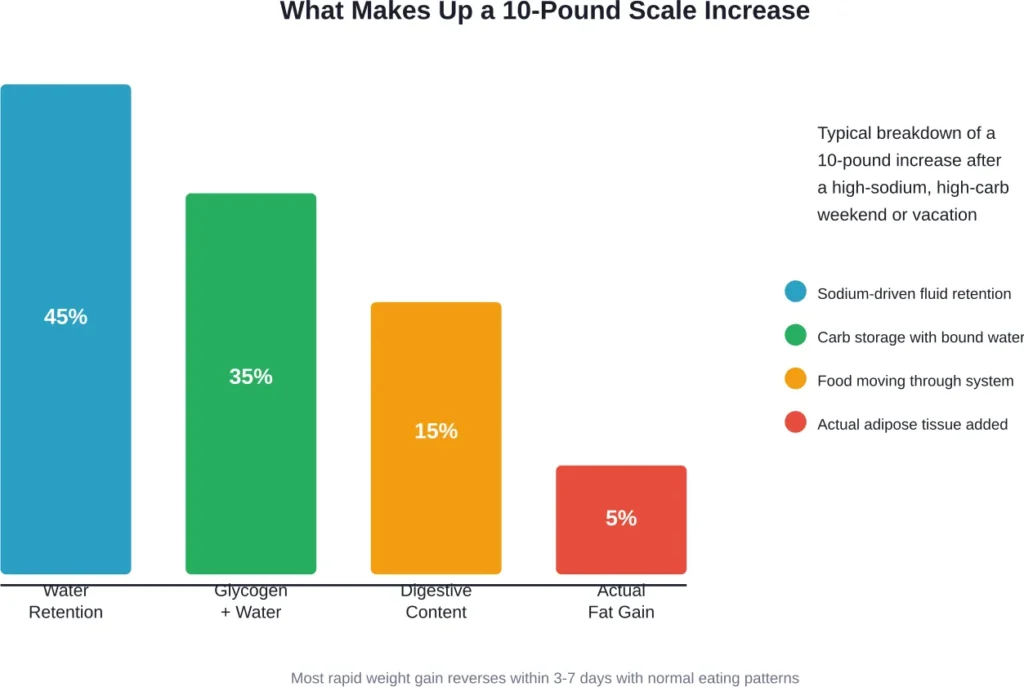
So if it’s not fat, what’s happening when the scale jumps dramatically? Several factors create rapid weight changes.
Water Retention
Water weight is the most common culprit behind sudden scale increases. The human body is roughly 60% water, and fluid levels shift constantly based on diet, hormones, and activity.
Sodium intake has a massive impact. Sodium intake has a significant impact on water retention. High-sodium meals from restaurants, processed foods, or takeout can contain substantial sodium amounts, leading to water retention within hours.
Hormonal fluctuations, particularly in menstruating individuals, cause predictable water retention patterns. Estrogen and progesterone levels shift throughout the menstrual cycle, causing fluid retention that can add 3-7 pounds before menstruation.
Travel, especially air travel, promotes fluid retention due to cabin pressure changes, prolonged sitting, and altitude. Many people notice swollen ankles and fingers after flights—that swelling represents retained fluid throughout the entire body.
Glycogen Storage
Glycogen is stored carbohydrate in muscles and liver. Each gram of glycogen binds to 3-4 grams of water.
When someone increases carbohydrate intake—whether from pasta, bread, rice, or sweets—the body stores more glycogen. Glycogen storage binds significant water, resulting in several pounds of weight.
Anyone who has started a low-carb diet knows this process in reverse: the first week brings rapid weight loss as glycogen stores deplete. Similarly, reintroducing carbs after restriction causes quick weight gain as stores replenish.
Young athletes who begin strength training often experience weight increases of several pounds in their first weeks—this reflects increased glycogen storage in developing muscles, not fat accumulation.
Digestive System Content
Food and waste in the digestive tract have actual weight. The average person carries 3-5 pounds of digestive content at any given time.
After large meals or days of increased eating, digestive content can temporarily weigh much more. A full stomach, food moving through intestines, and stool awaiting elimination all register on the scale.
High-fiber meals, while healthy, increase digestive bulk. Constipation—whether from travel, dietary changes, or medication—can add several pounds of retained waste.
Inflammation Response
Inflammation causes localized and systemic fluid retention. Intense exercise creates muscle microtrauma that triggers inflammatory responses. The body sends fluid to damaged tissue for repair, which shows up as temporary weight gain.
New exercise programs often cause initial weight increases before any fat loss appears. This frustrates people who start working out to lose weight, only to see the scale climb. The inflammation is temporary and actually indicates the body is adapting and repairing.
Medical Conditions That Cause Unexplained Weight Gain
While most rapid weight fluctuations are benign, certain medical conditions cause genuine, concerning weight increases.
According to Cleveland Clinic, gaining 2-3 pounds daily or 5 pounds in a week warrants medical evaluation. If someone gains 5% or more of their body weight in a month unexpectedly, that’s a red flag.
Hypothyroidism
An underactive thyroid slows metabolism significantly. The thyroid gland regulates metabolic rate, and when it underproduces hormones, the body burns fewer calories at rest.
Hypothyroidism also causes significant fluid retention. People with untreated thyroid disorders often describe feeling puffy and swollen, particularly in the face, hands, and feet.
Other symptoms accompany thyroid-related weight gain: fatigue, cold sensitivity, dry skin, hair loss, and constipation. Weight gain from hypothyroidism is rarely just weight gain—multiple systems show dysfunction.
Cushing’s Syndrome
This condition results from prolonged exposure to high cortisol levels, whether from tumors, medication, or pituitary dysfunction. Cushing’s causes distinctive weight gain patterns: fat accumulation in the face, upper back, and abdomen while arms and legs remain thin.
The weight gain from Cushing’s includes both fluid retention and fat deposition. Cortisol promotes fat storage, particularly visceral fat around organs.
Polycystic Ovary Syndrome (PCOS)
PCOS affects hormone balance and insulin resistance. Individuals with PCOS often experience unexplained weight gain or extreme difficulty losing weight despite diet and exercise efforts.
Insulin resistance causes the body to store more calories as fat rather than using them for energy. PCOS-related weight gain typically centers around the abdomen.
Heart Failure and Kidney Disease
Both conditions impair the body’s ability to regulate fluid balance. Heart failure prevents the heart from pumping efficiently, causing fluid backup in tissues. Kidney disease reduces the kidneys’ ability to filter and excrete excess fluid.
According to the National Heart, Lung, and Blood Institute (NHLBI), rapid weight gain is a warning sign of worsening heart failure. The fluid accumulation appears as swelling in ankles, legs, and abdomen.
This type of weight gain feels different—clothing becomes tight, shoes don’t fit, and rings feel constricting. The scale might show dramatic increases of 5-10 pounds in just days.
Medications That Promote Weight Gain
Many prescription medications list weight gain as a side effect. These drugs affect metabolism, appetite, or fluid balance.
| Medication Class | How It Affects Weight | Typical Gain Amount |
|---|---|---|
| Corticosteroids | Increase appetite and promote fat storage | 5-15 pounds |
| Antidepressants (SSRIs, TCAs) | Alter metabolism and increase appetite | 10-20 pounds |
| Antipsychotics | Affect insulin sensitivity and hunger signals | 10-30 pounds |
| Beta-blockers | Slow metabolism and reduce energy expenditure | 3-7 pounds |
| Insulin | Promotes glucose storage as fat | 5-10 pounds |
| Birth control (some formulations) | Cause fluid retention and appetite changes | 3-5 pounds |
Harvard Health reports that medication-related weight gain varies widely among individuals. Some people experience no weight changes while others gain significantly on the same medication.
Lifestyle Factors Behind Scale Fluctuations
Beyond medical causes, everyday behaviors create dramatic temporary weight shifts.
High-Sodium Foods
Restaurant meals, processed foods, and takeout contain shocking sodium levels. A single restaurant entrée can pack 2,000-4,000 mg of sodium—nearly double the recommended daily limit.
Fast food meals are particularly problematic. According to PubMed research, fast-food consumption has strong positive associations with weight gain and insulin resistance. While this research focused on long-term patterns, the immediate effect of high-sodium fast food is pronounced water retention.
Chinese takeout, pizza, deli meats, canned soups, and frozen meals are sodium bombs. The scale can easily jump 3-5 pounds the morning after a high-sodium meal.
Alcohol Consumption
Alcohol causes dehydration, which paradoxically triggers water retention. The body responds to dehydration by holding onto available fluids.
Alcoholic beverages also contain significant calories and carbohydrates. Beer, mixed drinks, and cocktails add hundreds of empty calories while simultaneously impairing judgment about food choices.
Weekend drinking followed by late-night eating creates a perfect storm for Monday morning scale shock.
Sleep Deprivation
According to the CDC, inadequate sleep affects weight regulation through multiple mechanisms. Sleep deprivation disrupts hormones that control hunger and satiety—ghrelin increases while leptin decreases.
Poor sleep also promotes water retention and inflammation. People who sleep fewer than six hours nightly often show increased cortisol levels, which promotes fluid retention.
Stress and Cortisol
Chronic stress elevates cortisol, which promotes abdominal fat storage and water retention. Stress also drives comfort eating and poor food choices.
The CDC emphasizes that stress reduction is a key component of healthy weight management, alongside nutrition and physical activity.
Changes in Exercise Routine
Starting a new workout program, increasing intensity, or trying unfamiliar exercises causes muscle inflammation and temporary weight gain.
Strength training creates micro-tears in muscle fibers. The repair process involves inflammation, which means fluid accumulation. Muscles also store more glycogen as they adapt to training demands.
This explains why someone can gain several pounds when starting at the gym despite being in a calorie deficit. The scale doesn’t reflect fat gain—it shows physiological adaptation.
When to Be Concerned About Rapid Weight Gain
Not all weight fluctuations are harmless. Certain patterns require medical attention.
Seek evaluation from a healthcare provider if:
- Weight increases 5 pounds or more in a week without obvious cause (no dietary changes, travel, or new medications)
- Rapid weight gain accompanies swelling in ankles, legs, or abdomen
- Breathing becomes difficult, especially when lying down
- Weight gain occurs alongside extreme fatigue, cold intolerance, or depression
- Sudden weight increases accompany severe headaches, vision changes, or muscle weakness
- Unintentional weight gain continues progressively over weeks or months
- Other symptoms suggest hormonal imbalances: irregular periods, excessive thirst, frequent urination
The Cleveland Clinic specifically recommends seeing a provider for gaining 2-3 pounds daily, as this rapid accumulation often indicates fluid retention from heart or kidney problems rather than dietary factors.
How to Handle Normal Weight Fluctuations
For most people experiencing scale jumps after weekends, holidays, or lifestyle changes, patience is the solution.
Wait It Out
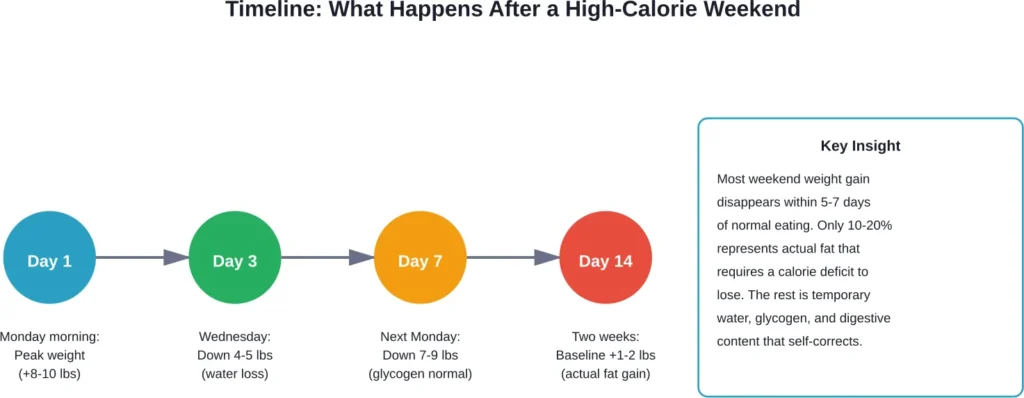
Give the body 5-7 days to normalize. Resume regular eating patterns, maintain hydration, and avoid the temptation to severely restrict calories in compensation.
Dramatic calorie cutting after a high-calorie period often backfires. Severe restriction triggers stress responses that promote further water retention and can slow metabolism.
Focus on Sodium Reduction
Return to home-cooked meals with controlled sodium levels. The CDC recommends limiting sodium intake to support healthy weight management.
Increase potassium-rich foods like bananas, sweet potatoes, and leafy greens. Potassium helps balance sodium and promotes fluid elimination.
Stay Hydrated
Counterintuitively, drinking more water helps reduce water retention. When hydrated adequately, the body doesn’t need to conserve fluids.
Aim for half your body weight in ounces daily—a 160-pound person should target 80 ounces of water.
Move Your Body
Physical activity helps normalize fluid balance and promotes digestion. According to the CDC, for overall health, adults need at least 150 minutes of moderate-intensity aerobic activity weekly. This could be 30 minutes a day, 5 days a week, or another combination that totals 150 minutes weekly.
Movement doesn’t need to be intense. Walking, gentle yoga, or swimming all support the body’s return to baseline.
Prioritize Sleep
Adequate sleep helps regulate hunger hormones and reduces stress-related cortisol. The CDC emphasizes that optimal sleep is a key component of healthy weight management alongside nutrition and physical activity.
Most adults need 7-9 hours nightly for proper metabolic function.
Weigh Strategically
Daily weighing can provide data, but it requires understanding fluctuations. Weight naturally varies by 3-5 pounds day-to-day based on hydration, digestive content, and hormonal cycles.
For those who find daily numbers stressful, weekly weighing at the same time under consistent conditions provides better trend data without the emotional rollercoaster.
The Role of Age and Metabolism
Age affects how quickly the body gains and loses weight. Harvard Health explains that starting in middle age, adults lose approximately 1% of muscle mass annually.
Muscle tissue burns more calories at rest than fat tissue. As muscle decreases, resting metabolic rate (RMR) declines. Research from the University of Colorado found that RMR decreases with age for both men and women partly because muscle mass declines.
This means older adults gain weight more easily from the same caloric intake that previously maintained their weight. The solution involves resistance training to preserve muscle mass and adjusting calorie intake to match changing metabolic needs.
Harvard Health suggests that clean living—eating nutritious whole foods and maintaining physical activity—remains the best approach to weight management as metabolism changes with age.
Understanding Body Composition vs. Scale Weight
The scale provides incomplete information. Two people can weigh the same but have vastly different body compositions.
Muscle weighs more than fat by volume. Someone who strength trains might weigh more than someone of the same height who doesn’t exercise, yet have a leaner appearance and better metabolic health.
According to PubMed research on fat tissue development, adipose tissue growth occurs through both fat cell size increase and creation of new fat cells. During weight loss, fat cells shrink but don’t disappear—they can quickly refill with triglycerides if caloric surplus returns.
This explains why weight regain after dieting often happens rapidly. The existing fat cells readily store energy again, whereas building new muscle tissue requires sustained effort and proper training stimulus.
| Measurement | What It Shows | Best Use Case |
|---|---|---|
| Scale weight | Total mass including fat, muscle, water, bones, organs | Tracking long-term trends (weekly averages) |
| Body fat percentage | Proportion of weight from adipose tissue | Assessing actual fat loss vs. muscle loss |
| Measurements (waist, hips, chest) | Physical size changes independent of weight | Tracking body composition changes during strength training |
| How clothes fit | Practical indication of size changes | Daily assessment without numbers fixation |
| Progress photos | Visual changes over time | Monthly comparisons to see gradual changes |
The Psychological Impact of Scale Fluctuations
Seeing a 10-pound increase creates genuine emotional distress, even when someone intellectually understands it’s temporary.
The number on the scale carries psychological weight beyond its physical meaning. It affects self-esteem, body image, and can trigger disordered eating behaviors.
Some people respond to weekend weight gain by severely restricting Monday through Friday, then overeating again on weekends—creating a harmful binge-restrict cycle.
Others become demotivated and abandon healthy habits entirely, thinking their efforts don’t matter if the scale can jump so dramatically.
Developing a healthier relationship with the scale requires understanding that:
- Weight is data, not a measure of worth or success
- Single weigh-ins are snapshots, not complete pictures
- Health markers beyond weight matter—blood pressure, cholesterol, energy levels, fitness capacity
- Sustainable health comes from consistent habits, not perfect days
For individuals with eating disorder history or those who find weighing triggers anxiety, alternative progress measures might be more appropriate.
Creating Sustainable Eating Patterns
The goal isn’t avoiding weight fluctuations entirely—that’s impossible. The goal is creating eating patterns that support health without extreme restriction or frequent binges.
According to the CDC, healthy eating patterns include a variety of nutritious foods. Fad diets promising fast results often limit nutritional intake, can be unhealthy, and tend to fail long-term.
Research published in PubMed shows that consumption of ultra-processed foods causes significant weight gain. Medical nutritional therapy focused on reducing ultra-processed foods could effectively prevent obesity.
Practical strategies include:
- Building meals around whole foods—vegetables, fruits, lean proteins, whole grains, healthy fats
- Limiting but not eliminating indulgent foods—restriction often leads to bingeing
- Planning ahead for events and travel rather than arriving overly hungry
- Eating mindfully and stopping when satisfied, not stuffed
- Cooking at home most of the time to control ingredients and portions
- Allowing flexibility for social occasions without guilt
The CDC emphasizes that comfort foods, in limited amounts, can be part of healthy eating patterns. The key is balance and proportion, not perfection.
Frequently Asked Questions
No, it’s physiologically impossible to gain 10 pounds of actual body fat in one week. This would require consuming 35,000 extra calories (5,000 per day) above maintenance needs. Rapid weight gain of this magnitude reflects water retention, glycogen storage, increased digestive content, and inflammation—not fat accumulation.
Water weight from high-sodium meals, carbohydrate loading, or travel typically resolves within 3-7 days of returning to normal eating and hydration patterns. The first 2-3 days show the most dramatic drops as excess sodium is excreted and glycogen stores normalize. Hormonal water retention related to menstrual cycles follows a predictable pattern and resolves as hormone levels shift.
No, severe calorie restriction after rapid weight gain usually backfires. Dramatic cutting triggers stress responses that can promote additional water retention and slow metabolism. Instead, return to normal, balanced eating patterns and allow the body 5-7 days to naturally return to baseline. Focus on nutrient-dense whole foods and adequate hydration rather than punishment-based restriction.
Seek medical evaluation if weight increases 5 pounds or more in a week without clear explanation, if rapid weight gain continues progressively, or if accompanied by symptoms like swelling in extremities, breathing difficulty, extreme fatigue, or signs of hormonal imbalance. According to Cleveland Clinic, gaining 2-3 pounds daily or 5% of body weight in a month warrants professional assessment.
New or intensified exercise causes temporary weight gain from multiple factors: muscle inflammation and repair fluid, increased glycogen storage in adapting muscles, and higher blood volume. These changes are positive adaptations, not fat gain. The scale typically increases 2-5 pounds in the first 2-3 weeks of a new program before trending downward as fat loss catches up to water retention.
Yes, adequate hydration actually helps reduce water retention. When properly hydrated, the body doesn’t need to conserve fluids. Dehydration triggers retention mechanisms that hold onto available water. Drinking half your body weight in ounces daily (a 160-pound person drinking 80 ounces) supports normal fluid balance and helps flush excess sodium.
Generally speaking, women experience more pronounced cyclical weight fluctuations due to hormonal changes throughout the menstrual cycle. Estrogen and progesterone shifts cause predictable water retention patterns that can add 3-7 pounds before menstruation. Men’s weight fluctuations tend to relate more to dietary sodium, carbohydrate intake, and exercise patterns rather than hormonal cycles.
The Bottom Line
Is it possible to gain 10 pounds in a week? Yes, the scale can absolutely show that number. But it’s not 10 pounds of body fat.
True fat gain requires a massive caloric surplus that’s extremely difficult to achieve even with deliberate overeating. The vast majority of rapid weight increases come from temporary factors—water retention from sodium and hormones, glycogen storage with bound water, digestive system content, and inflammation from exercise or travel.
These fluctuations are normal physiological responses, not failures or signs of irreversible weight gain. The body naturally returns to baseline within several days when regular patterns resume.
That said, unexplained rapid weight gain that persists or accompanies other symptoms deserves medical evaluation. Certain conditions—heart failure, kidney disease, hypothyroidism, Cushing’s syndrome—manifest as sudden weight increases and require professional treatment.
For most people dealing with scale shock after weekends or vacations, the solution is patience and perspective. Maintain healthy habits, stay hydrated, reduce sodium, prioritize sleep and stress management, and give the body time to normalize.
Focus on long-term trends rather than daily numbers. Health comes from consistent behaviors over time, not perfect days or weeks. The scale tells part of the story, but energy levels, fitness capacity, how clothes fit, and overall wellbeing provide equally important information.
According to the CDC, achieving and maintaining healthy weight involves multiple factors: nutritious eating, regular physical activity, adequate sleep, and stress reduction. No single weekend or week defines overall health trajectory—patterns and habits do.
Stop panicking over temporary fluctuations. Understand what the numbers really mean. And build sustainable practices that support health regardless of what the scale shows on any particular day.