

Quick Summary: You cannot be allergic to air itself, but you can experience severe allergic reactions to airborne allergens like pollen, dust mites, pet dander, mold spores, and air pollutants. These microscopic particles travel through the air and trigger immune responses in sensitive individuals, causing symptoms ranging from sneezing and watery eyes to life-threatening anaphylaxis.
Look, the short answer is no—you can’t be allergic to air itself. But here’s the thing: the air you breathe carries microscopic hitchhikers that can absolutely wreak havoc on your immune system.
Airborne allergens are everywhere. They float invisibly through indoor and outdoor environments, triggering reactions in millions of people worldwide. According to the CDC, pollen is an airborne allergen, and climate change may increase pollen concentrations and extend pollen seasons.
The air quality crisis compounds this problem. WHO data shows that in 2019, 99% of the world’s population lived in places where air quality guidelines weren’t met. Combined ambient and household air pollution are associated with 6.7 million premature deaths annually.
So while the air itself isn’t the enemy, what’s floating in it certainly can be.
What Are Airborne Allergens?
Airborne allergens are tiny particles suspended in the air that trigger allergic reactions when inhaled, touched, or sometimes just encountered. These substances are typically harmless to most people, but for those with sensitized immune systems, they’re recognized as threats.
When an allergen enters your body, your immune system mistakenly identifies it as dangerous. This triggers the release of histamine and other chemical mediators that cause the familiar allergy symptoms: sneezing, itching, congestion, and watery eyes.
According to NIH research on airborne allergens, they can be classified according to their area of exposure into indoor allergens (mites, epithelia, fungi, and pests) or outdoor allergens (pollens and fungal spores). They’re also categorized by timing as perennial (year-round) or seasonal.
Common Types of Airborne Allergens
The most prevalent airborne allergens include:
| Allergen Type | Common Sources | Peak Season/Exposure |
|---|---|---|
| Pollen | Trees, grasses, weeds | Spring, summer, fall (varies by plant) |
| Dust Mites | Bedding, carpets, upholstery | Year-round (peaks in humidity) |
| Pet Dander | Cats, dogs, rodents, birds | Year-round |
| Mold Spores | Damp areas, outdoor vegetation | Year-round indoors; summer/fall outdoors |
| Cockroach Particles | Urban environments, warm climates | Year-round |
Pet dander contains proteins that some people react to. According to research cited by medical sources, it’s possible to develop pet allergies even after years of symptom-free exposure.
Dust mites thrive in humidity. Research shows that maintaining relative humidity between 40-50% decreases dust mite prevalence.
The Science Behind Allergic Reactions to Air
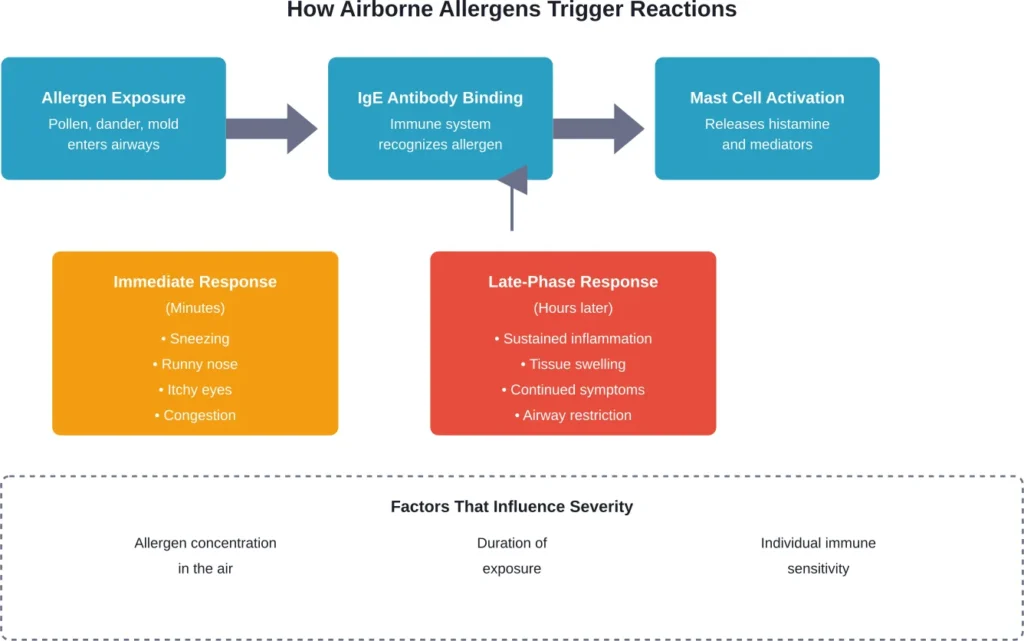
Allergic reactions involve a complex chain of immune system events. According to NCBI research on effector mechanisms in allergic reactions, the process begins when allergens cross-link preformed IgE antibodies bound to high-affinity receptors on mast cells.
Mast cells line body surfaces and serve to alert the immune system to local infection. When activated by allergens, they trigger inflammatory reactions by secreting chemical mediators stored in preformed granules and synthesizing leukotrienes and cytokines.
Here’s where it gets interesting: the reaction happens in two phases.
The immediate response occurs within minutes. Mast-cell degranulation releases histamine and other compounds that cause the rapid onset of symptoms—sneezing, itching, watery eyes, and nasal congestion.
The late-phase response follows hours later. This sustained inflammation involves recruitment of other immune cells, notably TH2 lymphocytes, eosinophils, and basophils, which contribute significantly to the ongoing allergic response.
Symptoms That Indicate Airborne Allergies
Airborne allergy symptoms vary widely depending on the allergen, exposure level, and individual sensitivity. The American Academy of Allergy, Asthma & Immunology identifies several common symptom patterns.
Respiratory symptoms are most common. These include sneezing, runny or stuffy nose, postnasal drip, coughing, and sinus pressure. These symptoms collectively define allergic rhinitis, commonly known as hay fever.
Eye symptoms affect many allergy sufferers. According to CDC data, allergic conjunctivitis impacts up to 30% of the general population and 70% of allergic rhinitis patients. Symptoms include red, watery, or itchy eyes caused by inflammation of the eye lining (conjunctiva) due to allergen exposure.
Asthma symptoms can be triggered by airborne allergens. In the United States, about 25 million people have asthma. According to medical sources, approximately 60% have allergies. Allergic asthma causes wheezing, shortness of breath, chest tightness, and difficulty breathing.
Skin reactions sometimes occur. Over 50% of those with atopic dermatitis—a chronic inflammatory skin condition—also develop asthma. Symptoms begin in childhood for 80% of those with atopic dermatitis.
When Airborne Allergies Become Dangerous
Airborne anaphylaxis is a rare but serious condition. According to NIH research, airborne anaphylaxis is defined by the occurrence of anaphylactic reactions to inhaled allergens, which may arise not only in occupational exposure but also in common settings.
Foods are surprisingly common causes of airborne anaphylaxis. Cooking fumes, flour dust, and even the smell of certain foods can trigger severe reactions in highly sensitized individuals.
Symptoms of anaphylaxis include difficulty breathing, rapid pulse, dizziness, swelling of the throat or tongue, and a sudden drop in blood pressure. This is a medical emergency requiring immediate treatment with epinephrine.
How Air Quality Affects Allergic Reactions
Poor air quality doesn’t just carry allergens—it actively amplifies allergic inflammation. Air pollution and climate change together worsen the health impacts of allergens like pollen and airborne biological particles, according to WHO research.
Particulate matter in polluted air acts as an adjuvant. NIH research on particles in allergic disease shows that combustion-derived particles and anthropogenic pollutants can enhance the allergenic properties of natural allergens.
Climate change is making allergies worse. The CDC reports that climate change may increase pollen concentrations and extend pollen seasons, heightening health effects for more people. Warmer temperatures and higher CO2 levels cause plants to produce more pollen for longer periods.
Indoor air quality matters just as much. Air conditioning systems can circulate allergens throughout a space if not properly maintained. But it’s not the AC itself that’s the problem—it’s what’s in the air being circulated.
Humidity levels play a crucial role. Maintaining indoor humidity below 50% creates an environment unfavorable for dust mites and mold growth. Dehumidifiers and proper ventilation in damp areas like bathrooms and basements help prevent mold proliferation.

Diagnosing Airborne Allergies
Proper diagnosis requires professional evaluation. Allergists use several methods to identify specific allergen sensitivities.
Skin prick tests are the most common diagnostic tool. According to the American Academy of Allergy, Asthma & Immunology, skin tests show the results within 20 minutes. Small amounts of suspected allergens are introduced to the skin surface, and any reaction indicates sensitivity.
Blood tests measure specific IgE antibodies. These tests are useful when skin testing isn’t practical or when patients take medications that interfere with skin test results.
Detailed health history matters enormously. Allergists evaluate symptom frequency, severity, timing, and potential exposure patterns. This information, combined with test results, guides treatment planning.
Treatment Options for Airborne Allergies
Treatment strategies range from avoidance and environmental control to medication and immunotherapy.
Allergen Avoidance
The first line of defense is reducing exposure. For pollen allergies, this means staying indoors during high pollen counts, keeping windows closed, and showering after outdoor activities.
For dust mite allergies, use allergen-proof bedding covers, wash bedding weekly in hot water, and remove carpet when possible. Hard flooring is easier to keep allergen-free than carpeting.
Pet allergen reduction requires keeping pets out of bedrooms, using HEPA air purifiers, and bathing pets regularly. But here’s the reality: complete avoidance is nearly impossible if you live with pets.
Medications
Several medication classes help control symptoms:
| Medication Type | How It Works | Common Uses |
|---|---|---|
| Antihistamines | Block histamine receptors | Sneezing, itching, runny nose |
| Nasal Corticosteroids | Reduce inflammation | Congestion, nasal symptoms |
| Decongestants | Shrink swollen nasal passages | Temporary congestion relief |
| Leukotriene Inhibitors | Block inflammatory chemicals | Asthma, allergic rhinitis |
| Mast Cell Stabilizers | Prevent histamine release | Eye symptoms, prevention |
Immunotherapy
Allergen immunotherapy is the only treatment that can modify the underlying allergic disease. It works by gradually desensitizing the immune system to specific allergens.
Traditional allergy shots involve regular injections of increasing allergen doses over several years. This approach has proven effectiveness for pollen, dust mites, pet dander, and mold allergies.
Sublingual immunotherapy uses allergen tablets or drops placed under the tongue. This method offers similar benefits with the convenience of at-home treatment.
Preventing Airborne Allergic Reactions
Prevention strategies focus on environmental control and preparation.
Air filtration makes a significant difference. HEPA filters can remove 99.9 percent of particles above a certain size. Use them in air purifiers and replace HVAC filters regularly.
Monitor pollen counts. Many weather services and allergy websites provide daily pollen forecasts. Plan outdoor activities when counts are lower, typically after rain or on cooler days.
Control indoor humidity below 50%. This creates an inhospitable environment for dust mites and mold. Dehumidifiers work well in damp basements and bathrooms.
Regular cleaning is essential. Vacuum with HEPA-filtered vacuums weekly, dust with damp cloths (which trap rather than scatter allergens), and wash bedding in hot water.
Maintain air conditioning systems. Clean units can help filter air, but poorly maintained systems breed mold and circulate allergens. Change filters monthly during heavy use periods.
When to See a Healthcare Provider
Certain situations warrant professional medical attention. Seek care if symptoms significantly impact daily life, interfere with sleep, or don’t respond to over-the-counter treatments.
According to medical guidelines, up to 70% of people with acute sinusitis recover without any prescribed medications. But persistent symptoms lasting more than 10 days or worsening symptoms after initial improvement suggest bacterial infection requiring antibiotics.
Emergency care is necessary for signs of anaphylaxis: difficulty breathing, throat swelling, rapid pulse, dizziness, or loss of consciousness. These symptoms require immediate epinephrine administration and emergency medical services.
Uncontrolled asthma symptoms also require urgent attention. If allergic asthma causes frequent symptoms, nighttime awakening, or limitation of activities, treatment adjustment is needed.
Living With Airborne Allergies
The prognosis for people with air allergies is generally good with proper management. Many people find significant relief through combination approaches using environmental control, medication, and sometimes immunotherapy.
Worldwide, more than a billion people are suffering from allergic disease, according to NIH research. Allergic respiratory illness is one of the most prevalent chronic conditions globally.
Climate change complicates the picture. As temperatures rise and pollen seasons extend, allergic individuals may face longer periods of symptoms and higher allergen exposure.
But effective management is possible. Most people with airborne allergies can control symptoms and maintain quality of life through consistent treatment and environmental modifications.
Frequently Asked Questions
Yes, allergies can develop at any age. Changes in environment, exposure to new allergens, or shifts in immune system function can trigger new allergic sensitivities even in people who never had allergies before. Adults can develop allergies to pollen, dust mites, pets, or mold that weren’t problematic earlier in life.
You’re not allergic to the air itself, but rather to specific allergens present in different environments. Indoor allergens like dust mites, pet dander, and mold are different from outdoor allergens like pollen. It’s entirely possible to react to indoor allergens while tolerating outdoor air well, or vice versa, depending on individual sensitivities.
Air purifiers with HEPA filters can remove 99.9% of particles from the air that passes through them, but they can’t completely eliminate allergens from a space. Allergens settle on surfaces, remain in textiles, and continuously enter from outside. Air purifiers are highly effective as part of a comprehensive strategy but work best combined with regular cleaning and source control.
Several factors contribute to nighttime allergy symptoms. Dust mites thrive in bedding, pillows, and mattresses. Lying down causes mucus to pool, increasing congestion. Pollen counts often peak in early morning hours. Additionally, circadian rhythms affect immune function and histamine release, making some people more reactive at night.
Air pollution doesn’t typically cause allergies directly, but it significantly worsens allergic reactions. Particulate matter and pollutants damage respiratory tissue, making it more permeable to allergens. Pollution can also act as an adjuvant, enhancing the allergenic properties of pollen and other airborne allergens, triggering stronger immune responses.
Most people begin noticing improvement from immunotherapy within 3-6 months, though optimal benefits typically require 1-2 years of consistent treatment. The full treatment course usually lasts 3-5 years. Results vary by individual, allergen type, and treatment adherence. Immunotherapy provides lasting benefits that can persist years after treatment ends.
Yes, airborne food allergies are real but rare. Highly sensitive individuals can react to airborne food particles from cooking fumes, flour dust, or even the smell of certain foods. These reactions range from mild respiratory symptoms to severe anaphylaxis. Foods commonly causing airborne reactions include fish, shellfish, milk, eggs, and legumes.
Conclusion
So, can you be allergic to air? Not exactly. But you can definitely be allergic to what’s floating in it.
Airborne allergens like pollen, dust mites, pet dander, and mold spores trigger reactions in millions of people worldwide. These microscopic particles activate immune responses that range from annoying sniffles to life-threatening anaphylaxis.
The good news? Effective management is entirely possible. Combination strategies using environmental control, proper air filtration, medication when needed, and immunotherapy for long-term relief can dramatically improve quality of life.
If you’re struggling with persistent symptoms, don’t settle for constant discomfort. Consult an allergist for proper testing and personalized treatment. With the right approach, you can breathe easier—literally.