
Quick Summary: While technically possible through extreme calorie restriction, losing 10 pounds in a week is neither safe nor sustainable. According to the CDC, healthy weight loss occurs at 1-2 pounds per week. Rapid weight loss primarily sheds water weight and muscle mass rather than fat, and the weight typically returns quickly once normal eating resumes.
The promise of dropping 10 pounds in just seven days floods social media feeds, email inboxes, and late-night infomercials. But here’s the thing—what’s technically possible isn’t always advisable or safe.
According to the CDC, healthy weight loss occurs at a rate of approximately 1 to 2 pounds per week. This gradual approach gives the body time to adjust while preserving muscle mass and metabolic function.
So what really happens when someone attempts to shed that much weight in such a short timeframe?
The Reality Behind Rapid Weight Loss
Yes, losing 10 pounds in a week is technically achievable. Athletes preparing for weigh-ins and individuals undergoing medically supervised programs sometimes accomplish this.
But the weight lost isn’t what most people imagine.
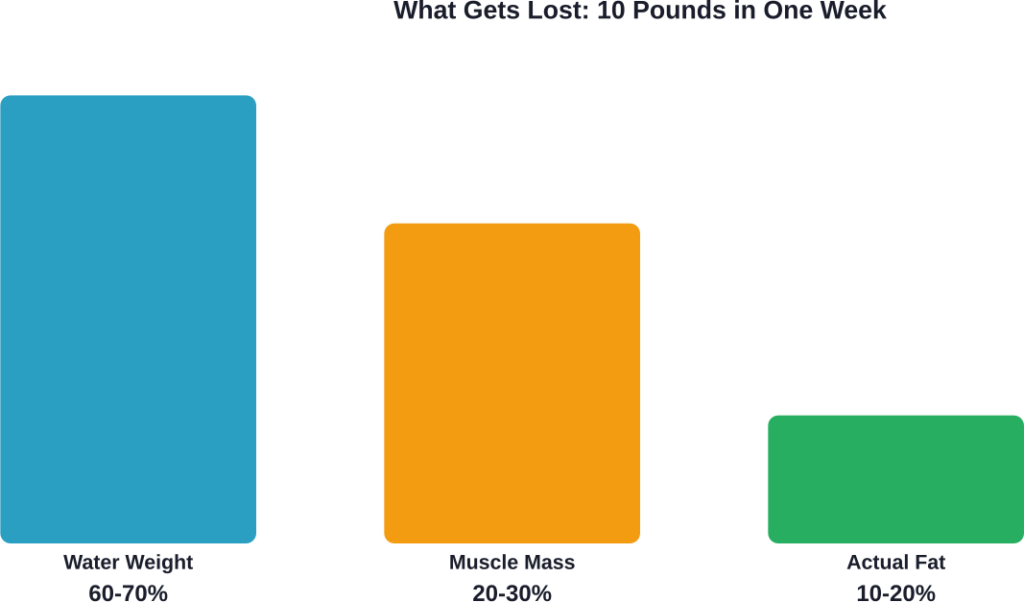
Rapid weight loss primarily consists of water weight, glycogen stores, and unfortunately, lean muscle mass. Fat loss—the actual goal for most people—represents only a small fraction of weight dropped during extreme restriction.
Research published by the National Institutes of Health indicates that weight loss exceeding 10% of body weight qualifies as “large” weight loss. While 5-10% reductions over six months can improve glycemic control and reduce blood pressure, faster rates increase potential health risks.
What Happens Inside the Body
When calorie intake drops dramatically, the body enters a state of perceived starvation. Metabolic rate decreases as a protective mechanism.
Studies on very-low-calorie diets show that resting metabolic rate declines during rapid weight loss. This metabolic adaptation makes further weight loss progressively harder and sets the stage for rapid regain.
The body also breaks down muscle tissue for energy when calorie restriction becomes extreme. Loss of lean muscle mass further reduces metabolic rate since muscle tissue burns more calories at rest than fat tissue.
Health Risks Worth Considering
Extreme calorie restriction needed to lose 10 pounds in a week creates multiple physiological stressors.
The National Library of Medicine identifies several risks associated with rapid weight loss diets that exceed 2 pounds per week over several weeks.
Nutritional Deficiencies
Very-low-calorie diets typically provide inadequate vitamins, minerals, and essential nutrients. Without medical supervision and supplementation, deficiencies develop quickly.
Electrolyte imbalances pose particular concern. Rapid fluid loss can disrupt sodium, potassium, and magnesium levels—minerals critical for heart function and muscle contraction.
Metabolic Consequences
Research demonstrates that resting metabolic rate decreases during rapid weight loss. This adaptation persists even after weight loss ends, making weight maintenance significantly harder.
Studies on very-low-calorie diets found decreases in serum T3 concentrations—a thyroid hormone that regulates metabolism. Lower thyroid function contributes to reduced energy expenditure.
Muscle Loss and Strength Decline
According to research analyzing different weight loss rates, faster rates may result in more fat-free mass loss and less fat mass reduction compared to slower approaches.
Loss of muscle tissue affects more than just metabolic rate. Strength, physical function, and daily activity capacity all decline when muscle mass decreases significantly.
| Weight Loss Rate | Primary Composition Lost | Metabolic Impact | Sustainability |
|---|---|---|---|
| 10 pounds/week | Water, muscle, minimal fat | Significant decrease | Very poor |
| 2-3 pounds/week | Mixed water, fat, some muscle | Moderate decrease | Poor to moderate |
| 1-2 pounds/week | Primarily fat, muscle preserved | Minimal decrease | Good to excellent |
The Rebound Effect
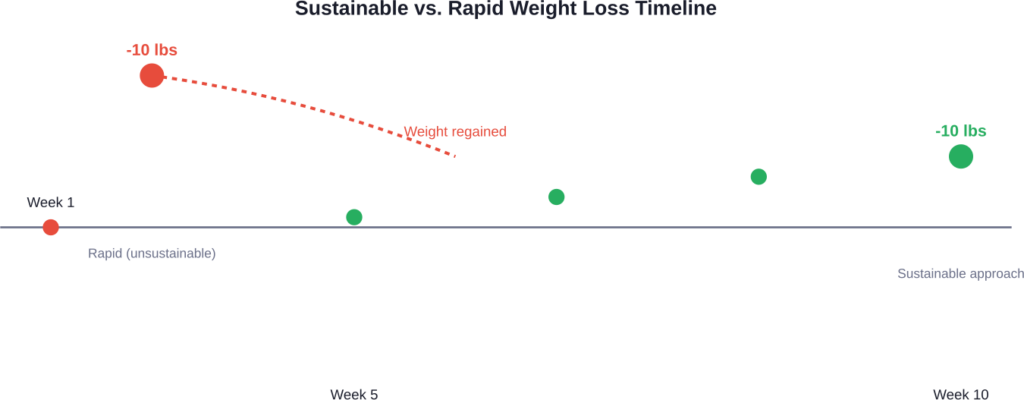
Here’s what almost nobody talks about: the weight comes back.
Water weight lost through glycogen depletion and fluid restriction returns within days of resuming normal eating patterns. Muscle lost during extreme restriction doesn’t return nearly as easily.
This creates a frustrating cycle where individuals end up at the same weight—or higher—with less muscle mass and a slower metabolism than before they started.
Many individuals report regaining rapid weight loss quickly after returning to regular eating patterns, though specific timeframes vary by person.
What Actually Works: The CDC Approach
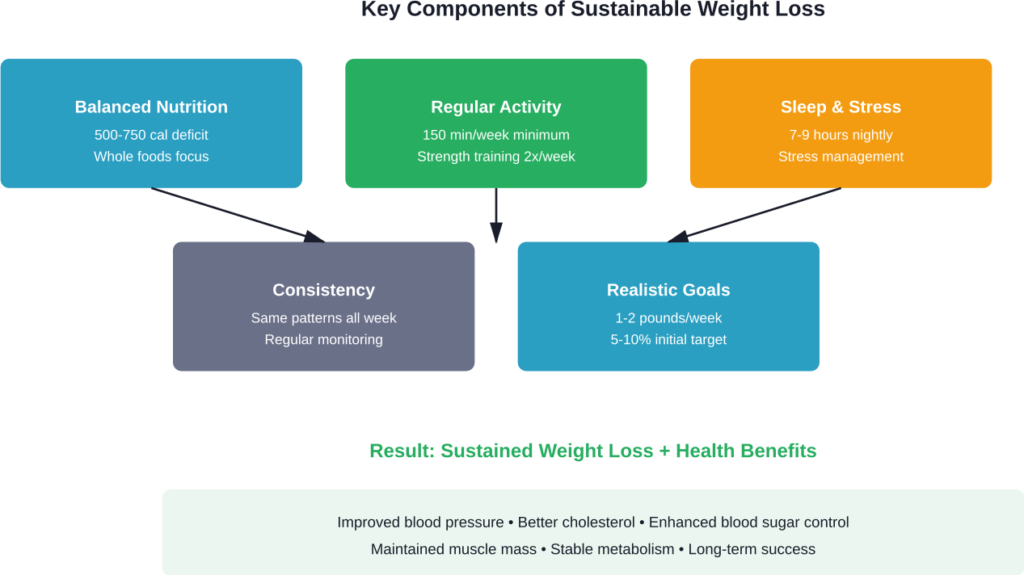
According to the CDC, people who lose weight at a gradual, steady pace of 1 to 2 pounds per week have more success maintaining that loss over time.
This approach prioritizes lifestyle changes over quick fixes: healthy eating patterns, regular physical activity, adequate sleep, and stress management.
The 5-10% Target
Research shows that even modest weight loss provides significant health benefits. For someone weighing 200 pounds, a 5% reduction equals just 10 pounds.
But here’s the difference: losing those 10 pounds over 5-10 weeks instead of one week produces lasting metabolic improvements. Studies demonstrate that weight losses of 5-10% improve blood pressure, cholesterol levels, and blood sugar control.
Research published in Circulation: Cardiovascular Quality and Outcomes found that weight loss benefits were associated with decreased risk factors for cardiovascular disease and Type 2 diabetes for at least five years, even if some weight was regained.
Physical Activity Requirements
The CDC recommends adults get at least 150 minutes of moderate-intensity aerobic activity weekly. That breaks down to 30 minutes daily, five days per week.
Additionally, muscle-strengthening activities on two or more days per week help preserve lean muscle mass during weight loss.
According to the American Heart Association, meeting these physical activity guidelines may be sufficient to reduce abdominal fat without additional exercise time required.
Creating a Realistic Calorie Deficit
Fat loss requires a calorie deficit—burning more energy than consumed. One pound of fat contains approximately 3,500 calories.
To lose 1-2 pounds weekly, a deficit of 500-750 calories daily is needed. The Mayo Clinic notes this can be achieved through a combination of reduced intake and increased physical activity.
But attempting to create a deficit large enough for 10-pound weekly loss would require eliminating 5,000 calories daily—more than most people consume in the first place.
The Role of Very-Low-Calorie Diets
Very-low-calorie diets providing 800 calories or fewer per day exist. However, according to MedlinePlus, these are typically used only in clinical settings under medical supervision.
These programs include careful monitoring, supplementation, and medical oversight to mitigate risks. They’re generally reserved for individuals with obesity-related health complications where rapid weight reduction provides medical benefit.
For the general population seeking weight loss, these approaches aren’t recommended without physician guidance.
When Rapid Weight Loss Occurs Naturally
Sometimes significant weight drops happen without extreme dieting. Water retention from high sodium intake, hormonal fluctuations, or inflammation can add considerable water weight.
When these factors normalize, weight can drop several pounds quickly. This represents fluid balance correction rather than fat loss.
Similarly, individuals starting from very high body weights sometimes experience faster initial losses. According to research on obesity, metabolic improvements begin when people with extreme obesity lose about 10% of body weight—but this occurs over months, not days.
Building Sustainable Habits Instead
The American Heart Association emphasizes that losing weight and maintaining that loss requires lifestyle changes, not temporary fixes.
Real talk: sustainable weight management isn’t glamorous. There’s no dramatic seven-day transformation. But there is lasting change that actually improves health markers and quality of life.
According to CDC guidelines for maintaining weight loss, successful long-term weight management includes:
- Following a healthy, realistic eating pattern that continues after initial weight loss
- Monitoring body weight regularly
- Getting 60-90 minutes of moderate physical activity most days
- Eating breakfast consistently
- Maintaining consistent eating patterns across all days
Research on people who successfully maintained weight loss shows most continued eating fewer calories than before but not at severely restrictive levels.
Frequently Asked Questions
No, losing 10 pounds in a week isn’t considered safe without medical supervision. The CDC recommends 1-2 pounds weekly as a healthy rate. Rapid weight loss primarily depletes water and muscle rather than fat, and carries risks including nutritional deficiencies, electrolyte imbalances, and metabolic disruption.
According to the CDC, healthy weight loss occurs at approximately 1 to 2 pounds per week. This rate allows the body to adapt while preserving muscle mass and metabolic function. Even modest weight loss of 5-10% over several months provides significant health benefits.
Rapid weight loss consists primarily of water weight and glycogen stores, which replenish quickly when normal eating resumes. Additionally, extreme calorie restriction decreases metabolic rate and causes muscle loss, making weight regain more likely and easier once the diet ends.
Research shows that resting metabolic rate decreases during rapid weight loss. Very-low-calorie diets reduce thyroid hormone levels and cause the body to burn fewer calories at rest. This metabolic adaptation persists even after dieting ends, contributing to weight regain.
No, losing 10 pounds of pure fat in a week is mathematically impossible for most people. Fat contains approximately 3,500 calories per pound, so 10 pounds would require a deficit of 35,000 calories—5,000 calories daily for seven days—which exceeds what most people consume.
Yes, very-low-calorie diets are sometimes used under strict medical supervision for individuals with obesity-related health complications. According to MedlinePlus, these programs include careful monitoring, supplementation, and oversight to mitigate health risks. They’re not recommended for general weight loss without physician guidance.
According to the CDC, an initial goal of 5-10% body weight loss is both realistic and beneficial. For someone weighing 200 pounds, that’s 10-20 pounds lost over 5-10 weeks. Research shows this modest reduction significantly improves blood pressure, cholesterol, and blood sugar levels.
The Bottom Line
So is it possible to lose 10 pounds in a week? Technically, yes. Should anyone actually attempt it? Almost certainly not.
The weight lost through extreme restriction comes right back. Meanwhile, metabolic damage, muscle loss, and nutritional deficiencies create lasting problems that make future weight management even harder.
According to the CDC and extensive research on sustainable weight management, the gradual approach wins. One to two pounds weekly might not make for dramatic before-and-after photos, but it produces lasting results that actually improve health.
For those ready to start losing weight sustainably, focus on creating a modest calorie deficit through balanced nutrition and regular physical activity. Aim for that 5-10% initial goal, give it adequate time, and build habits that last beyond any single week.
The transformation might take longer—but unlike rapid weight loss schemes, it’ll actually stick.