

Quick Summary: No, you cannot swallow your tongue. The lingual frenulum—a band of tissue connecting your tongue to the floor of your mouth—makes it physically impossible. While the tongue can fall back and block the airway in unconscious individuals, it cannot be swallowed, and placing objects in someone’s mouth during a seizure is dangerous and unnecessary.
Picture this: someone collapses during a sporting event, and within seconds, commentators are warning about “swallowing the tongue.” It’s a phrase that’s been repeated so often that it’s become accepted wisdom. But here’s the thing—it’s completely wrong.
The idea that someone can swallow their tongue is one of the most persistent medical myths out there. Despite repeated efforts by healthcare professionals to debunk it, the misconception continues to spread, leading to potentially dangerous first aid responses.
So what’s really happening when someone appears to be “swallowing their tongue”? And why won’t this myth die?
Why It’s Physically Impossible to Swallow Your Tongue
Your tongue isn’t just floating freely in your mouth. It’s firmly anchored by a band of tissue called the lingual frenulum.
According to research published by the National Institutes of Health, 99.5% of healthy individuals have a lingual frenulum that connects the tongue to the floor of the mouth. This anatomical structure prevents the tongue from moving backward far enough to be “swallowed.”
The frenulum is a normal anatomical structure—not some random piece of tissue. You can see it yourself: lift your tongue toward the roof of your mouth and look underneath. That thin band of tissue connecting the underside of your tongue to your mouth’s floor? That’s what keeps your tongue firmly in place.
Even during extreme situations like seizures, unconsciousness, or sleep, this connection remains intact. The tongue simply cannot detach and slide down your throat.
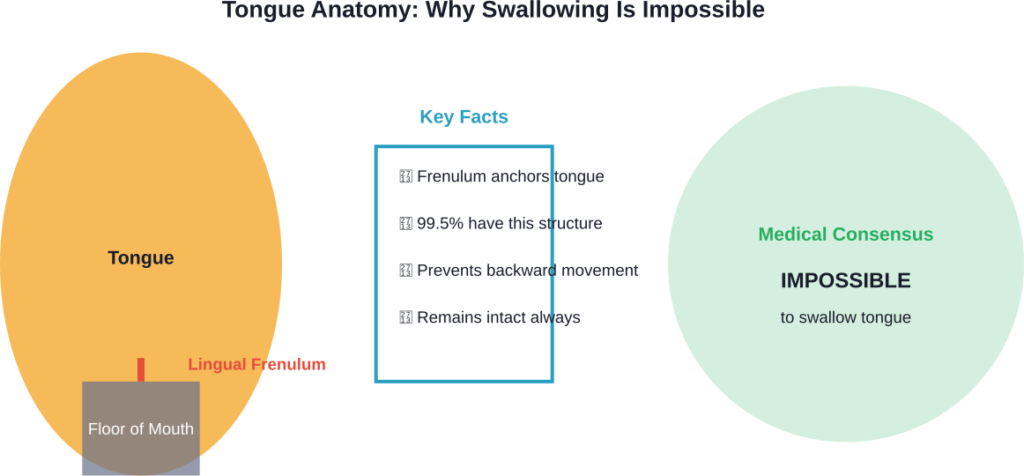
What Actually Happens: Airway Obstruction vs. Tongue Swallowing
Now, just because you can’t swallow your tongue doesn’t mean tongue-related breathing problems don’t exist.
When someone becomes unconscious—whether from a seizure, head injury, or other medical emergency—the muscles in their body relax. This includes the tongue muscles. In an unconscious person lying on their back, the relaxed tongue can fall backward toward the throat.
This is called airway obstruction, and it’s a real concern. But it’s completely different from “swallowing” the tongue.
The tongue remains attached to the mouth. It hasn’t gone anywhere. It’s simply blocking the passage of air, similar to how a collapsed garden hose stops water flow. The structure is still there—just in the wrong position.
The Seizure Connection
According to medical authorities including the National Institutes of Health and Mayo Clinic, placing foreign objects in a seizing person’s mouth is both unnecessary and dangerous.
During a seizure, the jaw muscles can clamp down with tremendous force. Putting fingers, spoons, wallets, or any other object in someone’s mouth can result in:
- Broken teeth (for the person having the seizure)
- Choking hazards (from the object itself)
- Severe bite injuries (for the person providing “help”)
- Blocked airways (from improperly placed objects)
In a 2017 study, researchers surveyed 106 people with epilepsy about oral injuries during seizures. The findings revealed that 52.4% experienced oral injuries during epileptic seizures, most commonly affecting the lips, tongue, or cheeks. Additionally, 18% experienced tooth cracks.
But here’s what’s important: these injuries happened during the seizure itself, from the muscle contractions—not from “swallowing” the tongue, and not from bystanders putting objects in their mouths.
Where This Dangerous Myth Came From
So why does this myth persist? A few reasons.
First, the phrase “swallowing your tongue” is dramatic and memorable. It sounds urgent and specific, which makes it stick in people’s minds and spread easily.
Second, in high-pressure situations like sports injuries or medical emergencies, people want to feel like they’re doing something helpful. The idea that you need to immediately “save” someone’s tongue gives bystanders a concrete action to focus on.
Third, commentators and media have repeated this phrase for decades, particularly in sports broadcasting. When athletes get injured on the field, you’ll often hear concerns about “swallowing the tongue”—reinforcing the myth to millions of viewers.
Real talk: old first aid training didn’t help. Decades ago, some first aid courses actually taught people to grab the tongue or put objects in the mouth of seizure victims. Though medical guidance has changed, these outdated practices still circulate through word of mouth.
Proper First Aid: What to Actually Do
Okay, so what should you do if someone has a seizure or becomes unconscious?
During a Seizure
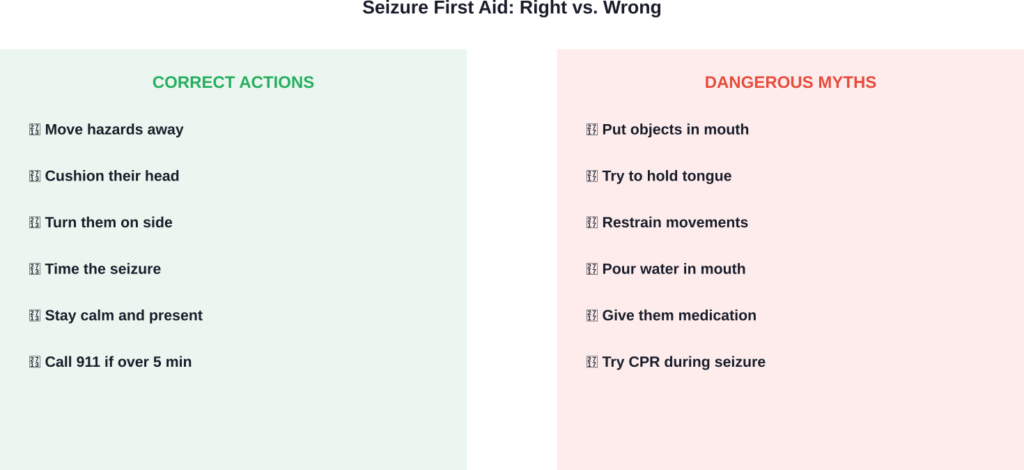
According to Mayo Clinic and other medical authorities, proper seizure first aid includes:
- Keep the person safe from nearby hazards (move furniture, cushion their head)
- Turn them on their side when possible (to help fluids drain from the mouth)
- Time the seizure (call emergency services if it lasts more than 5 minutes)
- Stay calm and stay with them
- Never put anything in their mouth
- Don’t try to hold them down or stop their movements
That’s it. No heroic tongue-saving required.
For an Unconscious Person
If someone is unconscious but breathing, the recovery position is your best approach:
- Position them on their side
- Tilt their head back slightly to open the airway
- Check that they’re breathing normally
- Call for emergency medical help
- Monitor them continuously until help arrives
The recovery position naturally prevents the tongue from falling back and blocking the airway. Gravity does the work—no manual tongue management needed.
Real Oral Injuries During Seizures
While tongue swallowing isn’t possible, oral injuries during seizures are definitely real.
The 2017 research found that more than half of people with epilepsy experience some form of oral injury during seizures. These injuries typically include:
| Type of Injury | Frequency | Typical Cause |
|---|---|---|
| Tongue/cheek bites | Most common | Involuntary jaw clenching |
| Tooth cracks | 18% | Muscle contractions |
| Lip lacerations | Common | Impact or clenching |
| Jaw injuries | Less common | Muscle force |
These injuries happen because of the powerful, involuntary muscle contractions during a seizure—not because anyone failed to “save” the tongue.
And here’s the critical point: putting objects in someone’s mouth doesn’t prevent these injuries. It can actually make them worse by adding foreign objects that can break teeth, cause choking, or create additional trauma.
When Tongue Position Actually Matters
There are legitimate medical situations where tongue position affects breathing, but they’re not about “swallowing.”
According to MedlinePlus, the epiglottis—a flap of cartilage located in the throat behind the tongue—normally covers the windpipe during swallowing to prevent food and liquid from entering the lungs. This is part of the normal swallowing reflex, which involves complex coordination between the tongue, throat muscles, and airway structures.
In unconscious individuals, this protective reflex doesn’t work properly. The relaxed tongue can fall backward, but proper positioning (like the recovery position) addresses this without any need to manipulate the tongue directly.
Medical Conditions Affecting the Tongue
Some legitimate conditions can affect tongue mobility:
- Ankyloglossia (tongue-tie): A shortened lingual frenulum that restricts movement, occurring in 4-16% of newborns
- Sleep apnea: Where the tongue and soft tissues relax and partially block the airway during sleep
- Swallowing disorders (dysphagia): Difficulty coordinating the swallowing mechanism
But notice: none of these involve “swallowing” the tongue. They’re about movement restriction, positioning, or coordination problems.
Breaking the Myth Cycle
Medical professionals have been fighting this myth for years. According to a publication in PubMed, neurologists have a specific obligation to champion safe practices for patients and educate the public about seizure safety.
The medical community is clear: one cannot swallow their tongue during a seizure, and foreign objects should never be placed into a seizing person’s mouth.
But myths die hard, especially when they’re reinforced by:
- Sports commentators using the phrase during broadcasts
- Older family members passing down outdated first aid advice
- Dramatic depictions in movies and television
- The persistent belief that “doing something” is always better than doing the right thing
Education, repetition, and calling out the myth when encountered can help change this narrative.
Next time the phrase “swallowing the tongue” comes up, you’ll know better. And now you can explain why it’s not just wrong—it’s anatomically impossible.
Frequently Asked Questions
No, it’s physically impossible. The lingual frenulum—a band of tissue under your tongue—firmly connects it to the floor of your mouth. This anatomical structure, present in 99.5% of people, prevents the tongue from moving backward far enough to be swallowed, even during seizures or unconsciousness.
During a seizure, powerful muscle contractions can cause the jaw to clench, sometimes resulting in tongue or cheek bites. However, the tongue remains attached and cannot be swallowed. According to a 2017 study, 52.4% of people with epilepsy experience oral injuries during seizures, primarily from involuntary muscle movements.
Absolutely not. According to the National Institutes of Health, placing foreign objects in a seizing person’s mouth is dangerous and can cause broken teeth, choking hazards, severe bite injuries, or blocked airways. The correct approach is to keep them safe from hazards, turn them on their side, and never put anything in their mouth.
Yes, but this is different from swallowing. When someone loses consciousness, relaxed muscles can cause the tongue to fall backward toward the throat, potentially obstructing the airway. The solution is positioning (like the recovery position), not trying to hold or manipulate the tongue directly.
The myth persists due to dramatic language used in sports broadcasting, outdated first aid training from decades ago, and media reinforcement. The phrase “swallowing your tongue” is memorable and sounds urgent, making it stick despite being anatomically impossible.
The recovery position involves placing an unconscious but breathing person on their side with their head tilted back slightly. This position uses gravity to prevent the relaxed tongue from falling backward and blocking the airway, while also allowing fluids to drain from the mouth naturally.
No. Tongue-tie (ankyloglossia) is a condition where a shortened lingual frenulum restricts tongue movement, affecting 4-16% of newborns. While it can impact breastfeeding and speech, it doesn’t make swallowing the tongue possible—in fact, the frenulum is exactly what prevents tongue swallowing in everyone.
The Bottom Line
The myth of tongue swallowing has persisted for far too long, leading to dangerous first aid practices that can cause real harm.
The truth is straightforward: your tongue is firmly anchored to your mouth by the lingual frenulum, making it anatomically impossible to swallow. What people call “swallowing the tongue” is actually airway obstruction from a relaxed tongue falling backward—a completely different situation that requires positioning, not intervention.
If someone has a seizure, keep them safe, turn them on their side, time the episode, and never put anything in their mouth. If someone is unconscious, place them in the recovery position and call for emergency help.
Share this information with friends, family, and especially anyone involved in sports or childcare. The next time someone mentions “swallowing the tongue,” you’ll have the knowledge to correct the myth and potentially prevent a dangerous intervention.
Understanding the real anatomy and proper first aid could make the difference between helping someone and inadvertently causing harm. And that’s knowledge worth spreading.