

Quick Summary: Yes, you can die from a broken heart. Takotsubo cardiomyopathy, or broken heart syndrome, is a real medical condition triggered by extreme stress that can cause serious complications and death. Recent data shows high mortality rates, especially in men, with no improvement in outcomes from 2016 to 2020 despite medical advances.
The phrase “died of a broken heart” sounds like something from a Victorian novel. But it’s not poetic exaggeration—it’s a genuine medical phenomenon that claims lives every year.
When someone experiences overwhelming emotional or physical stress, their heart can literally change shape and stop functioning properly. The medical term is takotsubo cardiomyopathy, named after a Japanese octopus trap because of how the heart’s left ventricle balloons during an episode.
And here’s what most people don’t realize: this condition can be fatal.
What Is Broken Heart Syndrome?
Takotsubo cardiomyopathy is a form of non-ischemic cardiomyopathy where the heart’s main pumping chamber temporarily enlarges and weakens. According to the National Institutes of Health, the condition mimics a heart attack but occurs without blocked arteries or plaque rupture.
The key difference? Heart attacks result from blood clots blocking coronary arteries. Broken heart syndrome stems from a massive surge of stress hormones—primarily adrenaline—that temporarily stuns the heart muscle.
The name comes from the distinctive shape the heart takes during an episode. On imaging, the left ventricle looks remarkably similar to a takotsubo, a ceramic pot Japanese fishermen use to trap octopuses. The bottom balloons out while the neck remains narrow.
What Triggers It?
According to StatPearls, a medical reference published by the National Institutes of Health, risk factors include:
- Death of relatives or loved ones
- Domestic abuse
- Natural disasters
- Major accidents or trauma
- Serious arguments or conflicts
- Financial loss or gambling losses
- Diagnosis of acute medical illness
- Stimulant drugs like cocaine or amphetamines
- Even positive life events like weddings or surprise parties
The condition isn’t limited to emotional triggers. Physical stressors—especially pulmonary and neurological diseases—can provoke episodes as well.
The Mortality Data Is Alarming
Here’s where the statistics get sobering. Research published in the Journal of the American Heart Association in May 2025 analyzed 199,890 patients admitted with takotsubo cardiomyopathy between 2016 and 2020.
The findings revealed continued high death rates with no improvement in outcomes over those five years. According to the American Heart Association, “The continued high death rate is alarming, suggesting that more research be done for better treatment and finding new therapeutic approaches to this condition.”
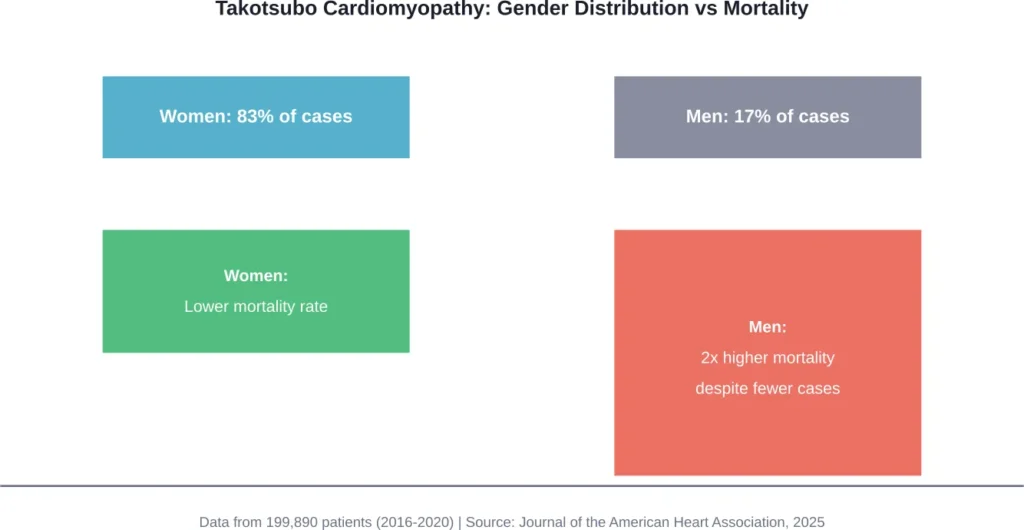
Another study found that men with takotsubo cardiomyopathy were twice as likely to die as women. This gender disparity persists despite women representing 83% of cases.
Risk Factors for Poor Outcomes
According to research published in the Journal of Personalized Medicine, several factors predict worse long-term prognosis:
- Male sex
- Older age
- Reduced left ventricular ejection fraction
- Physical triggers (particularly pulmonary and neurological diseases)
- Comorbidities like atrial fibrillation, chronic obstructive pulmonary disease, and active cancer
One study examining the connection between takotsubo syndrome and cancer found that for one in six people with broken heart syndrome, there’s a link to cancer diagnosis or treatment.
Who’s Most at Risk?
According to research cited in competitor sources, 83-88% of takotsubo cardiomyopathy cases occur in women, particularly postmenopausal women. Researchers suspect hormonal changes after menopause may increase susceptibility to stress-induced heart damage.
The typical patient profile includes:
- Postmenopausal women (ages 50+)
- White race (highest prevalence in the U.S. data)
- Recent exposure to severe emotional or physical stress
- History of anxiety or depression
But here’s the catch: while women develop the condition more frequently, men who get it are far more likely to die from it.
How It Differs From a Heart Attack
The symptoms look identical to a heart attack. Chest pain, shortness of breath, irregular heartbeat, and sudden weakness all characterize both conditions. That’s why anyone experiencing these symptoms needs emergency medical attention immediately.
| Feature | Heart Attack | Broken Heart Syndrome |
|---|---|---|
| Cause | Blocked coronary artery | Stress hormone surge |
| Arterial damage | Yes (plaque/clot) | No visible blockage |
| Heart shape change | No characteristic pattern | Apical ballooning pattern |
| Recovery | Permanent damage common | Often temporary (weeks-months) |
| Recurrence rate | Varies widely | Can recur in some patients |
The good news? According to medical experts, most people fully recover and their heart function returns to normal. Heart failure occurs in about 20% of cases, but the long-term prognosis is generally excellent for those who survive the initial episode.
That qualifier—”for those who survive”—matters though. The condition can be fatal, particularly in cases complicated by cardiogenic shock or severe ventricular dysfunction.
The Stress-Heart Connection
The National Institutes of Health has been researching how stress affects the cardiovascular system. In February 2025, NIH-funded researchers developed a risk score combining three measures of cardiovascular response to stress.
People with intermediate scores showed a 50% greater chance of experiencing future heart problems. Those with the highest scores—indicating poor cardiovascular adaptation to stress—had double the risk of heart attack, severe heart failure, or death years later.
This research underscores something cardiologists have known for decades: depression and heart disease share a two-way relationship. According to the National Heart, Lung, and Blood Institute, at least a quarter of cardiac patients suffer with depression, and adults with depression frequently develop heart disease.
Can You Prevent It?
There’s no guaranteed prevention strategy. The condition can strike even healthy people with no prior cardiac history. However, managing stress and treating underlying mental health conditions may reduce risk.
The American Heart Association emphasizes recognizing warning signs and seeking immediate medical attention. Because broken heart syndrome mimics a heart attack so closely, emergency evaluation is critical to rule out arterial blockage and provide appropriate treatment.
Frequently Asked Questions
Yes. Overwhelming grief can trigger takotsubo cardiomyopathy, which carries significant mortality risk. The emotional stress from losing a loved one creates a surge of stress hormones that can temporarily disable the heart. While many recover, some cases result in fatal complications.
Most cases resolve within days to weeks, with full recovery of heart function within one to two months. However, some patients experience prolonged symptoms, and complications during the acute phase can be life-threatening. Long-term mortality rates remain higher than previously expected.
It feels identical to a heart attack: sudden chest pain, shortness of breath, irregular heartbeat, and arm or jaw pain. These symptoms require immediate emergency evaluation since distinguishing between broken heart syndrome and an actual heart attack requires medical testing.
Yes, recurrence is possible. Some patients experience multiple episodes, particularly if they face repeated severe stressors. Research on long-term outcomes shows that recurrence can affect up to 11% of patients.
Absolutely. While women account for 83% of cases, men were twice as likely to die as women. The reasons for this gender disparity remain under investigation, but men with takotsubo cardiomyopathy experience worse outcomes and higher complication rates.
Surprisingly, yes. Weddings, surprise parties, lottery wins, and other joyful events can trigger the condition. Any event causing a massive emotional response—positive or negative—can flood the system with stress hormones and provoke an episode.
Treatment varies by case. Some patients receive medications like beta-blockers or ACE inhibitors during recovery. Long-term medication needs depend on individual risk factors, recurrence potential, and any complications that developed during the acute episode. Medical follow-up is essential.
The Bottom Line
Dying from a broken heart isn’t just possible—it happens more often than most people realize. Takotsubo cardiomyopathy represents a genuine medical emergency with mortality rates that haven’t improved despite modern cardiac care.
The condition disproportionately affects postmenopausal women but kills men at twice the rate. Physical and emotional stressors can both trigger episodes, and even positive life events sometimes provoke the syndrome.
If you or someone you know experiences sudden chest pain, shortness of breath, or other cardiac symptoms—especially following severe stress or trauma—seek emergency medical attention immediately. What feels like a metaphorical broken heart might actually be your heart crying out for help.