
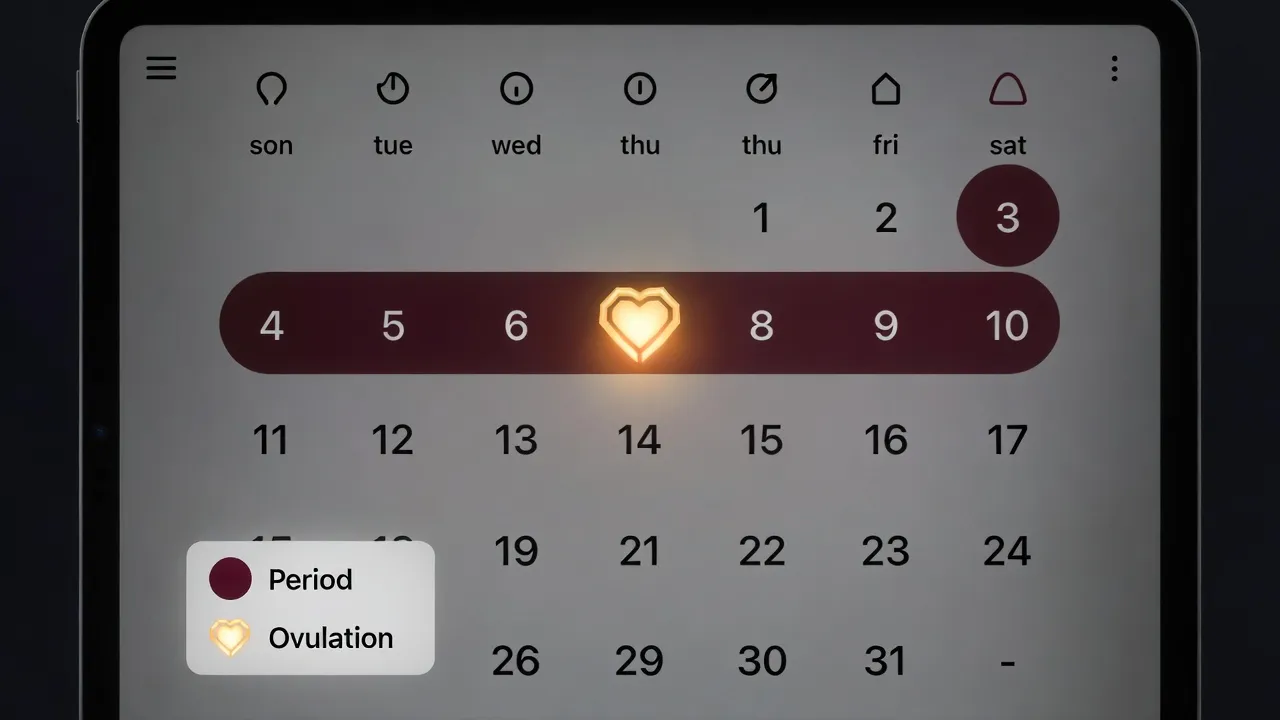
Quick Summary: True ovulation during menstruation is extremely rare in healthy women with regular cycles. However, women with very short cycles (21 days or less) can ovulate shortly after their period ends, and since sperm can survive in the female reproductive tract for about 3 days and sometimes up to 5 days, having sex during your period could potentially lead to pregnancy if you ovulate early in the next cycle.
The question of whether ovulation can happen during menstruation confuses many people trying to understand their fertility. The short answer? It’s technically possible but extremely unlikely for most women.
Understanding this requires looking at how the menstrual cycle actually works and why timing matters so much.
Understanding the Menstrual Cycle and Ovulation Timing
According to the National Institute of Environmental Health Sciences, the typical menstrual cycle lasts 28 days, though normal cycles range from 21 to 35 days. The cycle has two main phases: the follicular phase (which includes menstruation) and the luteal phase.
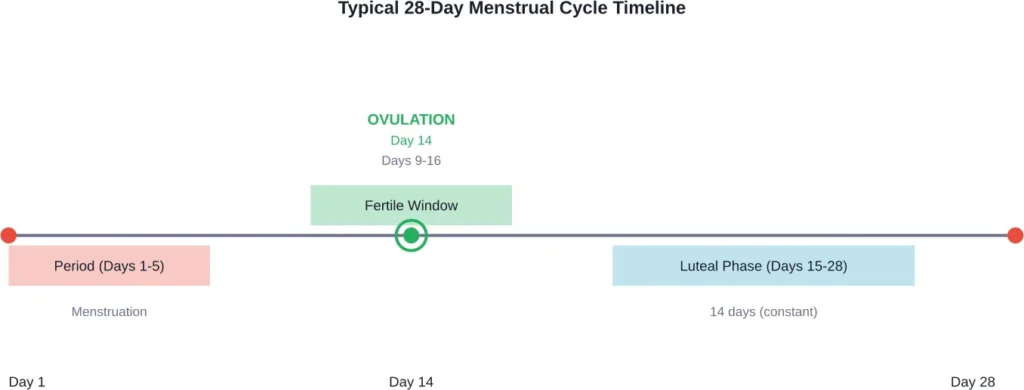
Here’s the thing though—the luteal phase stays relatively constant at about 14 days in most women. The variability comes from the follicular phase, which can range from 10 to 16 days.
Menstruation marks the beginning of the cycle. Ovulation typically happens about 14 days before the next period starts. For someone with a 28-day cycle, that’s around day 14. But for shorter cycles, ovulation happens much earlier.
Can Ovulation Actually Occur During Bleeding?
For the vast majority of women with regular cycles, ovulation during active menstruation is biologically improbable. The hormonal environment during menstruation actively prevents ovulation from occurring.
During your period, estrogen and progesterone levels are at their lowest. The brain needs rising estrogen levels to trigger the surge in luteinizing hormone (LH) that causes ovulation. This hormone cascade takes time to develop—typically at least a week after menstruation begins.
But wait. There are exceptions.
Women with very short cycles (21 days or less) present a different scenario. If someone has a 21-day cycle with a 5-day period, ovulation could occur around day 7—just two days after bleeding stops. In rare cases of extremely short cycles or irregular bleeding patterns, ovulation might overlap with the tail end of light spotting.
The Fertile Window: Why Timing Gets Confusing
Research from the National Institute of Environmental Health Sciences involving 221 healthy women planning pregnancy and 696 menstrual cycles found that the fertile window spans approximately six days. This includes the five days before ovulation and the day of ovulation itself.
Here’s what makes this relevant to period sex: sperm can survive in the female reproductive tract for about 3 days and sometimes up to 5 days. According to ACOG (American College of Obstetricians and Gynecologists), an egg can survive in the fallopian tube for about 24 hours after ovulation.
| Cycle Length | Typical Ovulation Day | Fertile Window | Risk During Period |
|---|---|---|---|
| 21 days | Day 7 | Days 2-7 | Higher risk |
| 28 days | Day 14 | Days 9-14 | Very low risk |
| 35 days | Day 21 | Days 16-21 | Minimal risk |
So even if ovulation doesn’t happen during bleeding, having sex during your period could lead to pregnancy if you ovulate shortly after. The sperm are already waiting when the egg releases.
Why Some Women Think They’re Ovulating on Their Period
Community discussions reveal several reasons for this confusion. Some women experience mid-cycle spotting during ovulation, which they might mistake for a period. Others have irregular cycles that make tracking nearly impossible without additional monitoring.
Breakthrough bleeding—light bleeding that occurs outside your regular period—can happen for various reasons including hormonal fluctuations, stress, or underlying conditions. This isn’t menstruation, but it gets confused for it.
Real talk: tracking apps often predict ovulation based on average data. But NIH research shows that studies show significant individual variation in fertile window timing, with many women reaching their fertile window earlier or later than the commonly cited days 10-17. Most women reach their fertile window earlier, and others much later.
Cycle Variations That Affect Ovulation Timing
Not every cycle follows textbook patterns. According to NIH data, the menstrual cycle tends to be most irregular at the extremes of reproductive life—after menarche (first period) and approaching menopause.
Young women often experience anovulatory cycles (cycles without ovulation) as their hormonal systems mature. ACOG notes that in adolescent girls, the mean cycle interval in the first gynecologic year is 32.2 days, with typical cycles ranging from 21 to 45 days, with significant variation.
Approaching menopause, cycles become increasingly unpredictable. Ovulation may occur earlier or later than expected, or not at all.

Medical Conditions That Disrupt Normal Patterns
Certain conditions create unusual bleeding or ovulation patterns. Polycystic ovary syndrome (PCOS) can cause irregular cycles and unpredictable ovulation. Thyroid disorders affect cycle regularity. Uterine fibroids or polyps may cause irregular bleeding that gets mistaken for periods.
Stress, significant weight changes, and intense exercise also disrupt normal hormonal patterns. These factors can shift ovulation timing or cause anovulatory cycles.
Frequently Asked Questions
Yes, though the risk is low for women with regular 28-day cycles. Women with short cycles (21 days or less) face higher risk because ovulation occurs soon after menstruation ends, and sperm can survive in the female reproductive tract for about 3 days and sometimes up to 5 days.
True ovulation during active menstruation is extremely rare. If experiencing this, consult a healthcare provider. What appears to be ovulation during a period might be mid-cycle spotting, breakthrough bleeding, or an irregular cycle requiring medical evaluation.
In very short cycles, ovulation can occur as early as day 7 or 8. For typical 28-day cycles, ovulation generally happens around day 14. The NIH research shows most women reach their fertile window earlier or later than the commonly cited days 10-17.
Not necessarily. Irregular bleeding has many causes including hormonal fluctuations, stress, contraceptive side effects, or medical conditions. Ovulation typically occurs without bleeding, though some women experience light spotting during ovulation.
The most accurate methods include ovulation predictor kits that detect the LH surge, basal body temperature tracking, and monitoring cervical mucus changes. Fertility tracking apps provide estimates but aren’t precise for everyone, especially those with irregular cycles.
Apps use average data and become more accurate over time with consistent input. However, studies show significant individual variation in fertile window timing, with many women reaching their fertile window earlier or later than the commonly cited days 10-17.
Variable cycle lengths make prediction challenging. The luteal phase stays relatively constant at 14 days, but the follicular phase varies. Tracking multiple cycles and using ovulation detection methods provides better accuracy than calendar predictions alone.
The Bottom Line on Period Ovulation
While technically possible in rare circumstances, ovulating during menstruation doesn’t happen for most women with regular cycles. The real concern isn’t ovulation during bleeding—it’s that sperm survival extends the fertile window backward.
Women with short cycles face genuine pregnancy risk from period sex. Those with irregular cycles have unpredictable fertility windows that make timing difficult to estimate.
Understanding personal cycle patterns matters whether trying to conceive or prevent pregnancy. If cycles are consistently irregular or confusing, consulting a healthcare provider helps identify any underlying issues and clarify individual fertility patterns.