
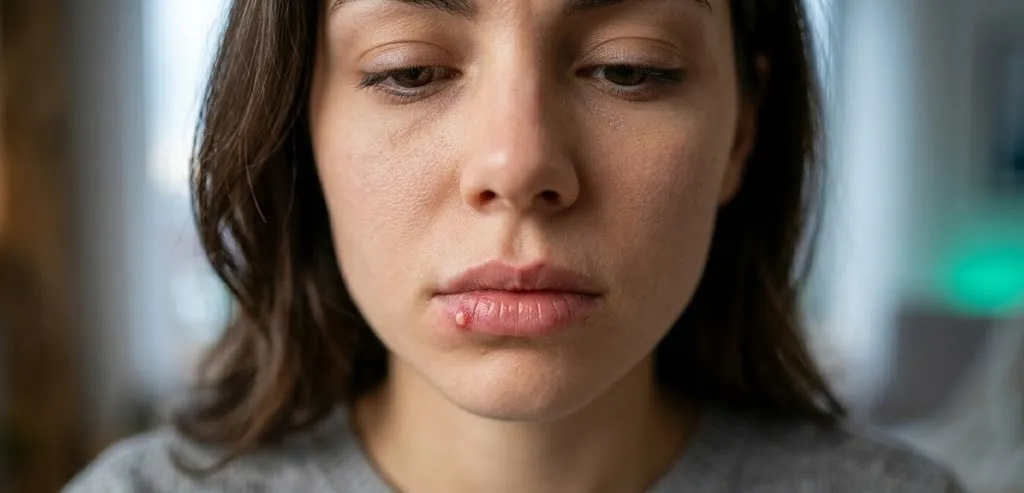
Quick Summary: Yes, you can get a pimple on your lip, though they’re more common along the lip line. These bumps form when pores become clogged with oil, dead skin cells, and bacteria. The challenge is distinguishing them from cold sores, which are caused by the herpes simplex virus and require different treatment.
Ever noticed a painful bump near your mouth and wondered if it’s actually a pimple? The short answer is yes—pimples can develop on or around your lips, though the skin directly on the lip surface has fewer oil glands than other facial areas.
But here’s the thing: not every bump on your lip is a pimple. Cold sores frequently appear in the same location and cause similar discomfort. Knowing the difference matters because these two conditions require completely different approaches to treatment.
According to the National Institutes of Health, acne vulgaris affects approximately 9.4% of the global population, making it one of the most common skin conditions worldwide. While facial acne typically concentrates on the forehead, nose, and chin, the lip line isn’t immune to breakouts.
What Causes Pimples on the Lips?
Lip pimples develop through the same basic mechanism as acne anywhere else on the face. The process starts when pores become clogged with a combination of sebum (natural skin oil), dead skin cells, and bacteria.
Hair follicles exist around the lip border, and each follicle contains a sebaceous gland that produces oil. When these follicles get blocked, bacteria can multiply inside the clogged pore, triggering inflammation. The result? A red, sometimes painful bump that may develop a white or yellow pus-filled center.
Several factors contribute to clogged pores around the mouth:
- Cosmetic products like lip balms, lipsticks, or glosses that contain pore-clogging ingredients
- Touching your face frequently with unwashed hands
- Hormonal fluctuations that increase oil production—research shows 70% of women experience a premenstrual flare-up in acne
- Sweat and oil buildup around the mouth area
- Certain medications or dietary factors
- Friction from clothing, phone contact, or face masks
The National Library of Medicine notes that genetic factors significantly influence the proportion of branched fatty acids found in sebum, with heritability estimates ranging from 50% to 90%. If your parents struggled with acne, you’re more likely to experience breakouts, including around the lip area.
Real talk: your toothpaste might be contributing to the problem. Fluoride-containing toothpastes can cause perioral dermatitis in some people, leading to small bumps and inflammation around the mouth.
Cold Sore vs. Lip Pimple: Key Differences
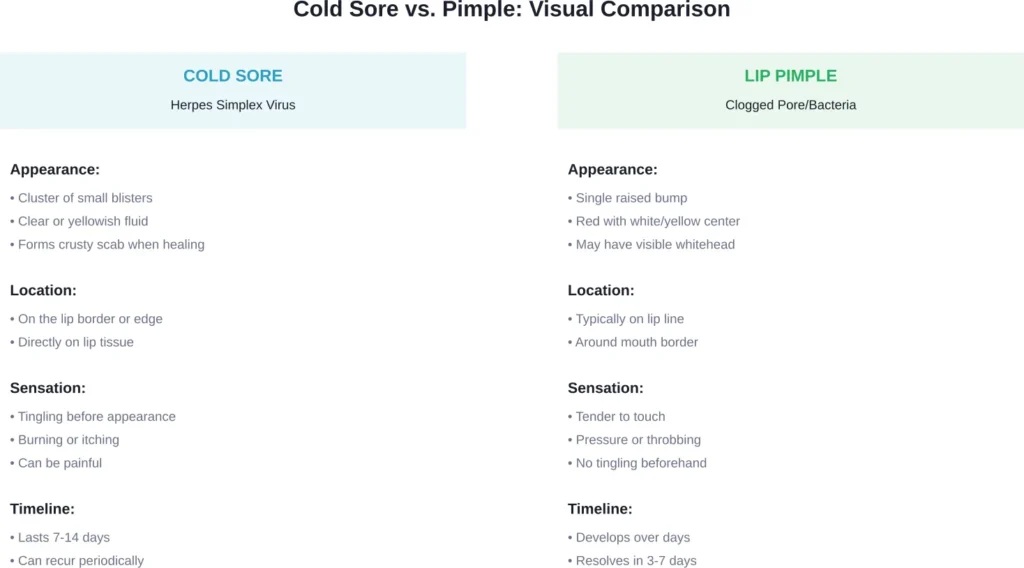
This is where things get tricky. Cold sores and pimples can look similar at first glance, but they’re fundamentally different conditions requiring distinct treatments.
Cold sores result from infection with the herpes simplex virus type 1 (HSV-1). Once you’re infected, the virus remains dormant in nerve cells and can reactivate periodically. According to Mayo Clinic Health System, triggers for recurrence include viral infections, fever, hormonal changes related to menstruation, and stress.
So how do you tell them apart?
Warning Signs It’s a Cold Sore
Cold sores typically announce themselves with a tingling, burning, or itching sensation before the blisters appear. This prodromal stage is a telltale sign.
When the lesions develop, they appear as clusters of small, fluid-filled blisters rather than a single bump. These blisters eventually break open, ooze clear fluid, and form a crusty scab. The entire cycle typically lasts 7-14 days.
Cold sores are contagious and can spread through direct contact, sharing utensils, or kissing. Pimples, on the other hand, aren’t contagious—they’re localized inflammatory responses to clogged pores.
Signs It’s Probably a Pimple
Pimples generally present as a single raised bump with redness around the base. If there’s a visible whitehead or yellowish center, that’s pus—a clear indicator of a bacterial pimple rather than a viral cold sore.
The location matters too. Pimples more commonly form along the border where lip skin meets facial skin, where there’s more oil gland activity. Cold sores frequently appear directly on the lip tissue itself or at the very edge.
Pimples develop gradually over several days and don’t produce the pre-appearance tingling that characterizes cold sores. They’re also less likely to recur in the exact same spot repeatedly, whereas cold sores often reactivate in familiar locations.
Treatment Options for Lip Pimples
Treating a pimple on or near your lip requires gentle care—this area is sensitive, and harsh treatments can cause irritation or damage delicate skin.
At-Home Treatments
The American Academy of Dermatology recommends benzoyl peroxide for treating mild acne. While products contain up to 10% benzoyl peroxide, it’s best to start with a 2.5% concentration to avoid side effects like dryness or irritation. Benzoyl peroxide works by killing acne-causing bacteria and helping to unclog pores.
Apply a small amount directly to the affected area once or twice daily. But wait—avoid getting the product inside your mouth, as it can be irritating to mucous membranes.
Salicylic acid is another option. This ingredient helps exfoliate dead skin cells and keep pores clear. It’s available in concentrations from 0.5% to 2% in various cleansers and spot treatments.
Warm compresses can reduce inflammation and help bring the pimple to a head. Apply a clean, warm cloth to the area for 10-15 minutes several times daily.
Here’s what NOT to do: don’t squeeze or pop lip pimples. The temptation is real, but the lip area has a rich blood supply and is prone to scarring. Popping can also push bacteria deeper, worsening the infection and potentially spreading it.
When to See a Dermatologist
Some situations warrant professional help. If the bump doesn’t improve within a week or two, gets progressively larger or more painful, or you’re experiencing frequent breakouts around the mouth, consult a dermatologist.
For severe or cystic acne, dermatologists may prescribe topical or oral antibiotics, retinoids, or—for the most severe cases—isotretinoin. According to the American Academy of Dermatology, isotretinoin is considered the most effective treatment for severe acne.
Treatment for Cold Sores (If That’s What It Is)
Cold sores require antiviral treatment, not acne medication. Over-the-counter topical treatments containing docosanol can shorten the duration if applied at the first sign of symptoms.
Prescription antiviral medications like acyclovir, valacyclovir, or famciclovir are more effective, especially when taken during the prodromal tingling stage. These can significantly reduce both the severity and duration of outbreaks.
Keep the area clean and avoid touching the sores. They’re contagious from the first tingle until completely healed. Wash hands frequently and avoid sharing personal items.
| Treatment Type | Best For | Application | Expected Results |
|---|---|---|---|
| Benzoyl Peroxide (2.5-5%) | Lip pimples | 1-2 times daily to spot | Improvement in 3-5 days |
| Salicylic Acid | Lip pimples | Daily, thin layer | Gradual clearing over 1 week |
| Warm Compress | Both conditions | 10-15 min, 3-4x daily | Reduces pain and swelling |
| Docosanol Cream | Cold sores (OTC) | 5 times daily | Shortens duration by 1-2 days |
| Antiviral Medication | Cold sores (Rx) | As prescribed | Reduces severity and duration |
Prevention Strategies
Preventing lip pimples involves a combination of good hygiene and smart skincare habits.
Daily Skincare Practices
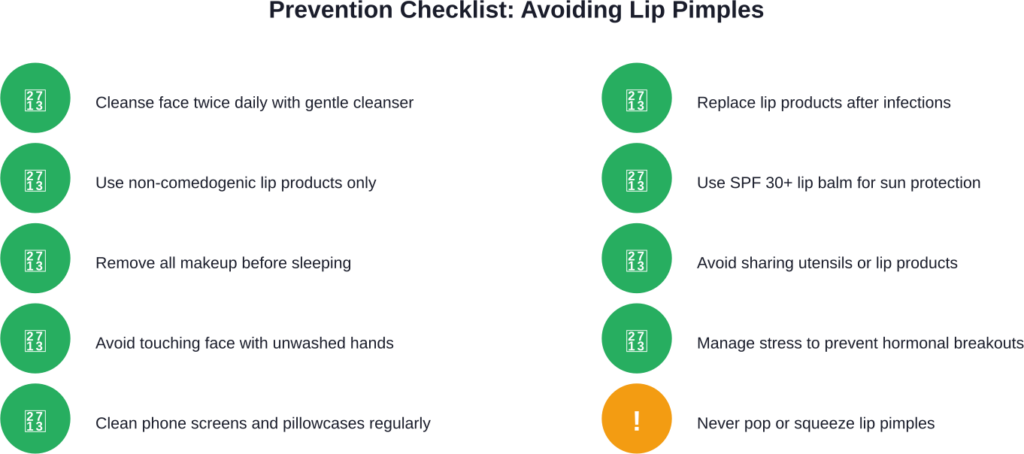
Cleanse the face twice daily with a gentle, non-comedogenic cleanser. Pay attention to the area around the mouth, but don’t scrub aggressively—this can irritate skin and trigger more breakouts.
Choose lip products carefully. Many lip balms and lipsticks contain comedogenic ingredients like coconut oil, cocoa butter, or certain waxes that can clog pores. Look for non-comedogenic formulas labeled as such.
Remove makeup thoroughly before bed. Sleeping in lipstick or other cosmetics gives bacteria and oil more time to clog pores.
Replace lip products regularly—especially after recovering from any lip infection. Bacteria can contaminate products and reinfect the area.
Lifestyle Factors
Keep hands away from the face. We touch our faces unconsciously dozens of times per day, transferring bacteria and oils from our hands to our skin.
Clean items that regularly contact the mouth area: phone screens, pillowcases, face masks, and anything else that touches the lower face. Phone screens should be cleaned regularly as they contact the face frequently.
Watch what touches your lips. Shared utensils, water bottles, or cosmetic testers can transfer bacteria.
For cold sore prevention, identify personal triggers (stress, sun exposure, illness) and take preventive measures. Sun protection for lips is crucial—use lip balm with SPF 30 or higher.
Other Possible Causes of Lip Bumps
Not every bump on or near the lips is a pimple or cold sore. Several other conditions can create similar appearances.
Folliculitis occurs when hair follicles become inflamed or infected. According to the American Academy of Dermatology, folliculitis can appear anywhere with hair follicles and often resembles acne breakouts. Each bump may have a red ring around it.
Perioral dermatitis causes small red bumps around the mouth, nose, and sometimes eyes. Harvard Health Publishing notes this condition can be triggered by topical steroids, certain cosmetics, or fluoride in dental products.
Allergic contact dermatitis can develop from reactions to ingredients in lip products. Research published in the National Library of Medicine documented cases of allergic contact cheilitis from peppermint oil in lip balm, causing eczematous dermatitis around the lips.
Milia are small white or yellowish bumps that form when keratin becomes trapped beneath the skin surface. They’re harmless but can appear on or around lips.
Lip contouring complications can occur after cosmetic procedures involving hyaluronic acid fillers, sometimes creating lumps or bumps along the lip border.
If a bump persists beyond two weeks, changes appearance significantly, or you’re uncertain what it is, see a dermatologist for proper diagnosis.
Frequently Asked Questions
No, dermatologists strongly advise against popping lip pimples. The area has abundant blood vessels and is prone to scarring. Popping can drive bacteria deeper into the skin, worsen infection, and increase healing time. Apply topical treatments instead and let it resolve naturally.
Most lip pimples resolve within 3-7 days with proper treatment. More severe pimples or cystic acne may take 1-2 weeks. Cold sores typically last 7-14 days from initial tingling to complete healing. If a bump persists longer than two weeks, consult a healthcare provider.
Recurrent lip line pimples often result from comedogenic lip products, hormonal fluctuations, touching the face with unwashed hands, or bacteria transfer from phones and other objects. Some people experience perioral dermatitis from fluoride toothpaste. Identify and eliminate the trigger for lasting improvement.
Yes, many lip balms contain comedogenic ingredients like coconut oil, cocoa butter, lanolin, or certain waxes that can clog pores, especially in acne-prone individuals. Choose non-comedogenic formulas and replace products regularly to avoid bacterial contamination.
No, pimples are not contagious. They result from clogged pores and bacterial growth in individual hair follicles. Cold sores, however, are highly contagious and spread through direct contact. Proper identification of the bump type is essential.
The white or yellowish material in a pimple is pus, composed of dead white blood cells, bacteria, and tissue debris. This forms when the immune system responds to bacterial infection in a clogged pore. The presence of pus distinguishes bacterial pimples from viral cold sores, which contain clear fluid.
See a dermatologist if the bump doesn’t improve within 1-2 weeks, becomes progressively larger or more painful, appears alongside other severe acne, or you’re uncertain whether it’s a pimple or cold sore. Professional diagnosis ensures appropriate treatment and prevents complications.
Conclusion
Yes, pimples can definitely form on or around your lips, though distinguishing them from cold sores requires careful observation of appearance, location, and symptoms.
Lip pimples develop when pores become clogged with oil, dead skin cells, and bacteria—the same mechanism behind facial acne. They typically present as single red bumps with possible white centers, while cold sores appear as clusters of fluid-filled blisters preceded by tingling sensations.
Treatment approaches differ significantly. Benzoyl peroxide and salicylic acid effectively treat bacterial pimples, while cold sores require antiviral medications. Prevention focuses on maintaining good hygiene, choosing non-comedogenic products, and avoiding triggers.
The takeaway? Don’t panic about lip bumps, but do pay attention to the details. When in doubt, consult a dermatologist for accurate diagnosis and appropriate treatment. Most lip pimples resolve quickly with proper care, letting you get back to smiling without worry.