

Quick Summary: No, people cannot sneeze during sleep, particularly during REM (rapid eye movement) sleep when the body suppresses reflexes. While sneezing may occur during very light sleep or upon waking, true sneezing during deep sleep stages is not possible because the brain essentially turns off the reflex response to nasal irritants.
Have you ever woken up sneezing and wondered if you’d been doing it all night? It’s a weird thought, right?
Here’s the thing though—sneezing while fully asleep is basically impossible. The science behind this is fascinating and involves how your brain regulates reflexes during different sleep stages.
Understanding why you can’t sneeze in your sleep reveals a lot about how your body prioritizes rest over reactive responses. And if you’re experiencing nighttime sneezing, it’s worth knowing what’s actually happening.
How the Sneeze Reflex Works
Sneezing is an involuntary reflex controlled primarily by the trigeminal nerve. When irritants like dust, pollen, bacteria, or viruses enter your nasal passages, nerve endings send signals to your brainstem.
Your brain then coordinates a complex response: you inhale deeply, your chest muscles contract, and air explosively exits through your nose and mouth. It’s your body’s way of expelling potential threats from your respiratory system.
But here’s what makes sleep different. This reflex requires active communication between sensory neurons and motor responses—and during certain sleep stages, that communication essentially gets put on hold.
Why You Can’t Sneeze During REM Sleep
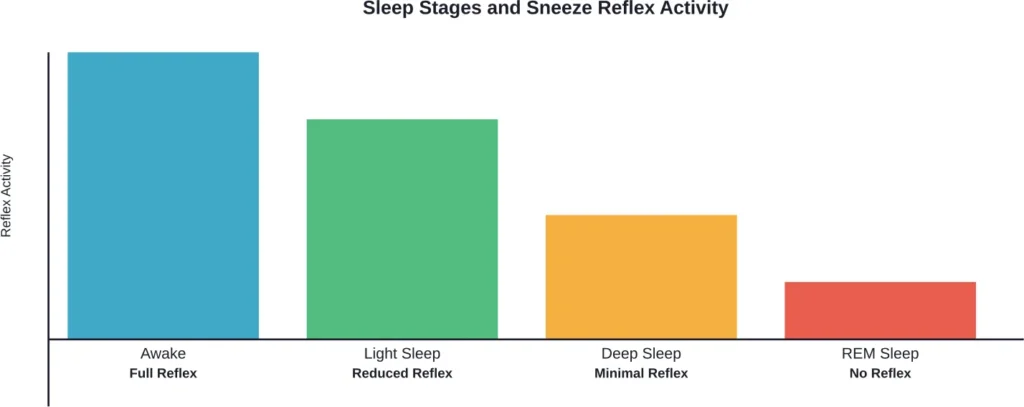
Research consistently shows that sneezing during REM sleep is not possible. REM stands for rapid eye movement, and it’s the sleep stage where most vivid dreaming occurs.
During REM sleep, your brain actively suppresses motor functions to prevent you from physically acting out your dreams. This phenomenon is called REM atonia—temporary muscle paralysis that keeps you safe while your mind wanders.
The same mechanism that prevents you from running, punching, or talking during dreams also shuts down the sneeze reflex. Your brain simply doesn’t process or respond to nasal irritation signals the same way it does when you’re awake.
What About Light Sleep Stages?
The answer gets slightly more complicated during lighter sleep phases. During stage 1 and early stage 2 sleep—when you’re just drifting off—your brain hasn’t fully shut down sensory processing.
In these transitional states, a strong enough irritant could potentially trigger a sneeze. But here’s the catch: you’d likely wake up in the process.
So technically, you might sneeze while transitioning from sleep to wakefulness, but you’re not truly asleep during the sneeze itself. Your brain has to partially engage waking functions to execute the reflex.
Common Causes of Nighttime Sneezing
If you’re waking up sneezing or experiencing fits right before bed, several culprits could be responsible.
Allergens in the Bedroom
Dust mites, pet dander, mold spores, and pollen accumulate in bedding, carpets, and curtains. When you lie down, you’re breathing in concentrated amounts of these irritants for hours.
Your nasal passages react to this exposure, often triggering sneezing fits upon waking when your reflexes reactivate.
Environmental Irritants
Dry air, strong scents from cleaning products, perfumes, or air fresheners can irritate nasal passages. Temperature changes in your bedroom—particularly cold air—can also trigger the sneeze reflex.
Infections and Illness
Viral and bacterial infections cause inflammation and mucus production. You might not sneeze during deep sleep, but as you cycle through lighter sleep stages or wake up, the accumulated irritation triggers multiple sneezes.
Chronic Conditions
Allergic rhinitis, sinusitis, and other chronic nasal conditions create persistent irritation. According to research on autonomic nervous system dysfunction and sinonasal symptoms published by the NIH, the autonomic nervous system richly innervates the nose and significantly contributes to respiratory symptoms.
| Trigger Type | Common Sources | Prevention Strategy |
|---|---|---|
| Allergens | Dust mites, pet dander, pollen | Hypoallergenic bedding, weekly washing |
| Environmental | Dry air, cold temperatures | Humidifier, temperature regulation |
| Chemical | Cleaning products, fragrances | Unscented products, ventilation |
| Medical | Infections, chronic rhinitis | Medical treatment, symptom management |
Does Your Body Suppress Other Reflexes During Sleep?
Sneezing isn’t the only reflex your brain puts on pause. Coughing also becomes suppressed during deep sleep and REM stages, which is why people with respiratory conditions often experience worse symptoms upon waking.
Interestingly, some reflexes remain active. You’ll still swallow periodically, adjust your position, and respond to certain stimuli like loud noises or physical touch.
The brain selectively maintains reflexes essential for immediate safety while suppressing those that could disrupt sleep quality. It’s a sophisticated balancing act.
Differences Between Adults and Children
Children and adults experience similar reflex suppression during sleep, but there are some developmental differences worth noting.
Young children spend more time in REM sleep than adults. This means they have more time with completely suppressed sneeze reflexes.
However, children also tend to have more frequent upper respiratory infections and allergies, which can cause more nighttime disturbances and waking sneezes.
When Nighttime Sneezing Becomes Concerning
Occasional sneezing upon waking is normal. But persistent nighttime sneezing that disrupts your sleep deserves attention.
Watch for these warning signs:
- New-onset headaches accompanying sneezing fits
- Changes to your sense of smell or taste
- Frequent nosebleeds
- Sneezing that wakes you multiple times per night
- Daytime fatigue due to disrupted sleep
These symptoms could indicate allergies, infections, structural issues, or other conditions requiring medical evaluation.
Practical Tips to Reduce Nighttime Sneezing
You can’t sneeze in true sleep, but you can minimize those annoying wake-up sneezing fits.
Optimize Your Sleep Environment
Wash bedding weekly in hot water to kill dust mites. Use hypoallergenic pillows and mattress covers. Keep pets out of the bedroom if dander triggers your symptoms.
A high-quality HEPA air purifier removes airborne allergens and irritants. Run it continuously in your bedroom for best results.
Control Humidity and Temperature
Maintain appropriate bedroom humidity using a humidifier or dehumidifier as needed. Dry air irritates nasal passages while excessive moisture promotes mold growth.
Keep your bedroom at a comfortable temperature, which most people find optimal for sleep quality.
Address Underlying Allergies
Consider allergy testing to identify specific triggers. Antihistamines, nasal corticosteroids, or immunotherapy might help manage chronic symptoms.
Nasal saline rinses before bed can flush out irritants and reduce nighttime inflammation.

The Science of Sleep and Reflexes
Sleep isn’t just one state—it’s a dynamic process cycling through distinct stages, each with different levels of brain activity and reflex responsiveness.
Non-rapid eye movement (NREM) sleep includes three stages: N1 (light sleep), N2 (intermediate sleep), and N3 (deep slow-wave sleep). As you progress deeper, your brain becomes less responsive to external stimuli.
Research from the NIH on central sleep apnea notes that periodic changes in breathing patterns during NREM sleep are accompanied by transient cortical arousal. This demonstrates how sleep stages directly influence autonomic functions.
The trigeminal nerve, which controls the sneeze reflex, requires active brainstem coordination to function. During deeper sleep stages, this coordination pathway essentially goes offline.
Frequently Asked Questions
No, sneezing during deep sleep (stage N3) or REM sleep is not possible because the brain suppresses motor reflexes during these stages. The neural pathways required to execute a sneeze are essentially inactive, preventing the reflex from occurring even if nasal irritants are present.
Morning sneezing typically results from accumulated allergens in your bedroom environment, particularly dust mites in bedding. As you transition from sleep to wakefulness, your reflexes reactivate and respond to irritation that built up overnight. Temperature changes and lying horizontal can also trigger increased nasal congestion.
No, your heart does not stop when you sneeze. This is a common myth. While the intrathoracic pressure changes during a sneeze can briefly affect your heart rhythm, your heart continues beating throughout the entire sneeze process without interruption.
Absolutely. Nasal congestion, post-nasal drip, and frequent sneezing upon waking can significantly disrupt sleep quality. Allergic rhinitis often causes fragmented sleep, leading to daytime fatigue. Managing bedroom allergens and treating symptoms can dramatically improve sleep quality.
Allergy sneezing tends to occur in rapid succession (multiple sneezes in a row) and is often accompanied by itchy eyes and clear nasal discharge. Cold-related sneezing is usually less frequent, accompanied by thicker mucus, body aches, and fatigue. Allergy symptoms persist as long as exposure continues, while cold symptoms typically resolve within 7-10 days.
You can sometimes suppress an impending sneeze by pressing your upper lip, pinching your nose, or breathing through your mouth. However, regularly suppressing sneezes isn’t recommended as it can cause pressure buildup that may damage ear structures or blood vessels. Sneezing serves an important protective function for your respiratory system.
See a healthcare provider if nighttime sneezing significantly disrupts your sleep, occurs alongside other concerning symptoms like headaches or loss of smell, persists despite environmental changes, or if you experience frequent nosebleeds. These could indicate conditions requiring professional diagnosis and treatment.
Conclusion
So, is it possible to sneeze in your sleep? The scientific answer is no—not during true sleep, especially REM stages when reflexes shut down completely.
What you’re experiencing when you “sneeze in your sleep” is actually waking up to sneeze or sneezing during extremely light transitional sleep stages. Your brain has to partially engage waking functions to execute the reflex.
If nighttime sneezing is disrupting your rest, focus on environmental controls: hypoallergenic bedding, air purification, humidity management, and addressing underlying allergies. These strategies can dramatically reduce wake-up sneezing and improve overall sleep quality.
Don’t let nighttime sneezing rob you of restorative sleep. Take control of your bedroom environment and consult a healthcare provider if symptoms persist—quality sleep is essential for your health and well-being.