

Quick Summary: Complete removal of stretch marks is not possible, but their appearance can be significantly reduced through treatments like laser therapy, microneedling, and topical retinoids. Early intervention when stretch marks are still red or purple yields the best results. Combining professional treatments with consistent skincare can improve stretch marks by 50-70% according to medical research.
Stretch marks are one of those skin concerns that seem to show up uninvited—during pregnancy, growth spurts, weight changes, or even muscle building. And once they appear, the question everyone asks is the same: can I actually get rid of these?
The honest answer? Not completely. But that doesn’t mean you’re stuck with them forever in their current state.
According to the American Academy of Dermatology, stretch marks are permanent scars that form when skin stretches or shrinks rapidly. The collagen and elastin fibers that support skin rupture during this process, creating those distinctive marks. While they won’t vanish entirely, modern treatments can dramatically reduce their appearance.
What Exactly Are Stretch Marks?
Medically known as striae distensae, stretch marks are a type of scarring that affects the dermis—the middle layer of skin. They appear as narrow streaks or lines on the skin’s surface, and their color reveals a lot about their age.
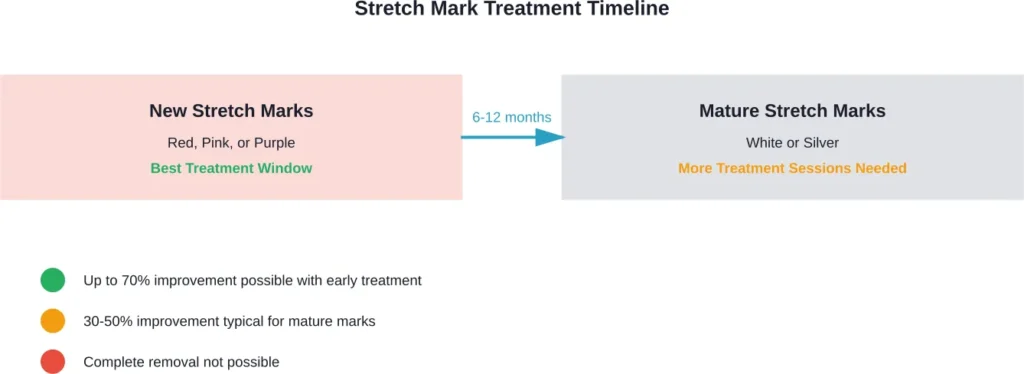
Fresh stretch marks, called striae rubrae, start out red, pink, or purple. This coloration comes from blood vessels showing through the thinned skin. Over time, these mature into striae albae—white or silver marks that are flat and depressed.
According to research published in the Indian Dermatology Online Journal, stretch marks affect approximately 50-90% of pregnant women. They’re not exclusive to pregnancy, though. Puberty, rapid weight gain or loss, bodybuilding, and certain medical conditions can all trigger their formation.
Here’s the thing: fluctuating hormone levels play a major role. Studies have noted lower serum relaxin levels in women with stretch marks. A deficiency of fibrillin has also been suggested as a contributing factor.
Why Treatment Timing Matters
The age of your stretch marks significantly impacts how well they respond to treatment. Red or purple stretch marks are still in an active inflammatory phase, which makes them more receptive to intervention.
White or silver stretch marks have already healed and matured. While they can still improve with treatment, they’re generally more stubborn than newer marks.
This isn’t just speculation. Medical research from the National Institutes of Health confirms that early treatment of striae rubrae produces better outcomes than waiting until they turn white.
Professional Treatments That Actually Work
Real talk: over-the-counter creams alone won’t deliver dramatic results. Professional treatments combine technology with medical-grade products to stimulate collagen production and remodel scar tissue.
Laser Therapy
Laser treatment has become the gold standard for stretch mark reduction. Different wavelengths target different aspects of the marks.
Pulsed dye lasers work particularly well on red or purple stretch marks. They target blood vessels in the skin, reducing redness and inflammation. Fractional CO2 lasers, on the other hand, create microscopic wounds in the skin to trigger collagen production.
A study published in Medicina (2023) evaluated a novel 675 nm laser wavelength specifically for stretch marks, showing promising results across different skin types. Research comparing fractional CO2 laser to other treatments consistently demonstrates significant improvement.
Most patients need multiple sessions. According to the American Academy of Dermatology, laser treatment can prevent raised scars and reduce redness while improving texture.
Microneedling
Microneedling uses tiny needles to puncture the skin, creating controlled micro-injuries that stimulate collagen and elastin production. The procedure is minimally invasive and safe for all skin tones.
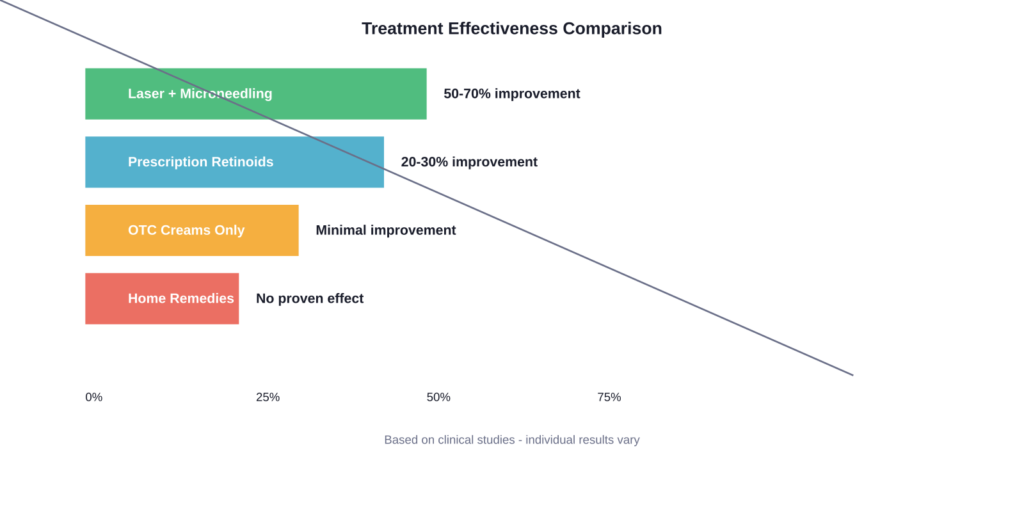
Research indicates that treatment for stretch marks typically requires 3 to 5 sessions performed every 2 to 4 weeks. Studies have found this treatment plan can fade stretch marks by 50% to 70%.
Studies published in dermatology journals, including the Journal of Cutaneous and Aesthetic Surgery, have found statistically significant aesthetic improvement with microneedling. Some practitioners combine microneedling with platelet-rich plasma or topical products to enhance results.
Radiofrequency Treatments
Radiofrequency energy heats the deeper layers of skin to stimulate collagen production without damaging the surface. Ablative fractional radiofrequency combined with topical treatments shows promise for stretch mark improvement.
Research indicates that RF treatments enhance skin-drug permeability, making topical products more effective when used together.
| Treatment Type | Best For | Sessions Needed | Expected Improvement |
|---|---|---|---|
| Pulsed Dye Laser | Red/purple marks | 3-6 sessions | Significant color reduction |
| Fractional CO2 Laser | White/silver marks | 3-5 sessions | 30-50% texture improvement |
| Microneedling | All mark types | 3-5 sessions | 50-70% improvement |
| Radiofrequency | Mature marks | 4-6 sessions | Moderate improvement |
Topical Treatments with Medical Backing
While topical treatments alone won’t eliminate stretch marks, certain ingredients show real promise—especially when combined with professional procedures.
Retinoids
Tretinoin, a prescription-strength retinoid, has the most research supporting its use for stretch marks. According to research, applying tretinoin 0.1% cream daily for 12 weeks improved pregnancy-related stretch marks, reducing their length by 20%.
Retinoids work by increasing collagen production and accelerating skin cell turnover. They’re most effective on newer, red stretch marks. One important note: retinoids should not be used during pregnancy or breastfeeding.
Hyaluronic Acid
This ingredient helps skin retain moisture and may improve the appearance of stretch marks when used consistently. While it won’t produce dramatic changes alone, hyaluronic acid supports skin health during treatment.
Centella Asiatica
Also known as gotu kola, this botanical ingredient appears in some stretch mark prevention and treatment products. Some research suggests it may support collagen synthesis, though more studies are needed.
What Doesn’t Work
Let’s clear up some misconceptions. Despite marketing claims, certain approaches simply don’t have evidence backing them.
Cocoa butter, vitamin E oil, and most drugstore stretch mark creams lack solid research showing they reduce existing stretch marks. They might keep skin moisturized, which is fine, but don’t expect visible reduction in scarring.
Home remedies like coffee scrubs, sugar exfoliation, or essential oils? These won’t remodel scar tissue or stimulate meaningful collagen production. They’re not harmful, but they won’t deliver the results people hope for.
According to the Mayo Clinic, stretch marks don’t require treatment—they’re harmless and often fade over time. Treatment can make them fade faster, but nothing available can make them disappear completely.
Can Stretch Marks Be Prevented?
Prevention is tricky. Genetics play a significant role in whether someone develops stretch marks, and hormonal factors during pregnancy or puberty can’t be controlled.
That said, keeping skin well-hydrated and maintaining steady weight (when possible) may help reduce risk. Rapid weight fluctuations put more stress on skin fibers, making stretch marks more likely.
During pregnancy, no cream has been proven to prevent stretch marks entirely. But keeping skin moisturized certainly doesn’t hurt, and many people find it comfortable.
Skin Type Considerations
Treatment effectiveness and safety vary across different skin tones. Research in dermatology literature indicates that management remains challenging, particularly in individuals with darker skin types.
Some laser treatments can cause pigmentary changes—either darkening or lightening—in skin types IV through VI. The American Academy of Dermatology notes that microneedling is safe for all skin tones, making it a particularly good option for people with darker skin.
Anyone considering professional treatment should seek a provider experienced in treating their specific skin type to minimize the risk of complications.
What to Expect During Treatment
Professional stretch mark treatments require time, multiple sessions, and patience. Results appear gradually as the body produces new collagen and remodels scar tissue.
According to the American Academy of Dermatology, results from microneedling become visible as the body produces more collagen, which can take weeks to months. Most treatments involve some temporary side effects like redness, mild swelling, or sensitivity.
Laser treatments may cause temporary erythema, post-treatment pain, crust formation, or pigmentary changes. These concerns are particularly relevant for darker skin types.
Cost varies significantly based on location, provider experience, and the number of sessions needed. Check with providers for current pricing, as costs fluctuate.
Realistic Expectations
Here’s what matters most: understanding what’s actually achievable. Stretch marks are permanent scars. Treatments can make them less noticeable—sometimes dramatically so—but they won’t disappear entirely.
The NHS states clearly that stretch marks are very common, harmless, and often get less visible over time. Treatment accelerates this fading process.
According to the Mayo Clinic, stretch marks naturally fade over time. Treatment may make them fade faster, but patience is essential regardless of the approach chosen.
Community discussions on platforms like Reddit reflect what dermatologists say: multiple treatments over several months typically produce the best results, and newer marks respond better than old ones.
Frequently Asked Questions
Stretch marks typically transition from red or purple to white or silver over 6 to 12 months. Even without treatment, they often become less noticeable over time, though they won’t disappear completely. Mature white stretch marks may continue to fade slightly over several years.
Yes, genetics play a significant role in stretch mark development. According to research from the National Institutes of Health, decreased expression of collagen and fibrillin genes contributes to stretch mark formation. If close family members have stretch marks, there’s a higher likelihood of developing them.
Absolutely. While stretch marks affect approximately 50-90% of pregnant women, men commonly develop them during puberty, bodybuilding, or rapid weight changes. The underlying mechanism—skin stretching faster than collagen and elastin can accommodate—is the same regardless of gender.
Some people experience mild itching when stretch marks first appear, particularly during the red or purple phase. The American Academy of Dermatology notes that while stretch marks themselves are harmless, treatment can help alleviate itching if it occurs. Generally, stretch marks don’t cause pain.
Weight loss doesn’t make existing stretch marks worse, but it can make them more visible if the skin becomes looser. Gradual weight loss with strength training to maintain muscle tone typically produces better aesthetic outcomes than rapid weight loss. Staying well-hydrated supports skin elasticity during weight changes.
No. Most professional stretch mark treatments, including laser therapy, microneedling, and prescription retinoids, are not recommended during pregnancy or breastfeeding. Treatment should wait until after breastfeeding is complete. Keeping skin moisturized during pregnancy is safe but won’t prevent stretch marks.
Costs vary widely based on location, provider experience, treatment type, and the number of sessions needed. Most treatments require multiple sessions over several months. Since stretch mark treatment is typically considered cosmetic, insurance doesn’t cover it. Check with local providers for current pricing in your area.
Moving Forward with Treatment
So, can stretch marks be eliminated? The evidence says no—but they can be dramatically improved.
The most effective approach combines professional treatments like laser therapy or microneedling with medical-grade topical products. Early intervention produces the best results, particularly when marks are still red or purple.
For those considering treatment, consulting a board-certified dermatologist ensures access to evidence-based options suitable for individual skin type and stretch mark characteristics. Dermatologists can create customized treatment plans that maximize improvement while minimizing risks.
Stretch marks are incredibly common, affecting the vast majority of people at some point in life. While cosmetic concerns are valid, these marks don’t indicate anything wrong with skin health. Treatment is always optional—a personal choice rather than a medical necessity.
Whether choosing professional treatment, trying prescription topicals, or simply allowing marks to fade naturally over time, realistic expectations make all the difference. Improvement of 50-70% represents significant success, even if it doesn’t mean complete removal.
Ready to explore treatment options? Schedule a consultation with a board-certified dermatologist to discuss which evidence-based approaches might work best for your specific situation. Professional guidance ensures safe, effective treatment tailored to your skin type and goals.