
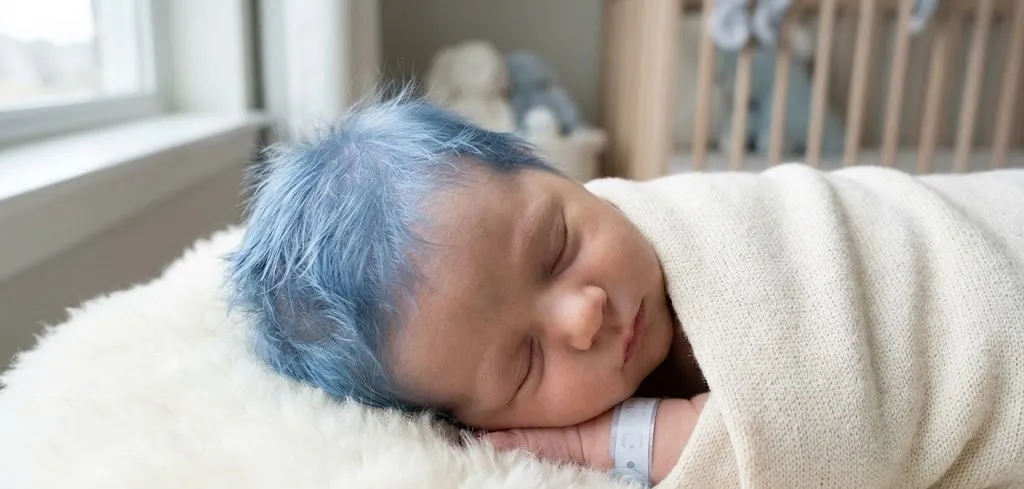
Quick Summary: No, humans cannot be born with naturally blue hair. Human hair color is determined by melanin pigments (eumelanin and pheomelanin), which can only produce black, brown, blonde, and red shades. While some genetic conditions like Waardenburg syndrome can cause unusual pigmentation patterns including white hair patches, true blue hair doesn’t exist in human genetics—though future genetic engineering might theoretically make it possible.
The question pops up regularly in online discussions: can someone actually be born with blue hair? It’s not hard to see why people wonder. We’ve got natural redheads, platinum blondes, and jet-black hair. So why not blue?
The short answer? Human biology just doesn’t work that way. But the explanation gets more interesting when you dig into the genetics.
Why Human Hair Can’t Be Naturally Blue
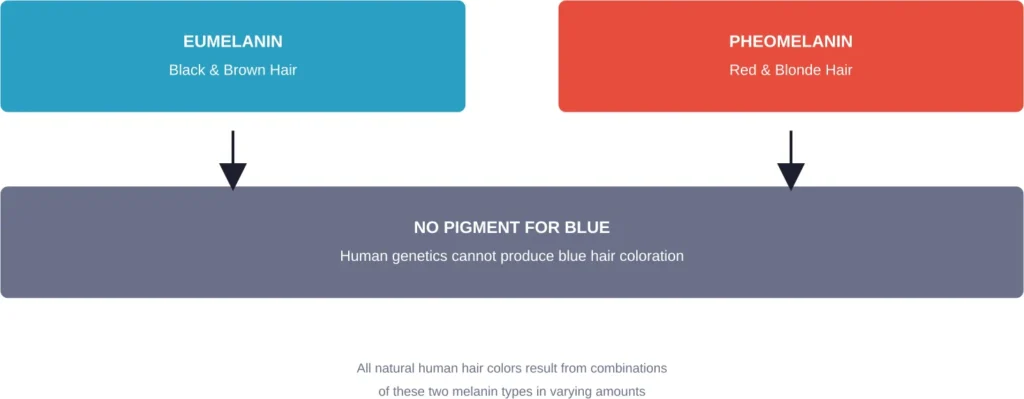
Hair color comes down to melanin—the pigment responsible for coloring your hair, skin, and eyes. According to research on human pigmentation diversity published by the National Institutes of Health, there are two main types of melanin that determine hair color:
- Eumelanin: Produces black and brown shades
- Pheomelanin: Produces yellow and red shades
That’s it. Those are your only options in human genetics.
The amount and type of melanin you produce is determined by multiple genes. Research on genetic determinants of hair color has identified over 123 genetic locations (loci) associated with hair color variations. These genes explain why someone might have auburn hair, platinum blonde, or deep black—but none of them can produce blue.
Here’s the thing: blue coloration in nature typically comes from structural color (how light reflects off microscopic structures) or completely different pigments that humans simply don’t produce. Birds with blue feathers? That’s structural coloration. Some animals described as having “blue” coats, like the Australian blue heeler dog mentioned in Wikipedia’s entry on blue hair, aren’t actually blue—they have a grayish-blue appearance from mixed black and white hairs.
What About Genetic Conditions?
Some genetic conditions do affect hair pigmentation in unusual ways. Waardenburg syndrome, documented in multiple studies available through the National Institutes of Health, is an autosomal dominant genetic disorder that causes pigmentation defects.
People with Waardenburg syndrome might have a distinctive white forelock (a patch of white hair at the front), heterochromia (different colored eyes), or patches of depigmented skin. But this isn’t blue hair—it’s an absence of pigment resulting in white or gray hair.
Other conditions affect pigmentation too:
| Condition | Hair Color Effect | Cause |
|---|---|---|
| Waardenburg Syndrome | White patches or forelock | Genetic mutations affecting melanocyte development |
| Albinism (OCA1B) | Very light blonde to white | Reduced melanin production |
| Argyria | Blue-gray skin tinge | Silver exposure (acquired, not genetic) |
Now, argyria is interesting because it can make skin appear bluish-gray. According to StatPearls medical research, argyria results from silver exposure or ingestion, causing silver particles to deposit in tissues. But this affects skin primarily, not hair, and it’s an acquired condition—not something you’re born with.
Could Humans Ever Evolve Blue Hair?
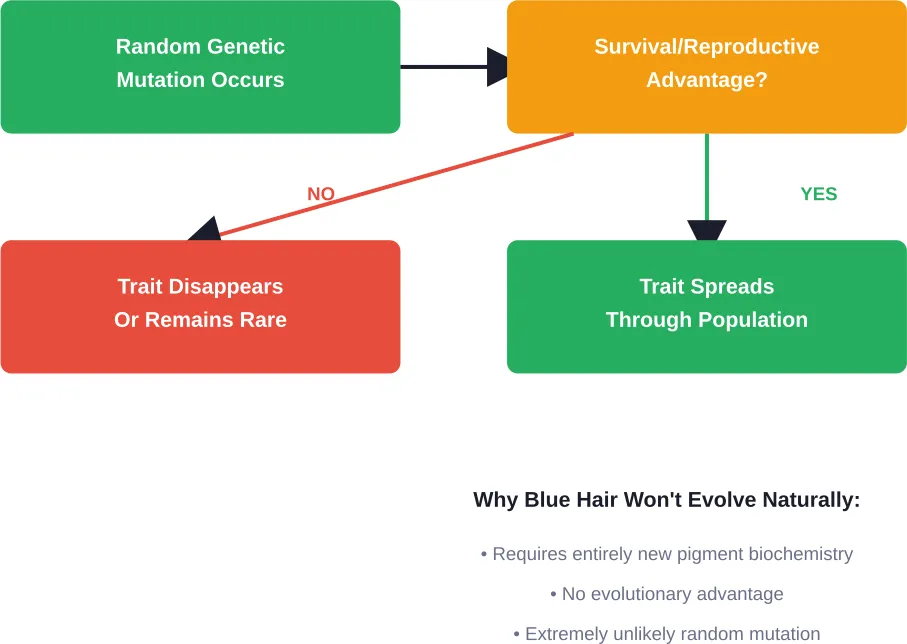
Evolution works through random mutations that provide some survival or reproductive advantage. For blue hair to evolve naturally, several things would need to happen:
First, a mutation would need to occur that either produces an entirely new pigment or creates structural modifications in hair shafts that generate blue coloration through light refraction. Then, that mutation would need to spread through populations—which only happens if it provides some evolutionary benefit or is linked to another beneficial trait.
The reality? There’s no evolutionary pressure for blue hair. Hair color variations that exist today (like red hair, which is rare globally) persist because they don’t significantly harm survival or reproduction. But they also don’t provide enough advantage to become universal.
Scientific discussions indicate that even “weird” colored hair like green, blue, or purple would require completely novel biochemistry that humans simply don’t possess.
What About Genetic Engineering?
Now this is where things get interesting. Could scientists genetically engineer humans to have blue hair?
Theoretically? Maybe. Genetic engineering technology is advancing rapidly. CRISPR and other gene-editing tools can already modify DNA with increasing precision. But creating blue hair would require either:
- Introducing genes from other species that produce blue pigments
- Engineering entirely novel biochemical pathways in human cells
- Creating structural modifications to hair that produce blue coloration through physics rather than chemistry
The technical challenges are massive. Hair pigmentation involves complex interactions between multiple genes and cellular processes. You’d need to ensure the modification works without causing harmful side effects.
And honestly? There are more pressing applications for genetic engineering in medicine. But in theory, future genetic manipulation could potentially create blue hair where natural evolution never would.
The Blue Hair in Pop Culture
Despite blue hair not existing naturally, it’s everywhere in animation, comics, and fantasy. Characters with blue hair are instantly distinctive and often signal something otherworldly or special about them.
This cultural fascination probably stems from blue’s rarity in human pigmentation. We can have blue eyes (a result of light scattering, not blue pigment), but blue hair remains firmly in the realm of hair dye and imagination.
Frequently Asked Questions
No. Human genetics only produce melanin pigments that create black, brown, blonde, and red hair colors. Blue hair doesn’t occur naturally in humans because we lack the biochemistry to produce blue pigmentation.
No animals have truly blue hair. Some dog breeds like the Australian blue heeler are described as “blue” but actually have grayish coats from mixed black and white hairs. Birds can have blue feathers through structural coloration, but that’s different from hair pigmentation.
Current human genetic mutations can only affect the amount and distribution of existing melanin types. A mutation that created genuinely blue hair would require producing an entirely new pigment or changing hair structure in ways that don’t exist in human biology.
Waardenburg syndrome is a genetic disorder that affects pigmentation, causing features like white hair patches, heterochromia, and hearing loss. It doesn’t cause blue hair—it results in absent or reduced pigmentation, producing white or gray areas rather than new colors.
Extremely unlikely. Natural evolution requires mutations that provide survival or reproductive advantages. Blue hair would require completely new biochemistry with no apparent evolutionary benefit, making natural evolution of this trait virtually impossible.
Potentially, yes. Advanced genetic engineering might eventually introduce genes for blue pigmentation or structural modifications to hair. But the technical challenges are enormous, and this isn’t a priority for current genetic research focused on treating diseases.
Some very dark black hair can appear to have blue highlights under certain lighting due to how light reflects off the hair surface. This is an optical effect, not actual blue pigmentation. Additionally, elderly people sometimes use blue rinse products to counteract yellow tones in gray hair.
The Bottom Line on Blue Hair
The science is clear: natural blue hair isn’t possible with human genetics as they currently exist. Our melanin-based pigmentation system simply can’t produce blue coloration.
While genetic conditions like Waardenburg syndrome can create unusual pigmentation patterns, these result in white or gray areas—not blue. And though evolution could theoretically produce any trait given enough time and the right pressures, blue hair has no evolutionary advantage and would require biochemistry humans don’t possess.
That said, if you want blue hair? Hair dye technology has come a long way. The vibrant blues available today might not be natural, but they’re certainly eye-catching.
Want to learn more about the fascinating genetics of human traits? Check out related topics on hair color genetics and how pigmentation really works.