

Quick Summary: At 13 weeks, most women cannot yet feel their baby move, though the fetus is already active. Research shows fetal movement perception typically begins around 19 weeks, with experienced mothers sometimes feeling flutters as early as 16-18 weeks and first-time mothers often not until 20-25 weeks.
The 13-week mark brings excitement for many pregnant women. Morning sickness often eases, energy returns, and you’re officially entering the second trimester. But there’s one milestone that remains frustratingly out of reach: feeling your baby move.
So can you actually feel your baby move at 13 weeks? The short answer is probably not—at least not yet. But here’s the thing: your baby is definitely moving in there, even if you can’t feel it.
What’s Happening at 13 Weeks
According to the National Institutes of Health, a fetus at 13 weeks is incredibly active. Your baby measures about 3 inches long and weighs roughly an ounce. Those tiny limbs are flexing, hands are opening and closing, and the fetus is making movements that would be visible on an ultrasound.
The problem isn’t a lack of movement. It’s that your baby is still too small, and the movements too gentle, for you to detect them yet.
Think about it this way: your baby floats in amniotic fluid inside the uterus, which sits deep in your pelvis at 13 weeks. There’s a cushioning effect that absorbs those tiny movements before they reach the nerve endings in your uterine wall.
When Do Most Women Actually Feel Fetal Movement?
Research published in medical journals provides data on this question. Studies on maternal perception of fetal movements suggest the average onset occurs around 19 weeks of gestation, though the exact timing varies.
But that’s just an average. The timeline varies significantly based on several factors.
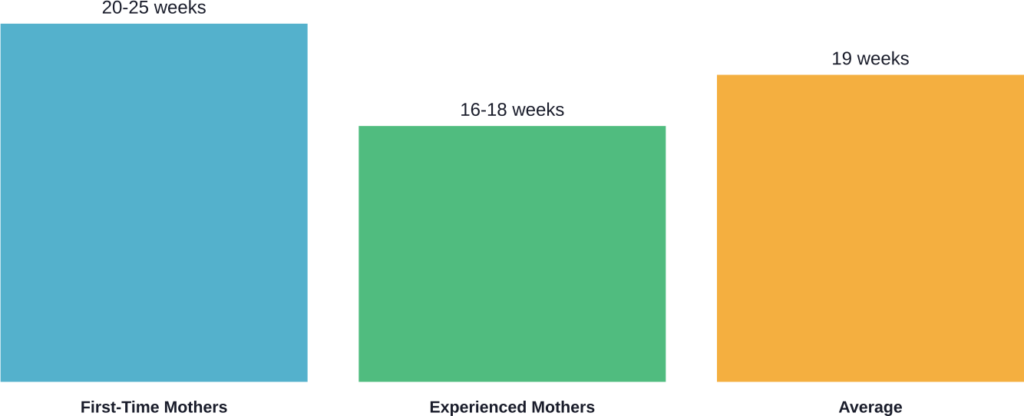
First-Time Mothers vs. Experienced Mothers
Women who’ve been pregnant before tend to recognize fetal movement earlier than first-time mothers. According to MedicineNet, although seasoned mothers may feel a baby flutter as early as 13 weeks, first-time mothers may not feel their baby move until the 25th week.
Why the difference? Experience plays a huge role. Women who’ve felt fetal movement before know exactly what they’re looking for. They can distinguish between gas bubbles, digestive movements, and the distinctive sensation of a baby moving.
First-time mothers don’t have that reference point. Those early movements feel like nothing they’ve experienced before, making them easy to miss or misinterpret.
Body Type and Placental Position
Research shows that maternal perception of fetal movements can be delayed by higher body mass index and anterior placental position. An anterior placenta means the placenta attached to the front wall of your uterus, creating an extra cushion between the baby and your abdominal wall.
Women with more body fat may also experience a delay in feeling movements, simply because there’s more tissue between the baby and the surface nerve endings.
What Does Quickening Actually Feel Like?
The first fetal movements you’ll feel are called “quickening.” Cleveland Clinic describes quickening as feeling like flutters, bubbles, or tiny pulses in the uterus.
Community discussions on platforms like Reddit reveal how varied these descriptions can be. Some women compare it to popcorn popping. Others describe it as butterflies, gas bubbles that don’t move through the digestive tract, or even like a fish swimming.
WebMD notes that these tiny movements are easy to confuse with other bodily sensations, especially in early pregnancy when they’re subtle and infrequent.
Could That Flutter at 13 Weeks Be Real?
Here’s where things get interesting. While medical research suggests the average is 19 weeks, some women insist they felt movement earlier—sometimes as early as 13 or 14 weeks.
Is this possible? Technically, yes, but it’s uncommon.
For a small percentage of women—typically those who are very thin, have anterior uterine positioning, or have been pregnant multiple times—earlier perception is possible. But it’s important to manage expectations. What feels like fetal movement at 13 weeks is more likely to be intestinal activity, gas, or muscle twitches.
That doesn’t mean women are imagining things. The sensations are real. They’re just probably not from the baby yet.
Factors That Affect When Movement Becomes Noticeable
| Factor | Effect on Movement Detection | Typical Timeline Shift |
|---|---|---|
| Previous pregnancies | Earlier recognition of movements | 3-7 weeks earlier |
| Anterior placenta | Cushions movements | 2-4 weeks later |
| Higher BMI | More tissue between baby and nerves | 1-3 weeks later |
| Maternal age | Older mothers may feel later | Variable |
| Baby’s position | Back-facing babies harder to feel | 1-2 weeks later |
What Happens Between 13 and 20 Weeks
Even though you can’t feel your baby yet, significant development is happening. According to the National Institutes of Health, the second trimester brings rapid fetal growth and increased movement complexity.
Between weeks 13 and 20, your baby will:
- Quadruple in size from about 3 inches to 6.5 inches
- Develop stronger muscles and bones
- Begin practicing breathing movements with the diaphragm
- Develop more coordinated movement patterns
- Start responding to external stimuli
By around 20 weeks, your baby is large enough and strong enough that those movements finally break through the sensory threshold. This is when most first-time mothers experience quickening.

Should You Worry If You Don’t Feel Movement?
Not at 13 weeks. Absolutely not.
Medical guidance is clear: the absence of perceived fetal movement at 13 weeks is completely normal. It doesn’t indicate any problem with your pregnancy or your baby’s health.
Even at 20 weeks, if you haven’t felt definitive movement yet, there’s usually no cause for concern—especially if this is your first pregnancy. Some perfectly healthy pregnancies don’t have obvious fetal movement until 24 or even 25 weeks.
Your healthcare provider monitors fetal well-being through other methods during this time: ultrasound, fetal heart rate monitoring, and measuring fundal height. These are far more reliable indicators than maternal perception of movement.
When Movement Tracking Actually Matters
Once you do start feeling regular fetal movements—typically in the late second or third trimester—tracking patterns becomes more important. According to sources including UT Southwestern Medical Center, fetal movement has long been considered a sign of the baby’s well-being.
But that comes later. At 13 weeks, there’s nothing to track because there’s nothing to feel yet.
Frequently Asked Questions
Yes, completely normal. Most women don’t feel fetal movement until 18-20 weeks or later. Research shows the average onset of maternal perception is around 19 weeks, with first-time mothers often not feeling movement until 20-25 weeks.
Some experienced mothers report feeling flutters as early as 13-14 weeks, though this is uncommon. These women have previous pregnancy experience and know exactly what fetal movement feels like, making early recognition more likely. However, it’s still more common for even experienced mothers to feel first movements around 16-18 weeks.
Early fetal movement, called quickening, feels like flutters, bubbles, tiny pulses, or butterflies in the lower abdomen. Many women compare it to popcorn popping or a fish swimming. These sensations are subtle and easy to miss or confuse with gas or digestive activity.
Absolutely. Intestinal gas, digestive movements, and abdominal muscle twitches can all mimic the sensation of fetal movement, especially when you don’t yet know what real fetal movement feels like. This is why first-time mothers often don’t recognize genuine quickening until movements become stronger and more obvious.
Yes, research confirms that anterior placental position can delay maternal perception of fetal movements. The placenta acts as a cushion between the baby and your abdominal wall, absorbing some of the movement before it reaches the nerve endings that would allow you to feel it.
At 13 weeks, there’s no need to contact your doctor about not feeling movement—this is expected. Once you’ve established a pattern of regular movement in the late second or third trimester, contact your healthcare provider if you notice a significant decrease in movement or if movements stop entirely.
Yes, ultrasound can clearly show fetal movement at 13 weeks. Your baby is actively moving, flexing limbs, and changing positions throughout the day. The ultrasound transducer detects these movements even though they’re too subtle for you to feel yet.
The Bottom Line
Feeling your baby move at 13 weeks is possible but highly unlikely. The reality is that most women—especially first-time mothers—won’t experience quickening for several more weeks.
Your baby is definitely moving in there. Those tiny limbs are stretching, those hands are grasping, and that little body is swimming around in the amniotic fluid. You just can’t feel it yet because your baby is still too small and the movements too gentle.
According to medical research, the average onset of fetal movement perception is around 19 weeks, with experienced mothers sometimes feeling movement a few weeks earlier and first-time mothers often not until 20-25 weeks.
So if you’re at 13 weeks and feeling anxious about not feeling movement yet? Take a deep breath. Everything is progressing exactly as it should. Those magical first flutters are coming—just be patient for a few more weeks.
In the meantime, focus on other exciting milestones: your growing belly, your baby’s development on ultrasound, and the relief of (hopefully) decreasing morning sickness. The quickening will happen when the time is right, and when it does, you’ll know it.