

Quick Summary: Yes, it is possible to overdose on ibuprofen. Taking more than the recommended maximum daily dose of 1,200 mg (over-the-counter) or 3,200 mg (prescription) can lead to serious health complications including gastrointestinal bleeding, kidney damage, and cardiovascular problems. Symptoms of ibuprofen overdose include nausea, vomiting, abdominal pain, drowsiness, and in severe cases, seizures or loss of consciousness.
Ibuprofen sits in medicine cabinets across millions of homes. It’s trusted, readily available, and effective for everything from headaches to arthritis pain.
But here’s the thing: just because something’s available over-the-counter doesn’t mean it’s risk-free. According to research published in the Italian Journal of Pediatrics, pediatric ibuprofen use grew by over 60% between 2020 and 2024, with the proportion of packages purchased without a prescription rising from 28% in 2008 to 70% in 2015.
That convenience comes with responsibility. Taking too much ibuprofen—whether accidentally or intentionally—can trigger serious health consequences. And with cold season encouraging people to mix multiple medications, the risk of accidental overdose increases significantly.
What Is Ibuprofen and How Does It Work?
Ibuprofen belongs to a class of medications called nonsteroidal anti-inflammatory drugs (NSAIDs). According to the National Institutes of Health, these medications work by inhibiting cyclooxygenase (COX) enzymes—both COX-1 and COX-2—which convert arachidonic acid into inflammatory compounds including prostaglandins, prostacyclin, and thromboxane.
The drug provides three main therapeutic benefits: reducing inflammation, relieving pain, and lowering fever. It’s available in multiple formulations including tablets, capsules, liquid suspensions, and topical gels.
Common brand names include Advil, Motrin, Nuprin, and Midol, among dozens of others. Over-the-counter versions typically come in 200 mg tablets, while prescription formulations range from 400 mg to 800 mg.
According to the NIH’s LiverTox database, ibuprofen is considered among the safest NSAIDs and is generally well tolerated. But safety depends entirely on proper dosing.
What Are the Safe Dosing Limits for Ibuprofen?
Understanding safe dosing is the first line of defense against overdose. The limits differ based on whether the medication is over-the-counter or prescription-strength.
Over-the-Counter Dosing Guidelines
For adults using over-the-counter ibuprofen, the standard dose is 200-400 mg every four to six hours as needed. The maximum daily dose should not exceed 1,200 mg in a 24-hour period unless directed by a healthcare provider.
That translates to no more than six 200 mg tablets in one day. Many people don’t realize this limit exists.
In controlled analgesic clinical trials, oral doses greater than 400 mg were no more effective than a 400 mg dose for pain relief. Taking more doesn’t mean better relief—it just increases risk.
Prescription Dosing Limits
When prescribed by a healthcare provider, ibuprofen doses can be higher. For conditions like osteoarthritis or rheumatoid arthritis, prescribed doses may reach 1,200-3,200 mg daily, divided into multiple doses.
But even with prescription use, 3,200 mg represents the absolute maximum daily dose. Going beyond this threshold significantly elevates the risk of serious adverse effects.
| Ibuprofen Type | Single Dose | Frequency | Maximum Daily Dose |
|---|---|---|---|
| Over-the-Counter (Adult) | 200-400 mg | Every 4-6 hours | 1,200 mg |
| Prescription (Adult) | 400-800 mg | Every 6-8 hours | 3,200 mg |
| Pediatric (varies by weight) | 5-10 mg/kg | Every 6-8 hours | 40 mg/kg or 2,400 mg max |
How Does Ibuprofen Overdose Happen?
Overdoses occur through several common pathways. Understanding these scenarios helps with prevention.
Accidental Double-Dosing
One of the most frequent causes involves taking multiple medications that contain the same active ingredient. Cold and flu remedies often combine ibuprofen with other drugs, making it easy to exceed safe limits without realizing it.
According to Poison Control data on medication errors, failing to track doses or having multiple caregivers administer medication without communication leads to accidental double-dosing. Real talk: when multiple family members are managing medications, mistakes happen.
Intentional Excessive Use
Some people deliberately exceed recommended doses, thinking more medication will provide better pain relief. This misconception proves dangerous. Others may take excessive amounts in suicide attempts or self-harm situations.
Confusion About Maximum Doses
Not reading medication labels carefully contributes significantly to overdose risk. According to Poison Control, understanding over-the-counter drug labels is the easiest way to prevent errors and overdoses. The Drug Facts section on every OTC medication contains crucial information about active ingredients, warnings, doses, and directions.
But labels only work if people read them.
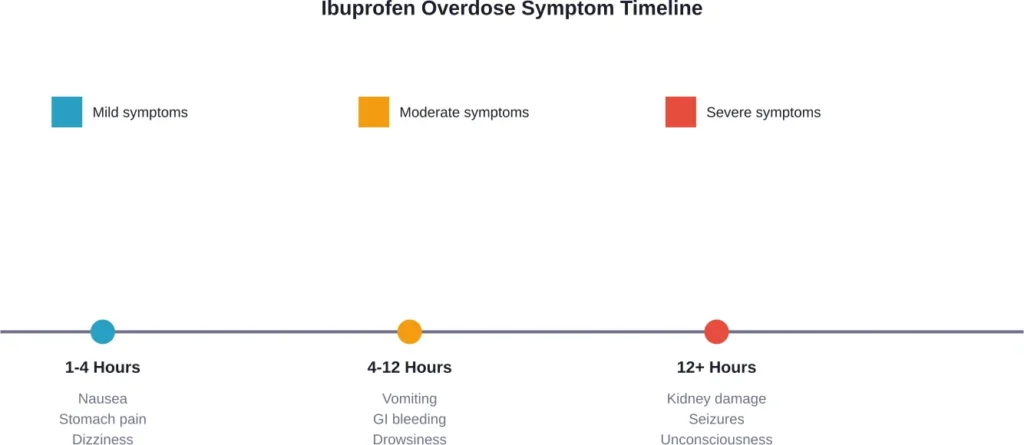
What Are the Symptoms of Ibuprofen Overdose?
Recognizing overdose symptoms quickly can be lifesaving. Symptoms vary based on the amount taken and individual factors.
Mild to Moderate Overdose Symptoms
According to NIH data on NSAID toxicity, common symptoms include:
- Nausea and vomiting
- Abdominal pain and discomfort
- Heartburn and dyspepsia
- Dizziness and drowsiness
- Headache
- Ringing in the ears (tinnitus)
- Blurred vision
These symptoms might appear within a few hours of taking excessive amounts. Even if symptoms seem manageable, medical evaluation remains important.
Severe Overdose Symptoms
Higher doses or prolonged excessive use can trigger more serious complications:
- Severe gastrointestinal bleeding
- Kidney damage or acute kidney injury
- Metabolic acidosis
- Seizures (particularly with certain NSAIDs like mefenamic acid)
- Loss of consciousness or unresponsiveness
- Difficulty breathing
- Extremely low blood pressure
According to StatPearls data from the National Institutes of Health, NSAIDs undergo extensive hepatic metabolism through cytochrome P450 2C9 enzymes and are eliminated via renal excretion. This metabolic pathway explains why liver and kidney complications feature prominently in overdose scenarios.
What Complications Can Ibuprofen Overdose Cause?
The health consequences of ibuprofen overdose extend beyond immediate symptoms. Understanding these risks reinforces why staying within safe limits matters.
Gastrointestinal Damage
NSAIDs inhibit protective prostaglandins in the stomach lining. Excessive doses amplify this effect, leading to ulcers, bleeding, and potentially life-threatening hemorrhage.
Gastrointestinal complications represent one of the most common serious adverse events from NSAID toxicity.
Kidney Injury
According to NIH research, NSAIDs are eliminated via renal excretion through glomerular filtration and tubular secretion. Overdose can overwhelm these systems, causing acute kidney injury.
The risk increases significantly in people with pre-existing kidney disease, dehydration, or those taking other medications that stress kidney function.
Cardiovascular Risks
High doses of ibuprofen can increase blood pressure and elevate the risk of heart attack and stroke. These cardiovascular complications prove particularly concerning for individuals with existing heart conditions.
Liver Toxicity
While ibuprofen is considered among the safest NSAIDs for liver health according to NIH’s LiverTox database, high therapeutic doses can rarely cause clinically apparent acute liver injury. The extensive hepatic metabolism through cytochrome P450 enzymes means the liver bears significant burden during overdose.
Central Nervous System Effects
Some NSAIDs carry heightened risk for neurological symptoms. According to research in EudraVigilance reports analyzed in 2025, nervous system disorders comprised 13.9% of ibuprofen adverse event reports, while psychiatric disorders accounted for 10.7%.
While mefenamic acid shows higher seizure risk than ibuprofen specifically, central nervous system toxicity remains a concern with significant overdoses.
Who Faces Higher Risk from Ibuprofen Overdose?
Certain populations face elevated vulnerability to overdose complications.
Children and Infants
According to a 2025 study published by NIH examining acute pharmaceutical exposure in children, NSAIDs ranked among the most common drugs involved in pediatric exposure events. The study analyzed 653 children, with nonsteroidal anti-inflammatory drugs appearing frequently.
Children’s lower body weight means smaller absolute amounts can cause overdose. Confusion between adult and pediatric formulations contributes to accidental poisoning.
Older Adults
Age-related changes in kidney function, increased medication use, and higher rates of chronic conditions make seniors more susceptible to NSAID complications. Polypharmacy increases the risk of dangerous drug interactions.
People with Pre-Existing Conditions
According to StatPearls data, NSAIDs are generally contraindicated in patients with significant hepatic or renal impairment. Those with heart disease, high blood pressure, ulcers, or bleeding disorders face substantially higher complication risks.
Pregnant Women
According to MotherToBaby research published by NIH in March 2025, ibuprofen use during pregnancy carries specific risks. While birth defects occur in about 3% of all pregnancies regardless of exposures, NSAID use—particularly in late pregnancy—can cause fetal toxicity and complications.
| Risk Factor | Why It Matters | Special Considerations |
|---|---|---|
| Age under 12 | Lower body weight, developing organs | Use weight-based dosing calculators |
| Age over 65 | Reduced kidney function, multiple medications | Use lowest effective dose |
| Kidney disease | Impaired drug elimination | May require dose adjustment or avoidance |
| Liver disease | Reduced drug metabolism | Consult healthcare provider before use |
| Heart conditions | Increased cardiovascular event risk | Use with caution, consider alternatives |
| Pregnancy (3rd trimester) | Fetal toxicity risk | Generally avoid after 20 weeks |
What Should You Do If Overdose Occurs?
Quick action makes a significant difference in overdose outcomes.
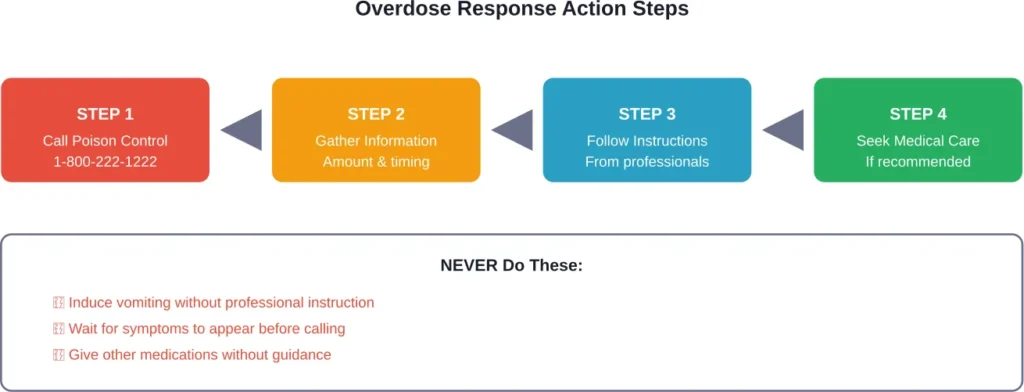
Immediate Steps
If someone has taken too much ibuprofen, contact emergency services or poison control immediately. In the United States, the poison control hotline is 1-800-222-1222, available 24 hours a day.
According to Poison Control, their webPOISONCONTROL online tool provides free, confidential expert guidance for medication errors and overdoses. Don’t wait for symptoms to appear before seeking help.
The FDA’s MedWatch program encourages reporting serious reactions to medical products. While this serves a different purpose than emergency response, documenting adverse events helps improve drug safety monitoring.
What Information to Provide
When contacting poison control or emergency services, have this information ready:
- The person’s age and approximate weight
- How much ibuprofen was taken
- When it was taken
- Whether it was taken with food or other medications
- Current symptoms
- Any pre-existing medical conditions
Don’t induce vomiting unless specifically instructed by medical professionals.
Medical Treatment Options
Treatment depends on overdose severity and timing. For recent ingestion, healthcare providers may administer activated charcoal to reduce drug absorption. Supportive care addresses specific symptoms and complications.
Severe cases may require hospitalization for monitoring kidney function, managing gastrointestinal bleeding, treating metabolic disturbances, or providing respiratory support.
There’s no specific antidote for ibuprofen overdose. Treatment focuses on supporting organ function while the body metabolizes and eliminates the drug.
How to Prevent Ibuprofen Overdose
Prevention strategies are straightforward but require consistent attention.
Read Medication Labels Carefully
According to Poison Control, understanding over-the-counter drug labels represents the easiest prevention method. Every OTC medication contains a Drug Facts section with active ingredients, proper dosing, warnings, and maximum daily limits.
Check labels on all medications being taken simultaneously. Many cold, flu, and pain relief combinations contain ibuprofen or other NSAIDs.
Track Doses Systematically
According to Poison Control guidance on medication errors, keeping a log and marking each dose prevents double-dosing. When multiple caregivers are involved, establish clear communication about who administers medications and when.
Pill organizers help track daily medications, though they must be kept secure from children.
Use Single-Ingredient Products When Possible
Combination medications increase confusion risk. Using single-ingredient ibuprofen provides clearer dosing control and reduces the chance of unintentionally exceeding limits through multiple products.
Respect Maximum Daily Limits
Remember the 1,200 mg daily maximum for over-the-counter use. That’s six 200 mg tablets in 24 hours. If pain requires more frequent dosing, consult a healthcare provider rather than exceeding recommended amounts.
Store Medications Safely
Keep all medications in their original containers with intact labels. Store them out of reach of children, preferably in locked cabinets. According to NIH research on pediatric pharmaceutical exposure, proper storage significantly reduces accidental poisoning risk.
Consider Alternative Pain Management
For chronic pain requiring frequent medication, explore complementary approaches including physical therapy, heat/cold therapy, or other analgesics under medical guidance. Rotating between different pain relief mechanisms can reduce reliance on any single medication.
Ibuprofen vs. Other Pain Relievers: Overdose Comparison
Understanding how ibuprofen compares to other common pain relievers provides helpful context.
Acetaminophen (Tylenol)
According to FDA consumer information, acetaminophen serves as another common over-the-counter pain reliever and fever reducer. But the risks differ significantly from ibuprofen.
The FDA warns that taking too much acetaminophen can cause liver failure and death. Severe liver damage may occur with three or more alcoholic drinks per day while using acetaminophen. The maximum daily dose is 4,000 mg for adults, though many healthcare providers recommend staying under 3,000 mg.
Acetaminophen overdose is one of the leading causes of acute liver failure. Unlike ibuprofen, which primarily affects the gastrointestinal system and kidneys, acetaminophen toxicity targets the liver specifically.
Other NSAIDs
Aspirin, naproxen, and other NSAIDs share similar mechanisms with ibuprofen but differ in potency, duration, and specific risk profiles. Some NSAIDs like mefenamic acid carry higher seizure risk—approximately 11% of mefenamic acid overdose patients develop seizures according to medical case reports.
Each NSAID requires attention to its specific dosing limits and contraindications.
| Medication | Maximum OTC Daily Dose | Primary Overdose Risk | Key Difference from Ibuprofen |
|---|---|---|---|
| Ibuprofen | 1,200 mg | GI bleeding, kidney damage | — |
| Acetaminophen | 3,000-4,000 mg | Liver failure | Not an NSAID; different mechanism |
| Naproxen | 660 mg | GI bleeding, kidney damage | Longer half-life, less frequent dosing |
| Aspirin | 4,000 mg | GI bleeding, metabolic acidosis | Antiplatelet effects, Reye’s syndrome risk in children |
Special Considerations and Drug Interactions
Several factors can amplify ibuprofen’s effects or increase toxicity risk.
Alcohol Consumption
Combining ibuprofen with alcohol increases gastrointestinal bleeding risk. Both substances irritate the stomach lining, and their combined effect proves more damaging than either alone.
Other Medications
NSAIDs interact with numerous medications including blood thinners, certain blood pressure medications, corticosteroids, and other NSAIDs. Taking multiple drugs that affect kidney function simultaneously can trigger acute kidney injury even at normal ibuprofen doses.
Selective serotonin reuptake inhibitors (SSRIs) and other antidepressants may increase bleeding risk when combined with NSAIDs.
Dehydration
According to dosing guidelines for intravenous ibuprofen formulations, patients should be well hydrated prior to administration to reduce the risk of renal adverse events. This principle applies to oral ibuprofen as well—dehydration stresses the kidneys and increases toxicity risk.
Frequently Asked Questions
For over-the-counter use, adults should not take more than 400 mg in a single dose. Taking 800 mg or more without medical supervision increases side effect risks without providing additional pain relief. According to clinical trial data, doses above 400 mg showed no greater effectiveness for pain management.
Yes, chronic daily use of ibuprofen increases the risk of gastrointestinal ulcers, kidney damage, and cardiovascular complications. According to NIH research, even at therapeutic doses, long-term NSAID use requires medical supervision to monitor for adverse effects. If pain requires daily medication, consult a healthcare provider about the safest approach.
Side effects can occur at normal therapeutic doses and include mild symptoms like heartburn, nausea, or headache. Overdose involves taking amounts exceeding maximum daily limits, typically producing more severe symptoms including persistent vomiting, gastrointestinal bleeding, significant drowsiness, or altered consciousness. But the line between the two isn’t always clear—any concerning symptoms warrant medical evaluation.
Initial symptoms like nausea, stomach pain, and dizziness typically appear within one to four hours after ingestion. More severe complications including kidney damage may develop over 12-24 hours. Some effects, particularly gastrointestinal bleeding, might not become apparent immediately. Don’t wait for symptoms to develop before seeking help if overdose is suspected.
Neither medication is inherently “safer”—they carry different risk profiles. According to FDA information, acetaminophen overdose primarily threatens the liver and can cause liver failure and death. Ibuprofen overdose primarily affects the gastrointestinal system and kidneys. The safest choice depends on individual health factors, existing conditions, and other medications being taken.
Absolutely. Pediatric dosing is based on weight, typically 5-10 mg per kilogram every six to eight hours, with a maximum daily dose of 40 mg/kg or 2,400 mg, whichever is lower. A dose that’s safe for an adult can be toxic for a child. According to NIH research on pediatric pharmaceutical exposure, NSAIDs ranked second among drugs involved in pediatric pharmaceutical exposure, with nonsteroidal anti-inflammatory drugs appearing in 14.1% (92/653) of cases. Always use weight-based dosing calculators or consult a pediatrician for children’s dosing.
If the double dose still falls within safe daily limits (under 1,200 mg for OTC use), monitor for symptoms but serious complications are unlikely. If the double dose pushes your daily total over safe limits, or if you experience symptoms like severe stomach pain, vomiting, drowsiness, or confusion, contact Poison Control at 1-800-222-1222 immediately. Don’t take another dose until you’ve received guidance.
The Bottom Line on Ibuprofen Safety
Can you overdose on ibuprofen? Absolutely. And it happens more often than most people realize.
The medication’s widespread availability and generally good safety profile at proper doses creates a false sense of complete harmlessness. But exceeding maximum daily limits—whether through single large doses or accumulated smaller doses throughout the day—can trigger serious health complications.
Gastrointestinal bleeding, kidney damage, and cardiovascular problems represent real risks from ibuprofen overdose. Children, older adults, and people with pre-existing conditions face heightened vulnerability.
Prevention comes down to simple practices: reading labels carefully, tracking doses systematically, respecting maximum daily limits, and storing medications safely. When multiple medications are being taken, checking for duplicate ingredients prevents accidental double-dosing.
If overdose occurs or is suspected, immediate action matters. Contact Poison Control at 1-800-222-1222 or seek emergency medical care. Don’t wait for symptoms to appear.
Here’s the thing though—ibuprofen remains a valuable medication when used properly. Understanding its limitations and risks doesn’t mean avoiding it entirely. It means using it responsibly, with awareness of safe dosing practices and potential complications.
The best approach? Treat over-the-counter medications with the same respect you’d give prescription drugs. Just because something doesn’t require a prescription doesn’t mean it’s without risk. Read labels. Track doses. Stay within limits.
And if pain requires frequent or high-dose medication, that’s a signal to consult a healthcare provider rather than continuing to self-medicate. Sometimes pain indicates underlying conditions that need proper diagnosis and treatment, not just symptom management.
Stay informed, dose carefully, and don’t hesitate to seek professional guidance when questions arise. That’s how you get pain relief benefits while minimizing overdose risks.