

Quick Summary: Breastfed babies can regulate their own milk intake through natural hunger and fullness cues, making true overfeeding extremely rare. Unlike bottle-feeding, nursing directly from the breast promotes self-regulation and allows babies to stop when satisfied. While excessive weight gain can occur due to oversupply issues, the act of breastfeeding itself provides built-in mechanisms that prevent overfeeding.
New parents often worry about whether their baby is getting enough milk. But here’s a question that catches many by surprise: can you actually overfeed a breastfed baby?
The short answer is no, not in the traditional sense. Breastfeeding creates a fundamentally different feeding dynamic than bottle-feeding, and understanding this difference matters for both baby’s health and parental peace of mind.
Why Breastfed Babies Self-Regulate
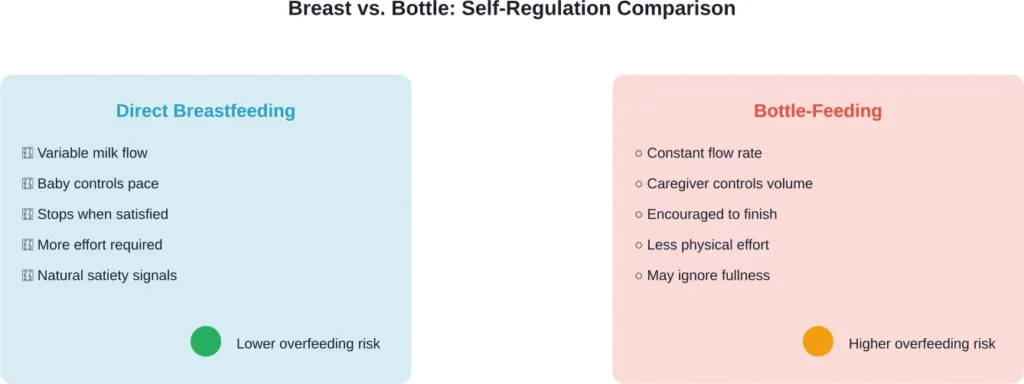
Babies who nurse directly from the breast have a remarkable ability to control their intake. Research indicates that infants fed directly from the breast show improved appetite regulation compared to bottle-fed infants, regardless of whether the bottle contains breast milk or formula.
This happens for several reasons. The flow of milk from the breast changes throughout a feeding session, starting faster and slowing as the breast empties. This natural variation gives babies time to recognize satiation cues.
Plus, nursing requires more effort than bottle-feeding. Babies work harder to extract milk, which means they’re more likely to stop when full rather than continuing to suck passively.
Understanding Hunger and Fullness Cues
The CDC emphasizes that understanding hunger and fullness signs is essential for responsive feeding. Even before babies can talk, they communicate their needs through sounds and movements.
Crying is actually a late hunger sign. By the time a baby cries, they’re already quite hungry. Earlier cues include rooting, bringing hands to mouth, and increased alertness.
Fullness cues are equally important. Babies who are satisfied will turn away from the breast, relax their hands, and may fall asleep. According to the CDC, recognizing these signs helps caregivers know when and how often to feed.
Common Hunger Signs
- Rooting or turning head toward breast
- Sucking on hands or fists
- Smacking or licking lips
- Increased activity and alertness
- Fussiness that escalates to crying
Common Fullness Signs
- Turning head away from breast
- Pushing away or arching back
- Relaxed, open hands
- Falling asleep at the breast
- Slowing or stopping sucking
The Bottle-Feeding Difference
Here’s where things get interesting. Research from the National Institutes of Health found that infants who are bottle-fed in early infancy are more likely to empty the bottle in late infancy than those who nurse directly from the breast.
This happens regardless of what’s in the bottle. Even when bottle-fed breast milk, babies show reduced self-regulation compared to direct breastfeeding.
A study from Brigham Young University found that clinical obesity at 24 months strongly traces back to infant feeding patterns. The researchers noted that encouraging a baby to finish the last ounce in their bottle might create lasting habits around overeating.
Research indicates that breastfeeding duration is inversely related to obesity risk, with studies reporting a reduction in type 2 diabetes incidence reflecting the long-term positive effects on weight control and feeding self-regulation.
When Oversupply Becomes the Issue
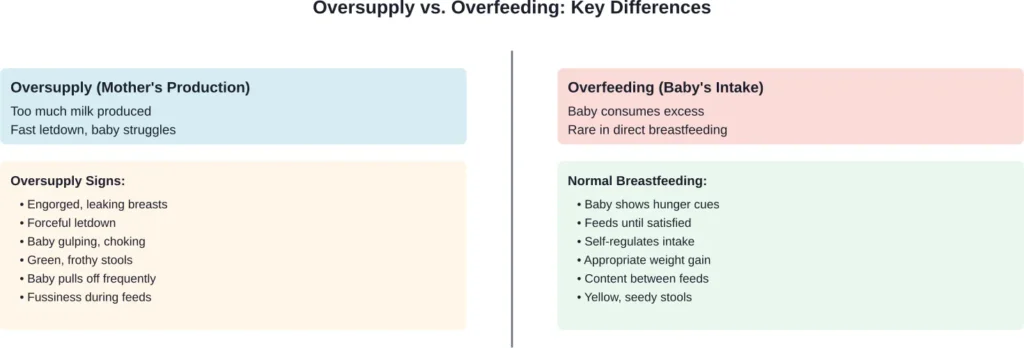
While babies can’t typically overfeed themselves when nursing, milk oversupply can create challenges. Some mothers produce more milk than their baby needs, leading to fast letdown and overwhelming flow.
Babies dealing with oversupply may gulp, choke, or pull off the breast frequently. They might have green, frothy stools and seem uncomfortable after feeds. This isn’t true overfeeding, though. It’s more about managing the delivery system.
Block feeding is one strategy that can help. This involves nursing from one breast for a set period (usually 2-4 hours) before switching sides, which helps reduce overall milk production.
Normal Feeding Patterns for Newborns
According to the HSE, newborn babies typically feed very often, and this is completely normal. There’s no need to time feeds. A newborn usually breastfeeds for 10 to 40 minutes every 1.5 to 3 hours.
This frequency exists because newborn stomachs are tiny and breast milk digests quickly. On the third day, an infant normally takes about 300-400ml per 24 hours, with this amount increasing as they grow.
The World Health Organization recommends exclusive breastfeeding for the first six months of life, with continued breastfeeding up to two years or beyond alongside complementary foods.
Weight Gain Considerations
Steady weight gain is one sign of adequate feeding, but excessive gain can occasionally signal issues. Newborns typically experience initial weight loss, followed by regain within the first weeks.
Babies gain weight steadily in the early months. But weight gain varies significantly between babies, and pediatricians look at overall growth patterns rather than single measurements.
If weight gain seems excessive, it’s worth discussing with a healthcare provider. But the most common scenario? Parents worrying their baby isn’t getting enough, not too much.
Responsive Feeding Practices
The WHO emphasizes responsive feeding as the foundation of healthy infant nutrition. This approach means feeding in response to hunger cues rather than on a rigid schedule.
Responsive feeding allows babies to develop healthy eating behaviors from the start. Research shows this approach supports self-regulation and may reduce obesity risk later in life.
For preterm infants, research has examined responsive feeding approaches, though evidence shows mixed outcomes compared to scheduled feeding.
Frequently Asked Questions
No, babies nursing directly from the breast will typically stop when satisfied. The effort required to nurse and natural flow variations help them recognize fullness before consuming excess milk.
Gassy babies pull their legs up, grunt, and pass gas frequently. True overfeeding (rare in breastfed babies) would show consistent discomfort after every feed plus excessive weight gain. Most fussiness relates to normal digestion or gas.
No, let babies nurse until they show fullness cues. Artificially limiting time can interfere with their natural regulation and prevent them from getting hindmilk, which is higher in fat and calories.
Cluster feeding involves frequent nursing sessions close together (common during growth spurts and evenings) followed by longer sleep periods. This is normal behavior, not overfeeding. Babies still regulate their total intake.
Comfort nursing rarely causes overfeeding. Babies sucking for comfort don’t actively transfer large amounts of milk. The breast adapts to their needs, providing small amounts of milk during comfort nursing.
Consult a pediatrician if weight gain exceeds normal ranges consistently or if your baby seems uncomfortable after every feeding. Single data points aren’t concerning, but patterns over time may warrant evaluation.
No, responsive feeding based on hunger cues works best for breastfed babies. According to the CDC and WHO, feeding on demand supports healthy self-regulation and appropriate growth.
The Bottom Line
Breastfed babies possess remarkable built-in mechanisms that prevent overfeeding when nursing directly from the breast. The real concern for most parents shouldn’t be about feeding too much, but rather ensuring responsive feeding that respects baby’s hunger and fullness signals.
Bottle-feeding changes the dynamic significantly, even with pumped breast milk. But at the breast? Trust that your baby knows what they need.
If something feels off, reach out to a lactation consultant or pediatrician. But in most cases, frequent nursing simply means a baby doing exactly what nature designed them to do.