
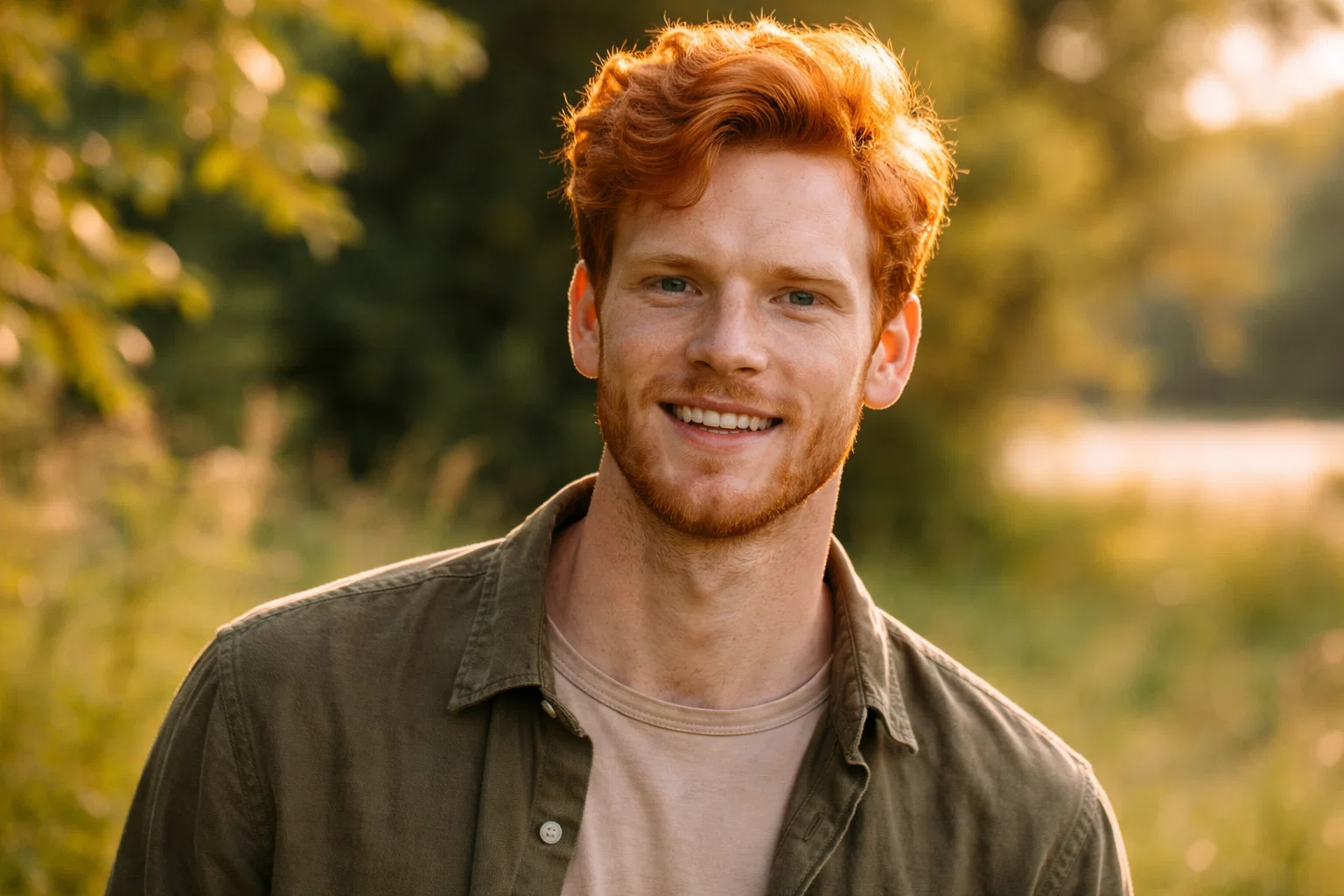
Quick Summary: Yes, people can absolutely be born with red hair. Red hair is a natural genetic trait caused by variants in the MC1R gene, inherited from both parents. It occurs in approximately 1-2% of the global population, most commonly in people of Northern or Northwestern European ancestry.
Red hair has fascinated people for centuries. From Prince Harry to Ed Sheeran, natural redheads stand out in a crowd—and for good reason. This striking hair color is one of the rarest human traits on Earth.
But here’s what many people don’t realize: red hair isn’t just about having ginger-toned parents. The genetics behind it are surprisingly complex, and yes, you can absolutely be born with red hair even when neither parent appears to be a redhead.
So how does this work? And what makes someone a natural redhead from birth?
The MC1R Gene: The Science Behind Red Hair
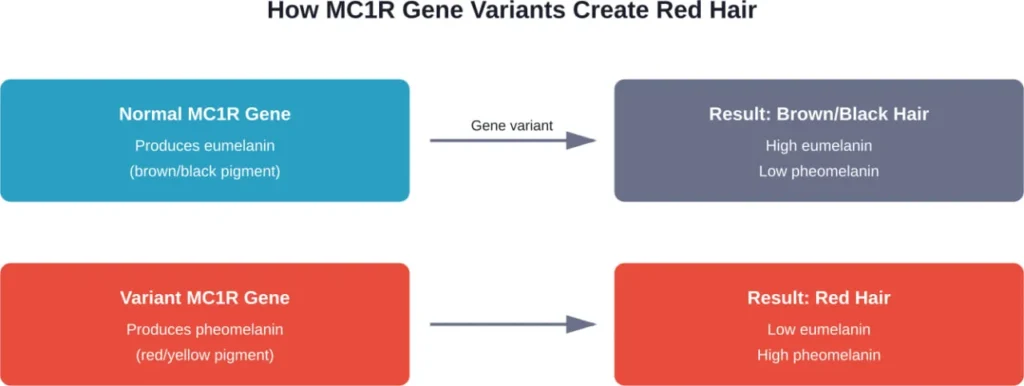
Red hair is caused by genetic variations in the melanocortin-1 receptor gene, known as MC1R. This gene plays a critical role in determining hair and skin pigmentation.
According to research published in Human Molecular Genetics, MC1R is the main predictor of red hair in humans. When this gene carries specific variants, it triggers the production of a different type of melanin pigment.
Here’s the thing though—humans produce two types of melanin:
- Eumelanin: Creates brown and black pigments
- Pheomelanin: Produces red and yellow pigments
Redheads have more pheomelanin than eumelanin. The MC1R gene variants essentially deactivate the normal melanin production pathway, causing hair follicles to produce predominantly pheomelanin instead.
Research shows that MC1R gene sequence variants have been found in over 80% of redheads and people with fair skin that doesn’t tan.
Key MC1R Variants That Cause Red Hair
Not all MC1R variants are created equal. Research identifies nine specific variant alleles strongly associated with red hair. Three are particularly common loss-of-function variants. Additionally, six rare high-penetrance variants have been documented: rs1805006 (D84E), rs11547464 (R142H), rs1110400 (I155T), rs312262906 (N29insA), rs555179612 (179InsC), and rs201326893 (Y152OCH).
These variants have what scientists call “high penetrance,” meaning they strongly influence the red hair trait when present.
How Red Hair Is Inherited
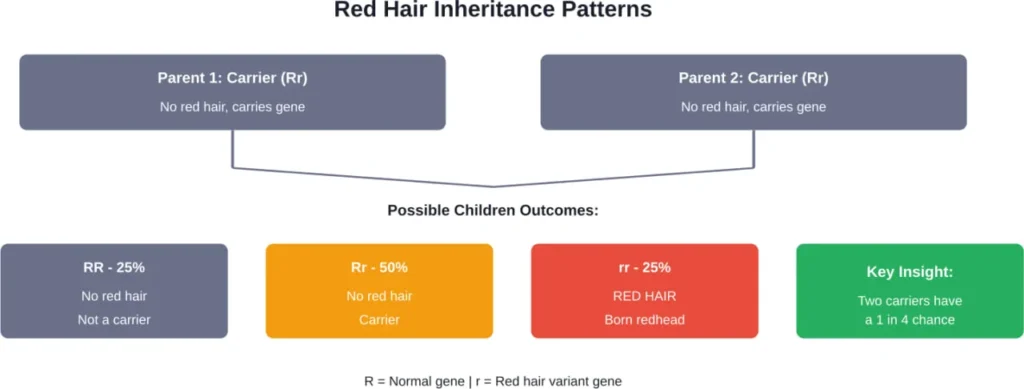
Red hair follows a recessive inheritance pattern. This means both parents must carry the gene variant—even if they don’t have red hair themselves—for a child to be born with red hair.
Think of it this way: each parent contributes one copy of the MC1R gene. If both copies contain the variant, the child will have red hair. If only one copy has the variant, the child becomes a carrier but typically won’t have red hair.
This explains why community discussions frequently ask: “Neither my husband nor I have red hair. How did our child get it?”
The answer? Both parents were carriers of the recessive red hair gene without expressing the trait themselves.
How Common Is Natural Red Hair?
Red hair occurs in approximately 1-2% of the global population. That makes it the rarest natural hair color in the world.
Geographic distribution matters significantly. Red hair is found in 2-6% of people of Northern or Northwestern European ancestry. Scotland and Ireland have the highest concentrations of natural redheads.
But wait. Can non-white individuals be born with red hair?
Yes. While less common, MC1R variants exist across different ethnic populations. The trait appears most frequently in European populations, but genetic variation means people from various ancestries can carry and express these variants.
Shades of Red Hair
Not all red hair looks the same. The spectrum ranges from strawberry blonde to deep auburn, depending on the specific MC1R variants and the ratio of pheomelanin to eumelanin.
| Shade | Characteristics | Pigment Balance |
|---|---|---|
| Strawberry Blonde | Light reddish-golden tones | Moderate pheomelanin, some eumelanin |
| Classic Ginger | Bright orange-red | High pheomelanin, low eumelanin |
| Auburn | Reddish-brown | Pheomelanin with moderate eumelanin |
| Deep Red | Dark burgundy tones | Pheomelanin with higher eumelanin |
These variations occur because MC1R doesn’t work alone. Research from UK Biobank participants found that other genetic factors beyond MC1R also contribute to the final shade of red hair.
Can Red Hair Appear Later in Life?
Most redheads have red hair at birth. However, some babies are born with lighter hair that darkens to red as they age.
The pigment production in hair follicles can change during early childhood. Some children appear blonde at birth but develop red hair by age two or three as their melanin production stabilizes.
That said, genuinely acquiring red hair as an adult without dye is extremely rare. The MC1R gene variants must be present from birth—they determine hair color from the start, even if the full expression takes time to develop.
Medical Considerations for Natural Redheads
The MC1R gene affects more than just hair color. Research shows several medical implications worth noting.
According to genome.gov data, genomic variations linked to MC1R influence various physical traits beyond appearance. Studies have found that redheads may require different anesthetic dosages. Research from Johns Hopkins found that desflurane requirements in redheads (6.2 vol% [95% CI, 5.9-6.5]) were significantly greater than in dark-haired women (5.2 vol% [4.9-5.5], P = 0.0004).
Additionally, MC1R variants are associated with increased melanoma risk. A meta-analysis assessing MC1R variants in German and Spanish populations (1,185 melanoma cases and 1,582 controls) found that the presence of any variant in both populations was associated with significantly increased melanoma risk (odds ratio 1.67, 95% CI 1.40-1.99).
Redheads typically have fair skin that doesn’t tan easily, which increases sun sensitivity and requires additional skin protection.
Frequently Asked Questions
Absolutely. If both parents carry the recessive MC1R gene variant, they have a 25% chance of having a redheaded child, even if neither parent has red hair themselves. Both must be carriers for this to occur.
No, this is a persistent myth. As long as people carry MC1R gene variants, red hair will continue to appear in future generations. Recessive genes don’t disappear—they can skip generations and resurface when two carriers have children.
Not necessarily. While red hair is most common in people of Northern European ancestry, the MC1R variants that cause it arose independently in different populations. People with red hair don’t share a single common ancestor.
Yes, but the other parent must be at least a carrier of the MC1R variant. If one parent has red hair (two variant genes) and the other is a carrier (one variant gene), there’s a 50% chance the child will have red hair.
Not all, but many do. The same MC1R gene variants that produce red hair also influence skin pigmentation patterns. This often results in freckles, but the correlation isn’t absolute—some redheads have clear skin.
Yes. Redheads experience age-related graying like everyone else, though red hair often fades to blonde or white rather than traditional gray. The pheomelanin pigment fades differently than eumelanin as people age.
Scotland and Ireland have the highest percentages of natural redheads globally. Other Northern European countries including the Netherlands, Belgium, and parts of Scandinavia also show higher frequencies than the global average.
The Bottom Line on Being Born With Red Hair
Red hair is absolutely a natural trait people are born with, determined by genetic variants in the MC1R gene inherited from both parents. It’s not a mutation in the negative sense—it’s simply genetic variation that produces a different type of melanin pigment.
The genetics are fascinating. Two parents without red hair can absolutely have a redheaded child if both carry the recessive gene. And while it’s rare globally, affecting only 1-2% of the population, red hair remains a beautiful example of human genetic diversity.
Understanding the science behind red hair helps explain why this trait appears, how it’s inherited, and what makes natural redheads genuinely unique from a biological perspective.
If red hair genetics interest you, consider exploring genetic testing services that analyze MC1R variants—many people discover they’re carriers without ever knowing it.