

Quick Summary: While true fat gain of a pound per day is virtually impossible, the scale can easily show a 1-3 pound increase overnight due to water retention, sodium intake, carbohydrate storage, and digestive contents. Actual fat gain requires a surplus of 3,500 calories beyond maintenance needs, making sustained daily pound gains of fat tissue physiologically unrealistic for most people.
The scale jumps three pounds overnight. Panic sets in. But here’s the thing—what the scale shows and what’s actually happening in the body are two very different stories.
Weight fluctuations are completely normal. The human body isn’t a static system. Water shifts, food digests, hormones fluctuate, and all of this impacts that number on the scale.
The Math Behind Actual Fat Gain
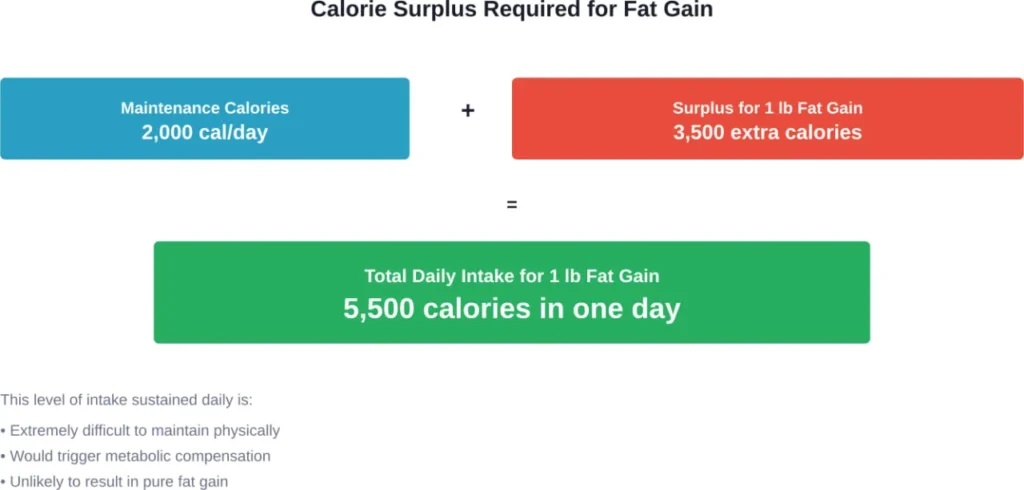
Real talk: gaining a pound of actual body fat requires consuming approximately 3,500 calories beyond what the body burns for maintenance. That’s not 3,500 total calories—that’s 3,500 extra calories on top of daily energy needs.
For someone with a maintenance calorie need of 2,000 calories per day, gaining a true pound of fat in 24 hours would require eating 5,500 calories. And then doing it again the next day. And the next.
According to NIH research on overfeeding, even when study participants consumed double their normal caloric intake, weight gain didn’t translate to pure fat accumulation. The body has mechanisms that regulate energy balance, including increased metabolic rate and thermogenesis in response to excess calories.
What Actually Causes Overnight Weight Increases
When the scale shows a sudden jump, it’s rarely fat. Here’s what’s actually happening.
Water Retention From Sodium
High-sodium meals cause the body to retain water to maintain proper electrolyte balance. A single salty restaurant meal can add 2-4 pounds of water weight overnight.
The body holds onto approximately 3 grams of water for every gram of sodium consumed above normal levels. That pizza or takeout? It could contain 3,000-5,000mg of sodium—well above the recommended daily intake.
Carbohydrate Storage and Glycogen
Carbohydrates are stored in muscles and liver as glycogen. Each gram of glycogen binds with 3-4 grams of water.
Research on overfeeding shows the body can accommodate large amounts of carbohydrates without significant fat storage. In one study where participants increased intake to 4,000 calories per day with 86% from carbs, carbohydrate oxidation for energy spiked dramatically. After seven days of overfeeding, only 50% of additional carb calories were stored.
Depleting glycogen stores through exercise or low-carb eating can cause a 3-5 pound scale drop. Refilling those stores brings that weight right back—but it’s not fat.
Digestive Contents
Food has mass. The digestive process takes 24-72 hours from consumption to elimination.
A large meal can weigh 2-3 pounds on its own. That weight shows up on the scale until digestion completes. Higher fiber intake, while beneficial for health, also means more digestive contents at any given time.
Hormonal Fluctuations
Hormones directly impact fluid retention. Menstrual cycles can cause 5-7 pound fluctuations in body weight due to progesterone and estrogen levels affecting water balance.
Stress hormones like cortisol also promote water retention. According to research on appetite and weight regulation from NIH, hormonal systems play significant roles in short-term weight variations independent of fat mass changes.
| Cause | Typical Weight Change | Duration |
|---|---|---|
| High sodium intake | 2-4 pounds | 1-3 days |
| Glycogen replenishment | 3-5 pounds | 24-48 hours |
| Digestive contents | 1-3 pounds | 24-72 hours |
| Menstrual cycle | 3-7 pounds | 5-10 days |
| New exercise routine | 2-4 pounds | 1-2 weeks |
The Overfeeding Studies
Research provides insight into what happens when people deliberately overeat. Studies on overfeeding consistently show that weight gain composition depends heavily on macronutrient breakdown.
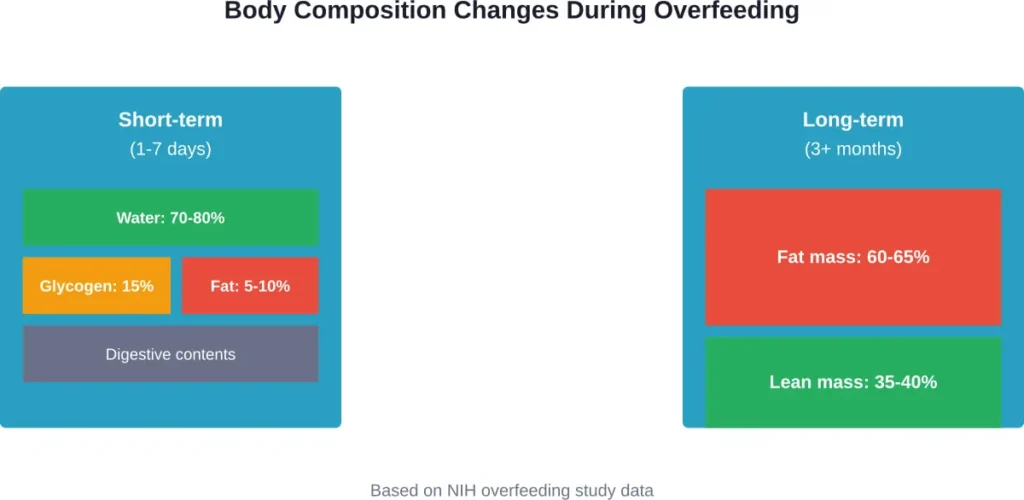
In overfeeding research documented by NIH, participants who consumed massive calorie surpluses for several weeks gained weight—but the composition varied. One study showed that after three months of overfeeding, participants gained an average of 16.2 kg (35.7 pounds), with 64% of that gain being fat mass and 36% being lean tissue.
But here’s what matters: this required sustained overfeeding for months, not a single day or even a single week.
Metabolic Adaptation to Excess Calories
The body doesn’t passively accept unlimited calorie storage. Metabolic adaptation occurs in response to overfeeding, just as it does with underfeeding.
According to research on energy expenditure changes, adaptive thermogenesis causes the body to increase energy expenditure when faced with caloric excess. Resting energy expenditure increases, non-exercise activity thermogenesis (NEAT) often rises unconsciously, and the thermic effect of food processing becomes more pronounced.
This biological resistance to weight change works in both directions—the body fights against rapid loss and rapid gain.
Intentional Weight Gain: What’s Actually Achievable
For people trying to gain weight—athletes building muscle, individuals recovering from illness, or those naturally underweight—realistic expectations matter.
Research on intentional weight gain suggests that healthy weight gain of 1-2 pounds per week can be expected when reasonably increasing energy intake. This rate varies based on individual factors and training status.
According to CDC guidance, achieving healthy growth and weight includes healthy eating, physical activity, optimal sleep, and stress reduction. It’s not just about consuming more calories—the quality and composition of those calories matters significantly.
The Role of Protein in Weight Gain
Not all caloric surpluses produce the same results. Protein intake during overfeeding influences whether gained weight is predominantly muscle or fat.
Studies show that higher protein intake during caloric surplus results in greater lean mass gain relative to fat mass. The body can utilize excess protein for muscle synthesis when combined with resistance training, whereas excess carbohydrates and fats are more readily stored as adipose tissue.
When Daily Weight Gain Signals a Problem
While short-term fluctuations are normal, certain patterns of rapid weight gain warrant medical attention.
Sudden, unexplained weight gain—particularly when accompanied by swelling, shortness of breath, or fatigue—can indicate fluid retention from heart, kidney, or liver issues. Some medications also cause rapid weight gain as a side effect.
The CDC notes that other factors such as sleep, age, genes, and medications can influence weight. Unintentional weight gain that persists beyond normal fluctuation patterns should be evaluated by healthcare professionals.
| Normal Fluctuation | Potential Concern |
|---|---|
| 1-3 pounds daily variation | 5+ pounds sustained increase weekly |
| Weight normalizes within days | Progressive upward trend without cause |
| Linked to diet/exercise changes | Accompanied by swelling or breathing issues |
| No other symptoms | Fatigue, pain, or other new symptoms |
Managing Weight Fluctuations
Understanding that daily weight changes are normal helps reduce unnecessary stress and poor decision-making around food and exercise.
Some strategies for putting weight fluctuations in perspective:
- Weigh at the same time daily, ideally first thing in the morning after using the bathroom
- Track weekly averages rather than daily numbers
- Measure body composition through methods beyond the scale
- Focus on long-term trends over 2-4 week periods
- Recognize that increased exercise causes temporary water retention for muscle repair
According to CDC guidance on maintaining healthy weight, being mindful of calories, ensuring adequate nutrition, and being physically active form the foundation of healthy weight management—not obsessing over daily scale fluctuations.
The Bottom Line on Daily Weight Gain
Can the scale show a pound gained in a day? Absolutely. Can actual body fat increase by a pound in 24 hours? Physiologically, it’s nearly impossible.
The math doesn’t support it. The biology doesn’t support it. What looks like rapid weight gain is almost always water, glycogen, digestive contents, and hormonal fluctuations—all temporary factors that resolve within days.
True fat accumulation requires sustained caloric surplus over time, typically weeks to months. Even deliberate overfeeding studies show that the body resists rapid composition changes through metabolic adaptation.
For those concerned about weight management, focus on long-term patterns and behaviors rather than daily scale drama. The body is complex, dynamic, and constantly adjusting. That overnight pound? It’s temporary noise, not permanent change.
Frequently Asked Questions
No, gaining a pound of actual body fat requires consuming 3,500 calories beyond maintenance needs in a single day. For most people with maintenance needs of 2,000-2,500 calories, this would mean eating 5,500-6,000 total calories—which is difficult to sustain and wouldn’t convert entirely to fat due to metabolic adaptation.
Overnight weight gain of 2-4 pounds typically results from water retention due to high sodium intake, carbohydrate-induced glycogen storage, digestive contents from large meals, or hormonal fluctuations. This temporary weight resolves within 1-3 days as the body processes food and regulates fluid balance.
Research on intentional weight gain suggests approximately 0.5-1 pound per week is achievable with structured caloric surplus, and even this rate may be challenging for some individuals. This weekly gain would include both lean mass and fat tissue, not pure fat accumulation.
Scale weight can increase temporarily even with reduced calorie intake due to increased water retention from higher sodium, hormonal changes, new exercise routines causing inflammation, or increased carbohydrate percentage in diet. However, sustained fat gain on a true caloric deficit is not physiologically possible.
A single high-calorie day causes temporary scale increases from water and digestive contents, but not significant fat gain. Studies on short-term overfeeding show that 70-80% of immediate weight gain is water. Permanent fat accumulation requires consistent caloric surplus over weeks and months.
Water retention from sodium typically resolves within 24-72 hours as the kidneys process excess sodium and restore electrolyte balance. Drinking adequate water and consuming potassium-rich foods can help speed this process.
Seek medical evaluation for sustained weight gain of 5+ pounds weekly without dietary changes, weight gain accompanied by swelling in legs or abdomen, shortness of breath, extreme fatigue, or when starting new medications known to affect weight. These patterns may indicate fluid retention from heart, kidney, or endocrine issues.