

Quick Summary: While it’s theoretically possible to sleep for 24 hours under extreme circumstances like sedation or medical conditions, healthy adults cannot naturally sleep this long continuously. The body’s circadian rhythm and sleep homeostasis typically limit sleep to 10-15 hours maximum before waking mechanisms activate, even after severe sleep deprivation.
We’ve all joked about wanting to sleep for an entire day after a particularly exhausting week. But is sleeping 24 hours straight actually possible for the human body?
The short answer is: under normal circumstances, no. Even when severely sleep-deprived, healthy people can’t naturally sleep for a full 24-hour period. But the reasons why reveal fascinating insights into how our bodies regulate sleep.
Understanding Sleep Duration Limits
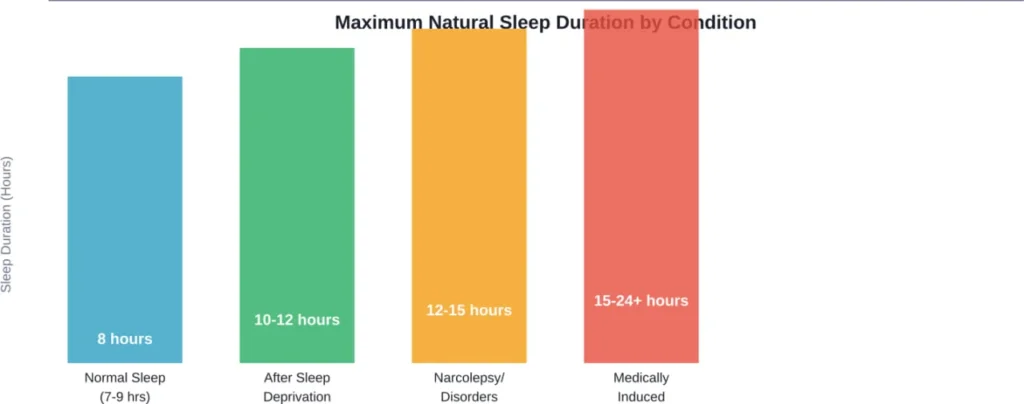
The National Heart, Lung, and Blood Institute recommends that adults sleep between 7 and 9 hours a night, noting that adults who sleep less than 7 hours a night may have more health issues than those who sleep 7 or more hours a night. Sleeping more than 9 hours regularly is considered oversleeping, and most people rarely exceed 10-12 hours even when given unlimited opportunity to sleep.
Here’s the thing though—our bodies have built-in mechanisms that prevent indefinite sleep. Two primary systems work together to regulate when we sleep and wake:
Sleep Homeostasis and Circadian Rhythm
Sleep homeostasis creates sleep pressure that builds the longer we’re awake. Think of it as a biological debt that demands repayment. But once that debt is paid through adequate rest, the pressure dissipates and we wake up.
The circadian rhythm operates on a roughly 24-hour cycle, influenced by light exposure and internal biological clocks. This system promotes wakefulness during daylight hours and sleepiness at night, regardless of how much sleep pressure exists.
Research published in Frontiers in Physiology (2021) by Klerman et al. examined what happens when people are given extended sleep opportunities. Even when participants could sleep as long as they wanted in controlled bedrest conditions, they didn’t sleep indefinitely. Sleep duration increased initially but then stabilized and actually decreased on subsequent days.
When 24-Hour Sleep Might Occur
While healthy people won’t naturally sleep an entire day, certain circumstances can push sleep duration to extreme lengths:
Medical Conditions and Sleep Disorders
Narcolepsy causes excessive daytime sleepiness and sudden, overwhelming sleep attacks. People with narcolepsy might sleep significantly longer than average, though even they typically don’t reach 24 consecutive hours without intervention.
Hypersomnia disorders involve chronic excessive sleep. According to the Sleep Foundation, regularly sleeping more than 9 hours is considered oversleeping and may indicate underlying health issues including depression, thyroid problems, or chronic illness.
Pharmaceutical Sedation
General anesthesia or heavy sedation can keep someone unconscious for extended periods. But this isn’t natural sleep—it’s a medically induced state with different brain activity patterns than normal sleep cycles.
Extreme Sleep Deprivation
After staying awake for multiple days, the body accumulates massive sleep debt. Recovery sleep following such deprivation might reach 12-15 hours, but biological wake mechanisms still activate well before 24 hours pass.
Research on behavioral and physiological consequences of sleep restriction shows that habitual sleep duration among adults varies considerably within and between individuals (a database of 1.116 million Americans queried in 1982), and the body maintains regulatory mechanisms preventing indefinite sleep.
What Happens During Extended Sleep
When people do sleep longer than usual, they cycle through normal sleep stages repeatedly. Sleep consists of rapid eye movement (REM) sleep and non-rapid eye movement (NREM) sleep, which make up about 20-25% and 75-80% of total sleep respectively in healthy adults.
During extended sleep opportunity, the proportion and quality of sleep stages change. Initial sleep cycles contain more deep NREM sleep to recover from deprivation, while later cycles become lighter and more fragmented.
| Sleep Stage | Percentage of Normal Sleep | Primary Function |
|---|---|---|
| Light NREM (Stage 1-2) | 50-60% | Transition and basic restoration |
| Deep NREM (Stage 3) | 15-25% | Physical recovery and immune function |
| REM Sleep | 20-25% | Memory consolidation and dreaming |
Health Risks of Regularly Sleeping Too Long
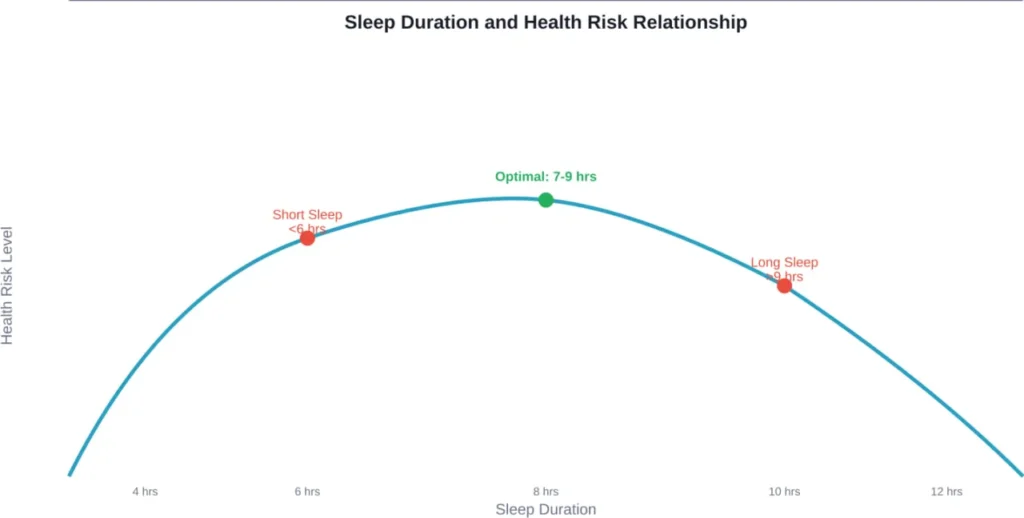
Now, this is where it gets interesting. While one day of extended sleep won’t cause harm, consistently sleeping more than 9 hours associates with several health concerns.
Research examining long sleep duration and health outcomes shows a U-shaped relationship between sleep and health. Both too little and too much sleep correlate with increased risks.
Associated Health Conditions
Studies published in medical journals have found associations between long sleep duration and:
- Increased mortality risk from all causes
- Higher cardiovascular disease rates
- Greater depression prevalence
- Elevated diabetes risk
- Cognitive decline in older adults
But here’s the crucial distinction: oversleeping is often a symptom rather than a cause. The underlying health condition may drive both the excessive sleep and other health problems.
Recommended Sleep Duration by Age
Sleep needs change across the lifespan. Research from the National Sleep Foundation provides evidence-based guidelines:
| Age Group | Recommended Hours |
|---|---|
| Newborns (0-3 months) | 14-17 hours |
| Infants (4-11 months) | 12-15 hours |
| Toddlers (1-2 years) | 11-14 hours |
| Preschoolers (3-5 years) | 10-13 hours |
| School-age (6-13 years) | 9-11 hours |
| Teens (14-17 years) | 8-10 hours |
| Adults (18-64 years) | 7-9 hours |
| Older adults (65+ years) | 7-8 hours |
These represent guidelines for healthy individuals not suffering from sleep disorders. Individual needs may vary slightly, but deviating significantly outside these ranges warrants medical evaluation.
When to Seek Medical Advice
Consistently sleeping more than 9-10 hours and still feeling tired signals potential health concerns. Consider consulting a healthcare provider if experiencing:
- Regularly sleeping 10+ hours but waking unrefreshed
- Sudden increases in sleep duration without obvious cause
- Excessive daytime sleepiness despite adequate nighttime sleep
- Difficulty staying awake during normal activities
- Mood changes, particularly depression symptoms
- Cognitive difficulties or memory problems
These symptoms might indicate sleep disorders like sleep apnea, narcolepsy, or hypersomnia, or underlying medical conditions requiring treatment.
Frequently Asked Questions
Without medical intervention or underlying disorders, most people max out around 10-12 hours even after severe sleep deprivation. The body’s circadian rhythm and sleep homeostasis mechanisms typically trigger waking before reaching 15 hours.
Occasionally sleeping 12 hours after exhaustion or illness isn’t harmful. However, consistently sleeping this long associates with increased health risks and often indicates underlying medical conditions that need evaluation.
Yes, but only partially. Extending sleep after deprivation helps reduce sleep debt, but research shows complete recovery may require multiple nights. One long sleep session doesn’t fully reverse effects of chronic sleep restriction.
This suggests poor sleep quality rather than insufficient quantity. Potential causes include sleep apnea, restless leg syndrome, depression, thyroid disorders, or other medical conditions disrupting restorative sleep processes.
This would be extremely dangerous and potentially fatal. Sleeping medications aren’t designed for extended use beyond normal sleep duration. Overdosing on sleep medications can cause respiratory depression, coma, and death.
Some animals sleep extensively—koalas sleep up to 22 hours daily, and brown bats around 20 hours. However, these represent their normal patterns, not continuous 24-hour periods without any arousal.
Yes, hypersomnia is a common symptom of depression. Research shows both short and long sleep durations associate with increased depression risk compared to recommended sleep durations.
The Bottom Line on 24-Hour Sleep
So can humans sleep for 24 hours straight? Under normal circumstances, no. Biological mechanisms governing sleep and wakefulness prevent healthy people from sleeping an entire day naturally.
The only realistic scenarios involve medical sedation, severe illness, or significant sleep disorders—none of which constitute normal, restorative sleep.
Rather than aiming for marathon sleep sessions, focus on consistent, quality sleep within recommended durations. The National Heart, Lung, and Blood Institute recommends that adults sleep between 7 and 9 hours a night, noting that adults who sleep less than 7 hours a night may have more health issues than those who sleep 7 or more hours a night.
If finding yourself regularly sleeping more than 9 hours yet still feeling exhausted, don’t dismiss it as simply needing more rest. This pattern often signals underlying health issues requiring professional evaluation. Contact a healthcare provider or sleep specialist to identify and address the root cause, ensuring sleep serves its restorative purpose rather than becoming a symptom of deeper problems.