

Quick Summary: Yes, it is possible to lactate without being pregnant. This condition can occur naturally due to hormonal imbalances (galactorrhea) or be intentionally induced through regular breast stimulation and sometimes medication. Both people who have never been pregnant and those who have can produce breast milk through induced lactation.
The human body has remarkable capabilities that often surprise us. And lactation without pregnancy is one of those fascinating biological phenomena that challenges common assumptions about breastfeeding.
Whether you’re considering adoption, exploring lactation for personal reasons, or experiencing unexpected milk production, understanding how this process works matters. According to the National Institutes of Health StatPearls, galactorrhea—milk production unrelated to pregnancy or lactation—affects varying populations. The prevalence of hyperprolactinemia ranges from 0.4% in an unselected normal adult population to as high as 9-17% in women with reproductive disorders, and was found to be as high as 17% among women with polycystic ovary syndrome.
But how exactly does the body produce milk when pregnancy hasn’t occurred? Let’s break down the science and practical realities.
Understanding Galactorrhea: Natural Lactation Without Pregnancy
Galactorrhea is the medical term for breast milk production that occurs outside of normal pregnancy and breastfeeding contexts. The NIH StatPearls source defines galactorrhea as milk production from the breast unrelated to pregnancy or lactation, with milk production one year after cessation of breastfeeding considered non-lactational and classified as galactorrhea.
Here’s the thing though—galactorrhea isn’t as rare as most people think. Research indicates that approximately 20-25% of women experience this condition at some point during their lifetime.
The condition results from elevated prolactin levels in the blood, known as hyperprolactinemia. Prolactin is the hormone primarily responsible for milk production. Various hormones including prolactin, estrogens, and thyrotropin-releasing hormone can affect milk production, even without pregnancy.
What Causes Spontaneous Lactation?
Several factors can trigger milk production without pregnancy:
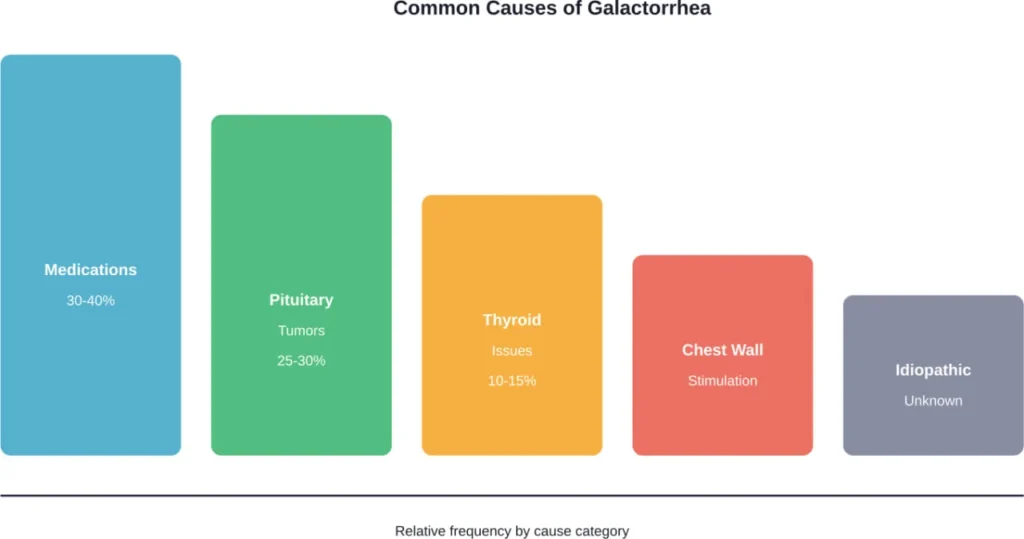
- Medication side effects: Antidepressants and antipsychotic drugs frequently cause galactorrhea. Research published in the Journal of Clinical and Diagnostic Research documents antidepressant-induced non-puerperal lactation cases. These medications affect serotonin transmission, which indirectly inhibits dopamine and leads to increased prolactin.
- Pituitary disorders: Prolactinomas (prolactin-secreting tumors) are characterized by the proliferation of lactotrophic cells in the anterior pituitary. Most prolactinomas (90%) are microadenomas (less than 1 cm in diameter) and are asymptomatic.
- Thyroid conditions: Primary hypothyroidism can elevate prolactin levels and trigger milk production.
- Chest wall stimulation: Chest wall pathology or repeated nipple stimulation can activate lactation reflexes.
- Herbal supplements: Certain herbs known as galactagogues can stimulate milk production.
According to NIH StatPearls, hyperprolactinemia self-resolves in 1/3rd of patients and remains stable in approximately half of the patients.
Induced Lactation: Deliberately Producing Breast Milk
Unlike spontaneous galactorrhea, induced lactation is the intentional stimulation of milk production without pregnancy. This process is commonly pursued by adoptive parents, partners of birthing parents, and transgender women.
Real talk: induced lactation requires dedication and consistency. But it’s absolutely achievable.
How Induced Lactation Works
The process relies on mimicking the hormonal and physical conditions that trigger natural lactation. According to Mayo Clinic guidance, induced lactation might be possible with considerable dedication and preparation through regular breast stimulation via pumping.
The recommended protocol involves a gradual progression:
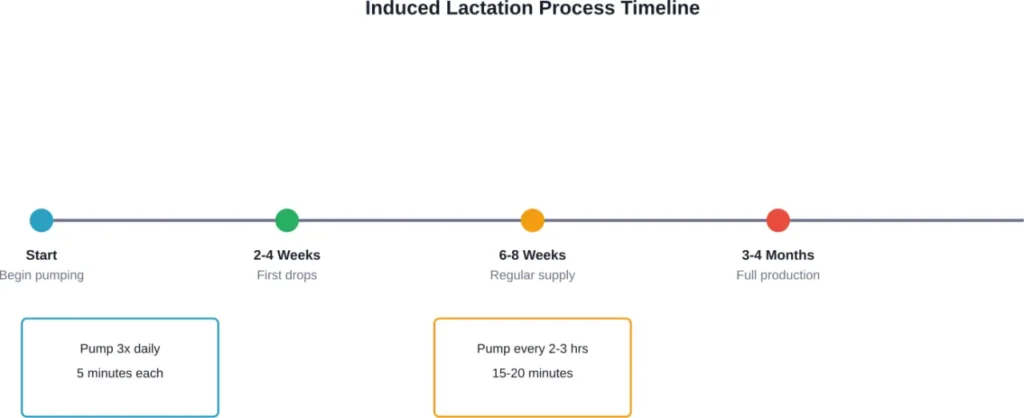
| Phase | Frequency | Duration per Session | Timeline |
|---|---|---|---|
| Initial | 3 times daily | 5 minutes | Week 1 |
| Building | Every 4 hours (including night) | 10 minutes | Weeks 2-4 |
| Established | Every 2-3 hours | 15-20 minutes | Week 4 onward |
Night pumping sessions are particularly important because prolactin levels naturally peak during nighttime hours.
Medical Support for Induced Lactation
Some healthcare providers prescribe medications to support induced lactation. Domperidone, though not FDA-approved for this purpose in the United States, is sometimes used off-label to increase prolactin levels.
Hormonal protocols may include birth control pills and other medications to simulate pregnancy hormones before beginning the pumping regimen. However, many people successfully induce lactation through pumping alone without pharmaceutical intervention.
Can Men Lactate?
Yes. Men possess the same basic breast tissue and mammary glands as women, just in less developed form. Under the right hormonal conditions, male lactation is physiologically possible.
Research published in medical journals has documented cases where men with certain conditions produced milk containing lactose, alpha-lactalbumin, and lactoferrin—the same constituents found in female breast milk.
Male galactorrhea most commonly results from prolactin-secreting pituitary tumors, liver disease, or medications that affect hormone levels.
Symptoms of Unexpected Lactation
If you’re experiencing galactorrhea unintentionally, you might notice:
- Milky nipple discharge (white or clear fluid)
- Discharge from one or both breasts
- Spontaneous leakage or discharge only when breasts are pressed
- Irregular menstrual periods or absence of menstruation
- Headaches or vision problems (if caused by pituitary tumor)
- Decreased libido or sexual dysfunction
Sound familiar? These symptoms warrant medical evaluation to identify the underlying cause.
When to See a Healthcare Provider
Galactorrhea itself isn’t dangerous, but the underlying causes sometimes require medical attention. Seek evaluation if:
- You’re experiencing nipple discharge and haven’t been pregnant or breastfeeding recently
- Discharge is bloody or occurs in only one breast
- You’re male and notice any breast discharge
- Galactorrhea accompanies irregular periods, headaches, or vision changes
Medical workup typically includes prolactin level testing, thyroid function tests, and potentially brain imaging to rule out pituitary tumors.
The Role of Prolactin in Lactation
Prolactin is a polypeptide hormone composed of 199 amino acids after proteolytic cleavage, with a molecular weight of 23,000 daltons. This hormone is responsible not just for lactation, but hundreds of other physiological functions needed to maintain homeostasis.
During pregnancy, prolactin levels increase dramatically—up to 10-20 times normal baseline levels—preparing the mammary glands for milk production. After birth, the act of breastfeeding stimulates continued prolactin release through nipple stimulation.
Now, this is where it gets interesting. The same mechanism can be triggered without pregnancy through regular breast stimulation, which is why induced lactation works.
FAQs About Lactation Without Pregnancy
Most people begin seeing small amounts of milk within 2-4 weeks of consistent pumping, though establishing a full milk supply typically requires 3-4 months. The timeline varies significantly based on individual hormone levels, pumping frequency, and whether medications are used.
Yes. Many adoptive parents successfully breastfeed through induced lactation. According to the American College of Obstetricians and Gynecologists, more than 83% of infants are breastfed at birth in the United States.
Galactorrhea itself isn’t dangerous, though it can indicate underlying conditions that require treatment. The most serious potential cause is a pituitary tumor, which may need medical management. Most cases are benign and related to medication effects or hormonal fluctuations.
Yes. Induced lactation and galactorrhea produce genuine breast milk with the same nutritional composition as milk produced after pregnancy. The milk contains lactose, proteins, fats, antibodies, and other beneficial components.
Stress doesn’t directly cause galactorrhea, but it can affect hormone levels including prolactin. Chronic stress may contribute to hormonal imbalances that trigger milk production, though this is rarely the sole cause.
For most people, induced lactation doesn’t cause permanent hormonal changes. Once regular breast stimulation stops, prolactin levels typically return to normal within weeks to months. However, if galactorrhea results from an underlying condition like a pituitary tumor, that condition requires appropriate medical management.
A hospital-grade double electric breast pump is recommended for induced lactation. These pumps provide stronger suction and more efficient stimulation than manual pumps. Some people also use supplemental nursing systems (SNS) once they begin feeding a baby, which allows the infant to receive supplemental milk while stimulating milk production.
Conclusion
Lactation without pregnancy is not only possible—it’s a well-documented biological capability that serves various purposes from medical to personal. Whether occurring spontaneously as galactorrhea or deliberately induced for adoptive nursing, the process demonstrates the remarkable adaptability of human physiology.
If you’re experiencing unexpected lactation, don’t panic. Medical evaluation can identify the cause and appropriate treatment if needed. And if you’re considering induced lactation, know that with consistency and proper support, many people successfully establish milk production.
Ready to learn more or start your lactation journey? Consult with a healthcare provider or certified lactation consultant who can provide personalized guidance based on your specific situation and goals.