
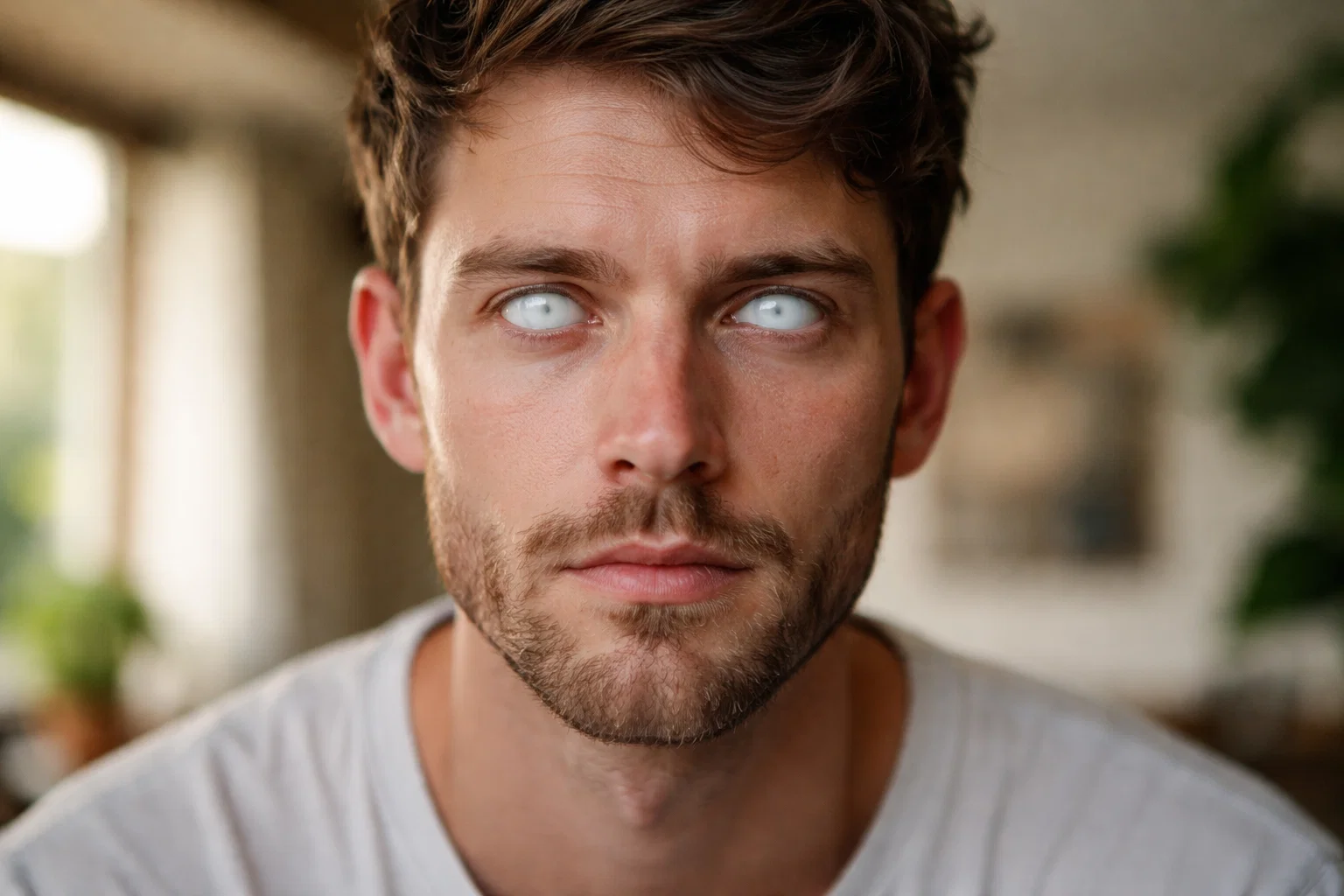
Quick Summary: True completely white eyes in humans don’t naturally occur in living people. The white part of the eye (sclera) is normally white, but the iris has color and the pupil appears black. Medical conditions like leukocoria can make the pupil appear white instead of black, while severe eye damage may cause a blind eye to turn whitish. Albinism affects eye color but doesn’t produce entirely white eyes.
The idea of completely white eyes shows up in movies, fiction, and horror stories. But can humans actually have eyes that are entirely white?
The short answer? No, not naturally in living people.
Here’s the thing though—several medical conditions can make parts of the eye appear white when they normally wouldn’t. Understanding these conditions helps separate fiction from medical reality.
Understanding Normal Eye Anatomy
Before diving into what can go wrong, let’s clarify what we’re talking about. The human eye has several distinct parts with different colors.
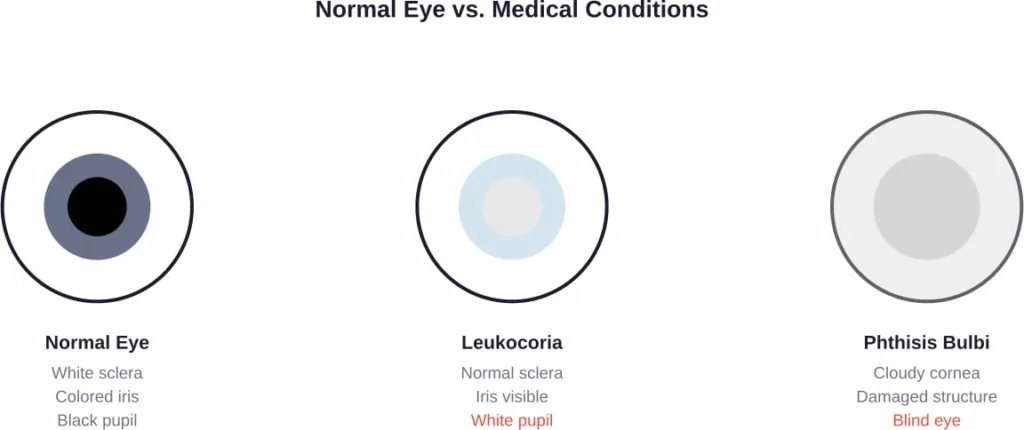
The sclera—that’s the outer coating of the eyeball—is naturally white. When people talk about “the whites of your eyes,” they mean the sclera. This part is supposed to be white (or slightly off-white).
The iris is the colored ring that determines whether someone has blue, brown, green, or hazel eyes. The pupil sits in the center, appearing black because it’s an opening that lets light into the eye.
So technically, everyone already has white parts in their eyes. But a completely white eye—iris, pupil, and all? That’s a different story.
What Is Leukocoria (White Pupil)?
Leukocoria means “white pupil.” Instead of the normal black appearance, the pupil looks gray, white, silver, or yellow.
This condition isn’t about having white eyes across the entire eye. Rather, it’s about the pupil reflecting light abnormally, creating a white or pale appearance where there should be darkness.
Common Causes of White Pupil
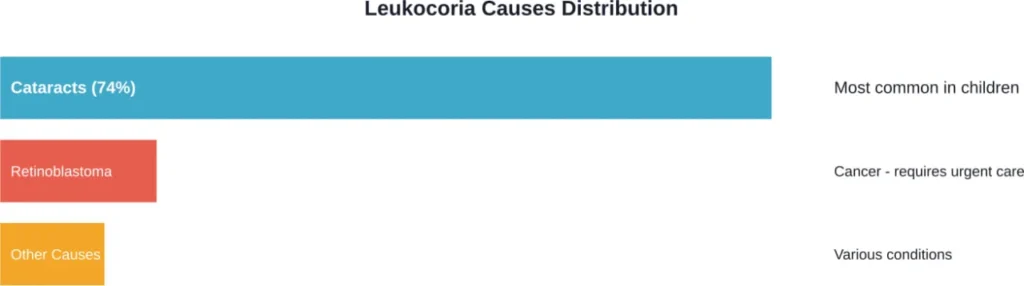
According to medical data, cataracts make up about 74% of leukocoria cases in children. When the eye’s lens becomes cloudy, it can create a whitish appearance in the pupil area.
Other causes include:
- Retinoblastoma (cancer of the retina)
- Persistent fetal vasculature
- Retinal detachment
- Coats disease
- Toxocariasis (parasitic infection)
Leukocoria often gets detected when parents notice something wrong in photos. Flash photography can reveal the white pupil when the expected “red eye” effect doesn’t appear.
Real talk: if you notice a white pupil in someone’s eye, especially a child’s, that’s a medical emergency. It could indicate serious conditions including cancer.
Can Albinism Cause White Eyes?
Many people wonder whether albinism creates completely white eyes. The answer is nuanced.
Oculocutaneous albinism (OCA) is a group of inherited disorders where the body produces little or no melanin. According to the National Institutes of Health, melanin determines the color of skin, hair, and eyes.
People with albinism typically have very light-colored eyes—often blue, gray, or pale brown. In some lighting conditions, their eyes might appear pinkish or violet because blood vessels show through the iris.
But here’s what albinism doesn’t do: it doesn’t turn the entire eye white. The iris still has some color (even if very pale), and the pupil remains black. The sclera stays white as it should.
Vision Problems in Albinism
According to research published in NCBI resources, albinism causes characteristic ocular abnormalities including:
- Foveal hypoplasia (underdeveloped central retina)
- Iris translucency
- Hypopigmented fundus (pale retina)
- Chiasmal misrouting (abnormal optic nerve pathways)
These vision problems occur because melanin plays a crucial role in eye development during pregnancy. Without proper melanin signaling, the optic nerves and retina don’t develop normally.
Why Does a Blind Eye Turn White?
Sometimes a severely damaged or blind eye develops a whitish, opaque appearance. This happens due to a condition called phthisis bulbi.
Phthisis bulbi occurs when an eye experiences severe trauma, inflammation, or disease. The eye shrinks, becomes disorganized internally, and loses its normal appearance.
The cornea—normally clear—can become cloudy and whitish. Scar tissue forms. The eye may appear smaller and have a milky or white surface instead of the usual clear front.
This isn’t the same as having naturally white eyes. It’s the result of severe eye damage and often involves a non-functional eye.
When the Sclera Changes Color
While the sclera should be white, several conditions can change its color. These don’t create “white eyes” but rather change the whites to other colors.
| Sclera Color | Possible Cause | Medical Significance |
|---|---|---|
| Yellow | Jaundice | Liver or blood problems |
| Red/Pink | Subconjunctival hemorrhage | Usually harmless, blood vessel break |
| Blue/Gray | Certain medications | Side effect, usually reversible |
| Brown spots | Increased melanin | Often normal, especially in darker skin |
According to the American Academy of Ophthalmology, a healthy sclera is white. Any significant color change warrants a medical evaluation.
The Fiction vs. Reality Gap
Movies and TV shows sometimes depict characters with completely white eyes—no visible iris or pupil. This creates dramatic visual effects but doesn’t reflect human biology.
Some special effects use white contact lenses to cover the entire visible eye surface. These are cosmetic props, not natural eye conditions.
In real medical practice, entirely white eyes would indicate either:
- Severe bilateral corneal scarring (making both corneas opaque)
- Advanced cataracts in both eyes
- Bilateral phthisis bulbi (both eyes severely damaged)
None of these would be compatible with normal vision or life. They represent serious pathology, not a natural variation.
Frequently Asked Questions
No, albinism always affects vision to some degree. According to NIH research, people with albinism experience reduced visual acuity, nystagmus (involuntary eye movements), and photophobia (light sensitivity) due to abnormal eye development. Vision is significantly reduced due to abnormal eye development.
No, cataracts cause about 74% of leukocoria cases in children, making them the most common cause. However, retinoblastoma (eye cancer) is a serious possible cause, which is why any white pupil requires immediate medical evaluation.
Not necessarily. Many blind people have normal-appearing eyes. Eyes only develop a whitish appearance if they experience severe damage, infection, or inflammation that leads to conditions like corneal scarring or phthisis bulbi. Blindness from optic nerve damage or brain issues doesn’t change eye appearance.
Yes, special cosmetic scleral lenses can cover the entire visible portion of the eye, creating a white appearance. These are used for theatrical effects and costumes but aren’t safe for extended wear and require proper fitting by an eye care professional.
According to the American Academy of Ophthalmology, yellow sclera typically indicates jaundice, which results from elevated bilirubin levels. This can signal liver disease, gallbladder problems, or blood disorders. Yellow eyes always warrant medical evaluation.
No, even the palest blue or gray eyes still have color pigmentation. People with albinism may have very light blue, gray, or violet-appearing eyes, but these aren’t white—they’re just extremely pale versions of normal eye colors.
True eye color (iris pigmentation) doesn’t turn white naturally. However, cataracts can develop with age, creating a whitish appearance in the pupil area. Corneal arcus (a gray-white ring around the iris) is common in older adults but doesn’t change the actual iris color.
When to See a Doctor
Seek immediate medical attention if you notice:
- A white pupil in any eye, especially in children
- Sudden vision changes accompanied by eye color changes
- Yellow discoloration of the sclera
- Cloudiness developing over the eye
- Eye trauma followed by whitish appearance
Regular eye exams can catch problems early. The American Academy of Ophthalmology recommends comprehensive eye exams for children and adults based on age and risk factors.
The Bottom Line
Completely white eyes don’t occur naturally in humans. The eye’s complex structure includes multiple parts with different colors—white sclera, colored iris, and black pupil.
Medical conditions can create white or whitish appearances in specific eye parts. Leukocoria makes the pupil appear white instead of black. Severe eye damage can cause corneal clouding. Albinism produces very pale eye colors but not truly white eyes.
If you notice unusual eye coloration in yourself or someone else, don’t wait. Schedule an appointment with an eye care professional. Many conditions causing abnormal eye appearance are treatable when caught early, and some require urgent intervention.
The human eye is remarkable in its complexity. Understanding what’s normal—and what’s not—helps protect one of our most precious senses.