

Quick Summary: Taking too much vitamin C is possible but rarely dangerous. The Tolerable Upper Intake Level is 2,000 mg daily for adults. Excessive intake mainly causes digestive issues like diarrhea and stomach cramps. Because vitamin C is water-soluble, the body excretes excess amounts through urine, making serious toxicity uncommon.
Vitamin C has a reputation as the go-to nutrient for immune support, wound healing, and overall health. But here’s the thing—just because something’s good for you doesn’t mean unlimited amounts are better.
So, is it actually possible to take too much vitamin C? The short answer is yes. While this essential nutrient plays crucial roles in the body, excessive intake can lead to uncomfortable and potentially harmful side effects.
Let’s break down what happens when vitamin C consumption crosses the line from beneficial to problematic.
What Makes Vitamin C Different From Other Vitamins
Vitamin C, also known as ascorbic acid, belongs to the water-soluble vitamin category. This classification matters more than you might think.
According to the National Institutes of Health, water-soluble vitamins dissolve in water and aren’t stored in the body for long periods. Leftover amounts leave the body through urine, which is why these vitamins need regular replenishment through diet or supplements.
This water-soluble nature provides a built-in safety mechanism. Unlike fat-soluble vitamins (A, D, E, and K) that accumulate in body tissues and can reach toxic levels more easily, vitamin C excess gets flushed out relatively quickly.
But that doesn’t mean taking massive doses is harmless.
The Official Upper Limit for Vitamin C
Health authorities have established clear guidelines for maximum safe vitamin C intake. The Tolerable Upper Intake Level (UL) for adults is set at 2,000 mg (2 grams) per day.
According to the National Institutes of Health, this upper limit is based on adverse effects observed at higher doses—primarily osmotic diarrhea and gastrointestinal disturbances.
For context, here’s how recommended intakes compare to the upper limit:
| Category | Daily Amount | Notes |
|---|---|---|
| Adult Men (RDA) | 90 mg | Recommended for normal health |
| Adult Women (RDA) | 75 mg | Recommended for normal health |
| Smokers | +35 mg | Additional amount needed |
| Upper Limit (UL) | 2,000 mg | Maximum safe daily intake |
That’s a significant gap between what the body needs and what it can safely tolerate. Most people consume between 30-180 mg daily through diet alone.
How Your Body Absorbs Vitamin C
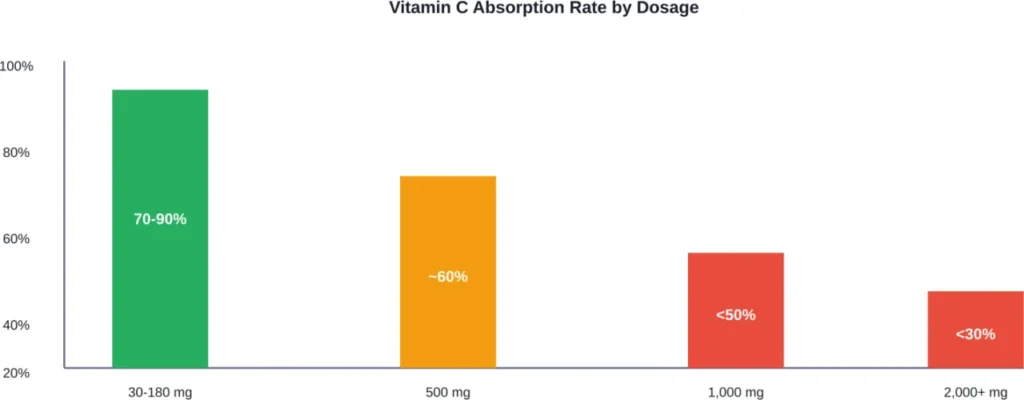
Vitamin C absorption isn’t linear—it actually decreases as intake increases.
Research published by the National Institutes of Health shows that approximately 70-90% of vitamin C is absorbed at moderate intakes of 30-180 mg per day. However, at doses above 1 gram daily, absorption falls to less than 50%.
At low gastrointestinal concentrations, active transport mechanisms dominate. At high concentrations, simple diffusion takes over—a less efficient process.
This means taking a 1,000 mg supplement doesn’t deliver 1,000 mg to your tissues. Much of that high dose passes through unabsorbed, which partly explains why excess causes digestive issues rather than systemic toxicity.
Common Side Effects of Too Much Vitamin C
When vitamin C intake exceeds what the body can absorb and excrete comfortably, several side effects can occur.
Digestive Disturbances
The most common problems involve the gastrointestinal system. Excessive vitamin C in the intestines draws water into the bowel through osmotic pressure, leading to:
- Diarrhea (often watery)
- Nausea
- Stomach cramps
- Bloating and gas
- Acid reflux or heartburn
These symptoms typically occur at doses above 2,000 mg daily, though some people experience discomfort at lower amounts. The threshold varies based on individual tolerance.
Kidney Stones
Vitamin C metabolizes into oxalate, a compound the kidneys filter and excrete. High oxalate levels can contribute to kidney stone formation, particularly calcium oxalate stones—the most common type.
This risk primarily affects people with existing kidney problems or a history of kidney stones. For most healthy individuals, the body manages oxalate levels effectively at reasonable vitamin C doses.
Iron Overload Concerns
Vitamin C enhances iron absorption, particularly non-heme iron from plant sources. According to research, when vitamin C binds with non-heme iron, it makes this iron much easier for the body to absorb.
For most people, improved iron absorption is beneficial. But individuals with hemochromatosis—a condition causing excessive iron accumulation—should monitor vitamin C intake carefully. Too much vitamin C could worsen iron overload in these cases.
When Vitamin C Supplements Become Problematic
Most vitamin C from food sources is safe and well-tolerated. Problems arise primarily from high-dose supplementation.
A market analysis of vitamin C supplements in Germany and the USA found that the mean daily dose across available products was 613.9 mg—below the upper limit but significantly higher than the RDA. The average daily cost was $0.37.
Many supplements contain 500-1,000 mg per dose. Taking multiple doses daily can easily push intake above 2,000 mg.
Here’s where supplement timing matters: spreading doses throughout the day allows better absorption than taking a large single dose. But even distributed doses totaling over 2,000 mg can cause problems.
Special Populations at Higher Risk
Certain groups need extra caution with vitamin C supplementation:
| Population | Risk Factor | Recommendation |
|---|---|---|
| Kidney disease patients | Reduced oxalate excretion | Consult physician before supplementing |
| Hemochromatosis patients | Increased iron absorption | Limit vitamin C intake |
| G6PD deficiency | Hemolysis risk at very high doses | Avoid mega-doses |
| Cancer patients on chemotherapy | Potential treatment interference | Discuss with oncologist |
According to CDC data from 2017-2018, 57.6% of U.S. adults aged 20 and over used any dietary supplement in the past 30 days. With vitamin C being one of the most popular choices, awareness of proper dosing becomes critical.
Can You Actually Overdose on Vitamin C?
Real talk: fatal vitamin C overdoses are virtually unheard of. The water-soluble nature and rapid excretion make life-threatening toxicity extremely rare.
However, “overdose” in medical terms doesn’t always mean fatal. It means consuming enough to cause adverse effects. By this definition, yes—vitamin C overdose is possible and manifests primarily through the gastrointestinal symptoms described earlier.
The body’s natural limits provide protection. Even if someone consumes 3,000-5,000 mg, severe diarrhea typically prevents continued intake and accelerates elimination.
Getting Vitamin C From Food vs. Supplements
Most health experts recommend obtaining vitamin C primarily through diet rather than supplements. Food sources provide the nutrient in amounts the body handles efficiently, along with other beneficial compounds.
Excellent dietary sources include:
- Citrus fruits (oranges, grapefruits, lemons)
- Berries (strawberries, blueberries)
- Bell peppers (especially red peppers)
- Broccoli and Brussels sprouts
- Tomatoes
- Kiwi fruit
- Cantaloupe
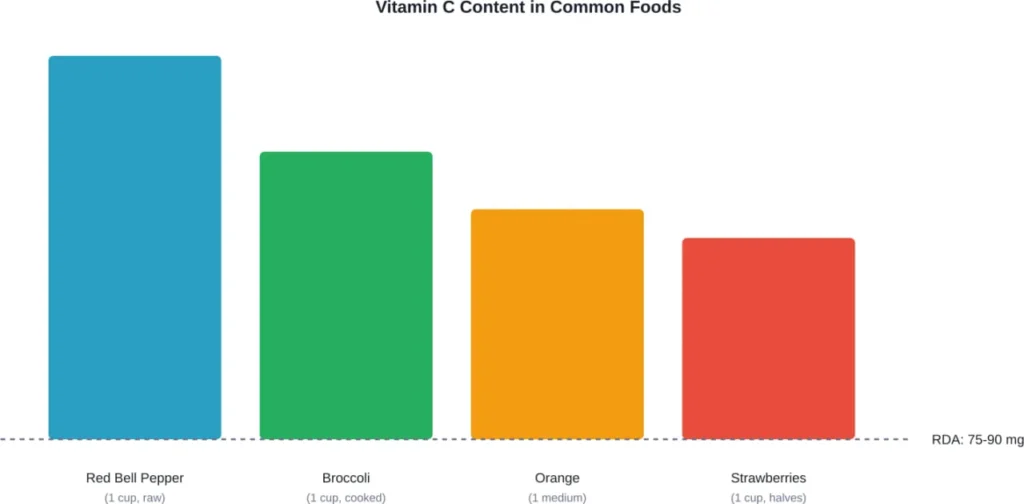
A single medium orange contains about 70 mg of vitamin C. One cup of raw red bell pepper provides around 190 mg. Eating a varied diet with several servings of fruits and vegetables easily meets daily requirements without approaching problematic levels.
Medication Interactions to Know About
High-dose vitamin C can interact with certain medications, altering their effectiveness or increasing side effects.
Key interactions include:
- Aluminum-containing antacids: Vitamin C increases aluminum absorption, potentially leading to toxic levels with prolonged use
- Chemotherapy drugs: Antioxidants may reduce effectiveness of certain cancer treatments
- Statins and niacin: Vitamin C might reduce the beneficial effects on HDL cholesterol
- Warfarin: Very high doses might reduce effectiveness of this blood thinner
Anyone taking prescription medications should consult their healthcare provider before starting high-dose vitamin C supplementation.
Signs You’re Taking Too Much
How do you know if vitamin C intake has crossed into excessive territory? Watch for these warning signs:
- Frequent loose stools or diarrhea
- Persistent stomach upset or nausea
- Heartburn or acid reflux
- Abdominal cramping
- Headaches
These symptoms typically appear when daily intake exceeds 2,000 mg and usually resolve quickly after reducing dosage.
Finding Your Optimal Vitamin C Intake
So what’s the right amount? That depends on individual circumstances.
For most healthy adults, the RDA (75-90 mg daily) maintains adequate vitamin C status. Smokers need an additional 35 mg due to increased oxidative stress.
Some situations might warrant temporarily higher intake—like during illness or periods of high stress. But even then, doses between 200-500 mg daily provide benefits without approaching problematic levels.
The “bowel tolerance” method some alternative health practitioners recommend—taking vitamin C until diarrhea occurs, then backing off slightly—pushes intake unnecessarily high for most people and offers no proven benefits over moderate doses.
Frequently Asked Questions
High doses of vitamin C can increase oxalate levels, potentially contributing to calcium oxalate kidney stone formation. This risk is higher for people with existing kidney problems or a history of stones. Most healthy individuals at moderate doses face minimal risk.
1,000 mg daily is below the 2,000 mg upper limit but significantly exceeds the RDA. Many people tolerate this amount without issues, though absorption efficiency drops substantially. Doses this high are unnecessary for most people through supplementation alone.
Taking vitamin C daily at recommended doses (75-90 mg for adults) is safe and beneficial. Higher daily doses below 2,000 mg are generally safe for most people but may cause digestive discomfort in some individuals. The body doesn’t store excess, so regular intake is important.
Yes, the body naturally eliminates excess vitamin C through urine because it’s water-soluble. This happens relatively quickly—usually within a few hours. Staying well-hydrated helps the elimination process, though the body manages this automatically.
High-dose vitamin C can interact with certain medications, including aluminum-containing antacids, some chemotherapy drugs, statins combined with niacin, and potentially warfarin. Anyone taking prescription medications should consult their healthcare provider before taking vitamin C supplements.
According to the Office of Dietary Supplements, smokers need an additional 35 mg of vitamin C daily beyond the standard RDA. This brings the recommendation to 125 mg for male smokers and 110 mg for female smokers due to increased oxidative stress from smoking.
While supplements can help meet vitamin C needs, dietary sources are preferred. Whole foods provide vitamin C along with other beneficial nutrients, fiber, and compounds that work synergistically. Supplements should complement, not replace, a diet rich in fruits and vegetables.
The Bottom Line on Vitamin C Limits
Yes, taking too much vitamin C is possible—and it can cause uncomfortable side effects. But the risk of serious harm remains low for most people.
The 2,000 mg daily upper limit provides a clear safety boundary. Staying below this threshold while meeting the 75-90 mg RDA gives the body what it needs without pushing into problematic territory.
For the majority of people, a balanced diet with plenty of fruits and vegetables provides sufficient vitamin C without supplementation. When supplements are used, moderate doses of 200-500 mg daily offer benefits without the risks associated with mega-doses.
Listen to your body. If digestive symptoms appear after starting or increasing vitamin C supplementation, that’s a clear signal to reduce intake.
Before starting any new supplement regimen—especially at higher doses—consult with a healthcare provider. They can assess individual risk factors, medication interactions, and whether supplementation is actually necessary.
Vitamin C is essential, beneficial, and generally safe. But like most good things, moderation matters.