

Quick Summary: While Nexplanon is over 99% effective at preventing pregnancy, it is technically possible to become pregnant while using it, though extremely rare. Fewer than 1 out of 100 people will experience pregnancy with the implant each year when used correctly. Effectiveness can decrease if the implant is left in beyond its approved 3-year timeframe or if it was incorrectly inserted.
The question weighs on the minds of anyone considering or currently using the birth control implant: can pregnancy actually happen with Nexplanon in place? The short answer is yes, but the reality is far more nuanced than a simple yes or no.
Nexplanon ranks among the most effective contraceptive methods available today. But that doesn’t mean it’s foolproof. Understanding how this tiny rod prevents pregnancy—and the rare circumstances under which it might fail—helps users make informed decisions about their reproductive health.
Let’s break down the real data, the mechanisms at work, and what factors might influence the implant’s effectiveness.
What Is Nexplanon and How Does It Work
Nexplanon is a small, flexible plastic rod about the size of a matchstick that gets inserted under the skin of the upper arm. It’s a long-acting reversible contraceptive that releases a synthetic progestin hormone called etonogestrel continuously over a three-year period.
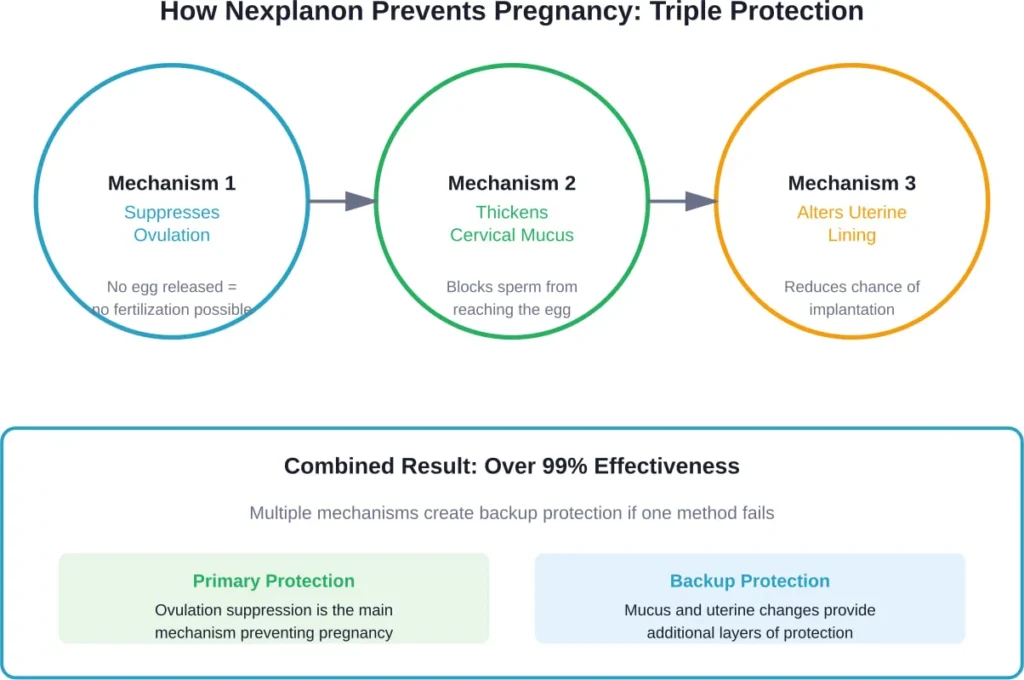
The implant works through multiple mechanisms to prevent pregnancy. The primary method involves suppressing ovulation—no egg release means no chance of fertilization. But that’s not the only defense mechanism at work.
Nexplanon also thickens cervical mucus, creating a barrier that makes it extremely difficult for sperm to travel through the cervix and reach any egg that might be released. Additionally, the hormone alters the lining of the uterus, reducing the likelihood of implantation if fertilization somehow occurs.
This multi-layered approach is what makes the contraceptive implant so remarkably effective compared to methods that rely on a single prevention mechanism.
The Actual Pregnancy Risk With Nexplanon
Here’s where the numbers matter. According to data from multiple sources, fewer than 1 out of 100 people using Nexplanon will become pregnant over the course of one year when the implant is inserted correctly and used within its approved timeframe.
That translates to an effectiveness rate of more than 99%. The implant is one of the most reliable birth control options available, matching or exceeding the effectiveness of other long-acting methods like IUDs.
Research published through the National Institutes of Health confirms that the etonogestrel implant was the most cost-effective contraceptive option when modeled over a five-year period, offering the fewest pregnancies and lowest associated healthcare costs.
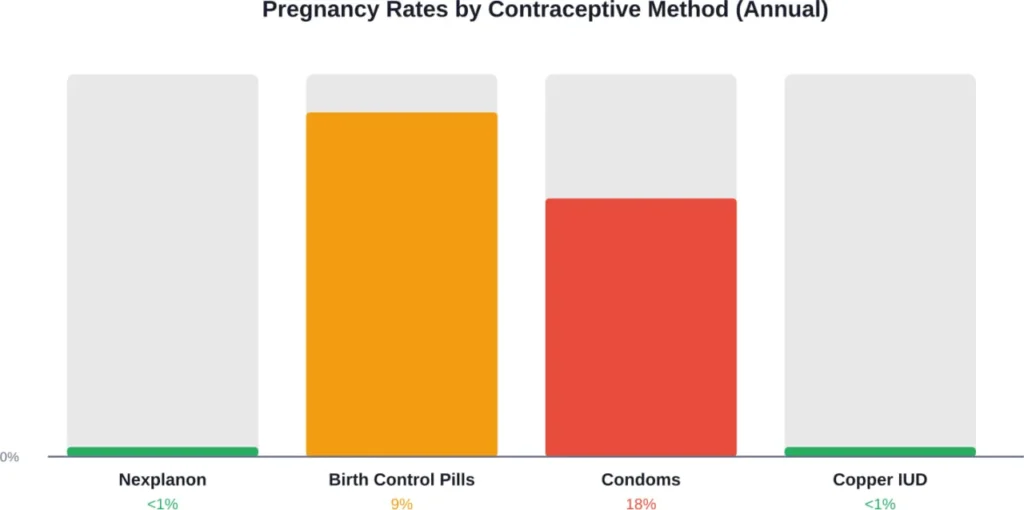
What makes these statistics particularly impressive is that the effectiveness rate accounts for typical use, not just perfect use. Unlike birth control pills that depend on daily adherence, the implant requires no ongoing action from the user once it’s inserted.
That means there’s no room for human error to reduce effectiveness—no forgotten pills, no improperly used barriers. Once the implant is in place, it works continuously without requiring any thought or maintenance.
When and Why Nexplanon Might Fail
So if the implant is over 99% effective, what accounts for that remaining fraction of a percent? Several factors can influence whether pregnancy occurs while using Nexplanon.
Incorrect Insertion
The most critical factor is proper insertion. If the implant isn’t placed correctly under the skin, it may not release hormones as intended. In rare cases, the implant might not actually be inserted at all—a situation that has led to unintended pregnancies and subsequent legal cases.
Healthcare providers trained in insertion technique follow specific protocols to ensure proper placement. The insertion process takes just a few minutes and requires local anesthesia to numb the insertion site on the upper arm.
Expired Implant
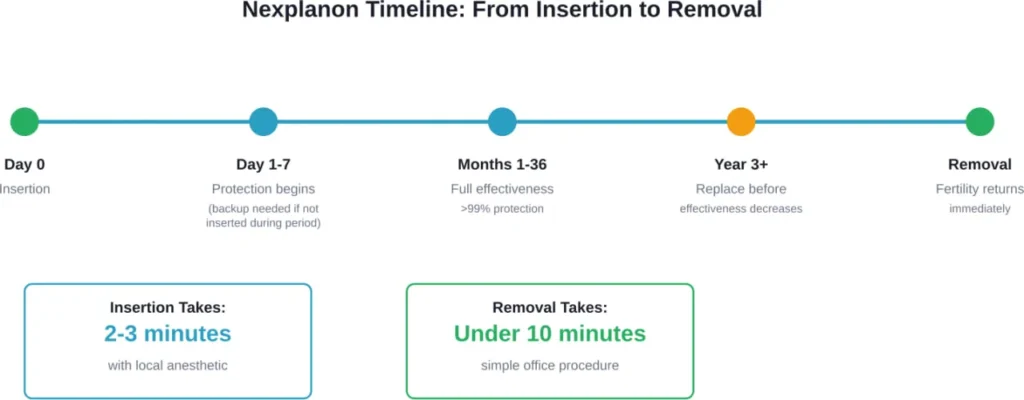
Nexplanon is approved for use up to three years. The risk of pregnancy increases if the implant is left in beyond this approved timeframe, as hormone release decreases over time.
The three-year window isn’t arbitrary—it’s based on clinical trials demonstrating consistent hormone release and contraceptive effectiveness throughout that period. After three years, hormone levels may drop below the threshold needed to reliably prevent pregnancy.
Body Weight Considerations
There’s been some concern about whether Nexplanon is less effective in individuals with higher body weight. Research published through the National Institutes of Health specifically examined this question.
The study found that observed implant effectiveness in women with overweight and obesity falls within the range of published data across all weight groups and does not suggest reduced effectiveness associated with higher body mass index. The observed effectiveness ranged from 0.0 to 1.4 per 100 woman-years across all weight categories.
This is reassuring data that suggests body weight alone shouldn’t be a reason to avoid or discontinue use of the contraceptive implant.
Drug Interactions
Certain medications can potentially interfere with Nexplanon’s effectiveness. Medications that affect liver enzymes—particularly those used to treat epilepsy, tuberculosis, HIV, or certain fungal infections—may reduce hormone levels and compromise contraceptive protection.
Anyone prescribed new medications while using the implant should inform their healthcare provider about their contraceptive method to check for potential interactions.
Pre-Existing Pregnancy
If someone is already pregnant when the implant is inserted, the device won’t terminate the existing pregnancy. That’s why healthcare providers typically time insertion for the first five days of a menstrual period or perform a pregnancy test before insertion if timing is uncertain.
Recognizing Pregnancy Signs With Nexplanon
One challenge with the contraceptive implant is that it often changes menstrual patterns. Many users experience irregular bleeding, lighter periods, or complete absence of menstruation while using Nexplanon.
These changes are normal side effects of the implant and don’t indicate pregnancy. But they can make it harder to recognize pregnancy by the traditional sign of a missed period.
Other pregnancy symptoms to watch for include:
- Breast tenderness or swelling
- Nausea or vomiting, especially in the morning
- Increased fatigue
- Frequent urination
- Food aversions or cravings
- Abdominal bloating or cramping
Anyone experiencing these symptoms while using the implant should take a home pregnancy test or consult their healthcare provider. Though pregnancy with Nexplanon is rare, early detection matters for making informed decisions about prenatal care or pregnancy options.
The Insertion and Removal Process
Understanding how the implant gets placed and removed helps demystify the process and addresses common concerns about the procedure itself.
Insertion Procedure
Insertion happens in a healthcare provider’s office and takes just a few minutes. The provider numbs the inside of the upper arm with local anesthetic, then uses a specialized applicator to place the implant just under the skin.
Most people can feel the implant under their skin after insertion, which provides reassurance that it’s in place. Some bruising, soreness, or swelling at the insertion site is normal and typically resolves within a few days.
The implant becomes effective at preventing pregnancy within 24 hours if inserted during the first five days of a menstrual period. If inserted at other times in the cycle, backup contraception is needed for the first seven days.
Removal Procedure
Removal is similarly straightforward. The provider numbs the area, makes a small incision, and removes the implant. The entire process typically takes under 10 minutes.
Fertility returns almost immediately after removal. Ovulation can occur within weeks, meaning pregnancy becomes possible right away if alternative contraception isn’t used.
A new implant can be inserted immediately after removing the old one if someone wants to continue using this contraceptive method.
Comparing Nexplanon to Other Birth Control Methods
How does the contraceptive implant stack up against other popular birth control options? The comparison reveals why many healthcare providers recommend long-acting reversible contraceptives like Nexplanon.
| Contraceptive Method | Annual Pregnancy Rate | Duration of Effectiveness | User Action Required |
|---|---|---|---|
| Nexplanon Implant | <1% | Up to 3 years | None after insertion |
| Copper IUD | <1% | Up to 10 years | None after insertion |
| Hormonal IUD | <1% | 3-8 years | None after insertion |
| Birth Control Pills | ~9% | Daily | Daily pill at same time |
| Contraceptive Patch | ~9% | Weekly | Weekly patch change |
| Vaginal Ring | ~9% | Monthly | Monthly ring change |
| Male Condoms | ~18% | Single use | Correct use each time |
| Female Condoms | ~21% | Single use | Correct use each time |
The data shows a clear pattern: methods that don’t rely on consistent user action tend to have significantly lower failure rates. Birth control pills are highly effective when taken perfectly, but typical use effectiveness drops to around 91% due to missed or late doses.
Nexplanon and other long-acting methods eliminate that gap between perfect use and typical use. There’s no way to forget or incorrectly use the implant once it’s in place.
Common Side Effects and What to Expect
While Nexplanon’s primary purpose is preventing pregnancy, it does come with potential side effects that users should understand before choosing this method.
The most common side effect involves changes to menstrual bleeding patterns. Some people experience irregular bleeding or spotting, especially during the first six to twelve months. Others have lighter periods or stop menstruating entirely—a condition called amenorrhea that’s harmless but can be concerning if unexpected.
Other potential side effects include:
- Headaches
- Weight changes
- Breast tenderness
- Acne or skin changes
- Mood changes
- Decreased libido
- Ovarian cysts
Most side effects are mild and decrease over time as the body adjusts to the hormone. But if side effects become bothersome or don’t improve, removal is always an option.
Serious complications are rare but can include infection at the insertion site, migration of the implant, or allergic reactions to the materials.
Who Should Consider Nexplanon
The contraceptive implant works well for many people, but it’s particularly suited to certain situations and preferences.
Good candidates for Nexplanon include those who:
- Want highly effective long-term birth control without daily attention
- Prefer a hormone-based method but struggle with pill adherence
- Cannot use estrogen-containing contraceptives due to health conditions
- Want reversible contraception that allows quick return to fertility
- Are breastfeeding (progestin-only methods are safe while nursing)
However, the implant might not be the best choice for everyone. Those who prefer regular monthly periods might find the irregular bleeding patterns frustrating. And anyone with certain health conditions—including breast cancer, liver disease, or unexplained vaginal bleeding—should discuss whether Nexplanon is appropriate.
Getting Pregnant After Nexplanon Removal
One major advantage of the implant is that fertility returns quickly after removal. Unlike some hormonal methods that can take months for fertility to normalize, ovulation typically resumes within a few weeks of Nexplanon removal.
Research indicates that pregnancy rates after implant removal are comparable to rates in the general population of people trying to conceive. There’s no waiting period needed before attempting pregnancy after removal.
That said, some healthcare providers recommend waiting for one normal menstrual cycle after removal before trying to conceive. This isn’t medically necessary for safety reasons—it simply makes it easier to date a pregnancy accurately.
For those trying to conceive after Nexplanon removal, standard preconception recommendations apply:
- Start taking prenatal vitamins with folic acid
- Track ovulation to identify fertile days
- Maintain a healthy weight and lifestyle
- Address any underlying health conditions
- Schedule a preconception checkup
Cost and Accessibility Considerations
The upfront cost of Nexplanon can seem high—the device itself plus insertion fees can run several hundred dollars. But when calculated over three years of use, the per-month cost often compares favorably to other methods.
According to research from the National Institutes of Health, the etonogestrel implant was the most cost-effective contraceptive option when modeled over a five-year period, offering the fewest pregnancies and lowest associated healthcare costs.
Many insurance plans cover Nexplanon with no out-of-pocket cost under the Affordable Care Act’s contraceptive coverage requirement. For those without insurance, programs like Title X family planning clinics and Planned Parenthood often provide the implant on a sliding fee scale based on income.
Availability has improved significantly in recent years as more healthcare providers have received training in insertion and removal techniques. But access can still be limited in some rural areas or regions with few family planning providers.
Myths and Misconceptions About Nexplanon
Several persistent myths surround the contraceptive implant. Let’s address some of the most common misconceptions.
Myth: The implant can move through your body and reach your heart or lungs
The implant can occasionally migrate a small distance from the insertion site, but it cannot travel through the bloodstream to vital organs. The rod is too large to enter blood vessels and remains in the subcutaneous tissue of the arm.
Myth: Nexplanon causes infertility
Fertility returns quickly after removal, typically within weeks. The implant doesn’t damage reproductive organs or cause long-term fertility problems.
Myth: The implant doesn’t work for people with higher body weight
Research published through the National Institutes of Health found that implant effectiveness in women with overweight and obesity falls within the same range as effectiveness across all weight groups, with no evidence of reduced protection.
Myth: The insertion and removal are painful
Both procedures use local anesthetic to numb the area. Most people report feeling pressure but not pain during insertion and removal.
Myth: Hormonal birth control like Nexplanon is dangerous
Serious complications from the implant are rare. Progestin-only methods like Nexplanon carry fewer health risks than combined hormonal methods containing estrogen.
When to Contact a Healthcare Provider
While Nexplanon requires minimal maintenance, certain situations warrant reaching out to a healthcare provider.
Contact a provider if:
- The implant can’t be felt under the skin after insertion
- Signs of infection appear at the insertion site (redness, warmth, pus, fever)
- Severe pain develops in the arm where the implant is located
- Pregnancy symptoms occur
- New medications are prescribed that might interact with Nexplanon
- Side effects become bothersome or don’t improve after the first few months
- The three-year replacement date is approaching
Regular gynecologic exams are still recommended while using the implant, though Nexplanon itself doesn’t require specific monitoring once properly inserted.
Frequently Asked Questions
While it’s possible, pregnancy during the first year with Nexplanon is extremely rare. Fewer than 1 out of 100 people will become pregnant over the course of one year when the implant is properly inserted and used within its approved timeframe. The implant reaches full effectiveness within 24 hours when inserted during the first five days of a menstrual period, or within seven days when inserted at other times in the cycle.
Recognizing pregnancy on Nexplanon can be challenging because the implant often causes irregular bleeding or absence of periods, making it hard to identify a missed period. Watch for other pregnancy symptoms like breast tenderness, nausea, fatigue, frequent urination, and food aversions. If pregnancy is suspected, take a home pregnancy test or consult a healthcare provider. Though rare, early detection of pregnancy matters for making informed healthcare decisions.
Research published through the National Institutes of Health specifically examined effectiveness in women with higher body weight. The study found that observed implant effectiveness in women with overweight and obesity falls within the range of published data across all weight groups, ranging from 0.0 to 1.4 per 100 woman-years. The evidence does not suggest reduced effectiveness associated with higher body mass index, making Nexplanon a reliable option regardless of weight.
If pregnancy occurs with an expired implant still in place, the implant should be removed. The progestin hormone doesn’t harm an existing pregnancy, but keeping an expired implant in serves no contraceptive purpose and unnecessarily exposes the body to hormones. The risk of pregnancy increases when Nexplanon is left beyond its approved three-year timeframe because hormone release decreases over time, falling below levels needed for reliable contraception.
Nexplanon significantly reduces the overall risk of pregnancy, including ectopic pregnancy. However, if pregnancy does occur while using the implant, there’s a higher relative chance it could be ectopic compared to pregnancies in the general population. This doesn’t mean Nexplanon causes ectopic pregnancy—it means that when the rare failure occurs, ectopic pregnancy should be considered and ruled out. Symptoms of ectopic pregnancy include severe abdominal pain, dizziness, and vaginal bleeding, requiring immediate medical attention.
Fertility typically returns within a few weeks of Nexplanon removal. Ovulation can occur as soon as two to three weeks after the implant is taken out, meaning pregnancy is possible almost immediately. There’s no required waiting period before attempting conception after removal. Some healthcare providers suggest waiting for one normal menstrual cycle to make dating the pregnancy easier, but this isn’t medically necessary. Pregnancy rates after implant removal are comparable to rates in the general population of people trying to conceive.
No, Nexplanon does not protect against sexually transmitted infections. The implant is highly effective at preventing pregnancy but provides no barrier protection against STIs. Anyone at risk for STI exposure should use condoms in addition to Nexplanon. Combining the implant with barrier methods provides both pregnancy prevention and STI protection, offering comprehensive reproductive health protection.
Making an Informed Decision About Nexplanon
Choosing a contraceptive method involves weighing effectiveness, convenience, side effects, cost, and personal preferences. Nexplanon ranks among the most effective options available, with a failure rate of less than 1% annually.
The implant’s main advantages include exceptional effectiveness that doesn’t depend on user action, long duration of protection, quick fertility return after removal, and suitability for people who can’t use estrogen-containing methods.
Potential drawbacks include menstrual irregularities, insertion and removal procedures requiring healthcare visits, inability to stop side effects immediately without removal, and lack of STI protection.
Real talk: no contraceptive method is perfect for everyone. What matters most is finding the option that fits individual health needs, lifestyle, and reproductive goals.
The Bottom Line on Nexplanon and Pregnancy
So can pregnancy happen with Nexplanon? Yes, technically it’s possible. But with fewer than 1 in 100 users experiencing pregnancy each year, the implant represents one of the most reliable contraceptive options available.
The etonogestrel implant works through multiple mechanisms—suppressing ovulation, thickening cervical mucus, and altering the uterine lining—to provide layered protection against pregnancy. Research confirms its effectiveness remains consistent across different body weights and offers cost-effectiveness over longer periods compared to other methods.
Risk factors that might compromise effectiveness include incorrect insertion, use beyond the three-year timeframe, certain drug interactions, and pre-existing pregnancy at insertion. But with proper placement and timely replacement, Nexplanon delivers on its promise of highly reliable long-term contraception.
For those seeking worry-free birth control that doesn’t require daily attention, the contraceptive implant deserves serious consideration. Anyone interested in Nexplanon should discuss their medical history, reproductive plans, and concerns with a healthcare provider to determine if this method aligns with their needs.
Ready to explore whether Nexplanon is right for you? Schedule a consultation with a healthcare provider who can assess your individual situation and help you make the most informed contraceptive choice for your reproductive health goals.