

Quick Summary: Losing 3 pounds per week is technically possible but not recommended for most people. According to the CDC, safe and sustainable weight loss is 1 to 2 pounds per week. While aggressive approaches may work short-term, they often lead to muscle loss, nutritional deficiencies, and weight regain.
The promise of rapid weight loss is tempting. Three pounds per week sounds achievable, and the idea of dropping 12 pounds in a month feels like real progress. But here’s the thing—what’s possible and what’s advisable are two very different matters when it comes to weight loss.
According to the CDC, healthy weight loss includes a lifestyle with balanced eating patterns, regular physical activity, adequate sleep, and stress management. Their recommended pace? One to 2 pounds per week. That’s a far cry from the three-pound weekly goal many people set.
So what happens when ambition outpaces physiology? And when might losing 3 pounds weekly actually make sense? Let’s break down what the science says.
What the Research Says About Weight Loss Rates
The CDC emphasizes that gradual, steady weight loss—about 1 to 2 pounds per week—represents the safest approach for most people. This recommendation isn’t arbitrary. It’s based on decades of research showing that slower weight loss produces better long-term outcomes.
Research published in CDC journals examined short-term weight loss interventions. The pooled mean difference in weight change was −2.59 kg (approximately 5.7 pounds) across intervention periods. When measured at the end of interventions, the average was −2.70 kg. These studies included both remote and in-person delivery methods, combining physical activity and nutrition counseling.
But what about faster rates? According to medical research, weight loss exceeding 10% of body weight has been defined as “large” weight loss. Losing approximately 5% to 10% of body weight over six months has improved glycemic control and clinically reduced blood pressure and cholesterol. Losing more than this, or weight loss at faster rates, may improve overall health but increases the possibility of health risks.
The distinction matters. While aggressive calorie restriction can produce rapid initial weight loss, it often comes with consequences.
The Mathematics of Losing 3 Pounds Weekly
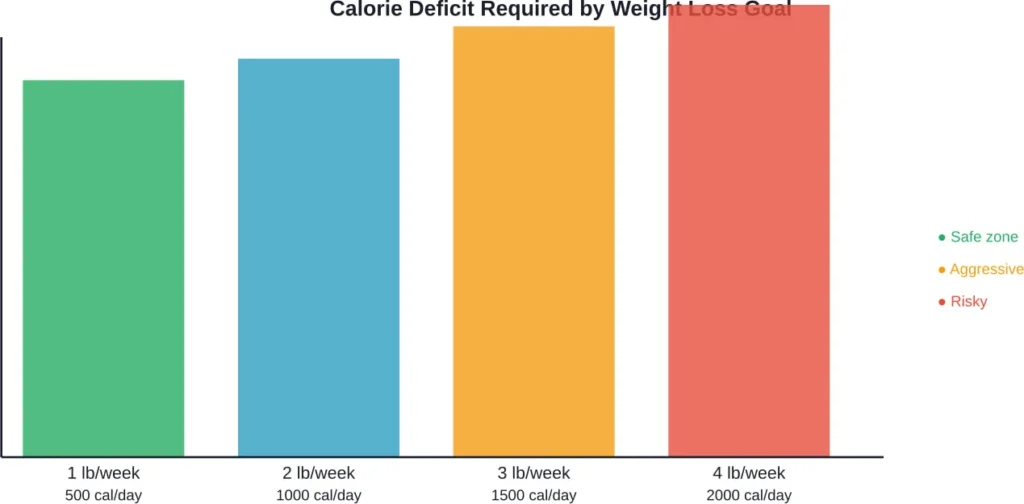
Understanding the calorie deficit required helps clarify why 3 pounds per week represents such an aggressive target.
One pound of body fat contains approximately 3,500 calories. To lose 3 pounds weekly, someone would need to create a deficit of 10,500 calories per week—that’s 1,500 calories per day.
For many people, especially women and smaller individuals, this creates an impossible situation. If someone’s total daily energy expenditure is 2,000 calories, a 1,500-calorie deficit would leave only 500 calories for food intake. That’s not just difficult—it’s potentially dangerous.
When Losing 3 Pounds Weekly Might Happen
That said, certain circumstances can produce 3-pound weekly losses, especially initially.
The First Week or Two
Early in a diet, weight loss often exceeds the expected rate. This happens because of water weight fluctuations. When carbohydrate intake drops, the body depletes glycogen stores, which hold water. This can produce dramatic initial losses that aren’t representative of fat loss.
Community discussions on platforms like Reddit note that people frequently lose 3 or more pounds in their first week, only to see the rate slow to 1-2 pounds weekly afterward. This pattern is normal and expected.
People With Significant Weight to Lose
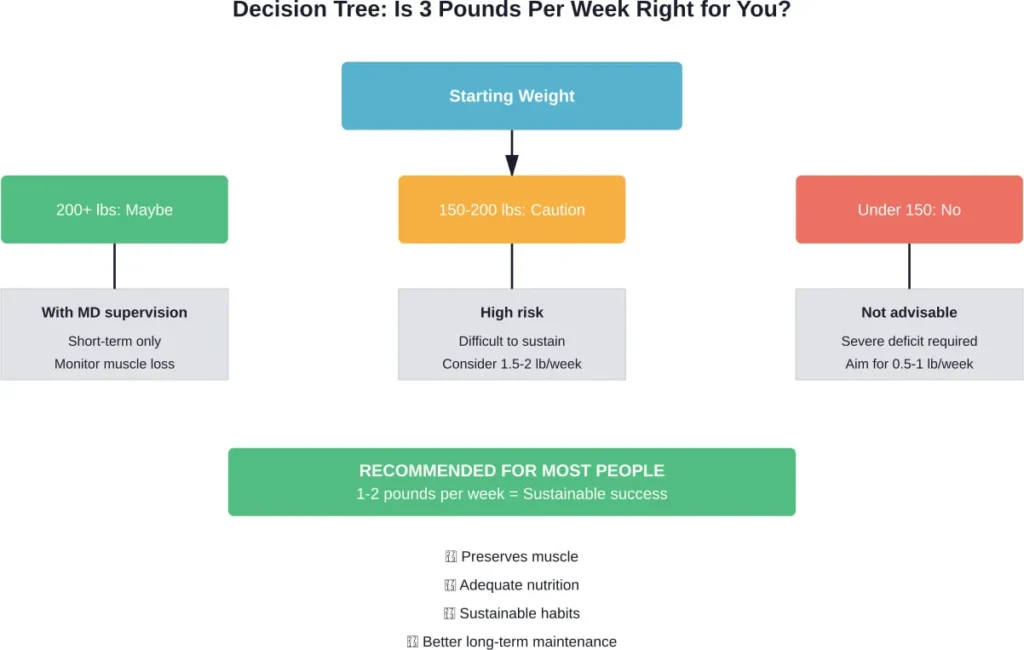
Individuals starting at higher body weights can safely lose more than 1-2 pounds weekly, at least initially. Someone weighing 300 pounds has different metabolic demands than someone weighing 150 pounds.
For these individuals, a 3-pound weekly loss might represent a reasonable 1% of body weight per week—a rate many experts consider sustainable for people with obesity.
Combining Diet and Intensive Exercise
Some people achieve 3-pound weekly losses through very low-calorie diets combined with extensive exercise. While this creates the necessary deficit, it raises sustainability questions. Some individuals report burning 900 calories daily through exercise, though such intensity requires substantial time and effort that most people find difficult to maintain long-term.
The Risks of Rapid Weight Loss
Research from NCBI highlights multiple concerns associated with aggressive weight loss approaches.
Muscle Loss
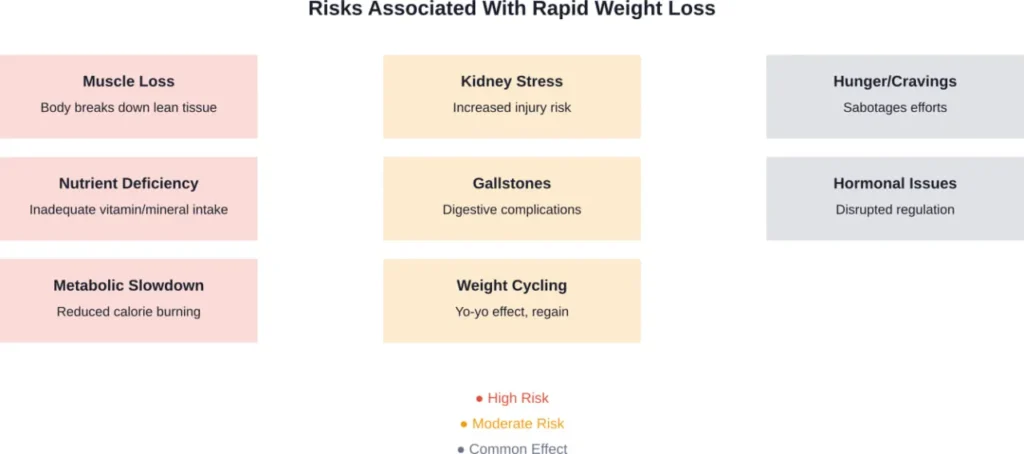
When calorie deficits become too severe, the body doesn’t just burn fat—it breaks down muscle tissue for energy. Studies comparing rapid versus slow weight loss show that faster approaches typically result in greater lean mass loss.
Research on gender differences in rapid weight loss indicates that women may experience different metabolic responses than men during aggressive weight loss, with studies suggesting potential for greater lean mass loss in women.
Nutritional Deficiencies
Severely restricted eating patterns make it difficult to obtain adequate vitamins, minerals, and essential nutrients. When calorie intake drops below 1,200 calories daily for women or 1,500 for men, meeting nutritional needs becomes increasingly challenging.
Metabolic Adaptation
The body adapts to aggressive calorie restriction by reducing metabolic rate. Research shows that rapid weight loss can lead to greater metabolic slowdown compared to gradual approaches, making weight maintenance more difficult afterward.
Physical Health Risks
According to research on combat sports athletes, rapid weight loss can increase the risk of acute kidney injury. The study noted that about 80% of combat sports athletes use specific methods of reducing body mass.
Other documented risks include gallstones, electrolyte imbalances, and hormonal disruptions.
The Weight Cycling Problem
Research on weight cycling—the pattern of losing and regaining weight repeatedly—shows concerning long-term effects. Studies indicate that weight cycling may impact mortality and morbidity risk, though research findings vary.
More consistently, rapid weight loss followed by regain appears to predispose cells to pathological responses in obesogenic environments, offering a possible explanation for the “yo-yo” effect frequently observed with dieting.
What Actually Works for Sustainable Weight Loss
The American Heart Association notes that learning to balance healthy eating and physical activity helps people lose weight more easily and keep it off. Their data shows that among people who successfully maintained weight loss, 98% modified their eating habits and 94% increased their physical activity, especially walking.
Setting Realistic Goals
According to the CDC, even modest weight loss helps improve health markers. For someone weighing 200 pounds, a 5% weight reduction—just 10 pounds—can lower the risk for chronic diseases by improving blood pressure, cholesterol, and blood sugar levels.
This reframes the conversation. Instead of fixating on losing 3 pounds weekly, focusing on that initial 5-10% body weight loss produces measurable health benefits regardless of pace.
The Five-Step CDC Approach
The CDC outlines five steps for healthy weight loss:
- Understand your “why” – Identify specific, personal reasons for losing weight
- Track where you are – Document current weight, eating patterns, and activity levels
- Set specific, realistic goals – Create achievable targets within realistic timeframes
- Find support – Engage friends, family, or professional help
- Monitor progress – Regularly assess changes and adjust as needed
Notice what’s missing? A specific weekly weight loss target. The focus stays on behaviors and systems rather than arbitrary numbers.
Physical Activity Recommendations
According to CDC guidelines, adults need at least 150 minutes weekly of moderate-intensity aerobic activity for overall health. That’s roughly 22 minutes daily or 30 minutes five days per week.
Combining this activity level with dietary changes improves weight loss outcomes. But the activity doesn’t need to be extreme. Brisk walking counts as moderate-intensity exercise.
Sleep and Stress Management
The CDC identifies adequate sleep and stress management as components of healthy weight loss—factors often overlooked in aggressive diet plans.
Their recommendations include turning off electronic devices at least 30 minutes before bedtime to support quality sleep, which affects hunger hormones and decision-making around food.
| Approach | Weekly Loss Rate | Sustainability | Muscle Preservation | Long-Term Success |
|---|---|---|---|---|
| Rapid (3+ lbs/week) | High initially | Low | Poor | Low |
| Moderate (1-2 lbs/week) | Steady | High | Good | High |
| Slow (0.5-1 lb/week) | Gradual | Very High | Excellent | Very High |
Special Considerations for Different Populations
Weight loss recommendations aren’t one-size-fits-all.
People With Diabetes
According to the CDC, losing just 5% to 10% of body weight can improve health and well-being for people with diabetes. Taking off 10 to 20 pounds for a 200-pound person can make a meaningful difference in blood sugar management.
For this population, gradual weight loss under medical supervision becomes especially important, as rapid changes can affect medication needs.
People With Fatty Liver Disease
NIH data indicates that losing at least 3% to 5% of body weight may reduce fat in the liver for people with overweight or obesity. This represents total weight loss over time, not a weekly rate.
Gender Differences
Research shows that men and women respond differently to rapid weight loss. Women typically experience greater decreases in fat-free mass and HDL cholesterol with aggressive approaches, suggesting gender-specific considerations matter when setting weight loss pace.
Making the Right Decision for Your Situation
So, back to the original question: Is it possible to lose 3 pounds a week?
Yes, it’s possible—especially in the short term, for people with significant weight to lose, or during the initial water-weight phase.
But should you aim for it? For most people, probably not.
The evidence consistently points toward slower, steadier approaches producing better outcomes. Weight loss of 1-2 pounds weekly allows for adequate nutrition, better muscle preservation, more sustainable habits, and improved long-term maintenance.
That said, individual circumstances matter. Someone weighing 250 pounds might safely lose 2.5-3 pounds weekly under medical supervision. Someone weighing 150 pounds attempting the same rate would face significant risks.
Questions to Ask Before Pursuing Rapid Weight Loss
- Have I consulted with a healthcare provider about appropriate goals?
- Can I sustain the required calorie deficit without extreme restriction?
- Am I prepared for the likely muscle loss and metabolic adaptation?
- Do I have a plan for maintaining weight loss afterward?
- Are there underlying health conditions that affect safe weight loss rates?
Honest answers to these questions provide better guidance than any generic recommendation.
Frequently Asked Questions
For most people, losing 3 pounds weekly exceeds the CDC’s recommended rate of 1-2 pounds per week. While it may be acceptable short-term for individuals with significant weight to lose under medical supervision, it generally increases risks of muscle loss, nutritional deficiencies, and metabolic adaptation. Slower rates produce better long-term outcomes.
Losing 3 pounds weekly requires a calorie deficit of approximately 10,500 calories per week, or 1,500 calories daily. For many people, this deficit is either impossible or unsustainable without severe restriction. Someone with a total daily energy expenditure of 2,000 calories would need to consume only 500 calories daily—dangerously low for most adults.
Burning enough calories through exercise alone to lose 3 pounds weekly would require approximately 1,500 calories of activity daily. Some individuals report burning 900 calories daily through exercise, but this level of activity is difficult to sustain long-term. Combining moderate exercise with dietary changes produces better, more sustainable results than extreme exercise alone.
Initial rapid weight loss typically reflects water weight rather than fat loss. When carbohydrate intake decreases, the body depletes glycogen stores that hold water, producing dramatic early losses. After the first week or two, weight loss usually stabilizes at a slower, more consistent rate that better reflects actual fat loss. This pattern is normal and expected.
According to research on combat sports athletes, rapid weight loss risks include muscle loss, nutritional deficiencies, metabolic slowdown, gallstones, electrolyte imbalances, and hormonal disruptions. Studies showed that rapid weight loss can increase acute kidney injury risk. Additionally, aggressive approaches often lead to weight cycling—the yo-yo pattern of losing and regaining weight—which may have its own health implications.
People starting at higher body weights can often safely lose more than 1-2 pounds weekly, especially initially. A 3-pound loss for someone weighing 300 pounds represents only 1% of body weight—a rate many experts consider reasonable. However, even for people with obesity, medical supervision becomes important when pursuing aggressive weight loss to monitor for complications and preserve lean muscle mass.
The CDC and American Heart Association both recommend 1-2 pounds per week for sustainable weight loss. This pace allows adequate nutrition, preserves muscle mass, supports habit formation, and improves long-term maintenance success. Data shows that among people who successfully maintained weight loss, 98% modified eating habits gradually and 94% increased physical activity—approaches incompatible with extreme restriction.
The Bottom Line on Losing 3 Pounds Weekly
Weight loss remains one of those areas where faster doesn’t equal better. While it’s technically possible to lose 3 pounds per week, the evidence overwhelmingly supports slower approaches for most people.
The CDC’s recommendation of 1-2 pounds weekly isn’t designed to frustrate ambitious dieters. It’s based on research showing that gradual weight loss produces better muscle retention, adequate nutrition, sustainable habits, and improved long-term success.
Even modest weight loss delivers real health benefits. That 5-10% initial body weight reduction improves blood pressure, cholesterol, and blood sugar regardless of how quickly it happens.
The American Heart Association’s data is revealing: among people who successfully maintained weight loss, 98% modified their eating habits and 94% increased physical activity. These behavioral changes require time to develop—time that aggressive approaches don’t allow.
If losing weight quickly feels urgent, consider why. Health improvements begin with the first pound lost and the first healthy habit adopted. The sustainable approach might take longer to reach a goal weight, but it’s far more likely to actually get there—and stay there.
Ready to start? Focus on the CDC’s five steps: understand your why, track where you are, set realistic goals, find support, and monitor progress. Skip the aggressive timeline. Build the habits. The results will follow.