

Quick Summary: Gaining 10 pounds in a month is possible but rarely represents actual fat or muscle gain. Most rapid weight fluctuations stem from water retention, digestive changes, medication effects, or underlying medical conditions. Healthy weight gain typically occurs at 1-2 pounds per week through strategic calorie increases and strength training, while sudden unexplained gains warrant medical evaluation.
The scale shows a number that doesn’t make sense. Ten pounds heavier than last month, despite eating relatively normally. Sound familiar?
Here’s the thing though—not all weight gain represents actual body mass. The human body fluctuates constantly based on dozens of variables, from sodium intake to hormone cycles. Understanding what’s behind rapid weight changes helps determine whether they’re concerning or completely normal.
This guide breaks down the science of monthly weight fluctuations, separating genuine mass gain from temporary shifts. Whether the change is intentional or unexplained, knowing the mechanisms helps make informed decisions about health.
Understanding Weight Fluctuations: The Science Behind the Scale
Weight changes involve more than just fat storage. The body consists of water, muscle, bone, organs, and digestive contents—all of which fluctuate independently.
Water alone accounts for roughly 60% of body weight in adults. Sodium intake, carbohydrate consumption, hormones, medications, and inflammation all affect water retention. A single high-sodium meal can trigger temporary water retention of several pounds.
According to the CDC, managing weight contributes to good health and helps prevent serious conditions including type 2 diabetes, high blood pressure, heart disease, and stroke. But short-term fluctuations don’t necessarily indicate health changes.
What Actually Constitutes Weight Gain
Real weight gain involves increases in fat mass, muscle tissue, or bone density. Fat accumulation requires a caloric surplus—consuming more energy than the body burns. Muscle growth demands resistance training combined with adequate protein and calories. Bone density changes occur gradually over months or years.
Temporary weight increases stem from different mechanisms entirely. Water retention, digestive contents, inflammation, and hormonal shifts create rapid changes that reverse just as quickly.
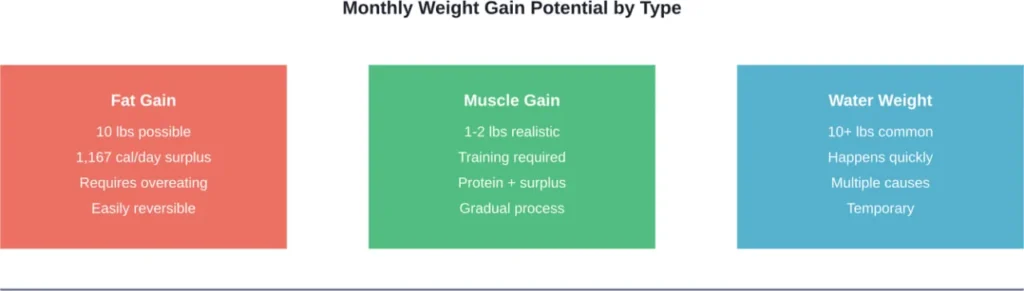
The math behind fat gain is straightforward. One pound of body fat represents approximately 3,500 calories. Gaining 10 pounds of actual fat in 30 days would require a surplus of 35,000 calories—that’s 1,167 extra calories daily beyond maintenance needs. For most adults, that means consuming 3,000-4,000 total calories per day consistently.
Can You Actually Gain 10 Pounds of Fat or Muscle in a Month?
Real talk: gaining 10 pounds of actual body mass in 30 days is extremely difficult without intentional effort.
Fat Accumulation Timeline
Fat storage requires sustained caloric excess. While technically possible to gain 10 pounds of fat monthly, it demands consistently eating far beyond normal intake. Most people would feel uncomfortably full attempting this without deliberate overeating.
Research on weight regain shows that up to 50% of lost weight is typically regained by 1-year follow-up, with nearly all remaining lost weight regained thereafter in the vast majority of individuals. However, this regain occurs over months or years, not weeks.
Muscle Growth Limitations
Muscle tissue develops slower than fat accumulates. Even under optimal conditions—proper training, adequate protein, caloric surplus, and genetic advantage—natural muscle gain rarely exceeds 1-2 pounds monthly for beginners. Advanced lifters gain even slower.
According to the Academy of Nutrition and Dietetics, muscle growth is a complex process that relies on adequate consumption of protein and calories, hormones the body produces including human growth hormone and testosterone, and consistent physical activity. Eating protein alone doesn’t equal big muscles.
Athletes seeking to build strength need strategic nutrition. The CDC recommends children and adolescents aged 6 to 17 need 60 minutes or more of moderate-to-vigorous intensity physical activity each day. Children and adolescents need aerobic, muscle-strengthening, and bone-strengthening activities.
The Water Weight Reality: Why Scales Lie
Water retention explains most rapid weight fluctuations. The human body can retain or shed several pounds of water within hours based on various triggers.
Community discussions frequently highlight this phenomenon. Users report “gaining” 10 pounds during vacation weeks, then losing the weight within days of returning to normal routines. The culprit? Water retention from increased sodium and carbohydrate intake, not actual fat accumulation.
Common Water Retention Triggers
Sodium intake dramatically affects fluid balance. High-salt meals cause the body to retain water to maintain proper electrolyte concentrations. A single restaurant meal containing 3,000-4,000mg of sodium can trigger several pounds of temporary retention.
Carbohydrate consumption also influences water storage. The body stores carbohydrates as glycogen in muscles and liver. Each gram of glycogen binds with approximately 3 grams of water. Increasing carb intake from 100 to 300 grams daily adds significant water weight.
Hormonal fluctuations affect fluid retention, particularly in women. Menstrual cycles trigger water retention in the luteal phase, with some individuals experiencing 5-10 pound fluctuations monthly. This represents normal physiology, not fat gain.
Travel and sitting for extended periods reduce circulation and increase fluid accumulation in extremities. Long flights commonly cause temporary weight increases that resolve within days.
Surprising Medical Causes of Unexplained Weight Gain
When weight gain occurs without obvious dietary or activity changes, underlying medical conditions may be responsible. According to medical research, secondary causes of obesity affect approximately 5% to 10% of patients presenting with weight gain.
Medication-Induced Weight Gain
Numerous medications cause weight gain as a side effect. Research shows weight gain in the first month after starting treatment is a strong predictor of long-term weight gain. Weight should be monitored before and shortly after starting new medications, with a 5% increase above baseline weight after initial treatment considered significant.
| Medication Class | Common Examples | Weight Gain Potential |
|---|---|---|
| Antidepressants | Citalopram, Mirtazapine | Citalopram shows 26% higher chance of a 5% weight gain episode, with Mirtazapine showing 50% higher chance |
| Antipsychotics | Various agents | Significant metabolic effects |
| Corticosteroids | Prednisone | Increased appetite and fluid retention |
| Beta-blockers | Various agents | Metabolic slowing |
| Insulin | Various formulations | Promotes fat storage |
According to research published in medical journals, drugs that affect body weight can cause increases varying from a few kilograms to 10% or more of initial body weight. Often accompanying this weight gain are worsened health risks, including increased incidence of metabolic syndrome, type 2 diabetes, and cardiovascular risk factors.
Hormonal Imbalances
Endocrine disorders affect weight regulation through multiple mechanisms. Hypothyroidism slows metabolism, reducing calorie expenditure. Cushing’s syndrome increases cortisol production, promoting central fat accumulation. Polycystic ovary syndrome affects insulin sensitivity and hormone balance.
According to research on secondary obesity causes, reduced estradiol levels contribute to increased central fat accumulation, diminished bone density, and worsening metabolic health. Male hypogonadism presents with decreased libido, erectile dysfunction, fatigue, depression, and loss of muscle mass alongside weight changes.
Inflammation and Chronic Conditions
Inflammatory conditions trigger weight gain through multiple pathways. Inflammation causes fluid retention and may increase cortisol production. Chronic conditions affecting mobility reduce energy expenditure while medications prescribed for these conditions often promote weight gain.
Intentional Weight Gain: The Healthy Approach
Some individuals need to gain weight for health, athletic performance, or recovery from illness. The Academy of Nutrition and Dietetics notes gaining or regaining weight may be necessary after serious illness, lengthy hospitalization, falling below healthy weight ranges, or for athletes building strength.
Strategic Calorie Increases
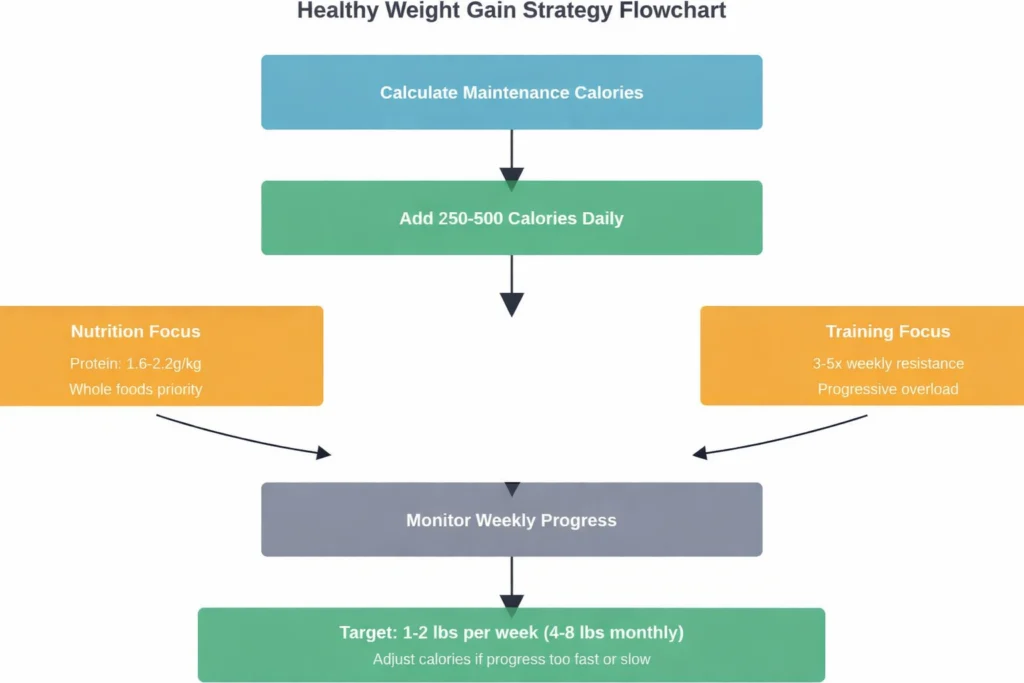
Healthy weight gain requires a controlled caloric surplus. To gain steadily over a month, aim for a 5-10% increase from standard calorie intake determined by age, weight, and activity level. This translates to approximately 250-500 extra calories daily for most adults.
The approach focuses on nutrient-dense foods rather than empty calories. Additional portions should come from quality protein sources, whole grains, healthy fats, and vegetables—not processed foods high in sugar and unhealthy fats.
Protein Requirements for Muscle Building
According to the Academy of Nutrition and Dietetics, young athletes need slightly more protein than peers who aren’t athletes. Protein needs are based on age, sex, body weight, and stage of development, with teens needing between 10% to 30% of daily calories from protein.
Distribution matters as much as total intake. Spreading protein across meals supports muscle protein synthesis more effectively than consuming large amounts in single meals. Aim for 20-30 grams per meal with post-workout protein intake for optimal results.
Resistance Training Fundamentals
Muscle gain requires progressive resistance training. According to the CDC, adults need muscle-strengthening activities involving all major muscle groups on two or more days per week for health benefits. For muscle growth, frequency often increases to 3-5 sessions weekly targeting different muscle groups.
The principle of progressive overload—gradually increasing weight, repetitions, or training volume—drives adaptation. Without this stimulus, excess calories convert to fat rather than muscle regardless of protein intake.
When 10-Pound Monthly Gains Signal Health Problems
Rapid unexplained weight gain sometimes indicates serious medical conditions requiring prompt evaluation. Knowing warning signs helps distinguish normal fluctuations from concerning changes.
Red Flags Requiring Medical Attention
Sudden weight gain accompanied by swelling in legs, ankles, or abdomen may indicate heart failure or kidney problems. Fluid accumulation in these conditions happens rapidly and requires immediate medical evaluation.
Weight gain with extreme fatigue, cold intolerance, dry skin, and constipation suggests thyroid dysfunction. Hypothyroidism slows metabolism significantly, causing gradual but steady weight increases alongside other symptoms.
Rapid central weight gain with purple stretch marks, easy bruising, and muscle weakness may indicate Cushing’s syndrome. This condition involves excess cortisol production and requires endocrinologic evaluation.
According to the CDC, managing weight contributes to good health now and into the future. Obesity can lead to serious health problems including type 2 diabetes, high blood pressure, heart disease, and stroke. Unexplained weight gain warrants investigation to rule out underlying conditions.
Diagnostic Approaches
Medical evaluation for unexplained weight gain includes comprehensive history, physical examination, and targeted testing. Healthcare providers assess medication lists, review symptom timelines, and perform laboratory studies checking thyroid function, cortisol levels, and metabolic markers.
Research on obesity diagnostics emphasizes that adequate diagnostics should precede treatment, followed by individualized approaches. When confronted with obesity, many healthcare providers focus on direct treatment of adiposity consequences rather than investigating underlying causes.
Age-Related Weight Changes: The Metabolism Myth
Weight management becomes progressively challenging with age, but metabolism decline isn’t the only culprit. Multiple factors contribute to age-related weight gain patterns.
Muscle Loss and Metabolic Decline
According to Harvard Health, starting in middle age, we lose about 1% of muscle mass per year. This affects both strength and metabolism—how fast the body burns calories. Smaller muscles use fewer calories at rest, reducing baseline energy expenditure.
Research on weight gain from early to middle adulthood shows significant health impacts. In a study following 92,837 women over 18 years and 25,303 men over 15 years, compared with participants who maintained stable weight, those who gained weight faced increased risks of cardiovascular disease, cancer, and other chronic conditions.
In research following women over 37 years, the mean weight gain was 12.6 kg (27.7 pounds). This gradual accumulation over decades represents roughly 1-2 pounds annually—not 10 pounds monthly.
Lifestyle Factors
Activity levels typically decrease with age due to career demands, family responsibilities, and physical limitations. Reduced movement lowers total daily energy expenditure, creating gradual caloric surpluses when food intake remains constant.
Sleep quality and duration often decline with aging. Research on university students shows sleep duration significantly affects weight changes. Among major weight gainers (those gaining 3.8 pounds over 4.5 months), sleep duration decreased from 7.1 to 6.8 hours nightly. Meanwhile, weight maintainers increased sleep from 7.3 to 7.6 hours.
The Freshman 15 and Life Transition Weight Gain
Major life transitions often trigger weight changes. The “Freshman 15” represents perhaps the most discussed example, though actual data shows more moderate gains.
Reality vs. Myth
Research on first-semester university students examined weight changes over 4.5 months. Hierarchical cluster analysis identified three groups: maintainers gained 0.1 kg (0.2 lbs), modest gainers gained 2.0 kg (4.4 lbs), and major gainers gained 3.8 kg (8.4 lbs).
Even the highest-gaining group didn’t reach 10 pounds in 4.5 months. The average across all participants was 1.8 kg (4 pounds) over this period. The dramatic “15 pounds” represents an exaggeration, though weight gain during this transition period is common.
Contributing Factors
Environmental changes drive transition-related weight gain. Unlimited dining hall access, irregular sleep schedules, alcohol consumption, stress, and reduced structured physical activity all contribute. The combination of factors creates an obesogenic environment for susceptible individuals.
The study found total diet scores improved among maintainers and modest gainers between visits but didn’t change among major gainers. Sleep duration changes differentiated groups significantly, suggesting sleep and diet education combined may increase intervention effectiveness for this high-risk population.
Practical Strategies for Healthy Weight Management
Whether preventing unwanted gain or pursuing intentional increases, evidence-based strategies support healthy weight management.
Nutrition Fundamentals
According to the CDC, an eating plan that helps promote health and manage weight includes a variety of healthy foods. People with healthy eating patterns live longer and face lower risk for serious health problems such as heart disease, type 2 diabetes, and obesity.
The American Heart Association recommends using up at least as many calories as consumed. Start by knowing daily calorie needs for maintaining weight. Nutrition and calorie information on food labels typically bases calculations on a 2,000-calorie diet, though individual needs vary.
Comfort foods, in limited amounts, can be part of healthy eating patterns. The key involves overall pattern consistency rather than perfection in every meal.
Physical Activity Requirements
Regular physical activity provides immediate and long-term health benefits. According to the CDC, being physically active can help maintain healthy weight, though the amount needed varies individually.
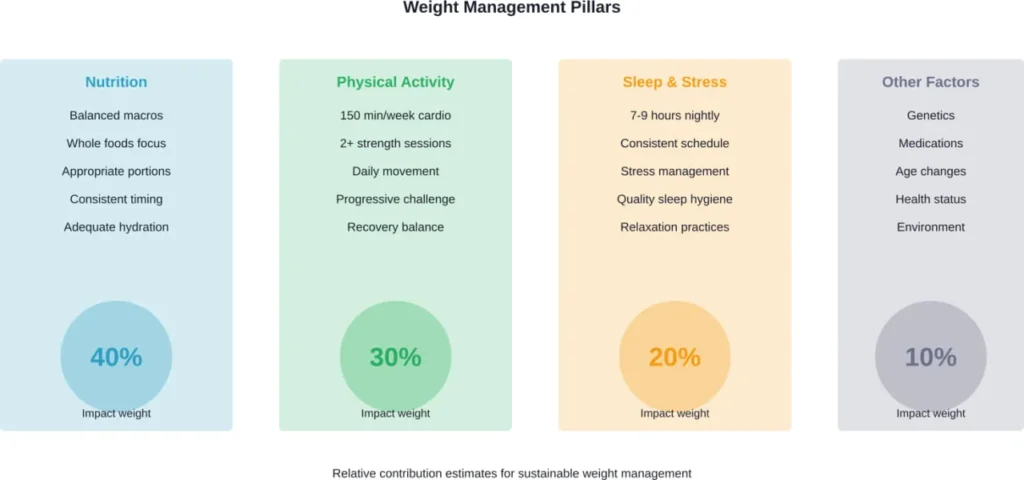
For overall health, adults need at least 150 minutes weekly of moderate-intensity aerobic activity. This could mean brisk walking 22 minutes daily, 30 minutes five days weekly, or whatever schedule fits individual routines. The flexibility allows adaptation to various lifestyles while meeting evidence-based recommendations.
Physical activity improves brain health, strengthens bones and muscles, and supports metabolic function. The benefits extend far beyond weight management alone.
Sleep and Recovery
Sleep duration affects weight through multiple mechanisms. Insufficient sleep disrupts hunger hormones, increasing ghrelin (hunger signal) while decreasing leptin (satiety signal). This hormonal shift promotes increased food intake and preference for high-calorie foods.
According to the American Heart Association’s Life’s Essential 8, most adults need 7-9 hours of sleep each night. Sleep represents a key measure for improving and maintaining cardiovascular health, which helps lower risk for heart disease, stroke, and other major health problems.
The research on university student weight gain showed sleep duration changes significantly differentiated weight maintainers from major gainers, highlighting sleep’s critical role during high-risk periods.
Monitoring Weight Changes Effectively
How and when to weigh matters as much as the numbers themselves. Understanding normal fluctuation patterns prevents unnecessary concern while identifying genuine trends.
Weighing Frequency Considerations
According to the American Heart Association, there’s no simple answer to optimal weighing frequency. For those trying to lose weight, daily weighing helps some people stay accountable while causing anxiety for others. Weekly weighing provides trend data without excessive fixation on daily fluctuations.
The scale isn’t the only metric worth tracking. Body measurements, clothing fit, energy levels, and performance markers often provide more meaningful progress indicators than weight alone.
Understanding Normal Fluctuations
Daily weight variations of 2-4 pounds are completely normal. Factors include digestive contents, hydration status, sodium intake, carbohydrate consumption, exercise timing, and hormone fluctuations. These variables create noise that obscures actual trends when examined too frequently.
Weekly or biweekly averages provide clearer pictures of directional changes. Weighing under consistent conditions—same time of day, similar clothing, same scale—reduces measurement variability.
The Bottom Line on Rapid Weight Gain
Can someone gain 10 pounds in a month? Absolutely. But does that represent 10 pounds of fat or muscle? Almost never.
Most dramatic monthly weight increases stem from water retention triggered by dietary changes, medication effects, hormonal fluctuations, or medical conditions. These changes reverse relatively quickly when underlying causes are addressed.
Genuine fat accumulation at 10 pounds monthly requires extreme and sustained overeating—1,167 calories daily above maintenance needs. Muscle gain at this rate is physiologically impossible under natural conditions. The realistic expectation for intentional muscle building is 1-2 pounds monthly with optimal training and nutrition.
When unexplained weight gain occurs alongside other symptoms—swelling, fatigue, changes in appetite or elimination, mood alterations—medical evaluation is warranted. Secondary causes of obesity affect 5-10% of weight gain cases and may require specific therapeutic interventions distinct from lifestyle modification.
For those seeking intentional weight gain, patience and strategy yield better results than aggressive approaches. A 5-10% caloric increase from baseline, combined with resistance training and adequate protein, supports healthy muscle and strength development without excessive fat accumulation.
The scale tells part of the story, not the whole narrative. Body composition, health markers, functional capacity, and quality of life matter more than numbers alone. Weight represents one metric among many in the complex picture of health.
Frequently Asked Questions
Technically possible but requires consuming approximately 1,167 extra calories daily beyond maintenance needs for 30 consecutive days. This level of sustained overeating is difficult without deliberate effort. Most rapid 10-pound gains represent water retention rather than fat accumulation.
Natural muscle gain typically ranges from 1-2 pounds monthly for beginners under optimal conditions including progressive resistance training, adequate protein intake (1.6-2.2g per kg body weight), caloric surplus, and proper recovery. Advanced lifters gain even more slowly, often less than 1 pound monthly.
Sudden weekly weight gains almost always represent water retention from increased sodium intake, carbohydrate consumption, new medications, hormonal changes, inflammation, or reduced activity. Travel, dining out frequently, menstrual cycles, and certain medications commonly trigger rapid but temporary water weight increases.
Seek medical evaluation if rapid weight gain occurs alongside swelling in legs or abdomen, severe fatigue, breathing difficulties, extreme thirst or urination changes, unexplained pain, or other concerning symptoms. Unexplained weight gain exceeding 5% of body weight monthly without dietary or activity changes warrants investigation for underlying medical conditions.
Antidepressants (particularly mirtazapine and citalopram), antipsychotics, corticosteroids like prednisone, certain diabetes medications including insulin, beta-blockers, and some seizure medications frequently cause weight gain. Research shows weight gain in the first month after starting treatment strongly predicts long-term increases. Discuss alternatives with healthcare providers if medication-related weight gain becomes problematic.
Metabolism does decline with age, primarily due to muscle loss starting in middle age at approximately 1% annually according to Harvard Health research. However, age-related weight gain results from multiple factors including reduced activity levels, poor sleep quality, hormonal changes, and accumulated lifestyle habits rather than metabolism decline alone.
Water weight appears and disappears rapidly (days to weeks), often accompanies swelling or puffiness, fluctuates with sodium and carbohydrate intake, and responds quickly to dietary changes. Fat gain occurs gradually over weeks to months, doesn’t reverse rapidly, requires sustained caloric surplus, and typically concentrates in specific body areas based on genetics and hormones. Tracking trends over 2-4 weeks reveals genuine changes versus temporary fluctuations.
Take Control of Your Weight Journey
Understanding what drives weight changes empowers informed decisions about health. Whether managing unwanted fluctuations or pursuing intentional gains, evidence-based strategies work better than extreme approaches.
Remember that health extends beyond scale numbers. According to the American Heart Association’s Life’s Essential 8, cardiovascular health depends on eating patterns, physical activity, sleep quality, and other behavioral and physiological factors working together.
Focus on sustainable habits rather than rapid transformations. The body responds best to gradual, consistent changes maintained over time. Patience and persistence yield lasting results while protecting overall health and well-being.
If weight changes concern you or occur without explanation, consult healthcare providers for proper evaluation. Secondary causes affecting 5-10% of weight gain cases require specific diagnosis and treatment approaches beyond standard lifestyle modification.
Your weight journey is unique. What works for one person may not suit another due to genetics, medical history, medications, life circumstances, and individual preferences. Finding personalized approaches aligned with health goals and sustainable within real-world contexts creates the foundation for long-term success.