

Quick Summary: Losing 40 pounds in 2 months is technically possible but not recommended by health authorities. The CDC advises a safe weight loss rate of 1-2 pounds per week, making 8-16 pounds in 2 months a healthier target. Rapid weight loss exceeding 10% of body weight increases health risks and often leads to weight regain.
The internet is filled with transformation stories of people who dropped 40 pounds in just two months. Some swear by extreme diets, others credit grueling workout routines. But here’s the real question: should you even attempt this?
Weight loss doesn’t happen in a vacuum. What works for one person might wreck another’s metabolism, and what seems like success in the short term often leads to frustration down the road.
Let’s cut through the noise and look at what health authorities actually recommend, what happens to your body during rapid weight loss, and whether that 40-pound goal is realistic—or just setting you up for disappointment.
What Health Authorities Say About Safe Weight Loss
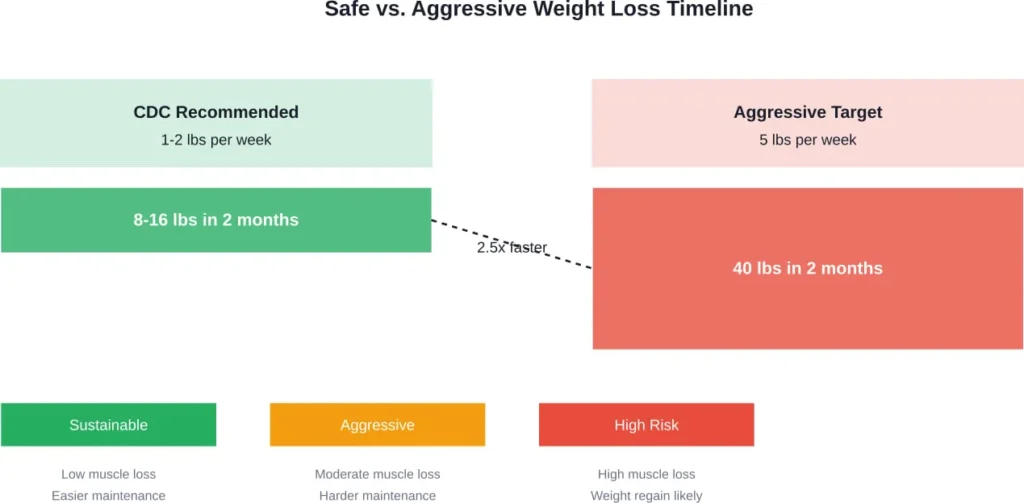
According to the CDC, healthy weight loss happens at a gradual, steady pace of about 1 to 2 pounds per week. That means in two months (roughly 8 weeks), a safe target would be 8 to 16 pounds.
Now, do the math. Losing 40 pounds in 2 months would require dropping 5 pounds every single week. That’s 2.5 times faster than the upper limit of what the CDC considers safe.
Research from the National Institutes of Health (StatPearls) indicates that weight loss >10% of body weight has been defined as “large” weight loss. For someone weighing 200 pounds, that’s 20 pounds. Losing more than this, or at faster rates, may improve some health markers initially but increases the possibility of health risks.
Why the 1-2 Pounds Per Week Guideline Exists
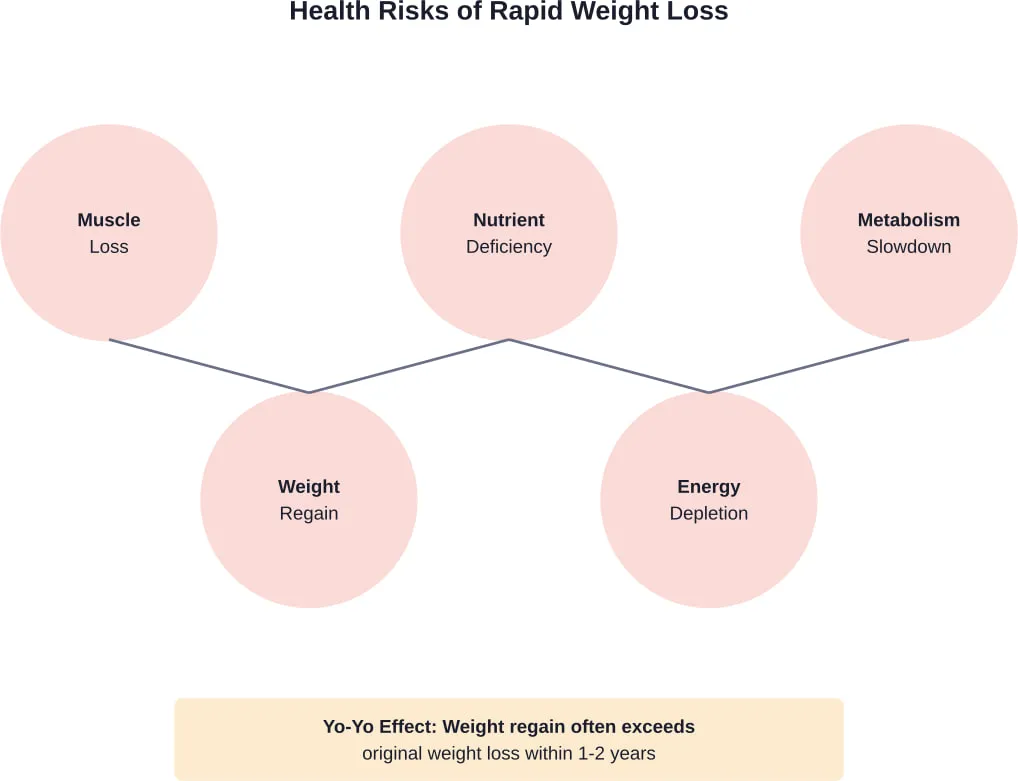
This isn’t arbitrary. The recommendation is based on decades of research showing that slower weight loss is more sustainable and less likely to cause muscle loss, nutrient deficiencies, or metabolic slowdown.
When people lose weight too quickly, they’re often losing water weight and lean muscle mass along with fat. That’s a problem because muscle tissue burns calories even at rest. Lose too much muscle, and your metabolism drops—making it harder to keep weight off later.
Even modest weight loss helps. The CDC notes that losing just 5% to 10% of body weight can improve blood pressure, cholesterol, and blood sugar levels. For a 200-pound person, that’s only 10 to 20 pounds—far less dramatic than 40, but with real health benefits.
The Reality: Who Might Lose 40 Pounds in 2 Months
Look, some people do lose weight faster than average. But context matters.
Someone who weighs 300 pounds will likely lose weight faster initially than someone who weighs 180 pounds. The more weight someone carries, the larger their calorie deficit can be without causing severe metabolic stress.
According to competitor content and community discussions, people with significantly higher starting weights sometimes report rapid initial weight loss, though much of this is water weight as the body sheds excess fluid retention.
Water Weight vs. Fat Loss
Here’s where things get tricky. When people drastically cut carbohydrates or reduce sodium intake, they can drop 5-10 pounds in the first week alone. But that’s not fat—it’s water.
Carbohydrates cause your body to retain water. Carbohydrates cause your body to retain water through glycogen storage mechanisms. When glycogen stores deplete on a low-carb diet, that water is released.
Real fat loss requires a calorie deficit. The commonly cited estimate is that losing one pound of fat requires a deficit of approximately 3,500 calories. To lose 40 pounds of actual fat in 2 months, you’d need a deficit of 140,000 calories—or 2,500 calories per day below your maintenance level.
For most people, that’s nearly impossible without extreme measures that come with serious health consequences.
Health Risks of Losing Weight Too Quickly
Rapid weight loss isn’t just ineffective long-term—it can be dangerous. According to research from the National Institutes of Health, weight loss exceeding 10% of body weight can increase health risks.
The American Heart Association notes that extreme obesity patients should wait until they’ve lost about 10% of their body weight before starting vigorous exercise programs. Pushing too hard, too fast can strain the cardiovascular system.
What Happens to Your Body
When weight loss happens too quickly, several problems emerge:
- Muscle loss accelerates, lowering your resting metabolic rate
- Nutrient deficiencies develop, especially in vitamins and minerals
- Gallstone formation increases due to rapid changes in bile composition
- Electrolyte imbalances can affect heart rhythm
- Hair loss and skin problems may occur
- Energy levels plummet, making daily activities exhausting
Research on weight cycling—the pattern of losing and regaining weight repeatedly—shows it may increase inflammation and disease risk. People who lose weight rapidly are more likely to regain it, starting the cycle over.
Research examining weight change in adults with diabetes found that unintentional weight loss was associated with increased risk of cardiovascular events and mortality. While intentional weight loss through healthy methods benefits health, rapid or extreme approaches can backfire.
The Metabolism Problem
Your body adapts to calorie restriction by slowing down metabolic processes. This is an evolutionary survival mechanism—when food becomes scarce, your body becomes more efficient at using fewer calories.
The problem? This metabolic adaptation doesn’t reverse immediately when you start eating normally again. That’s why many people gain back the weight they lost, often with a few extra pounds added on.
Among people who lost weight and maintained weight loss for a year, most continued to eat a diet with fewer calories than their pre-weight loss diet, according to CDC research.
What Actually Works for Sustainable Weight Loss
So if 40 pounds in 2 months isn’t realistic for most people, what is?
The CDC recommends focusing on lifestyle changes rather than quick fixes. That includes healthy eating patterns, regular physical activity, adequate sleep, and stress management.
Setting Realistic Goals
Instead of fixating on 40 pounds, break it down. Losing 10% of body weight is a meaningful goal with measurable health benefits. For someone weighing 200 pounds, that’s 20 pounds—achievable in 3-5 months at a safe pace.
Research shows that people who lose weight gradually are more likely to keep it off. A study tracking lifestyle intervention participants found that weight change in the first two months predicted long-term success at 8 years. But the successful participants weren’t the ones who lost the most weight fastest—they were the ones who established sustainable habits.
The Role of Physical Activity
According to the CDC, adults need at least 150 minutes per week of moderate-intensity aerobic activity for overall health. That could be brisk walking for 30 minutes a day, five days a week.
But combining physical activity with dietary changes improves weight loss outcomes. Among people who successfully maintained weight loss for a year, most engaged in about 60 to 90 minutes of moderate-intensity physical activity daily. That’s not all at once—it might mean 20 to 30 minutes three times a day.
Walking, specifically, appears frequently in community discussions about successful weight loss. Some users report working up to 10,000 or even 30,000 steps per day, though experts caution that such high volumes should be built up gradually.
Nutrition: No Magic Diet Required
Despite what the internet claims, there’s no single diet that works for everyone. Popular diet approaches such as the ketogenic diet, Atkins diet, paleolithic diet, and intermittent fasting all have adherents who swear by them. But research shows that the best diet is one you can stick to long-term.
The CDC emphasizes following a healthy and realistic eating pattern. After weight loss, most people who maintained it continued eating a diet with fewer calories than before—but not drastically fewer.
According to competitor content and community discussions, some users mention tracking calories using apps, which provides awareness of portion sizes and eating patterns. Some found success cutting out caloric beverages like soda and juice, while others focused on increasing protein and vegetable intake.
The key? Making changes you can maintain after the initial weight loss period ends.
| Approach | Typical Weight Loss Rate | Sustainability | Key Factors |
|---|---|---|---|
| CDC Recommended (1-2 lbs/week) | 8-16 lbs in 2 months | High | Balanced diet, regular activity, sleep, stress management |
| Aggressive Deficit (3-4 lbs/week) | 24-32 lbs in 2 months | Low | Very low calories, intense exercise, often unsustainable |
| Extreme Measures (5+ lbs/week) | 40+ lbs in 2 months | Very Low | Severe restriction, high muscle loss, significant health risks |
| Modest Goal (0.5-1 lb/week) | 4-8 lbs in 2 months | Very High | Small changes, easy to maintain, ideal for last 10-20 lbs |
Special Considerations: When Faster Loss Might Occur
There are specific situations where faster-than-average weight loss happens under medical supervision.
The FDA has approved several weight loss medications that, when combined with lifestyle changes, can accelerate weight loss. These include options that affect appetite regulation and metabolic processes. But these are prescribed by healthcare providers for specific patient populations—not DIY solutions.
Research on liraglutide 3.0 mg published in Obesity indicated that early responders to the medication who lost more weight in initial weeks tended to achieve greater weight loss at one year. But this was in the context of a medically supervised program, not an unsupervised crash diet.
Bariatric Surgery Patients
People who undergo bariatric surgery often lose significant weight in the first few months post-operation. But this is a medical intervention with careful pre- and post-operative management, not comparable to diet and exercise alone.
Even in these cases, the American Heart Association notes that patients with extreme obesity should focus on initial weight loss before adding vigorous physical activity, highlighting the need for graduated, supervised approaches.
Very High Starting Weights
Someone weighing 350 pounds will likely lose weight faster initially than someone weighing 200 pounds, simply because their calorie needs are higher. A 1,000-calorie daily deficit represents a smaller percentage of total intake for a larger person.
But even for people with very high starting weights, health authorities recommend no more than 1-2% of body weight per week. For a 350-pound person, that’s 3.5-7 pounds weekly—still well below the 10 pounds per week needed to hit 40 pounds in 2 months.
Why the First Month Looks Different
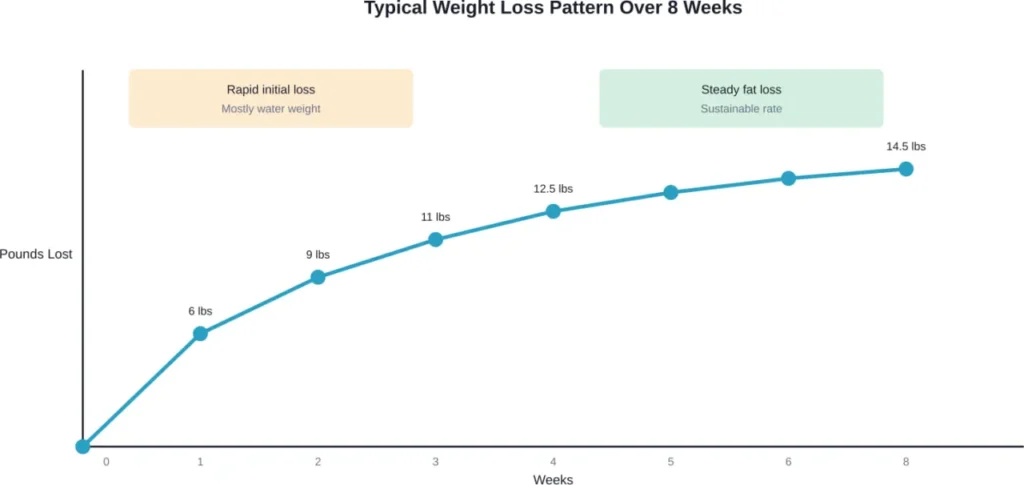
Many people lose more weight in the first month of a diet than in subsequent months. This isn’t because their effort drops off—it’s biology.
Initial weight loss includes water weight from reduced sodium and carbohydrate intake. Glycogen depletion alone can account for 5-10 pounds in the first week or two.
Additionally, when someone switches from a high-calorie diet to a restricted one, the immediate calorie deficit is often larger. As weight decreases, calorie needs drop too, requiring further adjustments to maintain the same rate of loss.
This is why someone might lose 15 pounds in the first month but only 5 pounds in the second month, even with consistent effort. The body adapts.
Building a Realistic Plan
If 40 pounds in 2 months isn’t the answer, what should your plan look like?
Start with the five-step framework the CDC recommends for weight loss:
- Make a specific plan with clear, achievable goals
- Develop healthy eating patterns that you can sustain
- Incorporate regular physical activity into your daily routine
- Prioritize adequate sleep (7-9 hours for most adults)
- Manage stress through healthy coping mechanisms
Step 1: Set a Realistic Timeline
Instead of 2 months for 40 pounds, consider 6-8 months. That allows for 1-2 pounds per week—a pace that research shows is maintainable and doesn’t sacrifice muscle mass.
Break the goal into smaller milestones. Losing 10 pounds in 6-8 weeks is achievable and provides motivation to continue. Four of those cycles gets you to 40 pounds in about 8 months.
Step 2: Calculate Your Calorie Needs
To lose one pound per week, create a daily deficit of 500 calories (3,500 calories per week). For two pounds per week, that’s 1,000 calories daily.
But this needs to be from your maintenance calories—not from an already restricted diet. Most women and men should consult healthcare providers before adopting very low calorie diets, as safety depends on individual health factors.
Community discussions mention using calorie tracking apps to build awareness. This doesn’t mean weighing every morsel forever, but it helps identify portion distortions and hidden calorie sources.
Step 3: Focus on Food Quality, Not Just Quantity
Eating 1,500 calories of nutrient-dense foods keeps you fuller and more energized than 1,500 calories of processed foods.
Emphasize:
- Lean proteins (chicken, fish, legumes, tofu)
- Vegetables and fruits
- Whole grains
- Healthy fats in moderation (nuts, avocado, olive oil)
User experiences highlight that cutting out sugary drinks alone can create a significant calorie deficit without feeling deprived. Sugary beverages can contribute significant daily calories; eliminating regular soda consumption can support meaningful weight loss.
Step 4: Move More, But Don’t Go Crazy
Starting with the CDC recommendation of 150 minutes of moderate activity per week is plenty for beginners. That’s 30 minutes, five days a week.
As fitness improves, increasing to 60 minutes daily supports weight loss maintenance. Walking is accessible, low-impact, and effective. According to community discussions, some successful individuals build up to approximately 10,000 steps daily.
Strength training matters too. Building or maintaining muscle mass during weight loss helps keep metabolism higher. Two to three sessions per week targeting major muscle groups is sufficient.
Step 5: Address Sleep and Stress
Poor sleep disrupts hormones that regulate hunger and fullness, making weight loss harder. Studies show that people who sleep less than 7 hours nightly tend to gain more weight over time.
Stress triggers cortisol release, which can increase appetite and cravings for high-calorie comfort foods. Finding healthy stress management techniques—whether that’s meditation, exercise, hobbies, or therapy—supports weight loss efforts.
| Timeline | Expected Loss | Weekly Rate | Best For |
|---|---|---|---|
| 2 months | 8-16 lbs | 1-2 lbs | Most people; sustainable and safe |
| 3 months | 12-24 lbs | 1-2 lbs | Building lasting habits |
| 6 months | 24-48 lbs | 1-2 lbs | Significant weight loss with lifestyle change |
| 8-10 months | 40-50 lbs | 1-2 lbs | Reaching 40 lb goal sustainably |
When to Seek Professional Help
Weight loss isn’t one-size-fits-all, and sometimes professional guidance makes the difference.
Consider consulting with healthcare professionals if:
- You have more than 50 pounds to lose
- You have obesity-related health conditions (diabetes, high blood pressure, sleep apnea)
- Previous attempts at weight loss have failed
- You’re considering weight loss medications or surgery
- You have a history of eating disorders
The American Heart Association notes that effective weight care is a team effort. A comprehensive care team might include cardiologists, endocrinologists, dietitians, physical therapists, mental health professionals, and pharmacists.
For people with type 2 diabetes, the NIDDK emphasizes that losing just 3% to 5% of body weight can reduce fat in the liver and improve metabolic markers. But weight loss approaches need to be coordinated with diabetes management to avoid blood sugar complications.
The Truth About Maintaining Weight Loss
Here’s something most transformation stories don’t tell you: keeping weight off is harder than losing it.
CDC research on people who successfully maintained weight loss for a year shows most continued eating fewer calories than before their weight loss, indicating the importance of sustained dietary changes.
CDC research indicates that people who maintain weight loss typically engage in 60 to 90 minutes of moderate-intensity physical activity most days. They monitored their weight regularly, catching small gains before they became large ones.
The National Institutes of Health research on weight cycling shows that repeatedly losing and regaining weight may increase disease risk and make future weight loss harder. That’s why the emphasis should be on sustainable approaches from the start, not quick fixes followed by regain.
Building Maintenance Habits During Weight Loss
Don’t wait until you hit your goal weight to think about maintenance. Build those habits now:
- Practice portion control rather than eliminating entire food groups
- Find physical activities you actually enjoy and will continue
- Develop non-food rewards and coping mechanisms
- Build a support system that will last beyond the weight loss phase
- Address emotional eating patterns and triggers
Weight loss that relies on willpower alone doesn’t last. Willpower is a finite resource. Sustainable weight loss comes from changing your environment, habits, and relationship with food.
Frequently Asked Questions
Technically possible but not recommended by health authorities. The CDC advises losing 1-2 pounds per week, making 8-16 pounds in 2 months a safer target. Losing 40 pounds in 2 months would require losing 5 pounds weekly—2.5 times faster than recommended and associated with muscle loss, nutrient deficiencies, and weight regain.
Based on CDC guidelines of 1-2 pounds per week, safe weight loss over 2 months (8 weeks) is 8-16 pounds. This rate allows for fat loss while preserving muscle mass and is more likely to be sustainable long-term. People with higher starting weights may lose slightly more initially due to water weight.
Rapid weight loss increases risks including muscle loss, slower metabolism, nutrient deficiencies, gallstone formation, electrolyte imbalances, hair loss, and fatigue. Research from the National Institutes of Health indicates that losing more than 10% of body weight rapidly increases health risks. Weight lost too quickly is also more likely to be regained.
At the recommended rate of 1-2 pounds per week, losing 40 pounds takes approximately 20-40 weeks, or 5-10 months. A realistic target for most people is 6-8 months, which allows for occasional plateaus and doesn’t require extreme restriction. This timeline supports sustainable lifestyle changes rather than temporary dieting.
Weight loss is possible through calorie restriction alone, but the CDC emphasizes that combining diet with physical activity improves outcomes. Exercise helps preserve muscle mass during weight loss, supports higher metabolism, and provides cardiovascular benefits. People who maintain weight loss long-term typically engage in 60-90 minutes of moderate physical activity daily.
There’s no single best diet for everyone. Research shows that the most effective diet is one you can sustain long-term. The CDC recommends focusing on healthy eating patterns—emphasizing fruits, vegetables, whole grains, lean proteins, and healthy fats—rather than following restrictive fad diets. Sustainability matters more than speed.
Studies of successful weight loss maintainers show they continued healthy eating patterns permanently, engaged in regular physical activity (60-90 minutes daily), and monitored their weight regularly. Avoid yo-yo dieting by making gradual, sustainable changes from the start. Address emotional eating patterns and build non-food coping mechanisms for stress.
The Bottom Line: Slow Wins the Race
Can you lose 40 pounds in 2 months? Maybe. Should you try? Probably not.
The research is clear: rapid weight loss comes with health risks, muscle loss, and a high likelihood of regain. What looks like success in the short term often turns into frustration when the weight returns—sometimes with extra pounds added on.
According to the CDC, losing just 5% to 10% of body weight provides meaningful health benefits. For someone weighing 200 pounds, that’s only 10-20 pounds—far less dramatic than 40, but with real improvements in blood pressure, cholesterol, and blood sugar.
A sustainable approach targeting 1-2 pounds per week gets you to 40 pounds in 6-8 months. That might sound slow, but consider this: where do you want to be a year from now? Still chasing the same 40 pounds through another crash diet, or maintaining a 40-pound loss that actually stuck?
The choice between quick results and lasting change determines not just your weight, but your relationship with food, exercise, and your body for years to come.
Focus on building habits you can maintain forever. Eat foods you enjoy in appropriate portions. Find movement that doesn’t feel like punishment. Prioritize sleep and manage stress.
That’s not as exciting as a dramatic 2-month transformation story. But it’s what actually works.
Ready to start? Set a realistic goal for the next 8 weeks—not 40 pounds, but maybe 10. Track your progress, adjust as needed, and celebrate small wins along the way. The weight didn’t appear overnight, and it won’t disappear overnight either.
But with patience and consistency, it will disappear—and stay gone.