
Quick Summary: Yes, it is possible to get pregnant right after your period ends, especially if you have a shorter menstrual cycle or irregular periods. The fertile window can overlap with the end of menstruation because sperm can survive in the reproductive tract for up to 5 days, and ovulation timing varies among individuals.
The idea that pregnancy can’t happen right after a period is one of the most common misconceptions about reproductive health. But here’s the thing—conception doesn’t follow a rigid schedule, and fertility windows shift more than most people realize.
According to the CDC, approximately 13 out of 100 SDM users become pregnant in the first year with typical use, partly because timing ovulation isn’t as straightforward as calendar counting might suggest. Understanding when pregnancy is actually possible requires looking at how menstrual cycles, ovulation, and sperm survival work together.
Understanding the Menstrual Cycle and Fertile Window
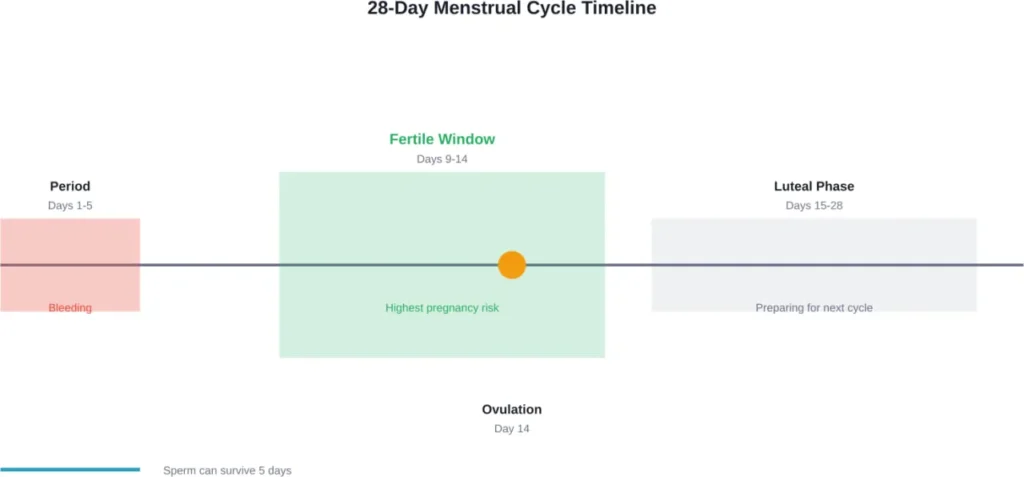
The menstrual cycle begins on the first day of bleeding and continues until the day before the next period starts. While the average cycle lasts 28 days, normal cycles range from 21 to 35 days, according to women’s health data.
Day 1 marks the start of menstruation, when the uterine lining sheds. This bleeding typically lasts about 5 days. Around day 7, one follicle on the ovaries continues developing and will eventually release an egg—this is ovulation.
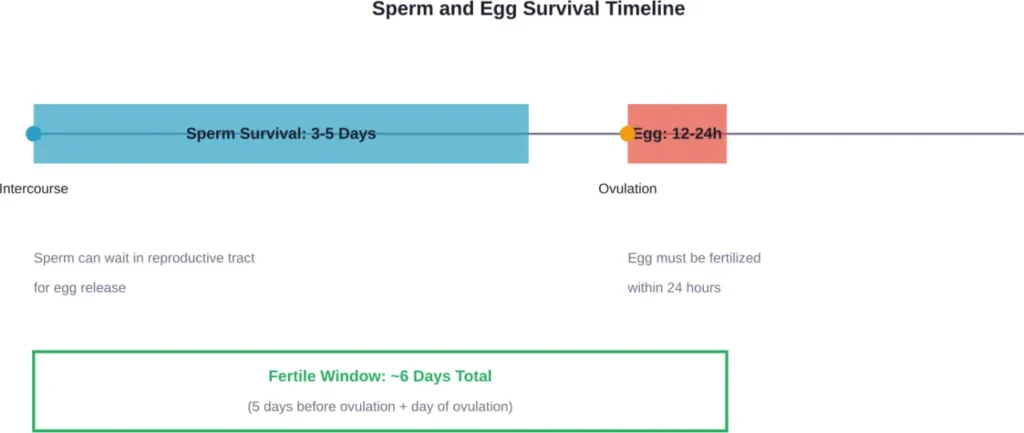
The fertile window is the timeframe when pregnancy can occur. Based on research from the National Institute of Environmental Health Sciences tracking 221 women planning pregnancy across 696 menstrual cycles, this window encompasses approximately 6 days: the five days before ovulation and the day of ovulation itself.
Why six days? Sperm can survive in the female reproductive tract for 3 to 5 days after intercourse, according to the American College of Obstetricians and Gynecologists. Meanwhile, an egg survives only 12 to 24 hours after ovulation. This means intercourse can happen days before the egg is released and still result in pregnancy.
When Ovulation Actually Happens
Most fertility advice assumes ovulation occurs around day 14 of a 28-day cycle. That’s true for some people—but not everyone.
Research tracking ovulation timing shows significant variation. In people with very short cycles, ovulation can occur as early as day 10, according to a large study of approximately 600,000 individuals. While this occurred in fewer than 1% of cases, it demonstrates that ovulation doesn’t follow a universal schedule.
For someone with a 21-day cycle, ovulation might happen around day 7—potentially while menstrual bleeding is still tapering off or just ending. This overlap explains why pregnancy right after a period isn’t just possible; in some cases, it’s actually likely.
Factors That Affect Ovulation Timing
Several factors influence when ovulation occurs:
- Cycle length: Shorter cycles mean earlier ovulation, sometimes overlapping with the end of menstruation
- Cycle regularity: Irregular cycles make ovulation timing unpredictable from month to month
- Stress and illness: Physical or emotional stress can delay or advance ovulation
- Hormonal fluctuations: Natural hormone variations affect follicle development and egg release
- Age: Cycle characteristics often change as women age, particularly approaching perimenopause
According to the Office on Women’s Health, normal menstrual cycles can range from 21 to 35 days, and each person’s cycle length may vary from month to month.
Can You Get Pregnant Immediately After Your Period?
The short answer? Absolutely.
Someone with a shorter cycle who has unprotected sex in the days immediately after their period ends could easily become pregnant. Here’s why: if bleeding stops on day 5 and ovulation occurs on day 10, intercourse on day 6 means sperm are already present and viable when the egg releases.
But even with longer, more typical cycles, the math still works against the assumption that post-period days are “safe.” Sperm surviving 5 days means intercourse on day 9 could result in pregnancy from ovulation on day 14.
| Cycle Length | Approximate Ovulation Day | Fertile Window Begins | Period Ends (Day 5) | Risk Level |
|---|---|---|---|---|
| 21 days | Day 7 | Day 2 | During fertile window | High |
| 24 days | Day 10 | Day 5 | Overlaps window start | High |
| 28 days | Day 14 | Day 9 | 4 days before window | Moderate |
| 35 days | Day 21 | Day 16 | 11 days before window | Lower |
The Reality of “Safe Days”
Many people assume early cycle days are automatically safe from pregnancy. The data tells a different story.
Unexpected pregnancies do occur from intercourse immediately following menstruation, particularly among those with variable cycle lengths. At least 85% of women who continue to have sex without birth control, even just once in a while, will be pregnant within one year.
The Standard Days Method, which recommends avoiding unprotected intercourse on days 8-19 of the cycle, still results in approximately 13 out of 100 users becoming pregnant, based on CDC data. This relatively high failure rate reflects the challenges of predicting ovulation accurately.
Your Actual Chances of Getting Pregnant
Pregnancy probability varies dramatically based on timing relative to ovulation. Research provides specific estimates:
| Timing of Intercourse | Pregnancy Probability |
|---|---|
| 7 days before ovulation | 3% |
| 6 days before ovulation | 6% |
| 5 days before ovulation | 9% |
| 4 days before ovulation | 18% |
| 3 days before ovulation | 27% |
| 2 days before ovulation | 33% |
According to government health resources, a person is most likely to get pregnant if intercourse occurs in the three days before and up to the day of ovulation, since sperm are already positioned when the egg releases.
Nearly all pregnancies among healthy women trying to conceive can be attributed to intercourse during a six-day period ending on the day of ovulation, according to medical research published in studies tracking conception timing.
Tracking Your Fertile Window
For those trying to prevent pregnancy—or achieve it—understanding personal ovulation patterns matters more than generic calendar calculations.
Ovulation Prediction Methods
Several methods help identify the fertile window:
Basal body temperature tracking: Body temperature rises slightly (typically 0.5-1°F) after ovulation. Tracking requires taking temperature immediately upon waking, before any activity. Specialized basal thermometers, available at most pharmacies for about $10, detect these small shifts. The temperature rise confirms ovulation has already occurred—meaning most women have ovulated within three days after temperature spikes.
Cervical mucus monitoring: Cervical discharge changes throughout the cycle. Around ovulation, mucus becomes clear, slippery, and stretchy (similar to egg whites), facilitating sperm transport. After ovulation, it becomes thicker and cloudier.
Ovulation predictor kits: These test strips detect the luteinizing hormone surge that occurs 24-36 hours before ovulation, providing advance notice of the fertile window.
Fertility tracking apps: Digital tools log cycle data and predict fertile days based on patterns. However, their accuracy depends on cycle regularity and consistent data entry.
Why Cycle Irregularity Changes Everything
Irregular cycles make fertility awareness methods significantly less reliable. When cycle length varies by several days each month, predicting ovulation becomes guesswork rather than calculation.
For people with irregular cycles, ovulation can shift unpredictably, meaning the fertile window might occur earlier or later than expected. This unpredictability increases the chance of unintended pregnancy when relying on calendar-based methods.
Preventing Unintended Pregnancy
If pregnancy isn’t the goal, assuming any days are automatically “safe” is risky. Real talk: effective contraception matters more than cycle tracking for pregnancy prevention.
Contraceptive Options
Multiple contraceptive methods offer varying levels of protection:
- Hormonal methods: Birth control pills, patches, injections, and implants prevent ovulation, making pregnancy unlikely regardless of cycle timing
- Barrier methods: Condoms, diaphragms, and cervical caps physically prevent sperm from reaching the egg
- Intrauterine devices: IUDs provide long-term pregnancy prevention through hormonal or copper mechanisms
- Emergency contraception: Available after unprotected intercourse to prevent pregnancy, most effective when taken within 72 hours
According to the 2024 U.S. Selected Practice Recommendations for Contraceptive Use, health care providers use multiple criteria with 99-100% negative predictive value to rule out pregnancy before starting contraceptive methods.
For those relying on fertility awareness for contraception, the CDC recommends avoiding unprotected intercourse on days 8-19 of the menstrual cycle when using the Standard Days Method. However, this still carries approximately a 13% annual pregnancy rate.
Early Pregnancy Signs and Testing
When pregnancy does occur, early signs may include:
- Missed period
- Breast tenderness or swelling
- Nausea or morning sickness
- Increased urination frequency
- Fatigue
- Light spotting (implantation bleeding)
Home pregnancy tests detect human chorionic gonadotropin (hCG), a hormone produced after a fertilized egg implants in the uterus. Most tests are accurate from the first day of a missed period, though some sensitive tests claim earlier detection.
For most reliable results, test with first morning urine when hCG concentration is highest. A negative result doesn’t definitively rule out pregnancy if taken too early—retesting a few days later may yield different results.
When to Consult Healthcare Providers
According to the American College of Obstetricians and Gynecologists, couples should seek infertility evaluation if pregnancy hasn’t occurred after one year of regular unprotected intercourse. For those over 35, evaluation is recommended after six months. Those over 40 should discuss evaluation timing with their obstetrician-gynecologist without delay.
In the United States, 1 in 5 (19%) of married women aged 15 to 49 with no prior births are unable to get pregnant after 1 year of trying. About 1 in 4 (26%) of women in this group have difficulty getting pregnant or carrying a pregnancy to term.
Medical consultation is also appropriate for those with highly irregular cycles, concerns about fertility, or questions about contraceptive effectiveness.
Frequently Asked Questions
Pregnancy is possible immediately after menstruation ends, especially with cycles shorter than 28 days. Sperm surviving up to 5 days means intercourse right after bleeding stops can result in pregnancy if ovulation occurs within that window.
No day is 100% guaranteed safe from pregnancy without contraception. While probability is lower at certain times, irregular ovulation, varying cycle lengths, and extended sperm survival mean pregnancy remains theoretically possible throughout the cycle.
Irregular cycles make pregnancy timing less predictable but don’t necessarily reduce overall fertility. However, they make fertility awareness methods unreliable for contraception and may signal underlying hormonal issues worth discussing with a healthcare provider.
The Standard Days Method results in approximately 13 out of 100 users becoming pregnant annually, according to CDC data. This relatively high failure rate makes it less reliable than hormonal contraception or barrier methods for pregnancy prevention.
A positive test means conception occurred approximately 2-3 weeks earlier—during your previous fertile window. Home pregnancy tests detect hCG hormone that appears after implantation, which happens 6-12 days after fertilization. Schedule an appointment with a healthcare provider to confirm and discuss next steps.
Sperm typically survive 3 to 5 days in the female reproductive tract under optimal conditions, according to the American College of Obstetricians and Gynecologists. This extended survival is why the fertile window begins several days before ovulation.
While uncommon, medical case reports document rare instances of ovulation during menstruation, particularly in women with premature ovarian insufficiency. For most people, ovulation occurs after menstruation ends, but short cycles can cause fertile windows to overlap with late-period bleeding.
Bottom Line
Getting pregnant right after a period isn’t just possible—depending on cycle length and ovulation timing, it can actually be likely. The fertile window extends approximately six days ending on ovulation day, and with sperm surviving up to five days, the math often works against assumptions about “safe” post-period days.
Understanding personal cycle patterns matters more than following generic timelines. For those trying to conceive, tracking ovulation indicators improves timing. For those preventing pregnancy, effective contraception provides far more reliable protection than calendar calculations.
Whether planning or preventing pregnancy, knowledge about how fertility timing actually works empowers better reproductive health decisions. When in doubt, consult healthcare providers for personalized guidance based on individual health factors and reproductive goals.