

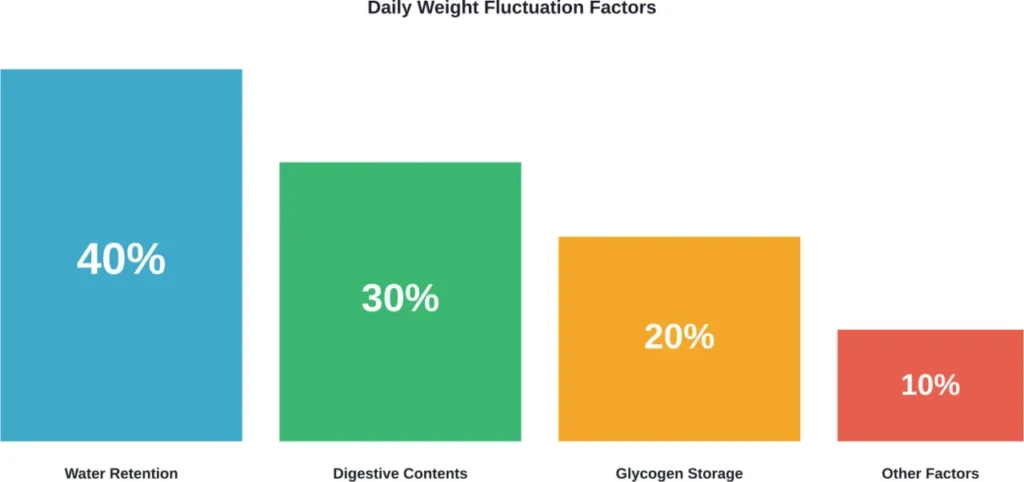
Quick Summary: It’s possible to see a 3-pound weight gain in a day, but it’s not true fat gain. Daily weight fluctuations typically result from water retention, sodium intake, digestive contents, hormonal changes, or glycogen storage. According to NIH research, actual fat gain requires a significant caloric surplus—approximately 3,500 excess calories per pound of fat—making genuine 3-pound fat gain in 24 hours virtually impossible through normal eating patterns.
Stepping on the scale to find you’ve gained 3 pounds overnight can trigger instant panic. But here’s the thing—that number doesn’t tell the whole story.
Weight fluctuations happen to everyone. Your body weight isn’t a fixed number that stays constant day after day. It shifts based on dozens of factors that have nothing to do with actual fat gain.
Understanding what causes these fluctuations can save you from unnecessary stress and help you make better health decisions. So let’s break down what’s really happening when the scale jumps significantly in just one day.
The Science Behind Rapid Weight Fluctuation
To gain one actual pound of fat, you’d need to consume roughly 3,500 calories above your maintenance level. That means gaining 3 pounds of genuine fat would require eating approximately 10,500 excess calories in a single day—far beyond what most people could realistically consume.
Research on weight loss dynamics supports this principle, though modern obesity research shows the calculation is more complex than previously thought. Still, the fundamental truth remains: rapid overnight weight gain isn’t fat accumulation.
Most people experience weight fluctuations of 1 to 2 kilograms within a three-week period due to normal lifestyle variations. But what about those dramatic single-day jumps?
Water Retention: The Primary Culprit
Water weight accounts for the vast majority of rapid scale changes. Your body is approximately 60% water, and that percentage shifts constantly based on what you eat, drink, and do.
Research on water intake published in the Journal of Natural Science, Biology and Medicine has examined the effects of water on body weight and found measurable physiological changes. The research highlighted how fluid balance directly corresponds to body weight measurements.
Water retention happens for several reasons. Your kidneys regulate fluid balance, and when certain triggers occur, they hold onto extra water temporarily. This isn’t harmful—it’s a normal physiological response.
Sodium’s Role in Water Retention
Salt has a massive impact on water weight. According to the American Heart Association infographic, Americans consume an average of 3,400 milligrams of sodium per day—more than double the ideal recommendation of 1,500 milligrams for optimal heart health.
When sodium intake spikes, your body retains water to maintain proper sodium-to-water ratios in your bloodstream. Just one high-sodium meal can trigger noticeable water retention by the next morning.
Restaurant meals, processed foods, and fast food are particularly problematic. More than 70% of dietary sodium comes from processed and restaurant foods, not from the salt shaker on your table.
Carbohydrates and Glycogen Storage
Carbohydrate intake creates predictable weight fluctuations through glycogen storage. When you eat carbs, your body converts them to glycogen and stores them in muscles and the liver for future energy use.
Here’s the catch: glycogen binds with water in significant ratios. Eat a carb-heavy meal, and your glycogen stores increase along with bound water.
This explains why people on low-carb diets often see rapid initial weight loss. They’re depleting glycogen stores and shedding the associated water weight—not necessarily burning fat at an accelerated rate.
When someone reintroduces carbohydrates after restriction, glycogen stores replenish quickly. Users on weight loss forums have reported weight increases of several pounds after consuming high-carbohydrate meals following a strict low-carb diet. That’s glycogen and water, not fat.
Digestive Contents and Timing
The food sitting in your digestive system has actual physical weight. From the moment food enters your mouth until waste leaves your body, it contributes to your total body weight.
Digestion isn’t instantaneous. Food digestion times vary significantly depending on meal composition. High-fiber foods take longer to process.
A large dinner eaten late at night means most of that meal is still being digested when you step on the scale the next morning. The weight of undigested food, combined with retained fluids needed for digestion, can easily add 2-3 pounds.
Hormonal Influences on Weight
Hormones trigger significant water retention, particularly in women. Menstrual cycle fluctuations cause predictable weight changes throughout the month.
Estrogen and progesterone levels affect fluid balance and can cause water retention during different phases of the menstrual cycle.
Stress hormones also impact weight. Cortisol elevation triggers water retention and can increase appetite, leading to both fluid gain and increased food intake.
Exercise and Muscle Recovery
Intense workouts often lead to temporary weight gain, which confuses people who exercise to lose weight. This happens for two main reasons.
First, muscle tissue retains water during the recovery and repair process. When you challenge your muscles, they experience micro-tears that trigger inflammation and fluid accumulation as part of healing. This is completely normal and necessary for muscle development.
Second, exercise depletes glycogen stores, which your body then replenishes along with the associated water weight. A hard workout followed by proper refueling can add noticeable water weight within 24 hours.
Medication Effects on Body Weight
Certain medications cause rapid weight gain through fluid retention or metabolic changes. Common culprits include corticosteroids, some antidepressants, beta-blockers, and insulin.
Steroids are particularly notorious for triggering water retention and increased appetite. People starting corticosteroid treatment often notice weight gain within days.
If you’ve recently started a new medication and experienced sudden weight gain, discuss this with your healthcare provider. Don’t discontinue medication without medical guidance, but do address concerning side effects.
When Weight Gain Signals a Health Concern
While daily fluctuations are normal, certain patterns warrant medical attention. According to Cleveland Clinic, if you gain 2 to 3 pounds a day, or 5 pounds a week, you should see your provider.
Rapid, unexplained weight gain can indicate several medical conditions:
| Condition | Typical Pattern | Additional Symptoms |
|---|---|---|
| Heart Failure | Rapid gain over days | Shortness of breath, swelling in legs, fatigue |
| Kidney Disease | Progressive fluid retention | Reduced urination, swelling, fatigue |
| Thyroid Disorders | Gradual but steady gain | Fatigue, cold sensitivity, constipation |
| Liver Cirrhosis | Fluid accumulation in abdomen | Abdominal swelling, jaundice, confusion |
| Medication Side Effects | Varies by medication | Depends on specific drug |
Medical guidelines indicate that gaining 5% or more of your body weight in a month warrants medical evaluation. For a 150-pound person, that’s 7.5 pounds.
According to Clinical Methods, about 65% of patients with weight loss will be found to harbor disease, compared to less than 1% of those with weight gain. Still, rapid gain deserves attention, especially when accompanied by other symptoms.
Minimizing Daily Weight Fluctuations
You can’t eliminate weight fluctuations entirely—they’re a normal part of human physiology. But you can minimize dramatic swings and get more consistent scale readings.
Consistent Sodium Intake
Keeping sodium consumption relatively stable prevents the dramatic retention that follows high-salt meals. Aim for the recommended 1,500-2,300 milligrams daily rather than wild variations between 1,000 mg one day and 5,000 mg the next.
Adequate Hydration
Counterintuitively, drinking more water often reduces water retention. When dehydrated, your body holds onto available fluids. Consistent hydration signals that water is plentiful, reducing the retention response.
Research on water intake and body weight shows that proper hydration supports metabolic function and can assist with weight management efforts.
Strategic Weigh-In Timing
For the most consistent readings, weigh yourself at the same time under the same conditions. Most experts recommend morning weigh-ins after using the bathroom but before eating or drinking.
Wearing similar clothing (or no clothing) also improves consistency. Clothes can add a surprising amount of weight—shoes alone might account for 1-2 pounds.
Focus on Trends, Not Single Data Points
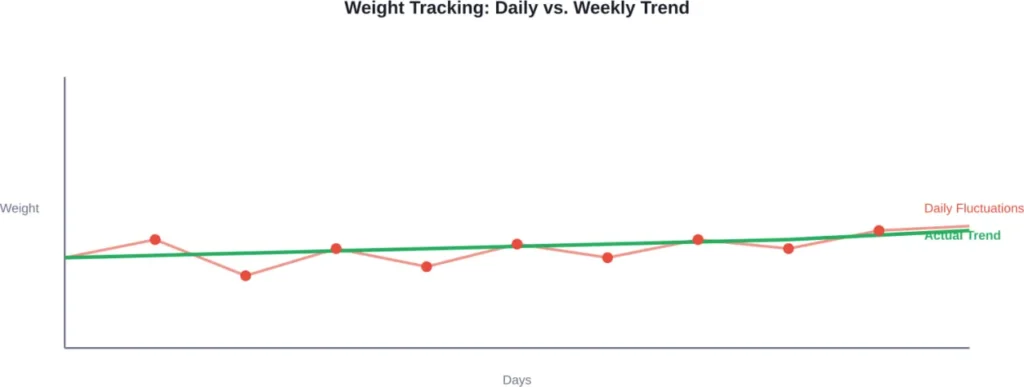
One day’s weight tells you almost nothing. Weight trends over weeks and months reveal meaningful information about whether you’re maintaining, gaining, or losing fat mass.
Track your weight weekly or even less frequently if daily fluctuations cause stress. Many people find that weekly averages provide useful information without the emotional rollercoaster of daily weighing.
Alternative Progress Measurements
The scale doesn’t deserve its position as the sole arbiter of health or fitness progress. Other measurements often provide more meaningful information.
Body measurements track changes the scale might miss. Someone building muscle while losing fat might see minimal scale movement but significant changes in waist, hip, and thigh measurements.
How clothing fits offers practical feedback. Jeans that fit comfortably when they were previously tight indicate progress regardless of what the scale says.
Energy levels, sleep quality, strength improvements, and endurance gains all matter more than daily weight fluctuations for overall health and wellness.
The Psychology of Daily Weighing
Scale obsession creates unnecessary stress for many people. Seeing a higher number can trigger anxiety, restrictive eating, or feelings of failure even when the gain is just water weight.
For some individuals, daily weighing helps maintain awareness and accountability. For others, it becomes a source of unhealthy fixation. There’s no universal right answer about weighing frequency—it depends on your relationship with the scale and your mental health.
If you find yourself becoming distressed about normal fluctuations or making impulsive dietary changes based on single weigh-ins, consider reducing weighing frequency or focusing on different progress markers.
Frequently Asked Questions
No, gaining 3 pounds of actual fat in one day is virtually impossible. It would require consuming approximately 10,500 calories above your maintenance level. Most rapid weight gain represents water retention, digestive contents, or glycogen storage rather than fat accumulation.
Most people experience daily weight fluctuations of 1-2 pounds, though variations up to 3-5 pounds can occur depending on sodium intake, carbohydrate consumption, hydration status, and digestive timing. These fluctuations are completely normal and don’t reflect fat gain or loss.
High sodium intake triggers water retention as your body maintains proper fluid balance. According to the American Heart Association infographic, Americans consume an average of 3,400 mg of sodium per day, well above recommended levels. A single high-sodium meal can cause several pounds of temporary water weight gain.
According to medical guidelines, contact a healthcare provider if you gain 2-3 pounds daily, 5 pounds within a week, or 5% of your body weight in a month without obvious cause. Rapid weight gain accompanied by swelling, shortness of breath, or reduced urination requires immediate medical attention.
Water has weight, so drinking a large amount will temporarily increase your scale reading. However, proper hydration actually helps reduce water retention over time. Research in the Journal of Natural Science, Biology and Medicine examined water intake effects and found that adequate hydration supports healthy weight management.
Water weight typically resolves within 2-4 days once the triggering factor (high sodium intake, hormonal changes, intense exercise) normalizes. Maintaining consistent hydration, moderate sodium intake, and regular physical activity helps minimize prolonged water retention.
Daily weighing works for some people but causes stress for others. If you weigh daily, focus on weekly averages rather than individual readings. If daily fluctuations negatively affect your mental health or trigger restrictive behaviors, reduce weighing frequency to weekly or less often.
Understanding Your Body’s Natural Rhythm
Your body isn’t a machine that maintains perfectly consistent weight. It responds to food intake, fluid consumption, stress, sleep, activity, and dozens of other variables.
A 3-pound weight gain in one day almost certainly represents normal physiological fluctuation rather than genuine fat gain. The human body simply can’t store that much fat in 24 hours under typical circumstances.
Healthy weight management focuses on long-term patterns: balanced nutrition, regular physical activity, adequate sleep, and stress management. These factors matter far more than daily scale variations.
Learning to interpret weight fluctuations correctly helps you respond appropriately rather than overreacting to normal variation. That spike on the scale after a restaurant meal or during your menstrual cycle doesn’t require drastic dietary changes—it requires patience and understanding of how your body works.
Track trends over weeks and months. Notice how you feel, how your clothes fit, and how your health markers change. The scale provides one data point among many, and it’s far from the most important one when it comes to overall health and wellbeing.
If you’re concerned about persistent weight gain or experiencing rapid increases accompanied by other symptoms, consult a healthcare provider for proper evaluation. But for those occasional overnight jumps? They’re just your body being a body—complex, dynamic, and constantly adapting to everything you put it through.