
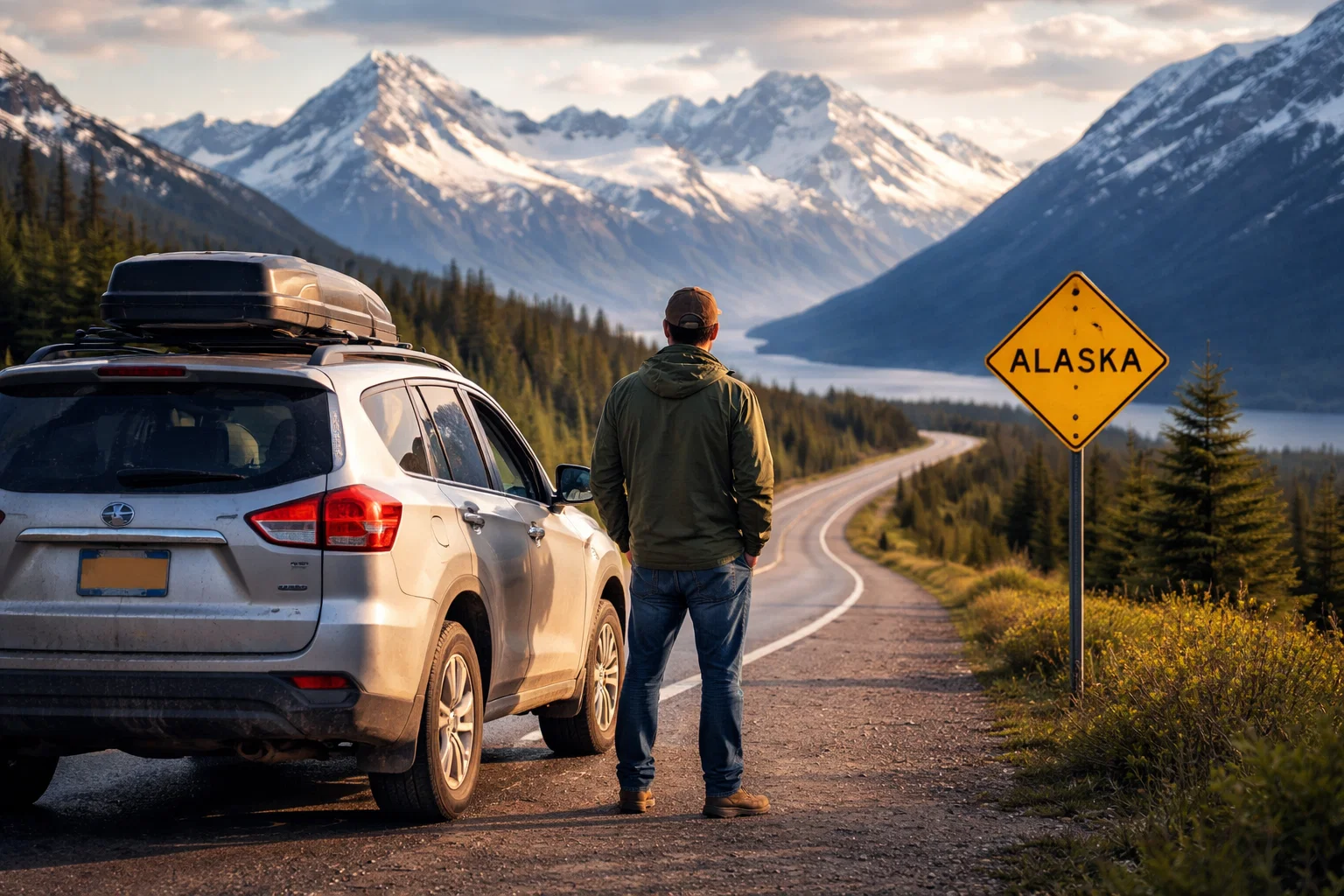
Quick Summary: Yes, you can drive to Alaska from the lower 48 states. The two main routes run through Canada: the Alaska Highway (1,387 miles from Dawson Creek, BC) and the Cassiar Highway. The drive takes approximately 36-38 hours just through Canada, plus your starting point distance, and requires valid travel documentation for border crossings.
Driving to Alaska might sound like an extreme adventure, but thousands of people make this journey every year. Unlike Hawaii or other disconnected states, Alaska maintains a land connection to the continental United States through Canada.
The catch? There’s no route that stays entirely on American soil. Every driving route to Alaska requires crossing into Canada and back again, which means border documentation and some planning.
But here’s the thing—this drive offers something flights can’t match: complete flexibility, stunning scenery through British Columbia and Yukon Territory, and the freedom to bring as much gear as your vehicle can carry.
The Two Main Routes Through Canada
When planning a drive to Alaska, two primary highways dominate the conversation. Both run through Canada, and each offers distinct advantages depending on where travelers start and what they want to see.
The Alaska Highway (Alcan Highway)
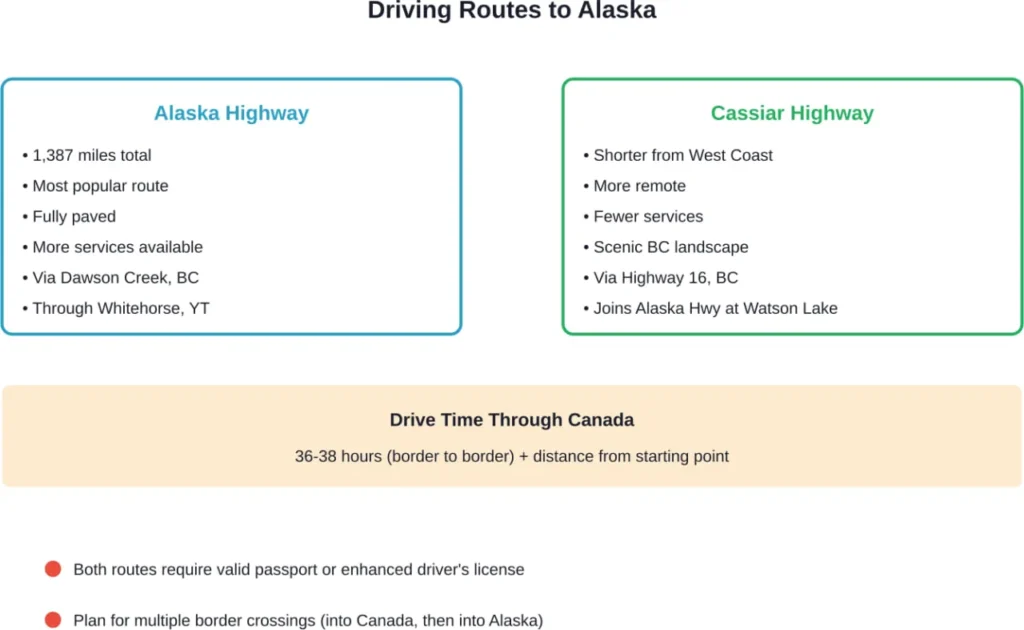
The Alaska Highway is the most popular route. Running 1,387 miles from Dawson Creek, British Columbia to Delta Junction, Alaska, this highway provides access to Alaska through Canada.
Most drivers approaching from the eastern or central United States funnel toward Dawson Creek through Edmonton, Alberta. The highway passes through Fort Nelson, crosses into Yukon Territory at Watson Lake, continues through Whitehorse (the Yukon capital), and finally enters Alaska near Beaver Creek.
According to the Alaska Department of Transportation & Public Facilities, about 35% of all public roads in Alaska are paved, with Alaska DOT&PF roads having the highest proportion at 66% of its 5,638 miles. The Alaska Highway itself is fully paved, though drivers should expect some rough patches, especially in spring after winter freeze-thaw cycles.
The Cassiar Highway Route
The Cassiar Highway offers a western alternative that’s shorter in total distance for those coming from the Pacific Coast. This route splits off from Highway 16 in British Columbia and reconnects with the Alaska Highway near Watson Lake.
Drivers starting from Washington, Oregon, or California often find this route faster. It’s more remote with fewer services, but the scenery through northern British Columbia is spectacular.
Border Crossing Requirements and Documentation
Since driving to Alaska requires passing through Canada, proper documentation is essential. Border delays happen when travelers arrive unprepared.
According to U.S. Customs and Border Protection, the Western Hemisphere Travel Initiative requires specific documents for land border crossings. For U.S. citizens, acceptable documents include a valid passport, passport card, or enhanced driver’s license.
Real talk: a standard driver’s license won’t cut it. Enhanced licenses are available in select states; check your state’s DMV for availability. Most travelers need a passport.
Canadian entry requirements mirror U.S. requirements. Travelers will cross the border twice—once entering Canada, and again entering Alaska. That means two opportunities for documentation issues if paperwork isn’t in order.
| Document Type | Valid for Entry? | Notes |
|---|---|---|
| U.S. Passport Book | Yes | Accepted at all crossings |
| U.S. Passport Card | Yes | Land/sea borders only |
| Enhanced Driver’s License | Yes | Only from certain states |
| Standard Driver’s License | No | Not sufficient for border crossing |
| NEXUS Card | Yes | Expedited trusted traveler program |
Best Time of Year to Drive to Alaska
Timing matters significantly when planning this drive. Weather conditions along the Alaska Highway and Cassiar Highway vary dramatically by season.
The best time is late May through mid-September, with warmer weather, more daylight, and better road conditions. But this is peak season—expect more traffic and higher accommodation costs.
Spring and fall present challenges. April and May can bring unpredictable weather, including snow at higher elevations. Early October and later see colder temperatures and the risk of early winter storms.
Winter driving (November through March) is possible but requires serious preparation: winter tires, emergency supplies, cold-weather gear, and willingness to delay travel during storms. Many services along remote highway stretches close for winter.
How Long Does the Drive Actually Take?
The drive from the U.S.-Canada border in Washington State through Canada to the Alaska border takes approximately 36-38 hours of actual driving time. That’s just the Canadian portion.
Add the distance from any starting point in the lower 48, plus the distance to a final Alaska destination, and most trips require 4-7 days minimum. Community discussions from travelers suggest planning at least 5 days for the drive itself, plus extra time to actually see Alaska.
Sound ambitious? Many drivers spread the journey over 7-10 days to avoid fatigue and enjoy the scenery. Rushing defeats the purpose of this trip.
Daily Driving Considerations
Services aren’t evenly distributed along these routes. Gas stations, restaurants, and lodging cluster in towns that might be 100+ miles apart. Planning daily stops around available services prevents problems.
Wildlife presents another factor. Moose, bears, and other animals frequently cross highways, especially during dawn and dusk. Collisions with moose can be fatal—these animals are massive and often total vehicles.
Essential Preparation Tips for the Road
Vehicle preparation makes or breaks this trip. The Alaska Department of Transportation & Public Facilities provides road condition information through 511.alaska.gov, and checking conditions before and during the trip is smart practice.
Mechanical issues in remote areas can be expensive and time-consuming. At minimum, vehicles should have a recent inspection, good tires (with a full-size spare), functioning heating system, and topped-off fluids.
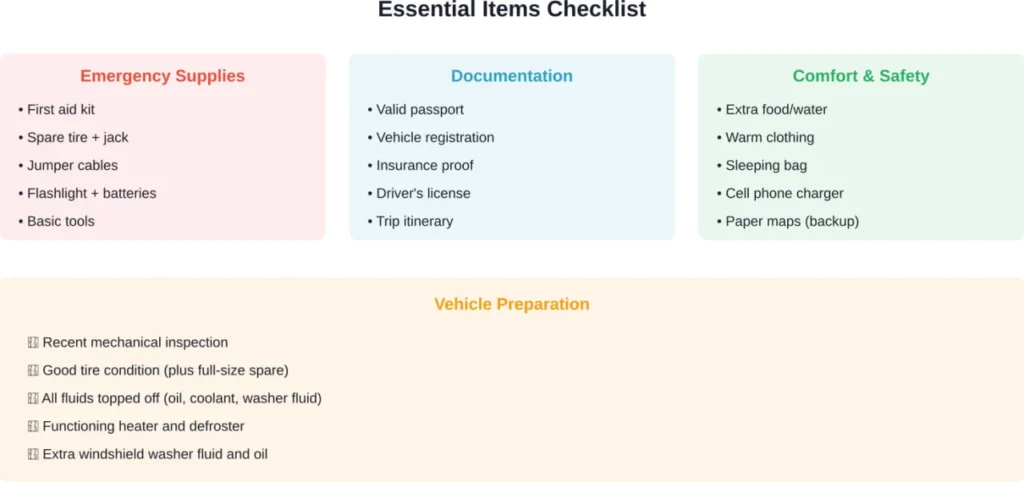
Cell phone coverage becomes spotty in remote areas. Downloading offline maps and carrying a physical road atlas provides backup navigation.
Frequently Asked Questions
No land route exists that avoids Canada entirely. The only alternative is taking the Alaska Marine Highway ferry from Bellingham, Washington, which transports vehicles but isn’t technically driving the whole way.
Yes. A valid passport, passport card, or enhanced driver’s license (from select states) is required for the border crossings into Canada and then into Alaska.
The highway itself isn’t inherently dangerous, but wildlife collisions, remote locations with limited services, and variable weather require preparation and caution. Thousands complete the drive safely each year.
Travel costs vary significantly based on starting point, vehicle fuel efficiency, and accommodation choices. Budget for gas, lodging, food, and potential vehicle maintenance.
Speed limits vary by section and country. In Canada, limits typically range from 90-100 km/h (56-62 mph). In Alaska, limits vary by road section. According to the Alaska DOT&PF, speed limits are set based on road conditions and engineering studies.
Winter driving is possible but challenging. Roads can be icy, services limited, and weather unpredictable. Travelers need winter tires, emergency supplies, and flexibility to delay travel during storms.
Yes, but they’re not evenly spaced. Towns with services can be 100+ miles apart. Filling up at every opportunity and never letting the tank drop below half is wise practice.
Conclusion: Is Driving to Alaska Worth It?
Driving to Alaska is absolutely possible and offers an adventure that flying simply can’t match. The journey through British Columbia and Yukon Territory provides scenery, wildlife, and flexibility that make the long drive worthwhile for many travelers.
But wait. This isn’t a casual weekend road trip. Proper preparation—valid documentation, vehicle maintenance, route planning, and realistic time expectations—separates successful trips from frustrating ones.
For those with the time and inclination, driving to Alaska remains one of North America’s great road trips. The Alaska Highway and Cassiar Highway both deliver on the promise of frontier adventure, just with a passport in hand and a well-maintained vehicle underneath.
Ready to start planning? Check current road conditions through 511.alaska.gov and review border crossing requirements at cbp.gov before setting out. The Last Frontier is waiting, and the drive there might be just as memorable as the destination itself.