

Quick Summary: Losing 50 pounds in 6 months is possible and aligns with healthy weight loss guidelines. According to the CDC, safe weight loss occurs at 1-2 pounds per week, which translates to 24-48 pounds in six months. Achieving a 50-pound loss requires consistent caloric deficit through diet, regular physical activity, and sustainable lifestyle changes that support long-term maintenance.
The question comes up constantly in weight loss communities: can someone realistically shed 50 pounds in half a year? It’s an ambitious goal, but not unrealistic when approached correctly.
According to the CDC, healthy weight loss occurs at a rate of 1-2 pounds per week. Over six months (roughly 26 weeks), that translates to 26-52 pounds. So losing 50 pounds in this timeframe sits comfortably within the recommended range.
But here’s the thing—knowing it’s possible and actually executing on that goal are two entirely different challenges.
The Math Behind a 50-Pound Weight Loss
Weight loss ultimately comes down to energy balance. One pound of body fat contains approximately 3,500 calories (a widely cited figure in weight loss literature, though some research suggests individual variation). To lose 50 pounds, someone needs to create a total caloric deficit of 175,000 calories over six months.
Break that down further: 175,000 calories divided by 180 days equals about 972 calories per day. That’s the daily deficit needed through reduced food intake, increased physical activity, or ideally, a combination of both.
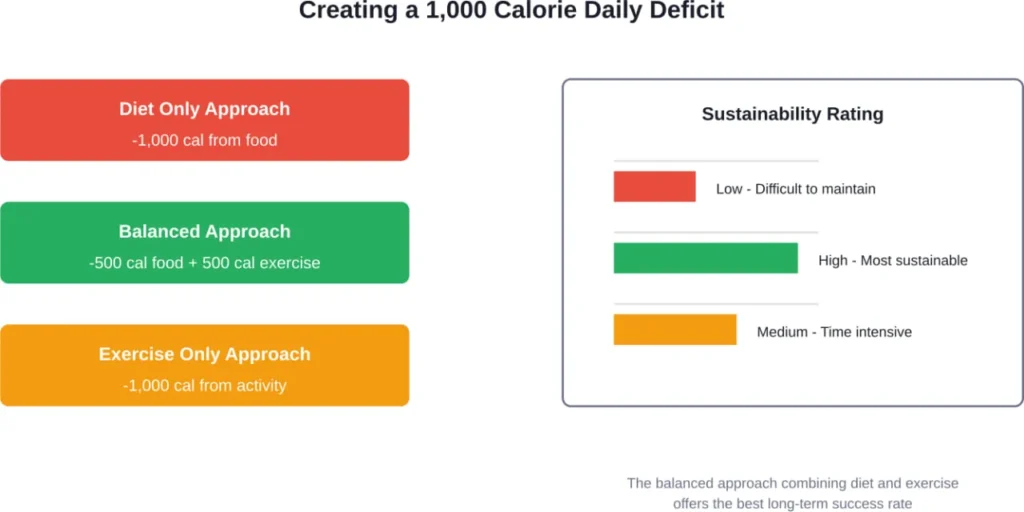
Caloric needs vary significantly based on age, gender, height, and activity level. Creating a 1,000-calorie daily deficit through diet alone would mean eating just 800-1,500 calories—which qualifies as a very low-calorie diet and requires medical supervision according to research from the National Institutes of Health.
A More Sustainable Approach
Rather than extreme caloric restriction, combining moderate dietary changes with increased physical activity creates a more sustainable path. Consider this breakdown:
- Reduce food intake by 500 calories daily
- Burn an additional 500 calories through exercise
- Total daily deficit: 1,000 calories
- Weekly weight loss: approximately 2 pounds
- Six-month total: 48-52 pounds
This balanced approach reduces the risk of muscle loss, nutritional deficiencies, and the metabolic slowdown that often accompanies rapid weight loss.
What Health Organizations Say About Rapid Weight Loss
The CDC emphasizes that gradual, steady weight loss—about 1-2 pounds per week—provides the best chance for long-term success. This recommendation isn’t arbitrary.
Research published by the National Institutes of Health shows that more than half of lost weight gets regained within two years. The faster the initial loss, the harder maintenance becomes.
That said, the CDC also notes that even modest weight loss helps. For someone weighing 200 pounds, losing just 5-10% of body weight (10-20 pounds) can improve blood pressure, cholesterol levels, and blood sugar control.
When Faster Loss Makes Sense
Medical research from NIH indicates that rapid initial weight loss doesn’t necessarily doom long-term success. Studies comparing fast, moderate, and slow initial weight loss found that faster losers were actually more likely to achieve clinically significant weight reduction at 18 months.
The key difference? Supervision and structure. Very low-calorie diets (under 800 calories daily) show effectiveness when medically supervised and combined with behavioral support.
Building a Realistic Six-Month Plan
Creating a sustainable 50-pound loss requires more than just cutting calories. It demands lifestyle restructuring across multiple areas.
Nutrition Strategies That Work
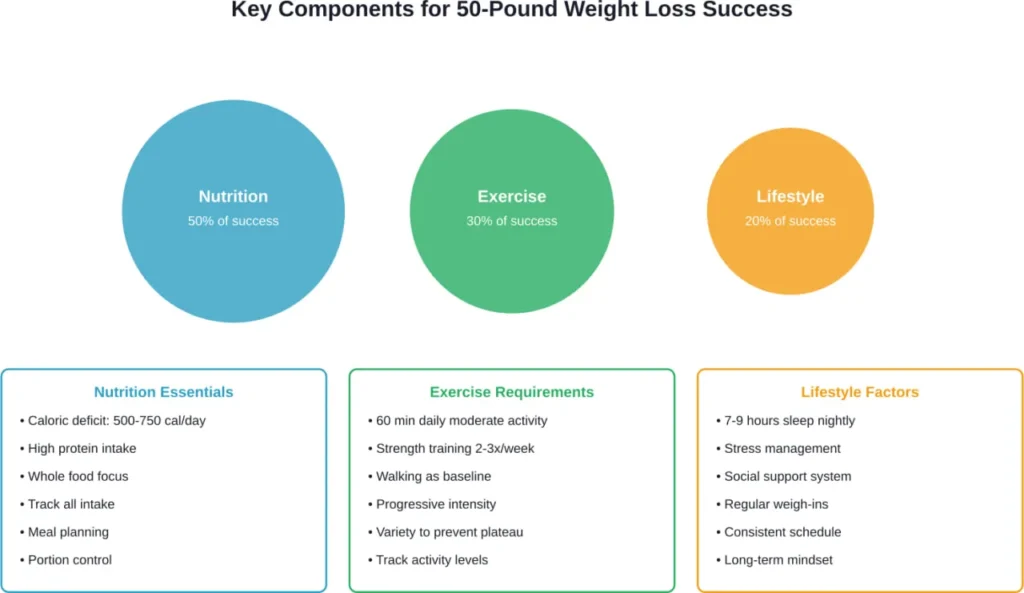
Diet modifications account for the majority of weight loss success. According to the American Heart Association, 98% of people who successfully maintain weight loss have modified their eating habits.
Focus on these evidence-based nutritional approaches:
- Track caloric intake – Research shows dietary self-monitoring strongly correlates with weight loss success
- Increase protein consumption – Higher protein intake helps preserve muscle mass during caloric restriction
- Prioritize whole foods – Fruits, vegetables, lean proteins, and whole grains provide satiety with fewer calories
- Manage carbohydrate quality – Carbohydrates should still comprise 45-65% of daily calories according to nutritional guidelines, but choosing complex carbs over refined options improves results
- Plan meals ahead – The American Heart Association notes that advance meal planning prevents impulsive, often unhealthy food choices
Research on meal replacement programs shows average weight loss of 7.0 kg (15.4 pounds) at six months with improvements in blood pressure and waist circumference.
| Dietary Approach | Daily Calorie Range | Medical Supervision | Expected Weekly Loss |
|---|---|---|---|
| Moderate calorie reduction | 1,200-1,500 (women)1,500-1,800 (men) | Not required | 1-2 pounds |
| Low-calorie diet | 800-1,200 | Recommended | 1.5-3 pounds |
| Very low-calorie diet | Under 800 | Required | 3-5 pounds |
| Meal replacement program | 1,200-1,500 | Not required | 1.5-3 pounds |
Physical Activity Requirements
The CDC reports that 94% of successful weight maintainers increased their physical activity, with walking being the most common form.
For significant weight loss, aim for these activity levels:
- Minimum baseline: 30 minutes of moderate activity daily
- Better results: 60 minutes of moderate-to-vigorous activity daily
- Optimal outcomes: 60-90 minutes of moderate activity or 30-45 minutes of vigorous activity daily
What counts as moderate activity? Brisk walking, recreational swimming, casual cycling, or active yard work. Vigorous activities include running, fast cycling, aerobic dance, or competitive sports.
Beyond Diet and Exercise
Weight management involves more than calories in versus calories out. The CDC identifies several supporting factors:
Sleep quality matters significantly. Insufficient sleep disrupts hunger hormones, increases cravings, and undermines willpower. Adults should target 7-9 hours nightly.
Stress management prevents emotional eating and reduces cortisol levels that promote fat storage, particularly around the midsection.
Behavioral strategies like keeping a food diary, measuring portions, and identifying eating triggers improve outcomes. Research on weight loss programs shows that participants who consistently self-monitored lost more weight than those who didn’t.
The Reality of Weight Loss Timelines
Weight loss rarely follows a straight line downward. Plateaus happen. Some weeks show no progress despite perfect adherence. Other weeks might reveal a sudden three-pound drop.
Several factors explain these fluctuations:
- Water retention from sodium intake, hormonal cycles, or inflammation
- Digestive transit time affecting scale weight
- Glycogen storage changes in muscles
- Natural metabolic adaptation to caloric restriction
Medical research shows that the body adapts to sustained caloric deficits by reducing metabolic rate. This doesn’t mean weight loss stops—it just slows. The initial pounds come off easier than the last ten.
[Image 2 could not be converted]
Weight loss typically follows this non-linear pattern with rapid initial progress followed by plateaus
Common Obstacles and How to Overcome Them
Half the battle isn’t knowing what to do—it’s maintaining consistency when life gets complicated.
The Plateau Problem
Weight plateaus frustrate even the most dedicated individuals. Weight loss may slow or plateau despite continued adherence to the program.
This happens because metabolic rate decreases as body mass decreases. A 150-pound person burns fewer calories at rest than a 200-pound person simply due to less tissue requiring energy.
Breaking through plateaus requires recalibration:
- Recalculate caloric needs based on current weight
- Increase exercise intensity or duration
- Vary workout types to challenge different muscle groups
- Ensure adequate protein intake to preserve muscle mass
- Consider a brief diet break (eating at maintenance for 1-2 weeks) before resuming the deficit
Social Situations and Special Events
Birthdays, holidays, work events, and dining out present repeated challenges. Complete avoidance isn’t realistic or sustainable.
Successful strategies include:
- Eating a protein-rich snack before events to reduce hunger
- Choosing restaurants where nutritional information is available
- Splitting entrees or boxing half before eating
- Limiting alcohol consumption (empty calories add up quickly)
- Not attempting to “save calories” all day for one big meal
Muscle Loss During Caloric Restriction
Losing weight too rapidly increases muscle loss alongside fat loss. Maintaining muscle matters because muscle tissue burns more calories at rest than fat tissue.
Preserve lean mass by:
- Consuming adequate protein (0.7-1.0 grams per pound of body weight)
- Including resistance training 2-3 times weekly
- Avoiding excessively low calorie intakes
- Spacing out weight loss over appropriate timeframes
Life After Losing 50 Pounds
Reaching the goal represents just half the journey. Maintenance proves harder than initial loss for most people.
The CDC compiled research on successful weight loss maintainers—people who lost significant weight and kept it off for years. Their common practices include:
- Continuing to eat a lower-calorie, healthy diet
- Maintaining high levels of physical activity (60-90 minutes most days)
- Regularly self-monitoring weight and food intake
- Eating breakfast consistently
- Limiting television and screen time
Studies show that weight regain is typical, with more than half of lost weight returning within two years. But this isn’t inevitable. Long-term success comes from recognizing that maintenance requires ongoing effort—the habits that created the loss must continue.
Warning Signs of Unhealthy Weight Loss
Aggressive weight loss can create health problems. Medical research from StatPearls identifies several risks associated with excessive weight loss:
- Nutritional deficiencies (vitamins, minerals, essential fatty acids)
- Gallstone formation (occurs in 10-25% of people losing large amounts of weight)
- Electrolyte imbalances
- Excessive muscle loss
- Fatigue and weakness
- Hair loss
- Irregular menstruation in women
- Decreased bone density
Consult healthcare providers before starting any weight loss program, especially when planning to lose more than 20 pounds. Medical supervision becomes essential for very low-calorie diets or when underlying health conditions exist.
Real-World Success Stories
Theory meets practice when examining actual cases of 50-pound losses over six months.
Community discussions reveal common themes among successful losers:
One individual emphasized the importance of stairs over elevators, noting that climbing stairs burns approximately 5 calories per flight. Over time, these small choices compound significantly.
Another focused on the marathon mindset rather than sprint mentality, recognizing that four pounds monthly would equal 48 pounds annually; a 50-pound loss over six months requires approximately 8.3 pounds monthly.
A third person highlighted the significance of consistent tracking, self-monitoring both food intake and physical activity throughout the journey.
These real experiences align with clinical research: sustainable weight loss requires multiple small changes maintained consistently rather than extreme restrictions that can’t be sustained.
| Success Factor | Percentage of Successful Maintainers | Implementation Strategy |
|---|---|---|
| Modified eating habits | 98% | Track food intake, plan meals, control portions |
| Increased physical activity | 94% | Daily walking, regular exercise routine |
| Regular self-monitoring | 75% | Weekly weigh-ins, food diary |
| Eating breakfast | 78% | Consistent morning meal with protein |
| Limited screen time | 62% | Reduce TV watching, avoid eating while viewing |
Putting It All Together: A 6-Month Action Plan
Turning theory into practice requires a structured approach. Here’s what a realistic plan looks like:
Month 1: Foundation Building
- Calculate current caloric needs and establish 500-750 calorie daily deficit
- Begin tracking all food and beverage intake
- Start walking 20-30 minutes daily
- Establish consistent meal schedule
- Expected loss: 8-12 pounds (includes initial water weight)
Months 2-3: Routine Development
- Increase daily activity to 45-60 minutes
- Add strength training 2-3 times weekly
- Continue dietary tracking with focus on protein adequacy
- Identify and address emotional eating triggers
- Expected cumulative loss: 20-28 pounds
Months 4-5: Plateau Management
- Recalculate caloric needs based on new lower weight
- Vary exercise routine to prevent adaptation
- Maintain high activity levels (60+ minutes daily)
- Focus on non-scale victories (measurements, fitness improvements)
- Expected cumulative loss: 32-42 pounds
Month 6: Final Push and Transition Planning
- Maintain established eating and activity patterns
- Begin developing maintenance strategies
- Address remaining obstacles to long-term success
- Schedule post-weight loss medical check-up
- Target cumulative loss: 48-52 pounds
Frequently Asked Questions
Not necessarily. According to CDC guidelines, healthy weight loss occurs at 1-2 pounds weekly, which equals 26-52 pounds over six months. Losing 50 pounds falls within this recommended range. However, individual circumstances matter—consulting a healthcare provider before beginning ensures the approach suits specific health conditions and needs.
This depends on current weight, age, gender, and activity level. Generally, creating a 1,000-calorie daily deficit through combined diet and exercise produces approximately 2 pounds of weekly loss. For most adults, this means consuming 1,200-1,800 calories daily while maintaining regular physical activity. Calorie needs should be recalculated as weight decreases.
Technically possible through dietary restriction alone, but not recommended. The American Heart Association reports that 94% of successful weight maintainers increased physical activity. Exercise helps preserve muscle mass, boosts metabolism, provides cardiovascular benefits, and makes long-term maintenance significantly easier. Combining diet with activity produces better outcomes than either approach alone.
Skin response varies based on age, genetics, weight loss speed, and how long someone carried excess weight. Younger individuals with better skin elasticity typically see more skin retraction. Losing weight gradually, staying hydrated, strength training to build muscle, and maintaining proper nutrition can help. Some loose skin may remain, particularly after larger weight losses or in older individuals.
Yes, metabolic rate decreases as body mass decreases—smaller bodies require fewer calories to maintain basic functions. Additionally, the body adapts to sustained caloric restriction by becoming more metabolically efficient. This doesn’t prevent continued weight loss, but it does mean calorie needs must be recalculated periodically. Preserving muscle mass through protein intake and resistance training helps minimize metabolic slowdown.
Research on weight maintenance shows several critical factors: continuing to eat a healthy lower-calorie diet, maintaining high physical activity levels (60-90 minutes most days), regular self-monitoring of weight and food intake, eating breakfast consistently, and limiting screen time. The habits that created weight loss must continue—maintenance isn’t automatic. The CDC notes that more than half of lost weight typically returns within two years without sustained lifestyle changes.
No single diet proves superior for everyone. Medical research shows that various approaches—low-fat, low-carb, ketogenic, Mediterranean, intermittent fasting—can all produce weight loss when they create a caloric deficit. The best diet is one that’s sustainable, nutritionally adequate, and matches personal preferences and lifestyle. Extremely restrictive approaches may produce faster initial results but often fail long-term due to poor adherence. Focus on finding an eating pattern that works indefinitely rather than following temporary restrictions.
The Bottom Line: Is 50 Pounds in 6 Months Realistic?
Yes, losing 50 pounds over six months is both possible and medically appropriate when approached correctly. It requires dedication, consistency, and realistic expectations about the challenges ahead.
The path forward involves creating a sustainable daily caloric deficit through balanced dietary changes and increased physical activity. This isn’t about extreme restriction or punishing workout routines—it’s about making moderate changes and maintaining them consistently over time.
Success requires more than just knowledge. It demands preparation for plateaus, strategies for social situations, ongoing self-monitoring, and recognition that maintenance presents its own distinct challenge.
But here’s what makes it worthwhile: even modest weight loss produces significant health improvements. The CDC notes that losing just 5-10% of body weight can improve blood pressure, cholesterol, and blood sugar levels. A 50-pound loss for someone starting at 250 pounds represents 20% body weight reduction—creating substantial health benefits that extend far beyond appearance.
The journey won’t be perfectly linear. Some weeks will show frustrating plateaus. Others will reveal surprising progress. The key lies in maintaining perspective: this isn’t a sprint with a finish line, but rather the beginning of permanent lifestyle changes that support long-term health.
Ready to start? Begin with small, manageable changes. Track food intake for awareness. Add 20 minutes of daily walking. Focus on protein at each meal. Build gradually from there.
The destination matters, but the sustainable habits developed along the way matter more. Those habits determine whether the weight stays off for years—or returns within months.