

Quick Summary: Yes, losing inches without weight loss is completely normal and often indicates positive body composition changes. This happens when fat mass decreases while lean muscle increases simultaneously—a process called body recomposition. Water retention, measurement timing, and metabolic adaptations can also mask fat loss progress on the scale.
The scale hasn’t budged in weeks. Yet your jeans fit looser, your shirts feel less snug, and people keep asking if you’ve lost weight.
Sound familiar? You’re not alone—and you’re definitely not crazy.
This frustrating phenomenon happens to countless people working toward better health. But here’s the thing: losing inches without dropping pounds isn’t just normal. It’s often a sign that your body is making exactly the kind of changes you want.
Understanding Body Composition vs. Scale Weight
The number on your bathroom scale tells an incomplete story. That single digit represents your total body mass—everything from bones and organs to muscle tissue, body fat, water, and even the food in your digestive system.
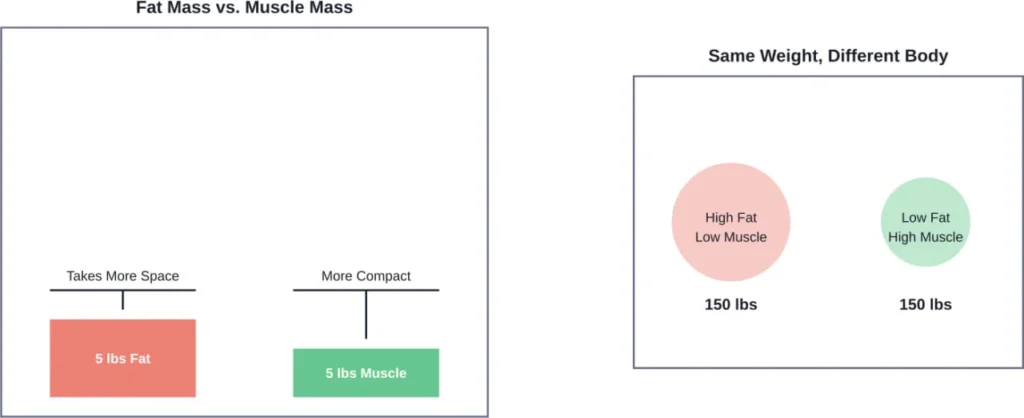
Body composition, on the other hand, breaks down what your body is actually made of. Two people can weigh exactly the same yet look completely different based on their muscle-to-fat ratio.
According to research published by the National Institutes of Health, weight loss alone doesn’t accurately predict improvements in body composition, particularly fat mass loss. The study examined individuals at a wellness center and found significant variation in how weight changes correlated with actual fat loss.
Muscle tissue is denser than fat tissue. Muscle tissue is denser than fat tissue, meaning muscle takes up less space than fat for the same weight. This density difference explains why someone can drop clothing sizes while maintaining the same weight.
Body Recomposition: Losing Fat While Gaining Muscle
The most common reason for losing inches but not weight is body recomposition—simultaneously reducing fat mass while building lean muscle mass.
This process happens most effectively when combining strength training with adequate protein intake. Resistance exercises create micro-tears in muscle fibers. During recovery, the body repairs and builds these fibers stronger and larger.
Research indicates that resistance training can be effective for fat mass loss as part of a comprehensive approach. When incorporated into a structured program, full-body resistance training can be particularly effective for changing body composition.
Who Experiences Body Recomposition Most?
Certain groups tend to see more pronounced recomposition effects:
- Beginners starting strength training for the first time
- People returning to exercise after a break
- Those increasing protein intake significantly
- Individuals with higher initial body fat percentages
The phenomenon occurs because these groups have greater potential for both muscle growth and fat loss happening simultaneously. More experienced lifters typically find it harder to build muscle while in a calorie deficit.
Water Retention: The Hidden Weight Fluctuation Factor
Water retention can mask fat loss progress for days or even weeks. The human body constantly adjusts its water balance based on numerous factors, and these fluctuations can easily overshadow genuine fat loss on the scale.
Several common triggers cause temporary water retention:
- High sodium intake from processed or restaurant foods
- Hormonal changes during menstrual cycles
- New or intensified exercise routines causing inflammation
- Certain medications including NSAIDs and blood pressure drugs
- Inadequate water intake (paradoxically, dehydration triggers retention)
- Extended periods of sitting or standing
According to the CDC, waist circumference measurements provide valuable data beyond simple weight. Research examining factors affecting obesity and waist circumference found that among 4,118 adults studied, 39% were obese by BMI standards while 55% had high-risk waist measurements—demonstrating that different metrics tell different stories.
Water weight can fluctuate by several pounds daily. Someone might lose half a pound of actual fat in a week, but if they’re retaining three pounds of water from a salty meal or hormonal shift, the scale shows a gain instead.
Metabolic Adaptation and Weight Loss Plateaus
The body adapts to sustained calorie restriction by reducing metabolic rate. This protective mechanism, sometimes called adaptive thermogenesis, helped ancestors survive famines but frustrates modern dieters.
As weight loss progresses, several changes occur:
- Basal metabolic rate decreases as total body mass reduces
- The body becomes more efficient at using energy
- Non-exercise activity thermogenesis (NEAT) often decreases unconsciously
- Hormones regulating hunger and satiety shift unfavorably
Research published in Nutrients examining body composition changes during weight loss found that maintaining lean body mass becomes increasingly important. The study noted that with significant portions of the U.S. adult population either overweight or obese, many weight loss strategies result in both fat and muscle loss—which further slows metabolism.
But here’s what matters: metabolic adaptation doesn’t mean fat loss stops. It means the rate slows. Someone still losing inches during a scale plateau is likely still losing fat, just at a pace that water retention and muscle gain can obscure.
Measurement Timing and Accuracy Issues
When and how you measure matters significantly. Scale weight varies throughout the day based on food intake, hydration status, bathroom habits, and even clothing.
For consistent measurements:
- Weigh at the same time each day (morning after bathroom, before eating works best)
- Use the same scale on the same surface
- Wear similar clothing or none at all
- Track trends over weeks, not daily fluctuations
Scale accuracy presents another issue. Home bathroom scales can drift out of calibration over time. Some scales show different readings on carpet versus hard floors, or if positioned slightly differently.
Inch measurements, while more stable than weight, also require consistency. Measuring the same body locations at the same tension level matters. Taking measurements relaxed versus flexed, or slightly above versus below the belly button, can yield different numbers.
Better Ways to Track Progress Beyond the Scale
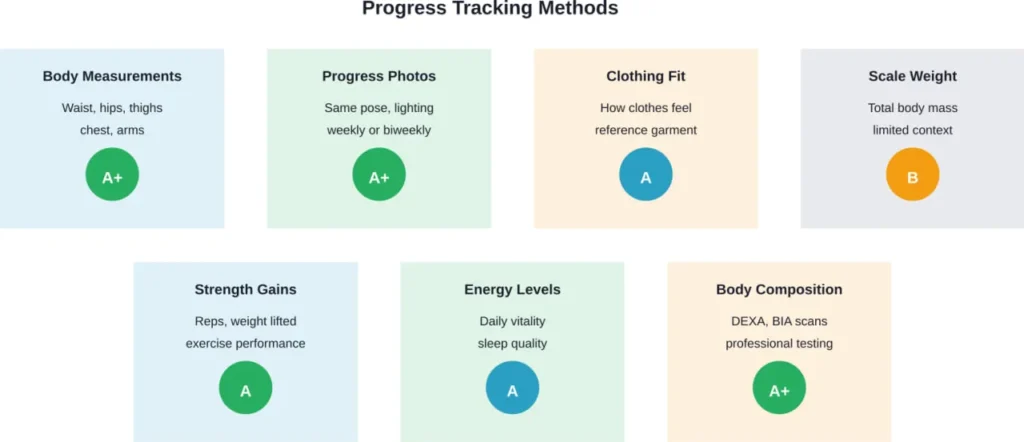
The scale provides one data point. Smart tracking incorporates multiple metrics that together reveal the full picture of body composition changes.
Body Measurements
Circumference measurements at key body locations provide concrete data about size changes. Track these consistently:
- Waist (at belly button level, relaxed)
- Hips (at widest point)
- Chest (across nipple line)
- Thighs (mid-thigh, same spot each time)
- Upper arms (flexed and unflexed)
Take measurements every 2-4 weeks rather than weekly. Changes happen gradually enough that weekly measurements often show no difference, leading to unnecessary frustration.
Progress Photos
Visual documentation reveals changes that measurements might miss. The human eye processes overall appearance differently than numbers can convey.
For useful progress photos: wear the same fitted clothing, use the same location and lighting, take photos at the same time of day, and shoot from multiple angles (front, side, back). Monthly photos typically show more obvious differences than weekly ones.
Strength and Performance Metrics
Increasing strength indicates muscle development. If someone’s lifting heavier weights, completing more repetitions, or performing exercises that were previously impossible, their body composition is improving regardless of scale weight.
Track workout performance through training logs. Note weights lifted, reps completed, or cardio endurance improvements. These performance gains often correlate with positive body composition changes.
Professional Body Composition Testing
Several methods can measure body composition more accurately than home scales:
| Method | Accuracy | Cost | Availability |
|---|---|---|---|
| DEXA Scan | Highest | $50-150 | Medical facilities, research centers |
| Hydrostatic Weighing | Very High | $40-75 | Universities, specialty facilities |
| Bod Pod | High | $40-75 | Universities, some gyms |
| BIA Devices | Moderate | $30-100 (home) / Free (gym) | Widely available |
| Skinfold Calipers | Moderate | $5-30 | Widely available |
Research from the National Institutes of Health on current body composition measurement techniques notes that bioelectrical impedance analysis (BIA) devices measure total body water and estimate fat-free mass assuming constant hydration of fat-free mass. While convenient, accuracy varies based on hydration status and device quality.
When Losing Inches But Not Weight Becomes Concerning
Generally speaking, losing inches without weight loss is positive. But certain scenarios warrant attention.
If measurements are decreasing but weight is increasing significantly (more than 2-3 pounds over several weeks), and muscle gain doesn’t explain it, consider checking with a healthcare provider. Some medical conditions affect body composition and fluid balance.
Rapid measurement changes without corresponding lifestyle modifications might indicate measurement errors or underlying health issues requiring professional evaluation.
According to the CDC’s guidance on healthy weight and diabetes, losing just 5-10% of body weight can improve health markers significantly. For someone weighing 200 pounds, that’s 10-20 pounds—but the improvements come from fat loss specifically, not just weight reduction.
How to Optimize Body Recomposition
Intentionally pursuing body recomposition requires specific strategies that differ from pure weight loss approaches.
Prioritize Protein Intake
Adequate protein supports muscle maintenance and growth during calorie deficits. Higher protein intake is associated with better preservation of lean mass during weight loss.
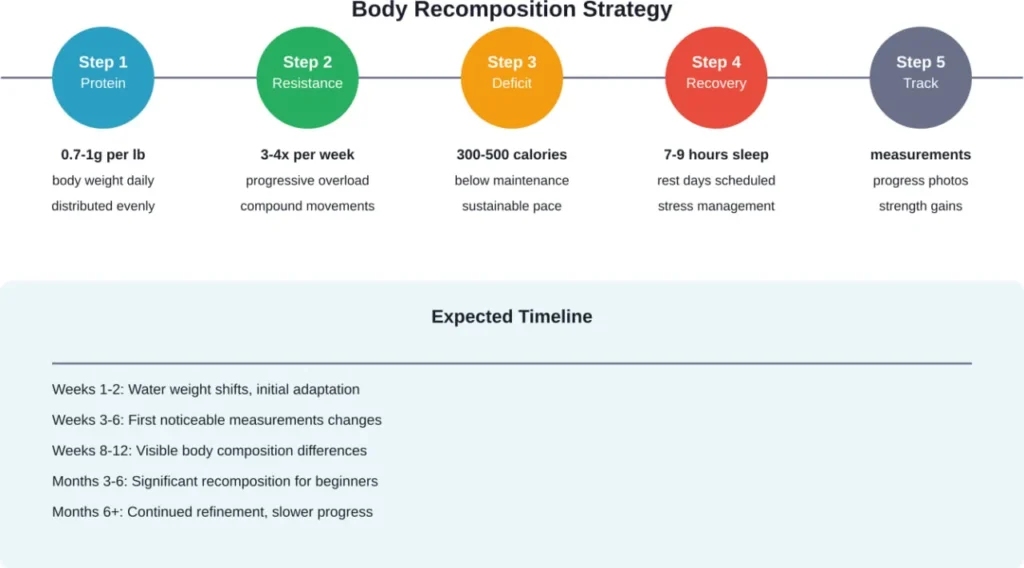
Target roughly 0.7-1.0 grams of protein per pound of body weight daily. Someone weighing 150 pounds would aim for 105-150 grams daily. Distribute protein across meals rather than concentrating it all at dinner.
Implement Progressive Resistance Training
Building muscle requires progressively challenging muscles over time. This means gradually increasing weight, reps, sets, or exercise difficulty.
Full-body resistance training performed 3-4 times weekly proves effective for most people. Research from the National Institutes of Health found that full-body routines can promote greater fat mass loss than split routines in certain contexts.
Maintain a Moderate Calorie Deficit
Aggressive calorie restriction makes simultaneous muscle gain and fat loss nearly impossible for most people. Moderate deficits of 300-500 calories daily allow fat loss while providing enough energy for muscle building.
Research suggests that moderate weight loss rates may help preserve lean body mass better than rapid loss rates.
Manage Recovery and Sleep
Muscle growth happens during recovery, not during workouts. Inadequate sleep impairs both fat loss and muscle building through hormonal disruptions affecting cortisol, testosterone, and growth hormone.
Aim for 7-9 hours of quality sleep nightly. Schedule rest days between intense training sessions to allow proper recovery.
Common Mistakes That Stall Progress
Several missteps can slow or prevent the body composition improvements people seek.
Excessive Cardio, Insufficient Resistance Training
While aerobic exercise burns calories and improves cardiovascular health, it doesn’t build muscle effectively. Different training modalities produce different body composition results, with resistance training supporting muscle development.
Relying solely on cardio for weight loss often results in losing both fat and muscle, which worsens body composition and slows metabolism.
Inadequate Protein Consumption
Many people don’t consume enough protein to support muscle maintenance, let alone growth. Without adequate amino acids, the body can’t rebuild muscle tissue effectively after resistance training.
Tracking protein intake for a few days often reveals consumption well below optimal levels. Increasing protein to recommended amounts frequently improves results noticeably.
Overly Aggressive Calorie Restriction
Severe calorie deficits trigger metabolic adaptations and muscle loss. The body prioritizes survival over aesthetics, breaking down metabolically active muscle tissue when it perceives starvation.
Research confirms that energy deficit drives fat loss regardless of method, but the size and sustainability of that deficit affects whether lean mass is preserved or lost alongside fat.
Inconsistent Tracking or Measurement
Taking measurements at different times, under different conditions, or at different body locations creates false data. Someone might think they’ve lost inches when they’ve simply measured slightly higher on their waist, or they might miss genuine progress by weighing at different times of day.
Establish specific protocols and follow them consistently. The accuracy of individual measurements matters less than the consistency that allows valid comparisons over time.
Frequently Asked Questions
Most people notice their first measurement changes within 3-6 weeks of consistent training and nutrition. Visible changes in photos typically appear around 8-12 weeks. Beginners often see faster initial results than experienced lifters. Patience is essential—body recomposition happens more slowly than pure weight loss but produces better long-term outcomes.
Yes, simultaneous fat loss and muscle gain is possible, especially for beginners, people returning from breaks, those significantly increasing protein intake, and individuals with higher body fat percentages. Advanced lifters find it more challenging and typically need to cycle between dedicated muscle-building and fat-loss phases. Research confirms body recomposition occurs under the right conditions of resistance training, adequate protein, and moderate calorie deficits.
Absolutely normal, and often a positive sign. It typically indicates fat loss accompanied by muscle gain or water retention masking scale progress. The National Institutes of Health research confirms that weight loss alone doesn’t accurately predict improvements in body composition. Focus on multiple metrics rather than scale weight exclusively.
Measure body circumferences every 2-4 weeks. Weekly measurements often show minimal changes that can be discouraging. Weigh yourself weekly or daily (then average the week) if scale weight matters to you, but understand daily fluctuations. Take progress photos monthly. Test strength improvements each workout. This combination provides comprehensive feedback without obsessive monitoring.
Losing inches matters more for most health and aesthetic goals. Inch loss indicates actual fat reduction and improved body composition. Scale weight includes everything—muscle, fat, water, food, waste—making it less meaningful. The CDC emphasizes that waist circumference provides valuable health data beyond BMI. Someone maintaining weight while losing inches is likely improving their body composition significantly.
Not necessarily, but weigh yourself less frequently and in proper context. Weekly weigh-ins can provide useful data when combined with other metrics. Daily weigh-ins work if you track trends rather than fixating on individual readings. If scale numbers cause excessive stress despite positive changes elsewhere, temporarily stepping away can benefit mental health. The key is treating weight as one data point among many, not the primary success indicator.
Generally speaking, this pattern indicates positive changes. However, consult a healthcare provider if experiencing unexplained rapid measurement changes without corresponding lifestyle modifications, significant weight gain alongside inch loss (beyond a few pounds explainable by muscle), persistent swelling or edema, or other unusual symptoms. These could occasionally indicate medical conditions requiring evaluation, though most cases simply reflect beneficial body recomposition.
The Bottom Line
Losing inches but not weight isn’t just possible—it’s common and often ideal. This pattern typically signals fat loss accompanied by muscle gain through body recomposition, temporary water retention, or both.
The scale tells an incomplete story. Body composition—the ratio of muscle to fat—matters far more than total weight for health, function, and appearance. Research from authoritative sources including the National Institutes of Health confirms that weight changes alone don’t accurately predict fat loss or body composition improvements.
Track multiple metrics: body measurements, progress photos, clothing fit, strength improvements, and energy levels alongside scale weight. This comprehensive approach reveals the full picture of progress that any single metric might miss.
For optimal body recomposition, combine progressive resistance training with adequate protein intake (0.7-1g per pound of body weight), maintain moderate calorie deficits (300-500 calories daily), prioritize recovery and sleep, and remain consistent for at least 8-12 weeks before expecting dramatic visible changes.
If your jeans fit better, your strength is increasing, and you feel healthier despite unchanged scale weight, you’re succeeding. The number on the scale is just one measurement—and often not the most meaningful one.
Ready to move beyond scale obsession? Start tracking body measurements and progress photos this week. Focus on strength gains in your workouts. Give your body 8-12 weeks of consistent effort before judging results. The changes happening inside your body matter far more than the number displayed on your bathroom scale.