

Quick Summary: Eating too much protein can strain your kidneys, cause digestive issues like constipation, lead to dehydration, and increase cardiovascular risks in certain populations. Most people need 0.8 grams per kilogram of body weight daily, though athletes may need more. Excessive protein intake offers no additional health benefits and may displace important nutrients like fiber from your diet.
Walk into any grocery store and you’ll notice protein everywhere. Protein water. Protein cereal. Protein-packed coffee creamer. Social media influencers tout high-protein diets as the secret to weight loss, muscle gain, and better health.
But here’s the thing: more isn’t always better.
While protein plays essential roles in building muscle, supporting immune function, and keeping you satisfied between meals, consuming excessive amounts can actually harm your health. According to the National Library of Medicine, protein should make up 10 to 35% of your daily calories—yet many people now consume well beyond this range, influenced by fitness trends and marketing hype.
So what really happens when you go overboard? The answer is more complicated than you might think.
Why Protein Matters (and Why Everyone’s Obsessed)
Protein is essential. It builds and repairs tissues, produces enzymes and hormones, and serves as a building block for bones, muscles, skin, and blood. Without adequate protein, the body can’t function properly.
The current recommendation for most adults is 0.8 grams of protein per kilogram of body weight. For a 150-pound (68 kg) person, the baseline recommendation would be approximately 54 grams daily. Athletes and highly active individuals may need more—perhaps 1.2 to 2.0 grams per kilogram, according to research from Harvard nutritionists.
But social media has amplified protein messaging to extreme levels. The “protein craze” of 2025-2026 has pushed consumption far beyond what most bodies actually need. Food companies highlight protein content on packaging to boost sales, even for products that traditionally weren’t protein sources.
The result? Many people are consuming protein well above recommended levels, often without realizing the potential consequences.
What Happens When You Eat Too Much Protein
Excessive protein consumption triggers several physiological responses, not all of them beneficial. Here’s what the science reveals.
Kidney Strain and Filtration Issues
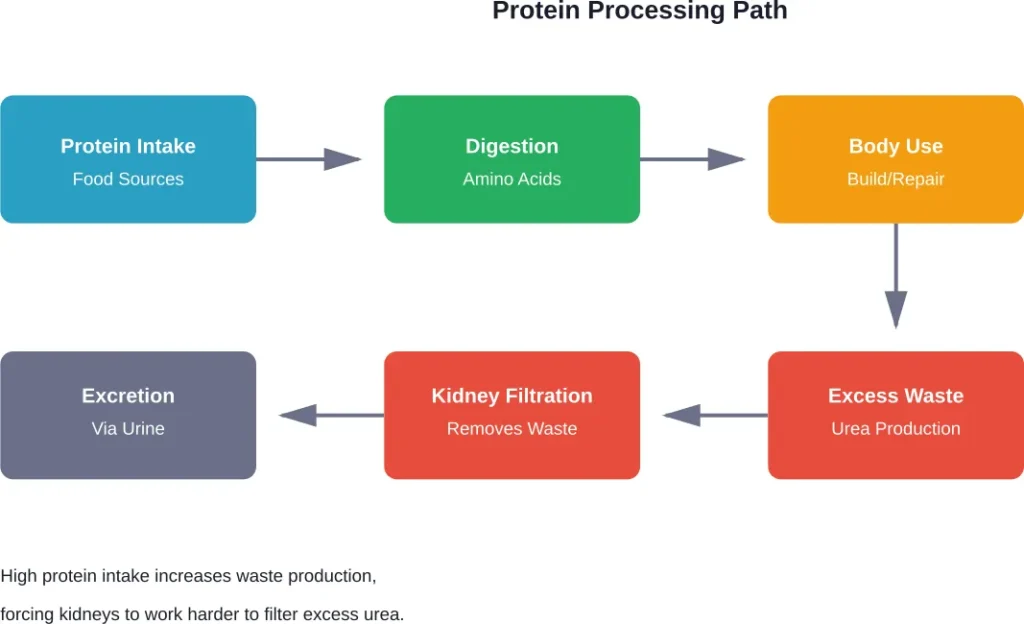
Your kidneys filter waste products from protein metabolism. When you consume more protein than your body needs, your kidneys work overtime to remove excess nitrogen and other byproducts.
Research published in 2025 examining data from the National Health and Nutrition Examination Survey found concerning associations between dietary protein intake and mortality in individuals with different kidney function levels. For people with reduced estimated glomerular filtration rate—a measure of kidney function—high protein intake showed increased health risks.
The kidneys must process and excrete urea, a waste product of protein breakdown. Consuming excessive protein means producing excessive urea, forcing kidneys into constant overdrive. Over time, this can strain kidney function, particularly in people with existing kidney disease or reduced kidney capacity.
Digestive Problems and Gut Health
High-protein diets often crowd out other essential nutrients, particularly fiber. When you fill up on protein-rich foods, you typically eat fewer fruits, vegetables, and whole grains—the primary sources of dietary fiber.
The consequence? Constipation and other digestive issues.
Fiber is crucial for healthy digestion, gut motility, and preventing disease. More than 70% of the sodium Americans consume comes from packaged and prepared foods, according to CDC data. The fiber deficit caused by excessive protein consumption is also concerning for long-term health.
Without adequate fiber, the digestive system struggles. Bowel movements become irregular and uncomfortable. The gut microbiome—which thrives on fiber—suffers, potentially affecting everything from immune function to mental health.
Dehydration Risks
Protein metabolism requires water. Lots of it.
When your body breaks down protein, it must flush out nitrogen through urine. This process demands increased fluid intake to prevent dehydration. People consuming high-protein diets without adjusting their water intake often experience dehydration symptoms: fatigue, headaches, dark urine, and decreased performance.
Athletes who increase protein intake without increasing hydration put themselves at particular risk. The body prioritizes removing protein waste products, which can pull water from other tissues and functions.
Cardiovascular Concerns
Some research has examined associations between dietary protein intake and cardiovascular outcomes. The relationship between protein intake and cardiovascular risk varies based on protein source and individual health factors.
The source of protein matters significantly here. Animal proteins, particularly red and processed meats, carry higher cardiovascular risks than plant proteins. A meta-analysis of chronic kidney disease patients found that increased plant protein intake was associated with statistically significant reductions in total cholesterol (−24.51 mg/dL, 95% CI −40.33, −8.69) and low-density lipoprotein cholesterol (−21.71 mg/dL, 95% CI −38.32, −5.1).
Animal proteins often come packaged with saturated fats and cholesterol, which contribute to arterial plaque buildup. Plant proteins, conversely, contain fiber and beneficial compounds that support heart health.
How Much Protein Do You Actually Need?
The answer depends on several factors: age, activity level, health status, and goals.
| Population Group | Recommended Protein Intake | Notes |
|---|---|---|
| Average Adult | 0.8 g/kg body weight | Baseline recommendation |
| Athletes | 1.2-2.0 g/kg body weight | Depends on training intensity |
| Older Adults | 1.0-1.2 g/kg body weight | Helps maintain muscle mass |
| Chronic Kidney Disease | 0.6-0.8 g/kg body weight | Reduced to ease kidney burden |
According to a Harvard nutritionist, a 110-pound female athlete might need an additional 20-25 grams of protein beyond the baseline calculation. For a 110-pound person, baseline would be approximately 40 grams, making the athlete total roughly 60-65 grams daily.
That’s far less than what social media influencers often suggest.
Signs You’re Eating Too Much Protein
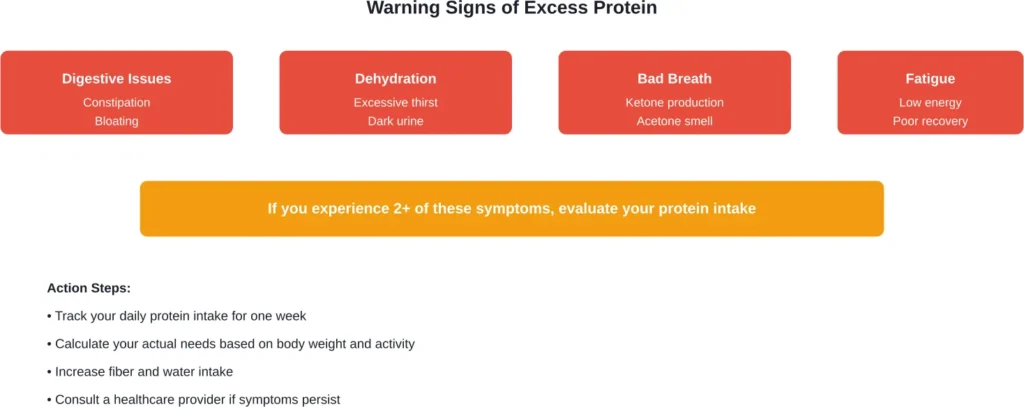
Your body sends signals when protein intake exceeds healthy levels. Watch for these indicators:
Persistent Digestive Issues
Constipation, bloating, and irregular bowel movements often signal too much protein and insufficient fiber. If you’re experiencing ongoing gut discomfort, examine your protein-to-fiber ratio.
Constant Thirst and Dark Urine
Excessive thirst despite adequate water intake, combined with consistently dark urine, suggests your kidneys are working overtime to process protein waste. These are classic dehydration markers related to high protein metabolism.
Bad Breath
When the body enters ketosis from very high protein intake (particularly in low-carb, high-protein diets), it produces ketones that cause a distinctive, unpleasant breath odor. This acetone-like smell indicates your body is burning protein for energy rather than using it for tissue repair.
Unexplained Fatigue
While protein should provide sustained energy, excessive amounts can actually cause fatigue. The body expends considerable energy processing and eliminating excess protein, leaving less available for daily activities.
Where You Get Protein Matters
Not all protein sources affect the body equally. The package matters as much as the protein itself.
Animal vs. Plant Proteins
Animal proteins deliver complete amino acid profiles but often come with saturated fats, cholesterol, and other compounds that increase cardiovascular risk. Red and processed meats show the strongest negative associations with health outcomes.
Plant proteins—from beans, lentils, nuts, seeds, and whole grains—provide fiber, antioxidants, and beneficial plant compounds alongside protein. Research consistently shows plant protein intake associates with better cardiovascular outcomes and lower mortality risk.
A balanced approach incorporating both sources, with emphasis on plant proteins, aligns with recommendations from the World Health Organization and CDC for healthy eating patterns.
Whole Foods vs. Supplements
Protein powders and supplements have become ubiquitous. But Harvard researchers warn about potential issues with these products, including added sugars, calories, and even toxic chemical contamination in some brands.
Whole food protein sources provide more than just amino acids. They deliver vitamins, minerals, fiber, and other nutrients that work synergistically. A piece of grilled chicken provides protein plus B vitamins, selenium, and phosphorus. A serving of lentils delivers protein plus iron, folate, and substantial fiber.
Supplements can be convenient, but they shouldn’t replace whole foods as primary protein sources.
Finding Your Protein Balance
The optimal protein intake balances adequate consumption with dietary diversity.
Calculate your baseline needs using the 0.8 grams per kilogram formula. If you’re highly active, adjust upward to 1.2-1.6 grams per kilogram. Track your intake for several days to see where you actually stand.
Prioritize protein quality over quantity. Choose lean meats, fish, eggs, dairy, legumes, nuts, and seeds. Vary your sources throughout the week to ensure diverse amino acid and nutrient profiles.
Don’t neglect other nutrients. Ensure you’re consuming adequate fiber, healthy fats, and complex carbohydrates. These work together to support overall health and optimal body function.
Stay hydrated. If you consume higher protein amounts, increase water intake proportionally to support kidney function and waste removal.
Who Should Be Especially Careful?
Some populations face greater risks from excessive protein consumption.
People with existing kidney disease or reduced kidney function should work closely with healthcare providers to determine appropriate protein levels. Research from 2025 shows clear associations between protein intake and mortality risk in individuals with different kidney function levels.
Older adults need adequate protein to maintain muscle mass, but excessive amounts may strain aging kidneys. The balance requires individual assessment based on overall health status.
Individuals with cardiovascular disease or risk factors should pay particular attention to protein sources, favoring plant proteins over animal sources, especially red and processed meats.
Frequently Asked Questions
For most healthy adults, consuming more than 2.0 grams per kilogram of body weight daily qualifies as excessive. For a 150-pound (68 kg) person, that’s roughly 136 grams. Going beyond this threshold offers no additional benefits and increases risks of kidney strain, dehydration, and nutrient imbalances. People with kidney disease should consume even less, typically 0.6-0.8 grams per kilogram.
In healthy individuals, temporarily high protein intake likely won’t cause permanent kidney damage. However, consistently excessive protein consumption over years may contribute to declining kidney function, especially in people with pre-existing conditions or genetic susceptibility. Research from the National Health and Nutrition Examination Survey shows clear associations between high protein intake and mortality in individuals with reduced kidney function.
Protein increases satiety and has a higher thermic effect than carbohydrates or fats, meaning your body burns more calories digesting it. However, consistent resistance training is what truly drives body composition changes, not protein alone. Excessive protein won’t accelerate weight loss and may displace other important nutrients. A moderate protein increase within recommended ranges can support weight management when combined with appropriate exercise and calorie control.
Watch for persistent constipation, bloating, excessive thirst despite adequate water intake, dark urine, bad breath with an acetone-like smell, and unexplained fatigue. These symptoms suggest your body is struggling to process excessive protein. If you experience multiple symptoms, track your daily protein intake and compare it to recommended levels for your body weight and activity level.
Both provide essential amino acids, but plant proteins offer additional benefits including fiber, antioxidants, and lower cardiovascular risk. Research shows plant protein intake associates with reduced cholesterol levels and better heart health outcomes compared to animal proteins, particularly red and processed meats. A balanced approach emphasizing plant proteins while including moderate amounts of lean animal proteins aligns with current health recommendations.
Protein shakes count toward your total daily intake. A typical protein shake contains 20-30 grams of protein. If you’re consuming multiple shakes daily plus protein-rich meals, you can easily exceed recommended levels. Harvard researchers note that protein supplements may contain added sugars, calories, and potentially harmful contaminants. Whole food sources should provide the majority of your protein intake.
Yes, though protein needs vary by age and growth stage. Children need adequate protein for development, but excessive amounts offer no benefits and may displace other essential nutrients. The WHO emphasizes that healthy dietary practices start early in life, establishing patterns that affect lifelong health. Parents should focus on balanced nutrition rather than protein maximization, offering diverse whole foods appropriate for their child’s age and activity level.
The Bottom Line on Protein Consumption
Protein is essential, but the current obsession with maximizing intake has gone too far for many people.
Most individuals consume adequate—or even excessive—protein without trying. The marketed need for protein-fortified everything stems more from commercial interests than nutritional science.
Real talk: your body can only use so much protein. Beyond that threshold, you’re just creating expensive urine and potentially harming your kidneys, digestion, and cardiovascular system.
Focus on meeting—not exceeding—your actual protein needs based on body weight and activity level. Prioritize quality sources, especially plant proteins. Ensure adequate intake of fiber, healthy fats, and other nutrients that often get crowded out by protein obsession.
Balance matters more than maximization. Your body will thank you for it.
Ready to optimize your nutrition? Track your current intake for a week, calculate your actual needs, and adjust accordingly. Consider consulting a registered dietitian for personalized guidance based on your specific health status, goals, and circumstances.