

Quick Summary: Taking too much melatonin typically causes mild symptoms like drowsiness, headache, nausea, and dizziness rather than life-threatening toxicity. While melatonin overdose is generally not dangerous, excessive doses can disrupt sleep-wake cycles and cause next-day grogginess. If someone takes a large amount, monitoring symptoms and contacting poison control is recommended, though serious medical emergencies are rare.
Melatonin usage among American adults increased from 0.4% in 1999-2000 to 2.1% by 2017-2018, according to the National Institutes of Health. As more people turn to this hormone for sleep support, questions about safety naturally arise.
Melatonin overdose looks very different from what most people imagine when they hear the word “overdose.”
Understanding Melatonin and How It Works
Melatonin is a hormone your brain produces naturally in response to darkness. According to the National Institutes of Health, it helps regulate your 24-hour circadian rhythm and signals when it’s time for sleep. The natural rise of melatonin occurs in the early evening and sends a message for the body to prepare for sleep in approximately three hours.
Synthetic melatonin supplements mimic this natural hormone. They’re available over-the-counter in the United States, though melatonin has a completely different regulatory status in Europe, where it’s often restricted.
The supplement interacts with MT1 and MT2 receptors in your brain, helping regulate sleep-wake cycles. Research from StatPearls indicates melatonin also exhibits anti-inflammatory properties and plays roles beyond sleep regulation, though these effects aren’t fully understood.
What Constitutes a Melatonin Overdose?
Here’s where things get interesting. There’s no officially established toxic dose for melatonin.
The National Center for Complementary and Integrative Health reports that melatonin appears to have relatively mild toxicity. Case reports document people surviving extremely high doses without severe consequences.
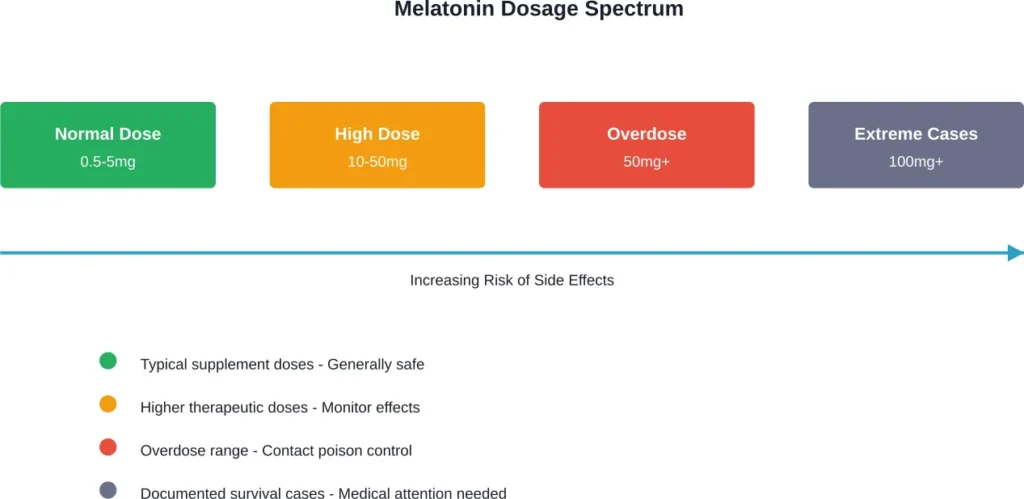
One documented case involved a 16-year-old male who intentionally overdosed on 900mg of melatonin. The patient regained consciousness 32 hours post-ingestion after gastric lavage was performed. Another case described a 2-year-old boy who swallowed up to 138 milligrams (mg) of melatonin over an hour. He slept for a couple of hours and was then fine.
Standard melatonin doses typically range from 0.5mg to 5mg. The NHS recommends starting with 2mg slow-release tablets, taken 30 minutes to one hour before bedtime. Some prescriptions may increase to 2-3 tablets depending on effectiveness.
So while taking 10-20 times the recommended dose is technically an overdose, it rarely produces the dramatic effects associated with other substances.
Common Symptoms of Taking Too Much Melatonin
When someone takes excessive melatonin, the symptoms mirror and amplify the supplement’s normal effects. The most commonly reported symptoms include:
- Excessive drowsiness and fatigue
- Headaches
- Dizziness and disorientation
- Nausea and upset stomach
- Irritability or mood changes
- Next-day grogginess
According to Poison Control data, melatonin was the leading substance reported to the webPOISONCONTROL online tool in 2020. Despite this high reporting rate, toxicity from melatonin appears to be mild.
The symptoms typically resolve on their own as the melatonin clears the system. Most people experience effects for several hours, though timing varies based on the formulation (immediate-release versus slow-release) and individual metabolism.
How Your Body Responds
Everyone’s body reacts differently to melatonin supplements based on several factors: age, gender, existing sleep issues, health conditions, and timing of administration.
The same 10mg dose might make one person pleasantly drowsy while leaving another groggy for an entire day.
The Problem With Melatonin Supplements
Melatonin supplements often contain wildly inaccurate amounts of the hormone.
A 2017 analysis of melatonin supplements sold in Canada found that actual melatonin content ranged from less than 83 percent to more than 478 percent of the labeled content and that substantial lot-to-lot variation was evident.
A 2023 study published by the American Medical Association examined over-the-counter melatonin gummies. In these products, the actual quantity of melatonin ranged from 74-347% of the labeled quantity. Researchers found that 22 of the 25 products – 88% – were inaccurately labeled.
This inconsistency means consumers might be taking far more (or less) melatonin than intended, even when following package directions.
| Study Location | Year | Products Tested | Accuracy Rate | Variation Range |
|---|---|---|---|---|
| Canada | 2017 | Multiple brands | Low | 83% to 478% of label |
| United States | 2023 | 25 gummy products | 12% | 74% to 347% of label |
Is Melatonin Overdose Dangerous?
The short answer? Generally not life-threatening, but definitely problematic.
Medical literature contains no reports of fatal melatonin overdoses in otherwise healthy individuals. The case reports from the National Center for Biotechnology Information document survival even after massive intentional overdoses exceeding 100 times normal doses.
That said, taking too much melatonin can:
- Disrupt natural sleep-wake cycles
- Make it harder to fall asleep on subsequent nights
- Cause significant next-day impairment
- Interact with other medications
The paradox here is that excessive melatonin can actually worsen the sleep problems someone is trying to solve.
Special Considerations for Children
Melatonin is the second most popular natural product parents give to their kids. Usage in children and adolescents has risen dramatically, raising concerns among medical professionals.
The Use and Misuse of Over-the-Counter Melatonin in Children and Adolescents commentary published in the Canadian Journal of Psychiatry highlights that purified forms of melatonin are widely used despite limited efficacy data for children with typical development.
Pediatric melatonin poisoning has increased alongside supplement popularity. Children may be more sensitive to melatonin’s effects, and the long-term impacts of regular supplementation on developing bodies remain unclear.
What to Do If You’ve Taken Too Much
If someone has taken a large amount of melatonin, here’s what to do:
- Stay calm—serious toxicity is unlikely
- Contact Poison Control at 1-800-222-1222 or use the webPOISONCONTROL online tool
- Monitor for symptoms like excessive drowsiness, confusion, or difficulty breathing
- Don’t drive or operate machinery
- Avoid taking more sleep aids or alcohol
Poison Control provides free, confidential expert guidance 24/7. They can help determine whether home monitoring is sufficient or if medical evaluation is needed.
In documented overdose cases, treatment typically involves supportive care. Gastric lavage may be performed in severe intentional overdoses, but most cases resolve with monitoring.
Safe Melatonin Use Guidelines
To minimize risks and maximize benefits, follow these evidence-based practices:
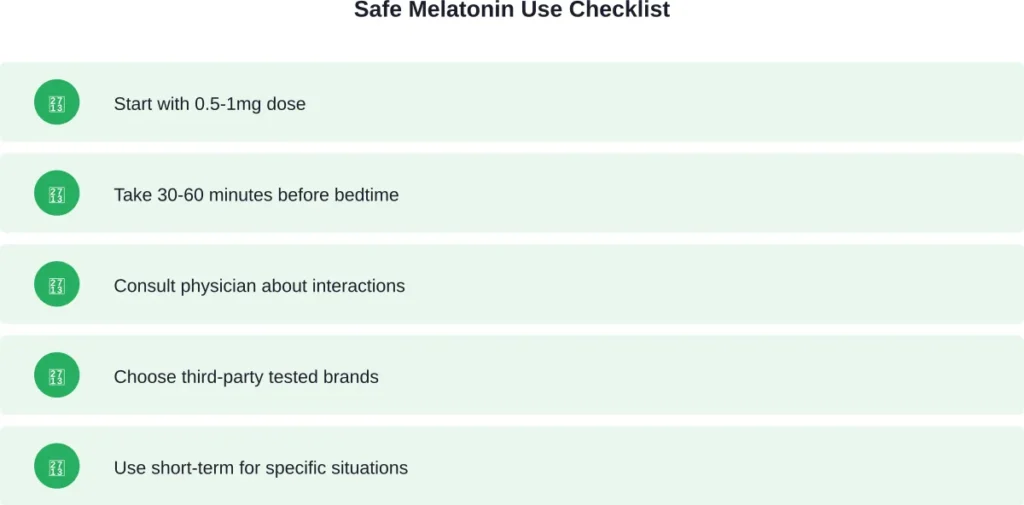
Start with the lowest effective dose, typically 0.5-1mg. Many people respond to doses far lower than what’s commonly sold. Take melatonin 30 minutes to one hour before the desired bedtime.
Use melatonin short-term for specific situations like jet lag or temporary sleep disruption. The National Institutes of Health notes there’s limited data on long-term safety, particularly for daily use extending beyond a few months.
Talk with a physician before starting melatonin, especially if taking other medications, having health conditions, or being pregnant. Melatonin can interact with blood thinners, diabetes medications, immunosuppressants, and other substances.
Choose reputable brands that undergo third-party testing. Given the widespread labeling inaccuracies, products verified by independent labs offer better quality assurance.
Frequently Asked Questions
There’s no established toxic dose, but anything significantly above the recommended 0.5-5mg range is considered excessive. Case reports document survival after doses exceeding 100mg, though such amounts can cause significant side effects and disrupt sleep patterns.
Fatal melatonin overdoses have not been documented in medical literature for otherwise healthy individuals. While extremely high doses can cause uncomfortable symptoms, melatonin appears to have relatively low toxicity compared to many other substances.
Common signs include excessive drowsiness, headaches, dizziness, nausea, irritability, and prolonged grogginess the next day. Symptoms typically mirror the supplement’s normal effects but are more pronounced and longer-lasting.
Most symptoms resolve within several hours to a day as the melatonin clears from the system. In documented cases of massive overdoses, patients regained normal function within 24-48 hours with supportive care.
Long-term safety data for nightly melatonin use is limited. While short-term use appears safe for most adults, the National Institutes of Health notes a lack of comprehensive information on extended daily supplementation. Consult a healthcare provider about regular use.
Studies found that 88% of tested melatonin gummies were inaccurately labeled, with actual content ranging from 74-347% of stated amounts. Supplements aren’t regulated as strictly as pharmaceuticals, leading to quality control issues and lot-to-lot variation.
Medical experts emphasize caution with pediatric melatonin use. While it’s become popular among parents, there’s limited efficacy data for children with typical development, and long-term effects on developing bodies remain unclear. Always consult a pediatrician before giving children melatonin.
Making Informed Decisions About Melatonin
Melatonin occupies an unusual position in the supplement world. It’s widely available, generally safe, yet poorly regulated and often misused.
The good news? Taking too much melatonin rarely causes serious medical emergencies. The less-good news? Excessive doses can worsen sleep problems, cause uncomfortable side effects, and create a cycle of dependency on ever-higher amounts.
Understanding proper dosing, recognizing quality products, and knowing when to seek help makes melatonin supplementation safer and more effective. If someone is struggling with sleep issues that aren’t resolving with low-dose melatonin, the answer probably isn’t taking more—it’s consulting a healthcare provider to address underlying causes.
When used appropriately as a short-term tool at minimal effective doses, melatonin can support better sleep. Just remember: more isn’t better, and natural doesn’t always mean risk-free.