
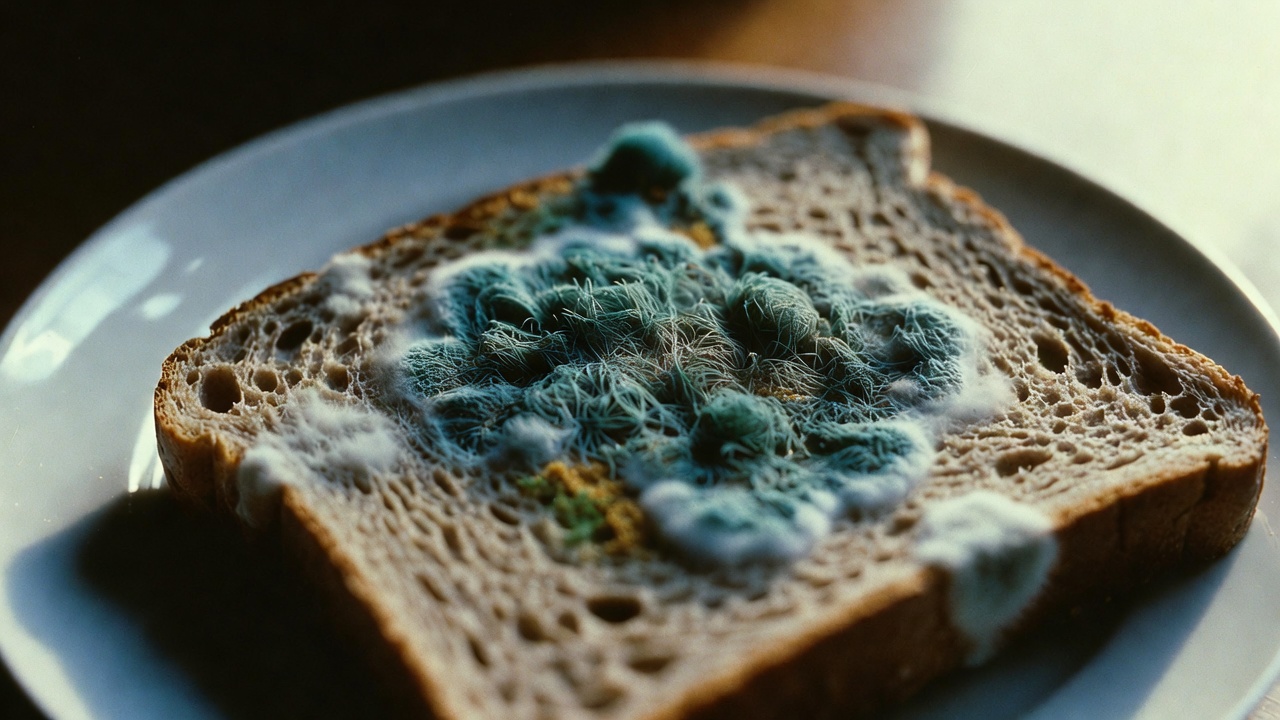
Quick Summary: Eating mold accidentally usually causes no harm, though some people may experience nausea, vomiting, or allergic reactions. Certain molds produce mycotoxins that can be dangerous, but a single exposure rarely causes serious illness. However, people with compromised immune systems should seek medical attention if they consume moldy food.
We’ve all been there. You’re halfway through a slice of bread when you notice those telltale fuzzy spots. Or maybe you’ve already swallowed a moldy berry before realizing what happened.
The immediate panic sets in. Should you rush to the emergency room? Induce vomiting? Call poison control?
Here’s the thing though—mold is everywhere, and eating a small amount accidentally is rarely a medical emergency. But that doesn’t mean all mold is harmless.
What Exactly Is Mold?
Mold represents microscopic fungi that live on plant or animal matter. According to the CDC, molds have been on Earth for millions of years, and there’s always some mold around in the environment.
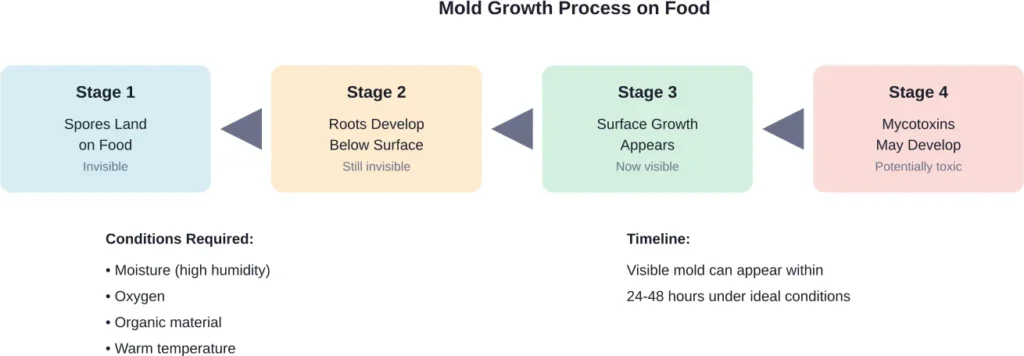
These organisms reproduce through spores that travel through the air. When spores land on food—especially in warm, moist conditions—they begin to grow. That fuzzy coating you see on old bread or fruit is actually a massive colony of mold organisms.
The visible mold is just the tip of the iceberg. Mold sends threadlike roots deep into food, spreading far beyond what the eye can see. This is why cutting off the moldy part doesn’t always make food safe to eat.
How Mold Develops on Food
Mold spores can enter homes through open doors, windows, vents, and heating and air conditioning systems. Once they land on food, they need three things to thrive: moisture, oxygen, and organic material to feed on.
Foods with high moisture content—like fruits, vegetables, bread, and cheese—provide ideal conditions for mold growth. According to the Food and Agriculture Organization, approximately 25% of the world’s food crops are affected by mycotoxins produced by molds.
What Happens When You Eat Moldy Food
Most of the time, nothing dramatic happens. The stomach contains strong acid that kills many microorganisms, including most mold spores.
But the response varies based on several factors: the type of mold consumed, the amount eaten, and individual health status.
Immediate Physical Reactions
Some people experience immediate gastrointestinal symptoms after eating mold. Nausea is the most common reaction, sometimes accompanied by vomiting or diarrhea. These symptoms typically resolve within a few hours as the body expels the offending substance.
Others may notice an unpleasant taste or texture but experience no physical symptoms at all. The vast majority of mold species living in harmony with humans rarely cause disease.
Allergic Responses
According to the CDC, allergies or allergic responses to mold are common. Research suggests that mold sensitivity prevalence is estimated to range from 3 to 10%.
Mold-allergic individuals may experience:
- Sneezing and nasal stuffiness
- Respiratory symptoms like wheezing or coughing
- Skin rashes or hives
- Eye irritation and watering
- Throat irritation
These reactions occur because the immune system recognizes mold proteins as threats and launches a defensive response.
The Real Danger: Mycotoxins
Here’s where things get serious. Some molds produce toxic compounds called mycotoxins under the right conditions.
According to the FDA, only certain molds and fungi can produce mycotoxins of concern. When consumed at high levels, these substances can cause illness. The most notorious mycotoxin is aflatoxin, which has been linked to liver damage and cancer in animal studies.
Foods particularly susceptible to mycotoxin-producing molds include:
- Grains and cereals
- Dried beans
- Dried fruits
- Coffee beans
- Nuts (especially peanuts and tree nuts)
- Corn and corn products
That said, eating moldy food once doesn’t mean automatic mycotoxin poisoning. These toxins typically accumulate through repeated exposure over time, and regulatory agencies monitor food supplies to keep mycotoxin levels below dangerous thresholds.
| Mycotoxin Type | Common Sources | Potential Health Effects |
|---|---|---|
| Aflatoxins | Peanuts, tree nuts, corn, grains | Liver damage, cancer risk with chronic exposure |
| Ochratoxin A | Grains, coffee, wine, dried fruit | Kidney damage, immune suppression |
| Deoxynivalenol | Wheat, barley, corn | Nausea, vomiting, diarrhea |
| Fumonisin | Corn and corn products | Neural tube defects, liver and kidney issues |
| Zearalenone | Corn, wheat, barley | Hormonal disruption |
Which Foods Are Safe to Salvage?
Can you cut around moldy food and eat the rest? Sometimes yes, sometimes absolutely not.
The USDA provides clear guidance on this question. The answer depends on the food’s texture, moisture content, and how mold spreads through it.
Foods You Should Always Discard
Throw away these items immediately if mold appears:
- Lunch meats, bacon, hot dogs
- Leftover cooked meat and poultry
- Cooked pasta and grains
- Soft fruits and vegetables (cucumbers, peaches, tomatoes)
- Bread and baked goods
- Peanut butter, nuts, and legumes
- Soft cheeses (cream cheese, cottage cheese, ricotta)
- Yogurt and sour cream
- Jams and jellies
Why? Mold spreads quickly through foods with high moisture content. The roots penetrate deeply, and mycotoxins can spread beyond the visible growth.
Foods You Can Sometimes Save
These firm, low-moisture foods may be salvageable:
- Hard cheeses (cheddar, Swiss, Parmesan) — cut off at least one inch around and below the mold
- Hard salami and dry-cured country hams — scrub mold off surface
- Firm fruits and vegetables (cabbage, carrots, bell peppers) — cut off at least one inch around mold
The key is cutting away a generous margin. Mold roots can penetrate about an inch into dense foods, so removing visible mold plus an inch margin removes the contaminated area.
| Food Category | Action When Moldy | Reason |
|---|---|---|
| Soft cheese, yogurt | Discard entire item | Mold spreads quickly through moisture |
| Hard cheese | Cut 1 inch around mold | Dense texture limits spread |
| Bread, baked goods | Discard entire item | Porous texture allows deep penetration |
| Firm vegetables | Cut 1 inch around mold | Low moisture, dense structure |
| Soft fruits | Discard entire item | High moisture allows rapid spread |
| Leftover cooked food | Discard entire item | Bacteria may also be present |
Special Case: Intentional Mold in Food
Not all mold on food is dangerous. Some cheeses and cured meats are intentionally crafted with specific mold cultures.
Blue cheese varieties like Roquefort, Gorgonzola, and Stilton contain Penicillium roqueforti mold. Brie and Camembert feature white Penicillium camemberti on their rinds. These molds are carefully selected and controlled during production.
But here’s the important distinction: these are food-grade mold strains introduced under controlled conditions. They’re fundamentally different from random molds that grow on forgotten leftovers.
If blue cheese develops fuzzy growth that looks different from its characteristic blue-green veining, that’s contamination from unwanted mold species. Discard it.
When to See a Doctor
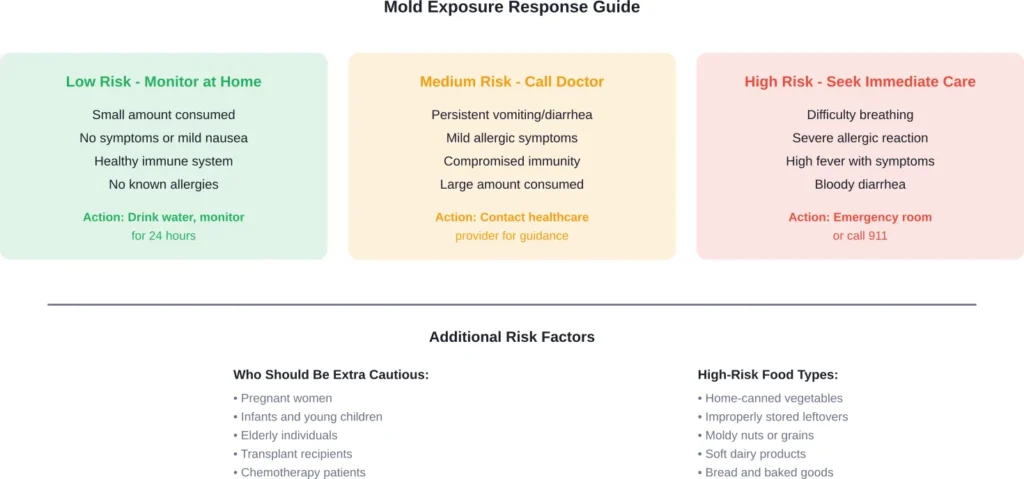
Most people who accidentally eat moldy food won’t need medical attention. The body’s natural defenses handle small exposures effectively.
However, seek medical care if experiencing:
- Severe or persistent vomiting lasting more than 24 hours
- High fever (above 101°F or 38.3°C)
- Difficulty breathing or wheezing
- Signs of allergic reaction (hives, swelling, throat tightness)
- Bloody diarrhea or severe abdominal pain
- Symptoms that worsen instead of improving
High-Risk Individuals
Certain people should be more cautious about mold exposure:
- Individuals with compromised immune systems
- Organ transplant recipients taking immunosuppressive drugs
- People undergoing chemotherapy
- Those with chronic lung diseases like asthma or COPD
- Individuals with known mold allergies
These individuals should be more cautious about mold exposure and may want to contact their healthcare provider after consuming moldy food.
How to Prevent Mold on Food
Prevention beats treatment every time. The CDC recommends keeping humidity levels in your home as low as you can — no higher than 50% — all day long.
Storage Strategies That Work
Proper storage dramatically reduces mold growth:
Keep foods covered: Mold spreads by airborne spores. Keeping foods covered—even in the refrigerator—limits exposure. Use airtight containers or wrap items tightly.
Use the crisper drawer: Refrigerator crisper bins maintain specific humidity levels (80-95%) that keep produce fresh while preventing excess moisture that encourages mold.
Check expiration dates: Foods stored beyond recommended timeframes become increasingly susceptible to mold colonization.
Clean regularly: Wipe down refrigerator surfaces, produce drawers, and bread boxes monthly. Mold can establish colonies in these areas and contaminate fresh food.
Don’t overfill storage areas: Air circulation prevents moisture accumulation. Crowded refrigerators and pantries create humid microclimates where mold thrives.
Temperature Control Matters
Keep refrigerators at 40°F (4°C) or below and freezers at 0°F (-18°C). These temperatures slow mold growth significantly, though they don’t stop it entirely.
Freeze foods for long-term storage. Freezing halts mold growth completely, though texture changes may occur in some foods.
Quick Consumption Principle
The faster food gets eaten, the less opportunity mold has to develop. Buy quantities appropriate for consumption within recommended timeframes.
Leftovers should be consumed within 3-4 days. When in doubt, throw it out—better safe than sorry.
Special Considerations for Home-Canned Foods
Home canning deserves special mention because the stakes are higher. According to the CDC, improperly canned foods can harbor botulism toxin in addition to mold issues.
Never taste home-canned food to determine safety. Even small amounts of botulism toxin can be deadly. If home-canned foods show any signs of spoilage—including mold, off odors, or bulging lids—discard them immediately.
According to CDC guidance, certain home-canned foods should be boiled before eating as a safety precaution to prevent botulism. At altitudes below 1,000 feet, boil home-canned tomatoes, foods containing home-canned tomatoes, all low-acid home-canned foods, and all home-fermented Alaska Native foods for 10 minutes. Add one minute for each additional 1,000 feet of elevation.
Frequently Asked Questions
Heat can kill mold organisms, but it doesn’t eliminate mycotoxins. These heat-stable compounds survive cooking temperatures. This is why cooking moldy food doesn’t make it safe—the toxins remain even after the living mold dies.
There’s no specific threshold because sensitivity varies between individuals and mold types differ in toxicity. Generally speaking, small accidental exposures rarely cause serious illness in healthy people. However, people with mold allergies or compromised immune systems may react to smaller amounts.
Both are fungi, but they grow differently. Mold forms multicellular structures that appear fuzzy or powdery. Yeast consists of single cells and typically creates a slimy or filmy appearance. Some yeasts are beneficial (like those in bread or beer), while others indicate spoilage.
No. Refrigeration slows mold growth dramatically but doesn’t stop it completely. Some mold species can grow at refrigerator temperatures, just more slowly. This is why refrigerated foods still develop mold eventually.
Usually not. White or grayish coating on chocolate is typically “bloom”—fat or sugar crystals that have separated and risen to the surface. This happens due to temperature fluctuations but isn’t harmful. Real mold on chocolate appears fuzzy and may have color variations including green, white, or black.
No. Bread’s porous structure allows mold roots to penetrate deeply throughout the loaf. Visible mold on one slice means invisible contamination likely extends through other slices. Discard the entire package.
Moisture content and skin thickness determine mold susceptibility. Berries with high water content and thin skins mold quickly. Citrus fruits with thick, protective peels resist mold longer. Damaged or bruised areas on any fruit create entry points where mold establishes faster.
The Bottom Line on Eating Mold
Accidentally eating moldy food isn’t ideal, but it’s rarely a medical emergency for healthy individuals. Most people experience no symptoms or mild gastrointestinal upset that resolves quickly.
Real danger comes from mycotoxins produced by certain molds, particularly in grains, nuts, and dried goods. These toxins pose greater risk through chronic exposure rather than single incidents.
When mold appears on food, err on the side of caution. Soft, moist foods should be discarded entirely. Dense, low-moisture items may be salvageable by cutting away generous margins around contamination.
Prevention remains the best strategy. Store food properly, maintain appropriate humidity levels, use items before expiration dates, and keep storage areas clean.
If concerning symptoms develop after eating moldy food—particularly difficulty breathing, severe vomiting, high fever, or signs of allergic reaction—seek medical attention promptly. People with compromised immune systems should contact healthcare providers even without severe symptoms.
The occasional moldy berry won’t derail health. But developing good food storage habits and knowing when to toss suspicious items protects against more serious mold-related illness.