
Quick Summary: If you miss a dose of amoxicillin, take it as soon as you remember—unless it’s almost time for your next scheduled dose. Never double up doses. Missing a single dose rarely causes major problems, but missing multiple doses can reduce treatment effectiveness and potentially contribute to antibiotic resistance.
Amoxicillin ranks among the most frequently prescribed antibiotics worldwide, treating everything from ear infections and strep throat to urinary tract infections and skin conditions. According to MedlinePlus, it’s typically taken every 8 hours (three times daily) or every 12 hours (twice daily), depending on the infection type and severity.
But life gets busy. Appointments run late, sleep schedules shift, or that midday dose simply slips your mind.
So what actually happens when you miss a dose? And more importantly, what should you do about it?
Why Consistent Dosing Matters with Amoxicillin
Amoxicillin doesn’t just attack bacteria once and disappear. The medication needs to maintain steady levels in the bloodstream to keep working effectively.
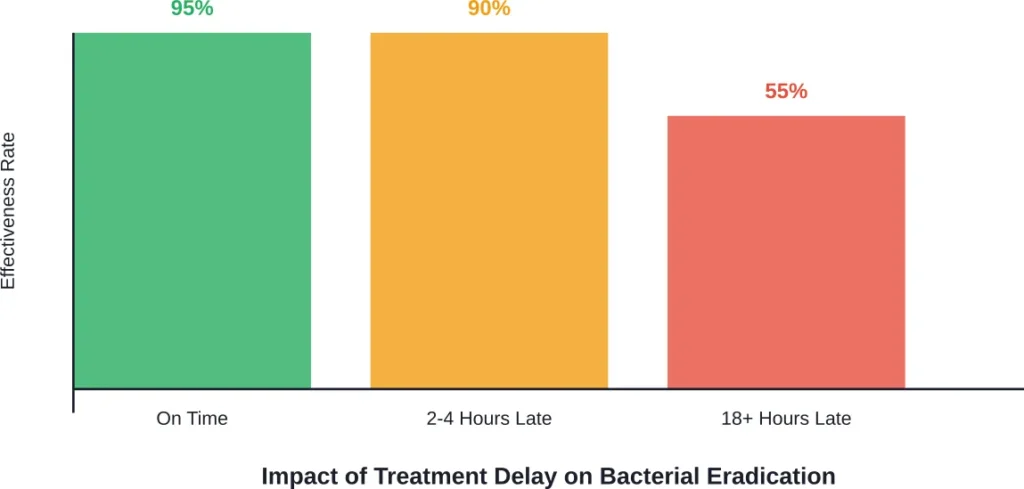
Here’s the thing though—bacteria don’t take breaks. When drug levels drop too low between doses, surviving bacteria get an opportunity to recover and multiply. This isn’t just about slowing down recovery. Research published in the National Institutes of Health medical archives shows that delayed antibiotic administration can significantly impact bacterial eradication rates.
One study examining acute otitis media found that bacterial eradication rates dropped from 95% to 55% when treatment was delayed by just 18-21 hours compared to starting at 2 hours post-infection. The timing matters.
According to MedlinePlus, amoxicillin comes in capsules, tablets, chewable tablets, and liquid suspension. Adults typically receive 250-500mg every 8 hours or 500-875mg every 12 hours. The precise schedule depends on infection type and severity.
What to Do Immediately After Missing a Dose
The standard recommendation is straightforward: take the missed dose as soon as you remember.
But there’s a critical exception.
If it’s almost time for the next scheduled dose, skip the missed one entirely. Never take two doses at once to “catch up.” Doubling doses increases the risk of side effects without improving treatment outcomes.
The Timing Question
What does “almost time” actually mean?
If it is almost time for the next scheduled dose, skip the missed dose. When in doubt, contact your pharmacist for specific timing guidance based on your schedule.
| Dosing Schedule | Take Missed Dose If | Skip Missed Dose If |
|---|---|---|
| Every 12 hours (twice daily) | More time until next dose | Close to next scheduled dose |
| Every 8 hours (three times daily) | More time until next dose | Close to next scheduled dose |
Real talk: this creates a judgment call. When in doubt, contact a pharmacist. Most pharmacy chains offer phone consultations at no charge.
Does Missing One Dose Actually Matter?
Missing a single dose typically won’t derail treatment completely. The body doesn’t clear amoxicillin instantly—some medication remains in the system for several hours after each dose.
That said, consistent blood levels produce better outcomes than fluctuating ones. Community discussions on medication adherence show that patients who miss occasional doses generally still recover, but the timeline may extend slightly.
The real concern isn’t the single missed dose. It’s the pattern.
When Multiple Doses Get Skipped
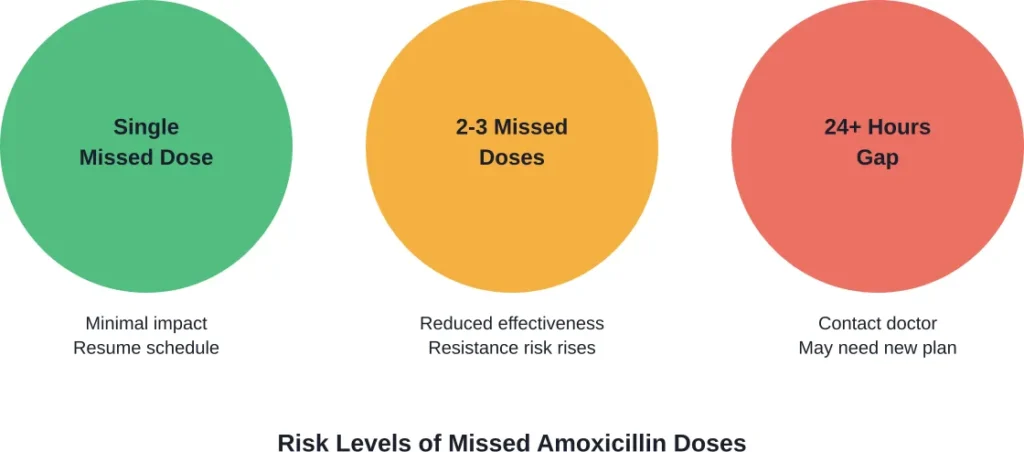
Missing multiple doses creates genuine problems. Drug levels drop below the threshold needed to kill bacteria effectively. Those surviving bacteria can then develop resistance mechanisms.
Research on antibiotic treatment delays shows that hospitalized patients who experienced delays in second-dose antibiotics faced increased mortality risks in severe sepsis cases. While home treatment of routine infections differs dramatically from critical care sepsis management, the underlying principle holds: consistency matters.
If more than 24 hours pass without taking amoxicillin, contact the prescribing doctor before resuming. The treatment plan may need adjustment.
The Antibiotic Resistance Connection
Antibiotic resistance has become a major public health concern. Bacteria evolve survival mechanisms when exposed to antibiotics without being fully eliminated.
Incomplete treatment courses give bacteria time to develop these mechanisms. When drug levels fluctuate—remaining high enough to stress bacteria but not high enough to kill them—selective pressure favors resistant strains.
Does missing a single dose directly cause resistance? Probably not in most cases. But repeated inconsistency across many patients taking many courses of antibiotics creates the conditions where resistance emerges and spreads.
The CDC and NIH both emphasize completing the full prescribed course, even after symptoms improve. Stopping early because “it’s working” leaves the toughest bacteria behind.
Common Scenarios and Specific Guidance
You Realize Within 1-2 Hours
Take it immediately and adjust the remaining schedule. If the dose was supposed to happen at 8 AM and it’s now 10 AM, take it at 10 AM, then resume at 6 PM (for every 8 hours) or 10 PM (for every 12 hours).
You Remember Right Before Bed
If the next dose isn’t until morning and it’s been fewer than 8 hours since the missed dose window, take it before sleeping. Otherwise, skip it and resume the morning dose on schedule.
Special Situations with Children
According to MedlinePlus guidelines, children 3 months and older weighing less than 40kg receive weight-based dosing. If vomiting occurs within 30 minutes of taking amoxicillin, the dose may need repeating—contact the pediatrician for guidance.
Liquid amoxicillin requires careful measurement. Household spoons vary in size, so always use the dosing syringe or cup provided with the medication.
Side Effects Don’t Increase from Missing Doses
Missing doses doesn’t typically trigger additional side effects. The concern runs in the opposite direction—reduced effectiveness rather than increased adverse reactions.
Common amoxicillin side effects include diarrhea, stomach pain, nausea, vomiting, and headache. These can occur whether doses are perfectly timed or occasionally missed.
Serious side effects requiring immediate medical attention include severe skin reactions, difficulty breathing, severe diarrhea with blood or mucus, and signs of liver problems. These relate to individual reactions to the medication itself, not dosing irregularities.
Practical Strategies to Avoid Missing Doses
The best solution to missed doses is preventing them in the first place. Here are strategies that actually work in practice:
Align with Daily Routines
Link medication times to existing habits. Take morning doses with breakfast, midday doses with lunch, evening doses with dinner. Habit stacking makes adherence nearly automatic.
Use Technology Wisely
Phone alarms work, but they’re easy to dismiss. Medication reminder apps offer more functionality—tracking doses taken, sending persistent alerts, and showing adherence patterns over time.
Keep Medication Visible
Out of sight means out of mind. Store amoxicillin somewhere visible (but safe from children and pets). The bathroom medicine cabinet seems logical but isn’t ideal—humidity and temperature fluctuations degrade medication. A kitchen counter or bedroom dresser often works better.
Prepare Doses in Advance
Some patients use daily pill organizers to sort morning and evening doses. For liquid medications, prepare the syringe at the beginning of each day.
| Strategy | Best For | Potential Drawback |
|---|---|---|
| Phone alarms | Simple reminders, free | Easy to dismiss without action |
| Medication apps | Tracking adherence patterns | Requires download and setup |
| Pill organizers | Visual confirmation of doses taken | Not suitable for liquid medications |
| Routine stacking | Long-term habit formation | Disrupted by schedule changes |
When to Contact Your Doctor
Most missed dose situations resolve with the standard guidance: take it when you remember unless the next dose approaches. But some circumstances warrant professional consultation:
- Missing more than two consecutive doses
- Stopping medication for over 24 hours
- Symptoms worsening despite taking amoxicillin
- New symptoms developing during treatment
- Severe side effects after any dose
- Uncertainty about how to proceed
Pharmacists can answer many medication questions without requiring an appointment. For prescription adjustments or treatment changes, contact the prescribing physician.
Storage and Handling Considerations
According to MedlinePlus, amoxicillin capsules and tablets should be stored at room temperature away from moisture and heat. Liquid suspension typically requires refrigeration after mixing and has a limited shelf life. Check the specific expiration date on your medication bottle for exact duration.
Check expiration dates before starting any course. Expired antibiotics lose potency and may not effectively treat infections.
Never share amoxicillin with others, even if they have similar symptoms. Bacterial infections require professional diagnosis, and using leftover antibiotics contributes to resistance problems.
Frequently Asked Questions
No. Never double up on amoxicillin doses. Taking two doses simultaneously increases side effect risks without improving treatment effectiveness. If you miss a dose and it’s almost time for the next one, skip the missed dose and continue with the regular schedule.
Missing a single dose rarely causes significant setbacks in treatment. While consistent dosing produces optimal results, one missed dose typically won’t allow the infection to worsen noticeably. The concern grows with multiple missed doses, which can reduce drug effectiveness and potentially extend recovery time.
The body eliminates amoxicillin gradually after each dose, which is why regular dosing every 8 or 12 hours maintains therapeutic levels in adults with normal kidney function. For specific pharmacokinetic information, consult with a pharmacist or healthcare provider.
Contact the prescribing doctor before resuming medication. A gap of several days may require restarting the treatment course from the beginning or switching to a different antibiotic. Don’t simply resume where you left off without medical guidance.
The interval between doses matters more than the specific clock time. If prescribed every 8 hours, maintaining roughly 8-hour spacing is important. The exact times (8 AM, 4 PM, midnight versus 9 AM, 5 PM, 1 AM) matter less than the consistent spacing.
Yes, with some caveats. Maintain the prescribed intervals (every 8 or 12 hours) but shift the clock times to fit your schedule better. Take the first dose at a time that allows sustainable spacing throughout your day. Once you establish a schedule, stick with it consistently.
If a child spits out or vomits amoxicillin within 30 minutes of administration, contact the pediatrician or pharmacist. Depending on the estimated amount lost, a repeat dose may be appropriate. Don’t automatically give another full dose without professional guidance.
Conclusion: Consistency Wins, But Don’t Panic
Missing an occasional amoxicillin dose isn’t ideal, but it’s also not catastrophic. The key is knowing what to do next: take it promptly if remembered early, skip it if the next dose approaches soon, and never double up.
The bigger picture matters more than single incidents. Antibiotic effectiveness depends on maintaining consistent drug levels throughout the treatment course. Completing the full prescribed duration—even after symptoms resolve—prevents resistance and ensures complete bacterial elimination.
Set up systems that work for your specific lifestyle. Whether that means phone reminders, pill organizers, or linking doses to meals, find a method that turns medication adherence into an automatic habit rather than a daily decision.
When in doubt about any missed dose scenario, reach out to a pharmacist or the prescribing physician. A quick phone call beats guessing about medication management every time.