
Quick Summary: Eating raw chicken exposes you to harmful bacteria like Salmonella and Campylobacter that cause food poisoning. Symptoms typically include diarrhea, vomiting, abdominal cramps, and fever within 6-48 hours. Most people recover without treatment, but severe cases require medical attention, especially for young children, elderly, or immunocompromised individuals.
Raw chicken sits at the center of one of the most common food safety concerns. According to the CDC, raw chicken can harbor foodborne germs that make you seriously ill. In the United States, people eat chicken more than beef, pork, or turkey, which makes understanding these risks absolutely essential.
But what actually happens when you accidentally bite into that undercooked piece of chicken? The answer isn’t always immediate, and the severity varies widely.
The Bacteria Lurking in Raw Chicken
Raw poultry carries multiple pathogens that cause illness. The two most common culprits are Salmonella and Campylobacter jejuni.
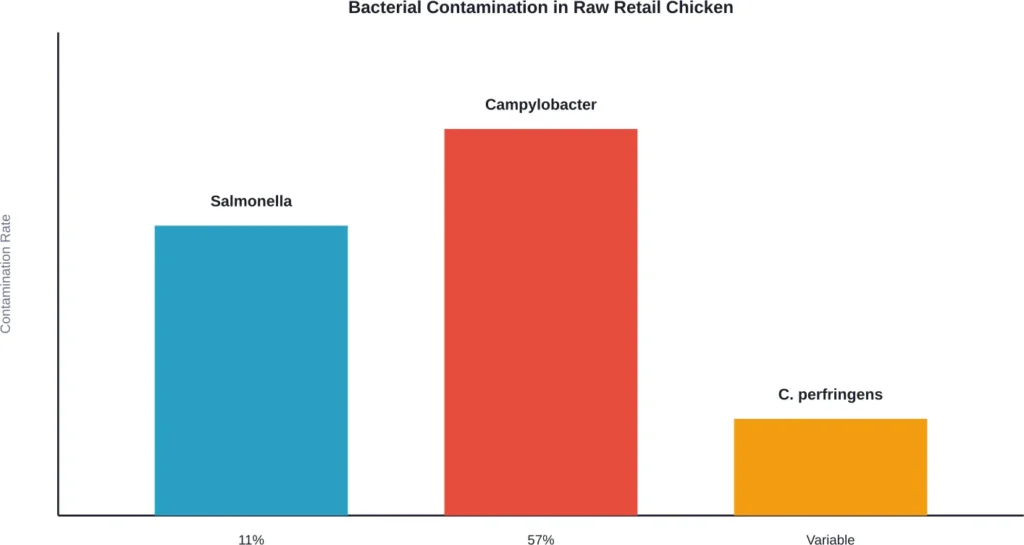
Campylobacter infections are now the leading cause of bacterial gastroenteritis reported in the United States, according to CDC research. This bacteria thrives on raw chicken, making it one of the most prevalent foodborne pathogens. The WHO identifies Campylobacter as one of four key global causes of diarrheal diseases and considers it the most common bacterial cause of human gastroenteritis worldwide.
Salmonella presents another significant threat. Raw chicken can be contaminated with Salmonella and Campylobacter, with studies showing variable contamination rates depending on sampling methods and regions.
A third pathogen, Clostridium perfringens, also appears on raw chicken. This bacteria typically causes issues when food is prepared in large quantities and kept at unsafe temperatures.
Immediate Effects After Eating Raw Chicken
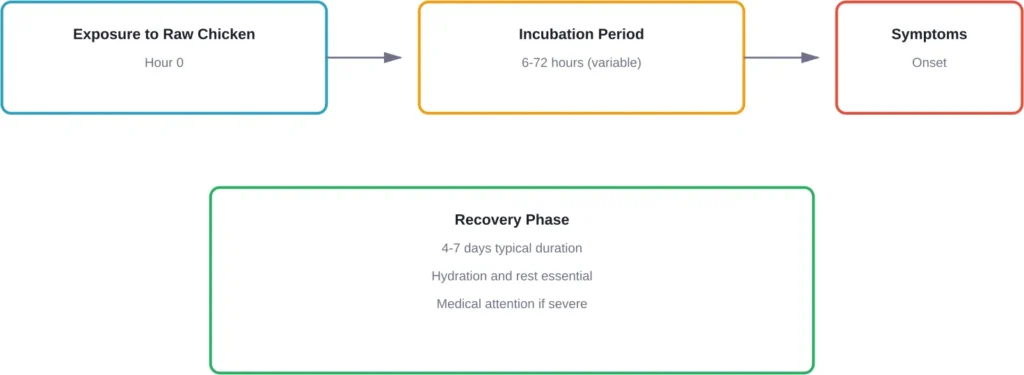
Here’s the thing though—symptoms don’t appear instantly. The incubation period varies depending on which bacteria infected you.
For Campylobacter infections, symptoms typically emerge 2-5 days after consumption. Salmonella usually takes 6-72 hours to produce noticeable effects. Clostridium perfringens works faster, with symptoms appearing within 8-12 hours.
The most common symptoms include:
- Diarrhea (often bloody with Campylobacter)
- Abdominal cramps and pain
- Nausea and vomiting
- Fever and chills
- Headache and muscle aches
According to the FDA, the food supply in the United States sees approximately 48 million cases of foodborne illness annually—that’s equivalent to sickening 1 in 6 Americans each year. These illnesses result in an estimated 128,000 hospitalizations and 3,000 deaths.
Potential Complications Beyond Basic Food Poisoning
Most healthy adults recover from chicken-related foodborne illness within a few days. But that’s not the whole story.
Severe complications can develop, particularly in vulnerable populations. Young children, elderly individuals, pregnant women, and immunocompromised people face higher risks.
Campylobacter infections can trigger Guillain-Barré syndrome, a rare neurological condition where the immune system attacks the peripheral nervous system, as documented in medical literature.
Salmonella can spread beyond the intestines, causing bacteremia (bacteria in the bloodstream). When this happens, it can infect other body sites including bones, joints, and the nervous system.
Reactive arthritis sometimes follows Salmonella infections, causing joint pain, eye irritation, and painful urination that can last months.
Globally, the WHO reports that foodborne diseases cause an estimated 600 million illnesses and 420,000 deaths every year. Children under 5 carry 40% of the foodborne disease burden, with 125,000 deaths annually.
What To Do If You’ve Eaten Raw Chicken
Real talk: don’t panic immediately. Not everyone who eats undercooked chicken gets sick.
Monitor yourself for symptoms over the next 2-5 days. Stay hydrated—diarrhea and vomiting can cause dangerous dehydration quickly.
Most cases resolve without medical intervention. The illness typically lasts 4-7 days for Campylobacter and similar duration for Salmonella.
Seek medical attention if you experience:
- Bloody diarrhea
- Fever above 102°F (38.9°C)
- Diarrhea lasting more than 3 days
- Signs of dehydration (decreased urination, dry mouth, dizziness)
- Severe abdominal pain
Healthcare providers may prescribe antibiotics for severe cases, though many Campylobacter strains have developed antimicrobial resistance.
How To Prevent Raw Chicken Illness
Prevention beats treatment every time. The CDC emphasizes that chicken should reach an internal temperature of 165°F to kill harmful bacteria.
Use a food thermometer—it’s the only reliable way to verify doneness. Color isn’t a dependable indicator. Pink chicken might be safe, while fully white chicken could still harbor pathogens if it hasn’t reached proper temperature.
The FDA recommends these handling practices:
- Don’t wash raw chicken (splashing spreads bacteria)
- Keep raw chicken separated from ready-to-eat foods
- Use separate cutting boards for raw poultry
- Wash hands, utensils, and surfaces after contact
- Refrigerate chicken promptly at 40°F or below
Cross-contamination causes many illnesses. Raw chicken juices touching salad ingredients or cooked food transfer bacteria efficiently.
Frequently Asked Questions
Symptoms typically appear within 6-72 hours for Salmonella, 2-5 days for Campylobacter, and 8-12 hours for Clostridium perfringens. The timeline varies based on the specific bacteria and amount consumed.
Yes, even small amounts of contaminated chicken can cause illness. However, not all raw chicken carries harmful bacteria, and individual immune system strength affects whether infection develops.
Both cause diarrhea, fever, and abdominal cramps. Campylobacter more frequently produces bloody diarrhea, while Salmonella symptoms tend to appear faster and may include more severe fever.
Antibiotics aren’t typically necessary for uncomplicated cases. Healthcare providers may prescribe them for severe infections, high fever, or immunocompromised patients. Many Campylobacter strains have developed antibiotic resistance.
Most cases resolve within 4-7 days. Clostridium perfringens infections often clear within 24 hours. Symptoms persisting beyond one week warrant medical evaluation.
Properly cooked chicken reaching 165°F kills harmful bacteria. Illness from cooked chicken typically results from cross-contamination after cooking or insufficient heating.
According to the CDC, cooking chicken to an internal temperature of 165°F kills foodborne bacteria. This high temperature must be reached throughout the thickest part of the meat.
The Bottom Line
Eating raw chicken exposes you to serious bacterial infections that cause uncomfortable and potentially dangerous symptoms. While most healthy adults recover without intervention, the risks increase dramatically for vulnerable populations.
The CDC data makes it clear: proper cooking and handling practices prevent these illnesses effectively. A food thermometer costs a few dollars and eliminates guesswork entirely.
If you’ve accidentally consumed undercooked chicken, monitor yourself closely and don’t hesitate to seek medical care if severe symptoms develop. Stay hydrated, rest, and remember that most cases resolve naturally within a week.