
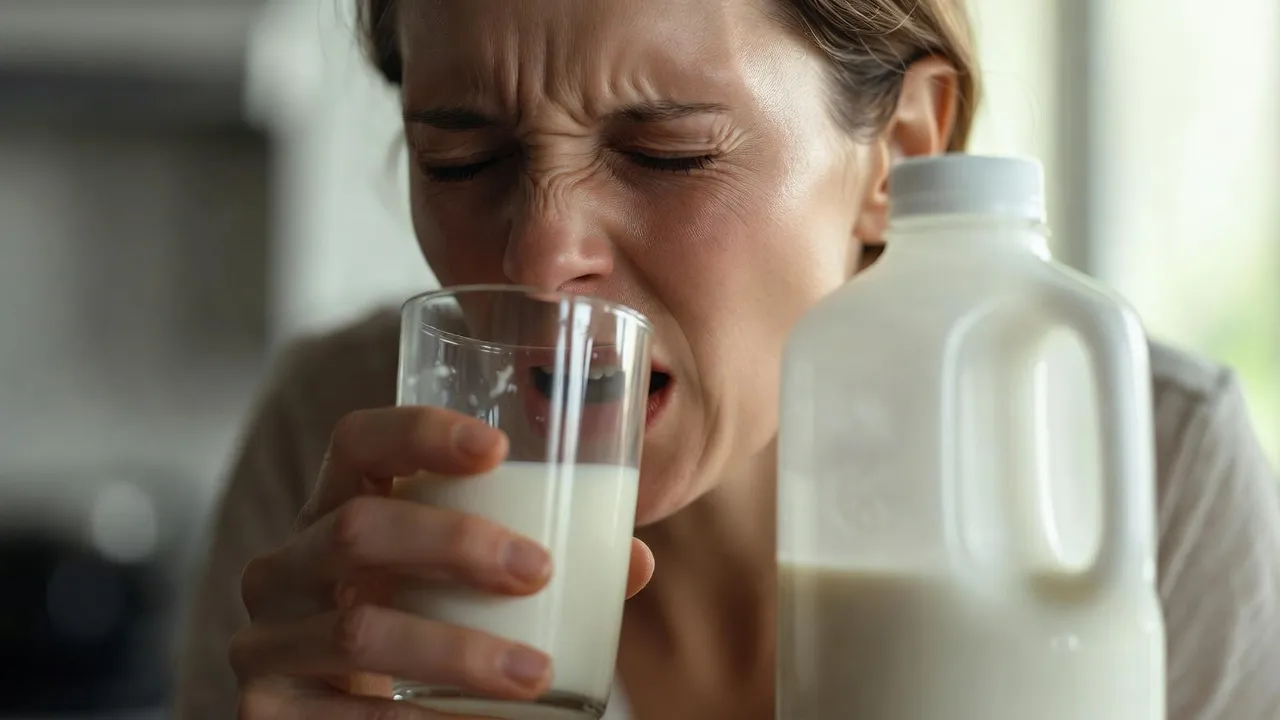
Quick Summary: Drinking spoiled milk typically causes food poisoning with symptoms like nausea, vomiting, diarrhea, and stomach cramps that appear within hours of consumption. Food poisoning symptoms typically last from a few hours to several days depending on the pathogen involved. The key is recognizing spoilage signs before consumption and seeking help if symptoms become serious.
That sinking feeling when you’ve already swallowed a gulp of milk before realizing it tastes off? It’s happened to most people at some point. Maybe the carton was pushed to the back of the fridge, or the smell test failed you.
The good news is that drinking spoiled milk rarely leads to serious complications for healthy adults. But it’s not pleasant, and understanding what’s happening in your body can help you know when to ride it out and when to call a doctor.
What Makes Milk Spoil?
Milk spoilage occurs when bacteria multiply beyond safe levels. Even pasteurized milk contains some bacteria that survive the heating process. When stored properly, these remain at safe levels. But once milk sits too long or warms up, bacteria like Lactobacillus and other organisms start reproducing rapidly.
According to research published in the National Institutes of Health database, bacterial counts in milk can range dramatically even before the expiration date. One study found that unopened refrigerated milk showed no significant sensory changes for up to 10 days after expiration when kept refrigerated, though bacterial growth accelerates within 24 hours of opening.
The bacteria break down lactose and proteins, creating that characteristic sour smell and taste. This fermentation process produces lactic acid, which curdles the milk and drops its pH level.
Immediate Effects of Drinking Spoiled Milk
Here’s what typically happens after consuming spoiled milk. The timeline and severity depend on how contaminated the milk was and how much someone drank.
Common Symptoms
According to the CDC, food poisoning symptoms from contaminated dairy products include:
- Nausea and stomach discomfort
- Vomiting (often the first symptom)
- Diarrhea, sometimes with mucus
- Stomach cramps that can be severe
- Fever and chills
- Headache
- Loss of appetite
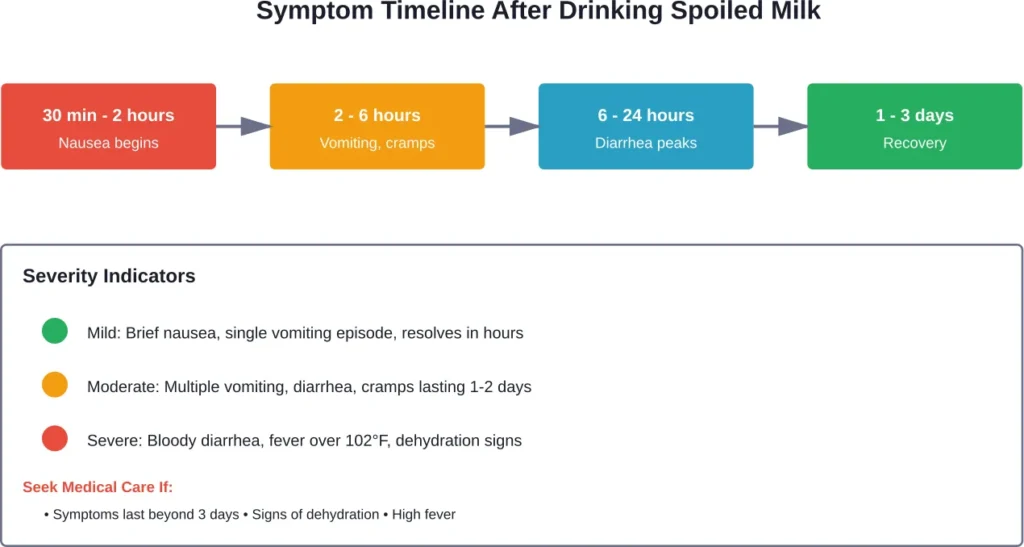
Most symptoms appear within 30 minutes to 8 hours after consumption. The body’s natural response is to expel the contaminated substance quickly, which explains why vomiting often happens first.
How Long Symptoms Last
For most healthy adults, symptoms resolve within 24 to 48 hours. Food poisoning symptoms typically last from a few hours to several days depending on the pathogen involved.
But severity varies. A small sip of slightly sour milk might cause minor stomach upset for an hour or two. Drinking a full glass of heavily contaminated milk can lead to more intense symptoms lasting several days.
Dangerous Bacteria in Spoiled Milk
Not all spoiled milk carries the same risks. While regular spoilage bacteria like Lactobacillus cause unpleasant symptoms, they’re not typically dangerous. The real concern is pathogenic bacteria that can contaminate milk.
According to the CDC and FDA, harmful bacteria that can grow in milk include:
| Bacteria | Symptom Onset | Primary Symptoms |
|---|---|---|
| Salmonella | 6 hours to 6 days | Diarrhea, fever, stomach cramps |
| E. coli | 1 to 8 days | Severe stomach cramps, bloody diarrhea |
| Listeria | Within 2 weeks (invasive); within 24 hours (intestinal) | Fever, muscle aches, headache (invasive); diarrhea, vomiting (intestinal) |
| Staphylococcus aureus | 30 minutes to 8 hours | Sudden vomiting, nausea, cramps |
The CDC estimates Salmonella cause about 1.35 million infections in the United States every year, with contaminated food being the primary source. Pasteurization kills these pathogens, but recontamination can occur through improper handling.
When to Seek Medical Attention
Most cases of drinking spoiled milk don’t require a doctor visit. But certain symptoms indicate a more serious problem.
The CDC recommends seeking medical care if:
- Diarrhea lasts more than 3 days
- Bloody diarrhea appears
- Fever exceeds 102°F
- Frequent vomiting prevents keeping liquids down
- Signs of dehydration develop (dry mouth, dizziness, decreased urination)
These symptoms suggest a more severe infection that may require antibiotics or IV fluids. Dehydration is the most common complication and can become dangerous quickly, especially for children and older adults.
High-Risk Groups
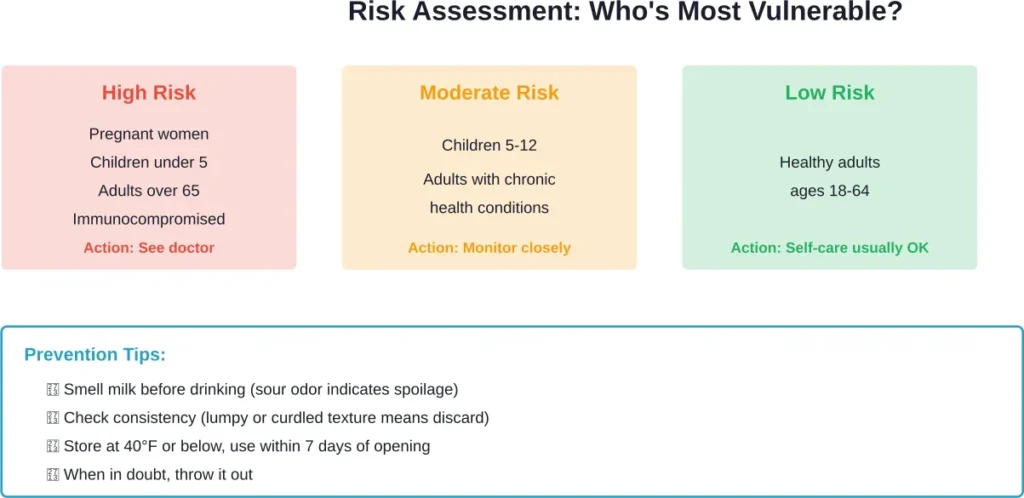
Certain populations face greater risks from consuming contaminated milk. According to the CDC and FDA, these groups should be especially cautious:
- Pregnant women (risk of Listeria affecting the fetus)
- Young children under 5
- Adults over 65
- People with weakened immune systems
For these groups, even mild symptoms warrant a call to a healthcare provider. According to the WHO, children under 5 years of age carry 40% of the foodborne disease burden, with 125,000 deaths every year.
How to Tell If Milk Is Spoiled
Prevention beats treatment. Catching spoilage before drinking saves a lot of discomfort.
The Smell Test
Fresh milk has a mild, slightly sweet aroma. Spoiled milk smells distinctly sour or rancid. This smell comes from lactic acid and other compounds produced during bacterial fermentation. Trust your nose—it’s evolved to detect this warning sign.
Visual Inspection
Pour a small amount into a glass. Fresh milk flows smoothly and looks uniformly white. Spoiled milk often appears:
- Lumpy or curdled
- Separated with watery liquid
- Thickened or slimy
- Discolored (yellowish tint)
Taste Test (Use Caution)
If smell and appearance seem fine but the milk is near its date, a tiny sip can confirm. Spoiled milk tastes sharp, sour, or bitter. Spit it out immediately if it tastes off.
Research shows that properly refrigerated pasteurized milk can remain safe for days past the printed date. But once opened, bacterial counts rise. The 7-day rule after opening provides a safer guideline than relying solely on the date stamp.
Treatment and Recovery
What should someone do after drinking spoiled milk? In most cases, supportive care at home is sufficient.
Immediate Steps
Right after realizing the milk was spoiled:
- Don’t panic—serious illness is uncommon
- Rinse the mouth with water
- Don’t try to induce vomiting
- Wait to see if symptoms develop
Managing Symptoms
If nausea, vomiting, or diarrhea begins:
- Stay hydrated with small sips of water, clear broth, or electrolyte solutions
- Avoid solid food until vomiting stops
- Gradually reintroduce bland foods (crackers, toast, rice)
- Avoid dairy products, caffeine, and fatty foods until fully recovered
- Rest and let the body fight the infection
The CDC advises against anti-diarrheal medications for most cases of food poisoning, as they can trap bacteria in the digestive system. Let the body clear the contamination naturally unless a doctor recommends otherwise.
Raw vs. Pasteurized Milk Risks
Worth mentioning: raw (unpasteurized) milk carries significantly higher risks than pasteurized milk, whether fresh or spoiled.
According to the CDC, from 1998 through 2018, there were 202 outbreaks linked to drinking raw milk. These outbreaks caused 2,645 illnesses and 228 hospitalizations. Raw milk can harbor dangerous bacteria like Salmonella, E. coli, and Listeria even when fresh.
The FDA prohibits interstate sales of raw milk for this reason. Pasteurization kills harmful pathogens while maintaining nutritional value, making it the safest choice for dairy consumption.
Frequently Asked Questions
Death from drinking spoiled pasteurized milk is extremely rare in healthy adults. According to the WHO, an estimated 420,000 people die every year from foodborne illnesses globally, most involving different contamination sources. Spoiled milk typically causes temporary digestive upset that resolves without serious complications. However, vulnerable populations could develop severe infections requiring hospitalization.
Symptoms typically begin 30 minutes to 8 hours after consumption, according to CDC data. The exact timing depends on the type and amount of bacteria present. Staphylococcus aureus acts fastest (30 minutes to 8 hours), while Salmonella takes 6 hours to 6 days. Most people notice nausea within 2-6 hours.
Cooking with slightly sour milk can be acceptable for certain recipes like baking, where high temperatures kill bacteria. However, heavily spoiled milk with visible curdling or foul odors shouldn’t be used. The heat may kill bacteria but won’t eliminate toxins some bacteria produce. When uncertain, discard the milk rather than risk illness.
Sour milk results from intentional fermentation with specific bacterial cultures, creating products like buttermilk or yogurt. Spoiled milk undergoes uncontrolled bacterial growth from various organisms, including potentially harmful ones. Sour milk used in recipes is deliberately cultured and safe. Spoiled milk from the fridge is contaminated and should be discarded.
Yes. Expiration dates assume proper storage at 40°F or below. If milk was left unrefrigerated, stored in a warm fridge, or contaminated during handling, bacteria can multiply rapidly even before the printed date. Temperature abuse is a leading cause of premature spoilage. Always use the smell, appearance, and taste tests regardless of the date.
Probiotics may help restore gut bacteria balance after food poisoning, though research on their effectiveness for acute cases is mixed. Focus first on staying hydrated and letting symptoms resolve. After recovery, probiotics or fermented foods might support digestive health. Consult a healthcare provider before taking supplements, especially if symptoms are severe.
Wait until all symptoms have completely resolved—typically 24 to 48 hours after the last episode of vomiting or diarrhea. Start with small amounts of fresh milk to test tolerance. Some people experience temporary lactose sensitivity after digestive upset. If symptoms return, wait a few more days before trying again or consider lactose-free alternatives during recovery.
The Bottom Line
Drinking spoiled milk is unpleasant but rarely dangerous for healthy adults. Most cases resolve within a few days with rest and hydration.
The key takeaways: Trust your senses to detect spoilage before drinking. Watch for warning signs like bloody diarrhea, high fever, or dehydration that require medical attention. Vulnerable populations should seek care more readily.
Prevention remains the best strategy. Store milk properly, use it within a week of opening, and discard anything that smells or looks questionable. When it comes to dairy safety, better to waste a dollar than risk days of misery.
If symptoms become concerning or last beyond three days, don’t hesitate to contact a healthcare provider. Food poisoning from contaminated dairy is treatable, and medical professionals can provide targeted care to speed recovery and prevent complications.