
Quick Summary: Missing your second Shingrix shot significantly reduces vaccine effectiveness. The CDC recommends two doses, spaced 2-6 months apart, for over 90% protection against shingles. A single dose provides incomplete immunity and may not adequately prevent shingles or postherpetic neuralgia. If you’ve missed the window, you can still complete the series—there’s no need to restart, though protection remains limited until the second dose is administered.
Shingrix has become the gold standard for shingles prevention since its FDA approval in 2017. But here’s the catch: it requires two doses to work properly.
The recombinant zoster vaccine isn’t a one-and-done deal. According to the CDC, adults aged 50 and older need both shots to achieve the vaccine’s advertised 90% effectiveness rate against herpes zoster infection.
So what actually happens if you get the first dose but never make it back for the second? The short answer isn’t great—but it’s also not the end of the world.
Why Shingrix Requires Two Doses
Unlike the older Zostavax vaccine (which was discontinued by CDC recommendation in 2020), Shingrix uses a recombinant subunit approach. It contains a piece of the varicella zoster virus protein combined with an adjuvant—a substance that boosts immune response.
This two-punch strategy trains the immune system in stages. The first dose introduces the viral protein and kicks off antibody production. The second dose, given 2-6 months later, reinforces that response and solidifies long-term immune memory.
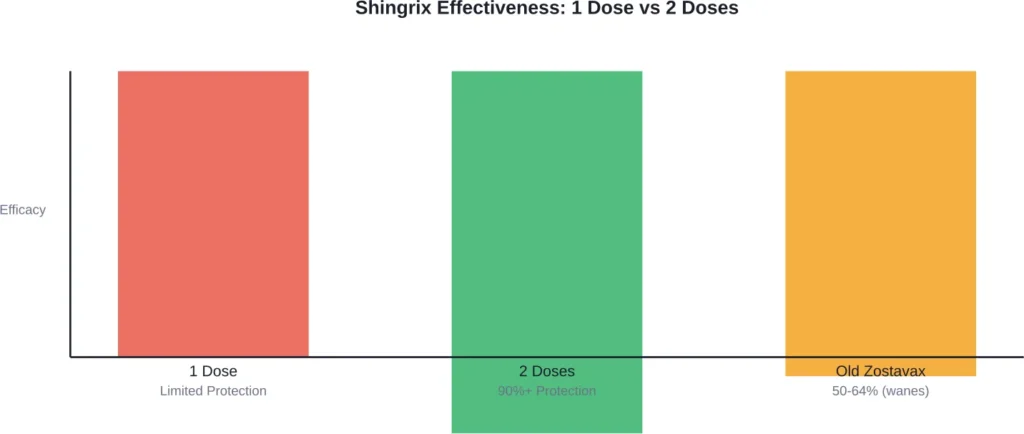
Clinical trials demonstrated that the vaccine’s efficacy exceeds 90% against shingles and postherpetic neuralgia in adults aged 50 and older with healthy immune systems. But that figure applies specifically to people who completed both doses.
Reduced Protection With a Single Dose
Here’s where things get concerning.
A single Shingrix dose doesn’t provide the same level of protection. While your body does mount some immune response after the first shot, studies show that one dose alone falls short of the two-dose series effectiveness.
Real-world data from a study published in Clinical Infectious Diseases estimated that two doses of Shingrix are approximately 74% effective against herpes zoster infection and 84% effective against postherpetic neuralgia in adults ages 50 and older, with notably lower protection in single-dose recipients. The study included 102,766 participants who received two doses and 192,984 who received one dose, with follow-up demonstrating protection rates declined significantly in single-dose recipients.
The numbers tell the story: incomplete vaccination means incomplete protection.
How Common Is Missing the Second Dose?
Turns out, plenty of people don’t complete the series.
Analysis of Medicare Part D prescription drug claims data revealed that while the majority of beneficiaries who received an initial Shingrix dose did get the second dose within six months, completion rates varied significantly by demographic group.
Follow-up vaccination rates were higher among White beneficiaries at 76% compared to Hispanic beneficiaries at 58%, American Indian/Alaska Native beneficiaries at 61%, and Black beneficiaries at 61%. Lower completion rates were also observed among beneficiaries younger than age 65 with long-term disabilities and low-income beneficiaries.
Vaccine shortages between 2018 and 2020 didn’t help matters. Many people who wanted their second shot simply couldn’t find it.
Can You Still Get the Second Dose Late?
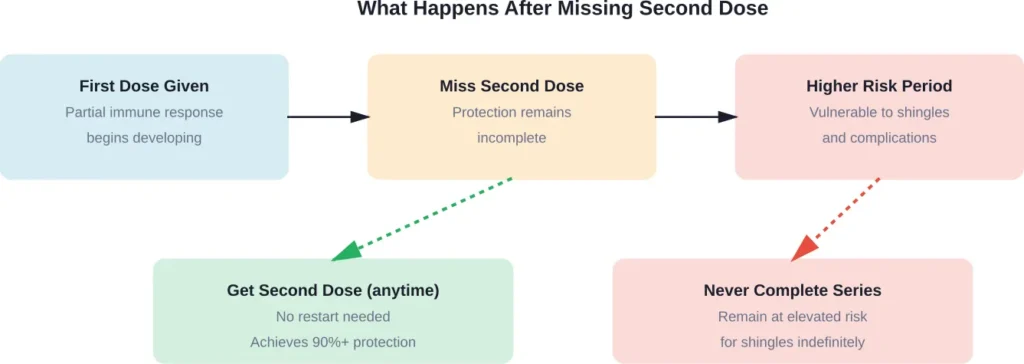
Yes. And you don’t need to start over.
The CDC recommends getting the second Shingrix dose 2-6 months after the first. But if you’ve exceeded that window—whether by weeks, months, or even years—you can still complete the series with just one additional shot.
There’s no maximum interval between doses. The first dose doesn’t “expire.”
That said, the longer you wait, the longer you’re walking around with suboptimal protection against shingles. More than 99% of U.S. adults over 50 have the varicella zoster virus dormant in their nervous system, even if they don’t remember having chickenpox.
| Time Between Doses | Action Needed | Protection Level |
|---|---|---|
| 2-6 months | Ideal timing—proceed as planned | Full protection after dose 2 |
| 6-12 months | Get second dose as soon as possible | Reduced until completion |
| 1+ years | Get second dose (no restart needed) | Limited until completion |
Risks of Remaining Unvaccinated or Partially Vaccinated
Shingles isn’t just an uncomfortable rash. Approximately one million people develop shingles annually in the U.S., and the complications can be severe.
Postherpetic neuralgia—a burning nerve pain that persists long after the rash clears—develops in 10% to 15% of people who get shingles. This pain can last months or years and significantly impact quality of life.
Adults with weakened immune systems face even higher risks. The CDC recommends Shingrix for adults aged 19 and older who are or will be immunodeficient or immunosuppressed, including solid organ transplant recipients and those undergoing cancer treatment.
Walking around with only one dose means accepting a preventable level of risk.
Side Effects and Safety Profile
Some people skip the second dose because the first one knocked them flat. That’s understandable—Shingrix has a reputation for causing more noticeable side effects than many other vaccines.
A pooled analysis of two pivotal Phase 3 trials found that injection site pain was the most common reaction, reported by 78.0% of Shingrix recipients compared to 10.9% of placebo recipients. Grade 3 pain (significant enough to interfere with daily activities) occurred in 6.4% of RZV recipients.
Other common reactions include fatigue, headache, muscle pain, and fever. These typically resolve within 2-3 days.
But here’s the thing: temporary discomfort beats postherpetic neuralgia. The vaccine’s safety profile has been extensively studied in clinical trials and post-marketing surveillance, with serious adverse events remaining rare.
Special Populations and Timing Considerations
Immunocompromised adults require special attention. The CDC recommends Shingrix for adults aged 19 and older who are or will be immunodeficient or immunosuppressed because of disease or therapy.
For these individuals, completing the two-dose series is even more critical. Research published in Vaccines (2025) analyzed antibody responses in immunocompromised patients, finding that depending on underlying disease, 2 or 3 doses were necessary to achieve adequate VZV-specific IgG antibody levels.
Solid organ transplant recipients—particularly kidney transplant recipients, who comprised 77.1% of subjects in one real-world Italian study—benefit significantly from full vaccination despite their heightened vulnerability.
| Population | Recommended Schedule | Special Considerations |
|---|---|---|
| Healthy adults 50+ | 2 doses, 2-6 months apart | Standard recommendation |
| Immunocompromised adults 19+ | 2-3 doses depending on condition | Higher risk of complications |
| Previous Zostavax recipients | 2 doses of Shingrix | Zostavax waned over time |
What If You Got Zostavax Previously?
Zostavax, the live attenuated zoster vaccine, was discontinued in 2020. Its effectiveness waned substantially over time—vaccine efficacy among adults aged 70-79 years averaged only 41% on average during the first 3 years following vaccination, and just 18% among those 80 and older on average during the first 3 years.
The CDC recommended RZV (Shingrix) over Zostavax beginning in 2018. If you received Zostavax years ago, getting the two-dose Shingrix series is still recommended and has proven effective.
A study published in Annals of Internal Medicine confirmed that two doses of Shingrix are effective even for people who previously received Zostavax. There’s no need to worry about vaccine interference—the recombinant approach works independently of prior live vaccine exposure.
Frequently Asked Questions
No. There’s no maximum interval between Shingrix doses. If you received your first dose months or years ago, you can complete the series with just one additional shot without restarting. The first dose doesn’t expire or lose its value over time.
One dose provides significantly less protection than the complete two-dose series. While your immune system does respond to a single dose, clinical data shows the vaccine achieves its advertised 90%+ effectiveness only when both doses are administered. Studies indicate markedly lower protection rates in single-dose recipients.
Yes. A single dose doesn’t provide complete protection against herpes zoster infection. You remain at elevated risk for developing shingles and its complications, including postherpetic neuralgia, until you complete the two-dose series. Approximately one million Americans develop shingles each year.
The minimum interval is at least 8 weeks (2 months) between the first and second doses. The CDC recommends spacing doses 2-6 months apart for optimal immune response. Getting the second dose earlier than 8 weeks is not recommended and may compromise effectiveness.
Generally speaking, most insurance plans and Medicare Part D cover both Shingrix doses regardless of the time interval between them, since completing the series is medically recommended. Contact your insurance provider to confirm coverage specifics, as policies vary by plan and provider.
Many people report similar or slightly more pronounced side effects after the second dose compared to the first. Common reactions include injection site pain, fatigue, headache, and muscle aches. These typically resolve within 2-3 days and indicate your immune system is responding appropriately to the vaccine.
Yes. You can receive your second dose at any pharmacy or healthcare facility that offers Shingrix, regardless of where you got the first dose. Vaccination records are typically stored in state immunization registries, but bring documentation of your first dose if possible to ensure proper record-keeping.
The Bottom Line
Missing your second Shingrix shot isn’t ideal, but it’s fixable.
The vaccine requires two doses for a reason—that’s how it achieves over 90% effectiveness against shingles and postherpetic neuralgia. One dose leaves you with incomplete protection and puts you at unnecessary risk for a painful, potentially debilitating disease.
If you’ve already gotten the first dose but haven’t completed the series, don’t wait any longer. Contact your healthcare provider or local pharmacy to schedule your second shot. There’s no need to restart, no matter how much time has passed.
And if you’re 50 or older and haven’t started the series at all? Now’s the time. More than 99% of adults in that age group carry the varicella zoster virus—you just don’t know when it might reactivate.
Vaccination is the only proven way to protect yourself against this painful disease. Make sure you get both doses.