
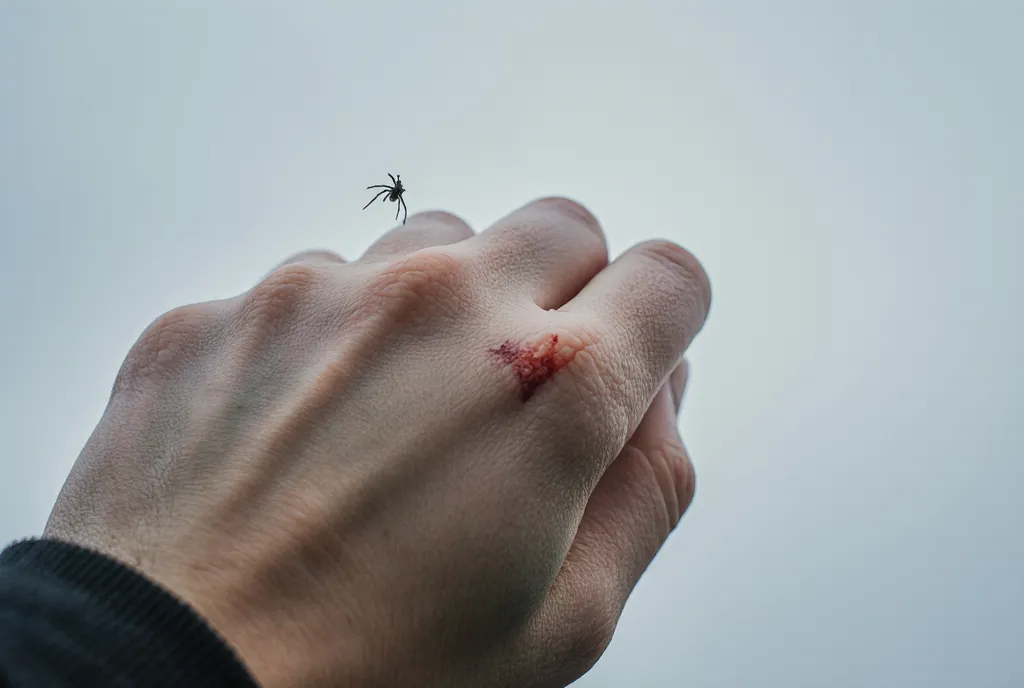
Quick Summary: A black widow spider bite causes pain at the bite site within minutes to hours, followed by muscle cramps, nausea, sweating, and potentially elevated blood pressure. According to CDC data, most bites result in minor to moderate symptoms that resolve with treatment, though severe cases may require antivenin therapy. Immediate medical attention is recommended, especially for children, elderly individuals, or those experiencing cardiovascular symptoms.
Black widow spiders are responsible for most clinically significant spider envenomations in the United States. These distinctive spiders—shiny black with a red hourglass marking—aren’t typically aggressive, but bites happen when the spider is trapped or accidentally touched.
Understanding what happens after a bite can help distinguish between a minor reaction and a medical emergency.
Recognizing a Black Widow Spider
Female black widows pose the greatest threat because they’re much more likely to deliver significant amounts of venom compared to males. The female’s shiny black body measures about half an inch long, with the characteristic red or orange hourglass shape on the underside of the abdomen.
According to the CDC, outdoor workers face particular risk when encountering these spiders in dark, undisturbed areas like woodpiles, garages, sheds, and outdoor equipment. The spiders aren’t aggressive by nature—most bites occur because someone accidentally disturbs the spider’s web or presses against it.
What Happens Immediately After the Bite
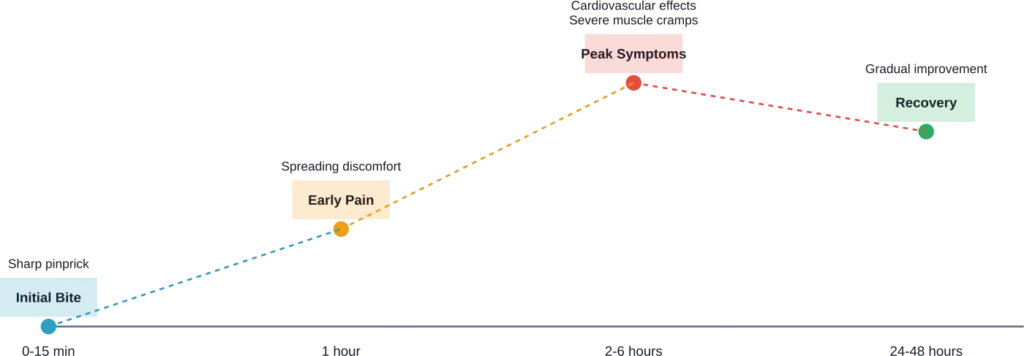
The initial bite might feel like a sharp pinprick, though some people don’t notice it at all. Within 15 minutes to an hour, the bite site typically develops distinct characteristics.
The area often becomes red and swollen. Some victims notice a target-like appearance with concentric circles around the puncture marks. Pain at the bite site ranges from mild to moderate initially.
But here’s where things change. The venom contains alpha-latrotoxin, a potent neurotoxin that triggers massive neurotransmitter release at nerve endings. This sets off a cascade of systemic effects that develop over the next several hours.
Symptom Progression and Timeline
Black widow envenomation—called latrodectism—follows a predictable pattern. Pain begins spreading from the bite site to nearby muscles and eventually throughout the body.
The First Few Hours
Pain intensifies and migrates. For bites on the extremities, pain moves toward the torso. Abdominal bites cause severe abdominal wall rigidity that can mimic surgical emergencies like appendicitis or peritonitis.
Muscle cramps develop—these aren’t ordinary cramps. The neurotoxin causes sustained, painful muscle contractions. Large muscle groups become affected: the back, chest, abdomen, and thighs.
Systemic Symptoms
Research involving 23,409 black widow exposures found that 65% presented with minor clinical effects, 33.5% moderate effects (longer duration of symptoms, treatment required), and 1.4% with major effects (life-threatening) with longer symptom duration.
Common systemic symptoms include:
- Severe muscle cramps and spasms
- Nausea and vomiting
- Profuse sweating, particularly at the bite site
- Difficulty breathing or shortness of breath
- Headache and dizziness
- Anxiety and restlessness
- Weakness and tremors
The sweating can be remarkable—patients often report drenching sweats that soak clothing.
Cardiovascular Complications
Here’s what makes black widow bites potentially serious. The venom affects the cardiovascular system in ways that require monitoring.
A systematic review of 22 articles involving 25 black widow envenomation patients found that 68% (17 patients) developed hypertension, 64% (16 patients) experienced tachycardia, and 64% (16 patients) showed elevated troponin levels—a marker of potential heart muscle damage.
Blood pressure can spike dangerously. Heart rate increases. In rare cases, patients develop symptoms mimicking heart attacks, including chest pain and abnormal electrocardiogram readings.
These cardiovascular effects explain why medical evaluation is critical, especially for individuals with pre-existing heart conditions, the elderly, young children, or pregnant women.
Treatment Approaches
Treatment depends on symptom severity. For mild cases with localized pain, supportive care might suffice. Moderate to severe cases require more aggressive intervention.
| Treatment Type | Purpose | When Used |
|---|---|---|
| Pain medications | Control localized and systemic pain | All cases with significant discomfort |
| Muscle relaxants (benzodiazepines) | Reduce muscle spasms and anxiety | Moderate muscle cramps |
| Intravenous calcium gluconate | Alleviate muscle cramps | Severe muscle spasms |
| Antivenin (Latrodectus antivenom) | Neutralize venom, provide rapid relief | Severe cases, vulnerable populations |
| Blood pressure medications | Control hypertension | Cardiovascular complications |
The Role of Antivenin
Antivenin—specifically designed to neutralize black widow venom—provides the most effective treatment for severe envenomation. Case series data shows that antivenin administration leads to rapid symptom relief, often within 30 minutes to two hours.
But it’s not used routinely. Research examining adverse events following antivenin administration found it relatively safe with only mild to moderate side effects in a small percentage of patients. No deaths or severe allergic reactions were identified in the review.
Still, antivenin is typically reserved for severe cases because it’s derived from horse serum and carries a small risk of allergic reactions. Medical providers weigh symptom severity against potential risks.
Standard Supportive Care
Most patients receive supportive care that manages symptoms effectively:
- Ice packs applied to the bite site reduce local pain and swelling
- Elevation of the affected limb minimizes swelling
- Opioid or non-opioid analgesics control pain
- Intravenous fluids maintain hydration
- Tetanus prophylaxis if vaccination status is uncertain
Pain and muscle cramps often resist standard therapy but respond well to intravenous calcium gluconate or benzodiazepines.
Who Faces the Greatest Risk
While black widow bites can affect anyone, certain populations face higher risk of severe complications.
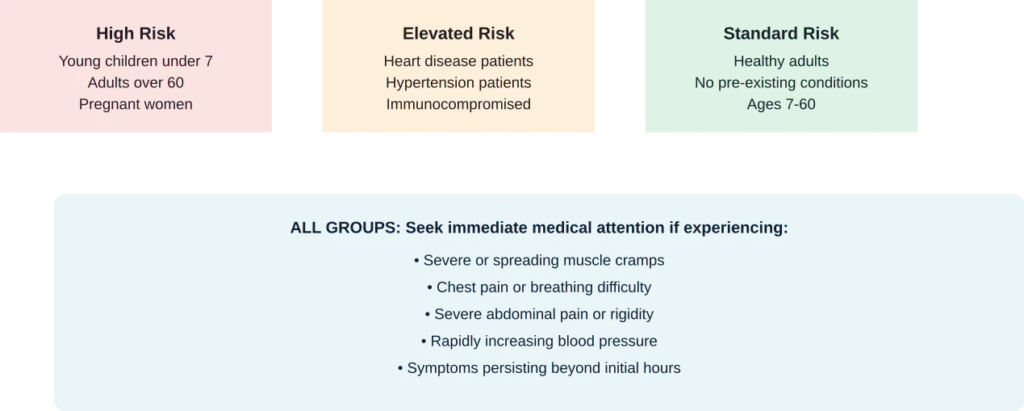
Children face particular danger because the same venom dose affects their smaller body mass more severely. The elderly may have compromised cardiovascular systems less able to tolerate the hemodynamic stress.
Pregnant women require special consideration because the venom can potentially trigger uterine contractions or affect fetal wellbeing, though this remains uncommon.
Recovery and Long-Term Outlook
The prognosis for black widow bites is generally good with proper medical care. Fatal outcomes are extremely rare in modern medical settings.
Symptoms typically peak within 2-6 hours and gradually improve over 24-48 hours. Some patients experience lingering muscle aches or weakness for several days to weeks after the acute phase resolves.
Complete recovery without lasting effects is the norm. The CDC reports that with prompt treatment and appropriate care, most patients recover fully without complications.
Residual symptoms—when they occur—might include:
- Muscle soreness lasting several days
- Fatigue and general weakness
- Mild headaches
- Numbness or tingling near the bite site
These resolve spontaneously in most cases.
Prevention Strategies
According to the CDC, outdoor workers and anyone working in areas where black widows live should take protective measures.
Practical prevention steps include:
- Wear gloves when handling stored items, firewood, or gardening materials
- Shake out shoes, clothing, and towels before use if stored in garages or sheds
- Use caution when reaching into dark, undisturbed areas
- Keep storage areas clean and organized to minimize spider habitat
- Seal cracks and crevices where spiders might enter buildings
- Remove clutter, debris, and woodpiles from around structures
- Install tight-fitting screens on windows and doors
Black widows prefer dark, protected spaces. Regular cleaning and inspection of potential hiding spots reduces encounter risk significantly.
When to Seek Emergency Care
Any suspected black widow bite warrants medical evaluation, but certain symptoms require immediate emergency care:
- Severe pain spreading beyond the bite site
- Muscle cramps involving the chest, back, or abdomen
- Difficulty breathing or chest pain
- Severe headache or altered mental status
- Rapidly developing symptoms
- Bites in children, elderly individuals, or pregnant women
- Signs of allergic reaction (rare but possible)
For guidance, poison control centers provide free, confidential expert advice 24 hours daily at 1-800-222-1222. The webPOISONCONTROL online tool also offers immediate assistance.
Don’t wait to see if symptoms worsen. Early intervention prevents complications and provides faster symptom relief.
Frequently Asked Questions
Initial pain at the bite site typically develops within 15 minutes to one hour. Systemic symptoms like muscle cramps, nausea, and sweating usually begin 1-3 hours after the bite and peak at 2-6 hours. Some people don’t notice the actual bite until symptoms start developing.
Deaths from black widow bites are extremely rare, especially with modern medical care. Before antivenin became available, mortality rates were approximately 5%, but fatalities are now exceptionally uncommon. Vulnerable populations like young children, elderly adults, and those with heart conditions face higher risk of severe complications, but death remains unlikely with proper treatment.
Black widow bites cause distinctive patterns: pain that spreads from the bite site to large muscle groups, severe muscle cramps (especially in the abdomen, back, and chest), profuse sweating, elevated blood pressure, and rigid abdominal muscles. The bite site itself is often unremarkable—just minor redness or a target-like appearance. Brown recluse bites, by contrast, cause significant local tissue damage and necrosis rather than systemic muscle symptoms.
No. Research shows that 65% of black widow exposures cause only minor symptoms that resolve with supportive care like pain medication and muscle relaxants. Antivenin is reserved for severe cases with intractable pain, significant muscle spasms, cardiovascular complications, or bites in high-risk populations. Medical providers assess symptom severity to determine appropriate treatment.
Most acute symptoms peak within 2-6 hours and improve significantly over 24-48 hours with treatment. Mild residual effects like muscle soreness or fatigue may persist for several days to a week. Complete recovery typically occurs within 1-2 weeks. Severe cases treated with antivenin often experience dramatic symptom relief within 30 minutes to 2 hours of administration.
Clean the bite area with soap and water. Apply ice to reduce pain and swelling. Keep the affected limb elevated if possible. Seek medical attention promptly—don’t wait for symptoms to worsen. Try to safely capture or photograph the spider if possible for identification, but don’t risk another bite. Contact poison control at 1-800-222-1222 for immediate guidance while seeking care.
Male black widows are much smaller than females and rarely bite humans. When they do, they deliver significantly less venom and pose minimal health risk. The female black widow—with her larger size, more potent venom, and defensive behavior when protecting egg sacs—causes virtually all clinically significant bites.
Conclusion
Black widow spider bites trigger a distinct syndrome of pain, muscle cramps, and systemic symptoms that can be frightening but rarely prove fatal with appropriate care. Understanding symptom progression helps differentiate minor reactions from medical emergencies requiring immediate intervention.
The key takeaway? Don’t try to tough it out. Medical evaluation allows providers to monitor for complications and provide targeted treatment—whether supportive care for mild cases or antivenin for severe envenomation. With prompt attention, the prognosis remains excellent.
If bitten by a black widow or experiencing symptoms consistent with envenomation, contact poison control immediately at 1-800-222-1222 or seek emergency care. Early treatment prevents complications and speeds recovery.