
Quick Summary: Skipping airplane mode won’t crash a plane, but it can disrupt cockpit communication, drain your battery faster, and violate aviation regulations. The Federal Aviation Administration requires passengers to follow crew instructions regarding electronic devices. While modern aircraft are designed to handle electromagnetic interference, multiple active phones can create static or interference in pilot headsets during critical flight phases.
The flight attendant’s voice comes through the cabin speakers, reminding everyone to switch devices to airplane mode. But what actually happens if you don’t?
Spoiler: Your plane won’t fall from the sky. But that doesn’t mean there aren’t consequences.
The Myth vs. Reality: Why Your Phone Won’t Crash a Plane
Here’s the truth. A single active phone won’t bring down a commercial aircraft. Modern planes are built with redundant systems and shielding specifically designed to handle electromagnetic interference.
Aviation experts have been clear about this for years. The concern isn’t about catastrophic failure—it’s about something more subtle and more annoying.
According to the Federal Aviation Administration, devices containing lithium batteries like smartphones and laptops should be carried in carry-on baggage, not checked baggage, and flight crews are trained to recognize and respond to device-related issues. The regulations exist for operational reasons, not because of imminent danger.
But wait. If phones are so harmless, why do airlines care so much?
The Real Issue: Interference With Pilot Communication
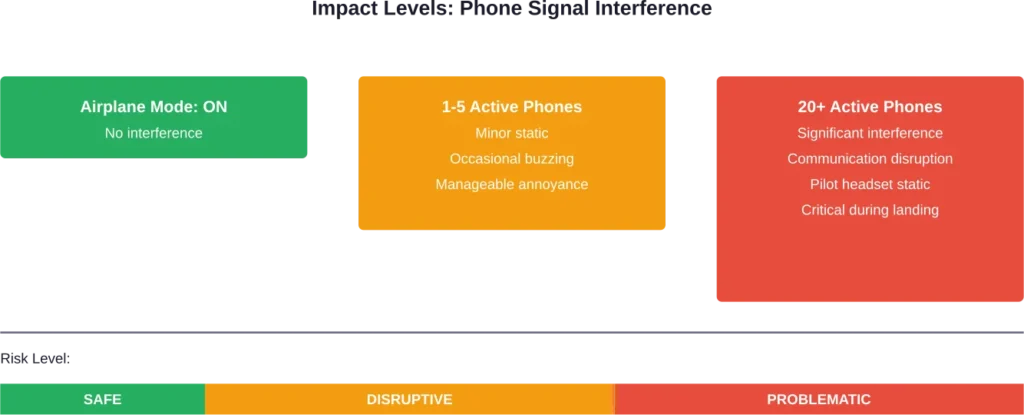
The actual problem is interference with cockpit communication systems. When your phone actively searches for cellular towers at 35,000 feet, it’s working overtime, transmitting at maximum power.
That transmission can create static or buzzing in pilot headsets. Imagine trying to hear critical air traffic control instructions during landing while dealing with an annoying buzz in your ears.
Real talk: One phone might cause a minor annoyance. But when dozens of passengers ignore airplane mode, the cumulative effect creates a genuine communication problem during the most critical phases of flight—takeoff and landing.
Battery Drain and Network Problems
Your phone doesn’t understand it’s flying. When airplane mode is off, the device constantly searches for a cellular signal it can’t find.
This relentless searching drains your battery at an accelerated rate. Battery drain accelerates noticeably when searching for cellular signals at altitude.
And there’s another issue. Your phone rapidly connects and disconnects from ground towers as the plane moves at 500+ mph. This creates problems for cellular networks below, potentially disrupting service for people on the ground.
| Scenario | Battery Life | Network Impact |
|---|---|---|
| Airplane Mode ON | Minimal drain | None |
| Cellular ON (flight) | Drains 3-4x faster | Tower overload |
| Wi-Fi only (flight) | Moderate drain | None |
Why It’s Still Required: Regulations and Crew Authority
The Federal Aviation Administration mandates that passengers follow crew instructions regarding electronic devices. This isn’t a suggestion—it’s federal regulation.
Flight crews have authority to enforce these rules. Refusing to comply with crew instructions can result in fines, removal from the flight, or even being placed on a no-fly list.
According to the FAA, aviation safety requires cooperation from everyone on board. The regulations exist to maintain operational standards, even when the risk of catastrophic failure is low.
Community discussions reveal that many travelers forget to switch modes occasionally. Generally speaking, one forgotten phone isn’t a crisis. But deliberate non-compliance is different—that’s when crew members will intervene.
Smart Ways to Stay Connected Without Breaking Rules
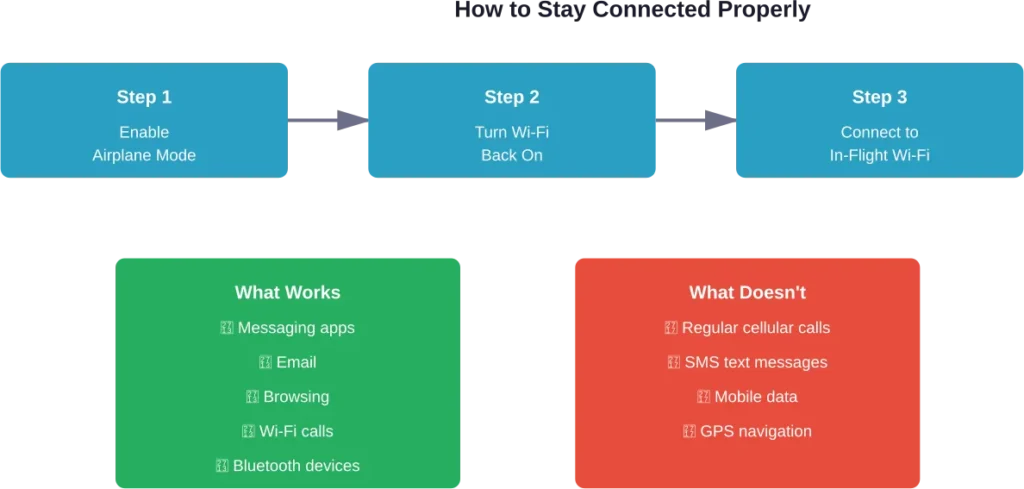
Most modern aircraft offer Wi-Fi that works with airplane mode enabled. You can switch on airplane mode, then manually re-enable Wi-Fi to stay connected.
This approach gives you internet access without the cellular signal issues. You can send messages, browse, and even make Wi-Fi calls on many flights.
Some considerations:
- Airplane mode disables all wireless, but you can selectively turn Wi-Fi back on
- Bluetooth can also be re-enabled separately for wireless headphones
- In-flight Wi-Fi systems are designed to work with airplane mode
- Download content before your flight for offline access
Frequently Asked Questions
No. Modern aircraft are designed with shielding and redundant systems that prevent a phone from causing catastrophic failure. The concern is interference with pilot communication, not structural or system failure.
Not directly. Flight attendants can’t scan devices to detect airplane mode status. But they can observe you actively using cellular features, and they rely on passenger compliance with safety instructions.
Pilots would likely experience significant static or buzzing in their headsets, particularly during takeoff and landing. This could interfere with communication with air traffic control during critical flight phases.
Yes. Airplane mode disables all wireless functions initially, but you can manually turn Wi-Fi and Bluetooth back on separately. This allows you to use in-flight Wi-Fi and wireless headphones without cellular interference.
Refusing to follow crew instructions regarding electronic devices can result in fines, removal from the flight, or being placed on an airline’s no-fly list. The Federal Aviation Administration requires passengers to comply with crew member instructions.
Absolutely. When airplane mode is off during flight, your phone constantly searches for cellular towers at maximum transmission power. This can drain your battery three to four times faster than normal use.
The requirement balances operational safety, communication clarity for pilots, regulatory compliance, and consideration for ground cellular networks. While catastrophic failure isn’t the concern, maintaining clear cockpit communication during critical flight phases remains important.
The Bottom Line
Skipping airplane mode won’t make your plane crash. But it’s not a harmless oversight either.
The practice disrupts pilot communication, drains your battery unnecessarily, and violates federal aviation regulations. When dozens of passengers ignore the rule, the cumulative effect creates real operational problems.
Here’s the thing though—compliance is easy. Switch on airplane mode during your flight, then manually re-enable Wi-Fi if you want connectivity. You’ll stay connected, save battery life, and avoid annoying pilots during the most critical moments of your flight.
Sound familiar? That announcement you’ve heard on every flight exists for legitimate reasons. Next time you fly, take two seconds to enable airplane mode. Your pilots will thank you.