
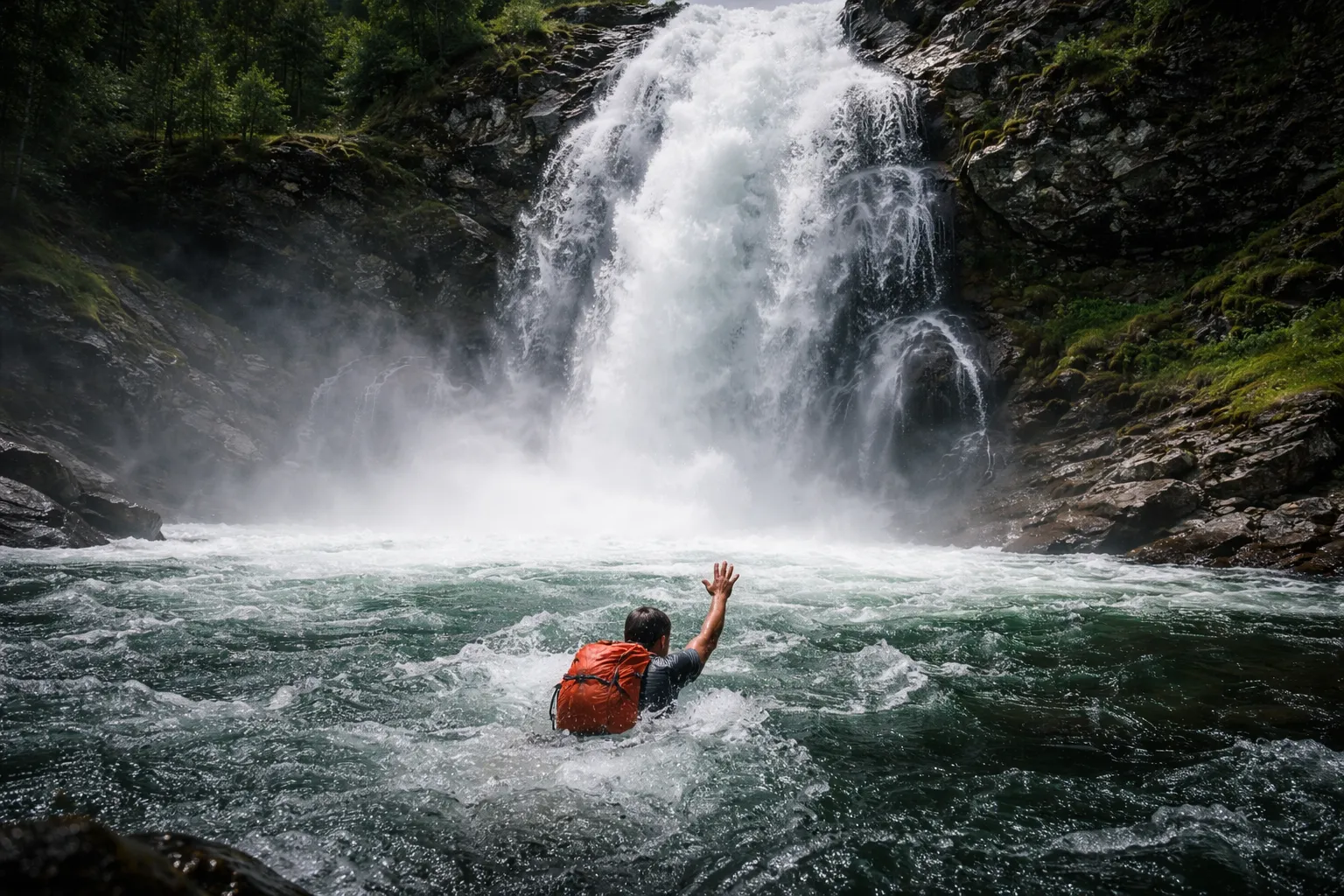
Quick Summary: Falling into Follheur waterfall poses severe risks including immediate drowning, impact trauma from rocks, hypothermia from cold water, being pinned underwater by powerful currents, and disorientation from aeration. According to the National Park Service, water is a leading cause of fatalities in parks with waterfalls, and rescue efforts are often delayed by hours due to difficult terrain.
The mist rising from Follheur waterfall creates an almost ethereal scene. Sunlight breaks through water droplets, cameras click, and visitors inch closer for that perfect shot.
But beneath that beauty lies a question that blends fascination with genuine concern: what happens if you fall into Follheur waterfall?
The answer isn’t simple. It’s not just about getting wet or taking an unexpected swim. Waterfalls are deceptively dangerous environments where multiple hazards converge at once—powerful currents, freezing temperatures, hidden rocks, and disorienting turbulence that can overwhelm even strong swimmers in seconds.
According to the National Park Service, water is the number one cause of fatalities in parks like Glacier National Park. Swift, cold glacial streams and waterfalls present dangers that have claimed the lives of children, photographers, and experienced outdoor enthusiasts alike.
Understanding what actually happens when someone falls into a waterfall like Follheur isn’t about feeding morbid curiosity. It’s about recognizing real danger so you can make smarter decisions when you visit.
The Immediate Impact: What Happens When You Hit the Water
The first few seconds after falling into Follheur waterfall determine survival odds more than anything else.
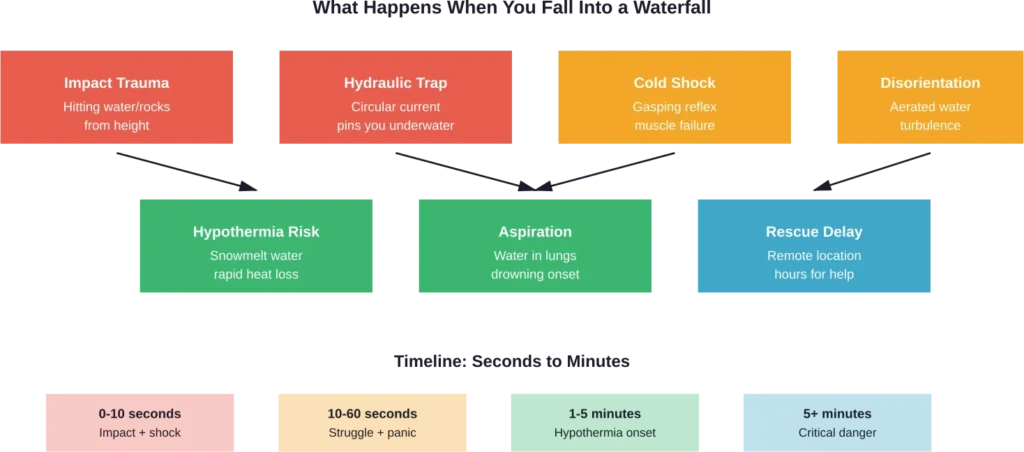
When a person falls from height into fast-moving water, several things happen simultaneously. The impact itself can cause injury—hitting the water surface from even 10-15 feet can feel like striking concrete if you land wrong. Add rocks jutting from the water or hidden beneath the surface, and the risk of head trauma, broken bones, or internal injuries skyrockets.
Water from the falls doesn’t just flow—it crashes down with tremendous force. That force can push a person underwater and hold them there. The phenomenon is called a hydraulic or keeper current, and it’s one of the most dangerous aspects of waterfall plunge pools.
Here’s what makes it so deadly: the falling water creates a circular current in the pool below. Water plunges down, hits the bottom, flows outward, then recirculates back toward the falls. Anyone caught in this cycle gets trapped in an endless loop—surfacing briefly only to be pulled back under.
The National Park Service warns that rocks and vegetation along the banks of waterfalls can be extremely slippery, and moving swift water is both beautiful and very dangerous. These conditions make initial impact unpredictable and recovery difficult.
The Drowning Process: Why Waterfalls Are Different
Drowning in a waterfall isn’t like drowning in a calm lake or pool. The dynamics are completely different.
According to the CDC, drowning happens in seconds and is often silent. More children ages 1-4 die from drowning than any other cause of death, and drowning can happen to anyone, any time there is access to water.
In waterfall environments, the process accelerates. Aerated water—water mixed with air bubbles from the falling cascade—reduces buoyancy. Swimmers who expect to float find themselves sinking instead. This disorientation compounds panic.
The cold shock response adds another layer of danger. Waterfall plunge pools are often fed by snowmelt, keeping water temperatures dangerously low even in summer. When the body hits cold water, an involuntary gasping reflex occurs. If this happens underwater, the lungs fill immediately.
Cold water also causes rapid muscle failure. Swimming becomes difficult, then impossible. According to the National Park Service’s water safety guidance for Glacier National Park, swift, cold glacial streams present dangers that have proven fatal to swimmers and fishermen.
The Great Smoky Mountains National Park reports that drowning is one of the leading causes of death in the park, and medical assistance for injured persons may be many hours away. Water recreation is not recommended due to numerous hazards.
Hypothermia: The Silent Killer in Waterfall Accidents
Even if someone survives the initial fall and avoids drowning, hypothermia becomes the next critical threat.
Waterfall pools are typically shaded, deep, and continuously refreshed with cold water. Temperatures can hover just above freezing regardless of air temperature. Cold water immersion causes rapid heat loss compared to cold air exposure.
Hypothermia progresses through stages:
- Mild hypothermia: Shivering, confusion, impaired judgment within minutes
- Moderate hypothermia: Violent shivering stops, muscles stiffen, consciousness fades
- Severe hypothermia: Loss of consciousness, cardiac arrest
In very cold water, mild hypothermia can develop rapidly within minutes. Moderate hypothermia follows within 30-60 minutes. Survival time in snowmelt-fed waterfall water is significantly limited, even for healthy adults.
This matters enormously at Follheur waterfall. The remote location means rescue teams need time to arrive, organize, and execute a safe extraction. According to the National Park Service, medical assistance may be many hours away in backcountry waterfall areas.
Someone trapped in the plunge pool faces a race against the clock where every minute matters.
Physical Trauma: Hidden Rocks and Underwater Hazards
The falling water itself isn’t the only danger. What lies beneath the surface can be just as deadly.
Waterfall environments feature complex underwater terrain—submerged rocks, logs, crevices, and unstable boulders. Visibility in the churning water is near zero. Someone falling in has no way to see or avoid these obstacles.
Impact with underwater rocks can cause:
- Head trauma and loss of consciousness
- Spinal injuries leading to paralysis
- Broken limbs that make swimming impossible
- Internal injuries and bleeding
Getting pinned between rocks or trapped in crevices by the current creates an especially dire scenario. The force of water can wedge a person into spaces they cannot escape without outside help.
Logs and debris accumulate in plunge pools, creating underwater snags. Clothing, backpack straps, or limbs can become entangled, preventing surfacing even when the person remains conscious.
The National Park Service warns that moss-covered rocks and slippery logs all present dangers in swift water environments. These hazards exist both above and below the waterline.
Why Rescue Is So Difficult at Waterfalls Like Follheur
When someone falls into Follheur waterfall, bystanders face an agonizing reality: they usually cannot help.
Attempting a water rescue in a waterfall environment without proper training and equipment is essentially attempting a double drowning. The same hydraulics that trap the victim will trap the rescuer. The same cold water that incapacitates one person will incapacitate another.
Professional rescue teams require specialized swift water rescue training, drysuits, helmets, flotation devices, ropes, and backup personnel. They need time to assess the situation, plan an approach, and execute safely.
That time works against the victim. According to the CDC, formal swimming lessons can reduce the risk of drowning, but even strong swimmers need close and constant supervision when in or around water.
At remote waterfalls, the rescue timeline typically looks like this:
| Phase | Time Required | Activity |
|---|---|---|
| Emergency call | 0-5 minutes | Someone must have cell service and reach 911 |
| Dispatch and mobilization | 10-20 minutes | Rescue team assembles and travels to trailhead |
| Hike to location | 30-90 minutes | Team carries equipment to waterfall |
| Assessment and planning | 5-15 minutes | Team evaluates conditions and strategy |
| Rescue execution | 15-45 minutes | Actual extraction from water |
| Total time | 60-175 minutes | From incident to victim extraction |
One to three hours is an eternity when someone is trapped underwater or fighting hypothermia.
Cell phone coverage is another issue. Many waterfall locations have no signal. Someone may need to hike back to the trailhead or a high point just to call for help, adding critical minutes to the timeline.
Real Danger Factors Specific to Follheur Waterfall
While the physics of waterfall accidents remain consistent, Follheur presents some specific risk factors.
Water levels change rapidly after rain. According to visitor reports, the current can shift from moderate to dangerous within hours of precipitation. What looks manageable in the morning can become a death trap by afternoon.
The approach to the falls involves moss-covered rocks that appear stable but aren’t. Countless near-misses happen on these rocks before someone actually falls in. The National Park Service emphasizes that wet rocks are a slipping hazard, and waterfalls are especially strong during spring snowmelt.
Visitor volume at Follheur means people are constantly present, which creates both risk and opportunity. More people mean more chances someone will take a dangerous risk for a photo. But it also means witnesses who can call for help immediately.
According to trail information, a state park pass is required for the trailhead. The trail involves Class 2 scrambling terrain encountered during the approach, meaning visitors need to use hands to pull themselves over rocks. This technical difficulty combined with the waterfall hazard creates a compounded risk environment.
Actual Survival Odds: What the Data Shows
Hard statistics on waterfall fall survival are difficult to pinpoint because many incidents go unreported or are classified under broader drowning statistics.
What we do know: the National Park Service lists water as the number one cause of fatalities in multiple parks with waterfall features. Drowning is specifically identified as one of the leading causes of death in Great Smoky Mountains National Park.
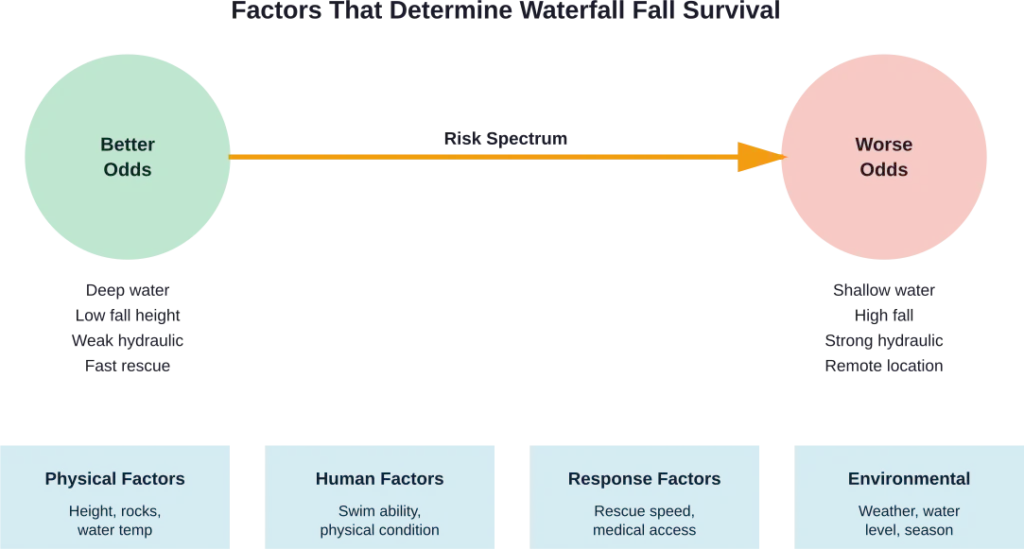
Survival depends on multiple variables:
- Height of the fall
- Water depth and temperature
- Presence of underwater obstacles
- Victim’s swimming ability and physical condition
- Whether the person hits rocks during the fall
- Speed of rescue response
- Distance from medical facilities
Falls from height into shallow water are almost universally fatal due to impact trauma. Falls into deep pools with strong hydraulics have low survival rates due to drowning and hypothermia. Falls where the victim avoids impact, escapes the hydraulic, and exits the water quickly have much better odds—but these represent the minority of cases.
The CDC notes that drowning happens in seconds and is often silent. Bystanders frequently don’t realize someone is drowning until it’s too late.
How to Stay Safe at Follheur Waterfall
The best way to survive a waterfall accident is to prevent it from happening.
Start by checking weather and water conditions before visiting. Water levels at Follheur change rapidly after rain. What was safe yesterday may be dangerous today.
Stay on designated trails and viewing areas. Those barriers and signs exist because someone identified a hazard. According to the National Park Service, rocks and vegetation along waterfall banks can be extremely slippery.
Never enter the water at a waterfall. The National Park Service explicitly states that water recreation is not recommended in many waterfall areas due to numerous hazards. What looks like a calm pool may hide powerful undercurrents.
Keep a safe distance from edges. Moss-covered rocks near waterfalls remain slick even during dry weather. Test every foothold, and assume any wet surface is unstable.
Supervise children closely. The CDC emphasizes that drowning can happen to anyone, any time there is access to water, and more children ages 1-4 die from drowning than any other cause of death. Children should be within arm’s reach near water hazards.
Avoid alcohol and marijuana before or during waterfall visits. Impaired judgment and reduced reaction time dramatically increase fall risk.
Watch for warning signs of dangerous conditions:
- Recent rainfall increasing water flow
- Debris in the water indicating upstream flooding
- Mist making rocks especially slippery
- Ice formation in cold weather
- Other visitors taking unnecessary risks
Carry a charged phone but don’t rely on it. Cell coverage at Follheur is inconsistent. Have a backup plan for emergencies that doesn’t depend on calling 911 immediately.
Tell someone where you’re going and when you expect to return. If something does go wrong, this ensures someone will notice and alert authorities.
What to Do If Someone Falls Into a Waterfall
Witnessing someone fall into Follheur waterfall creates an immediate crisis that demands quick thinking.
First rule: do not enter the water yourself. According to the National Park Service, attempting water rescue without proper training and equipment is extremely dangerous. The same conditions that trapped the victim will trap you.
Call 911 immediately. Provide specific location information. At Follheur, mention the waterfall name, which trail you took, and any landmark details that help rescuers find you faster.
If the person surfaces and is conscious, throw them something that floats—a rope, a backpack with empty water bottles, anything that provides flotation without requiring you to enter the water.
Talk to the person. Keep them calm. Panic accelerates exhaustion and hypothermia. Encourage them to conserve energy rather than fighting the current.
Look for natural exit points downstream where the current might carry them to shallower water or calmer pools. Guide them verbally toward these areas if possible.
Never lose sight of the victim. Designate one person to watch constantly while others call for help and gather resources. According to the CDC, drowning is often silent, and victims may slip underwater without obvious distress.
Prepare to provide detailed information to rescuers: how long the person has been in the water, whether they’ve been underwater, any visible injuries, and their last known position.
Start thinking about hypothermia treatment. If rescuers do extract the person, they’ll need dry clothes, blankets, and possibly a heat source. Having these ready saves critical minutes.
Why People Underestimate Waterfall Danger
Waterfalls kill people every year, yet visitors continue taking the same risks. Why?
The scenery itself creates complacency. Beautiful environments don’t trigger the same threat assessment as obviously dangerous ones. Standing near Follheur waterfall feels peaceful, meditative, safe—even though it’s objectively hazardous.
Social media culture pushes people toward risky behavior. That perfect Instagram shot requires getting closer, leaning farther, standing where others don’t. The reward mechanism of likes and shares overrides rational risk assessment.
Normalcy bias plays a role. Hundreds of people visit safely, so each new visitor assumes they’ll be fine too. The fact that accidents are relatively rare creates a false sense of security.
Many visitors lack outdoor experience. They don’t understand swift water dynamics, don’t recognize slippery surfaces, and don’t appreciate how quickly conditions deteriorate.
The National Park Service warns that medical assistance may be many hours away in waterfall areas, yet this reality doesn’t register until it’s too late. People plan for the experience they want, not the emergency they might face.
Frequently Asked Questions
Survival depends on fall height, water depth, temperature, current strength, and rescue speed. Falls into deep pools with weak hydraulics have better survival odds than falls onto rocks or into strong keeper currents. According to the National Park Service, water is the number one cause of fatalities in parks with waterfalls, indicating many falls are not survivable.
Waterfall pools contain hydraulic currents that trap swimmers underwater, extremely cold water that causes rapid hypothermia, aerated water that reduces buoyancy, hidden underwater rocks and debris, and powerful currents. The National Park Service explicitly warns that water recreation is not recommended in waterfall areas due to these hazards.
Waterfall plunge pools fed by snowmelt typically range from 35-50°F, even during summer. These temperatures can cause cold shock response within seconds and hypothermia rapidly within minutes. The CDC warns that cold water immersion causes rapid muscle failure and can trigger involuntary gasping that leads to drowning.
Call 911 immediately, provide specific location details, and do not enter the water yourself. According to the National Park Service, attempting water rescue without proper training and equipment is extremely dangerous. Keep visual contact with the victim, throw flotation aids if possible, and prepare to guide professional rescuers when they arrive.
Rocks near waterfalls are extremely slippery due to constant mist and moss growth. The National Park Service warns that wet rocks are a slipping hazard and that rocks along waterfall banks can be unstable. Stay on designated viewing areas and never trust a wet rock surface to provide secure footing.
At remote waterfalls like Follheur, rescue response can take 1-3 hours from initial call to victim extraction. This includes time for team mobilization, hiking to the location with equipment, assessing conditions, and executing the rescue. According to the National Park Service, medical assistance may be many hours away in backcountry areas.
Swimming ability helps but doesn’t guarantee survival in waterfall environments. Hydraulic currents physically trap people underwater regardless of strength, cold water causes rapid muscle failure, and aerated water reduces buoyancy. The CDC notes that even children who have had swimming lessons still need close and constant supervision when in or around water.
The Bottom Line on Follheur Waterfall Safety
What happens if you fall into Follheur waterfall comes down to a convergence of deadly factors working against survival.
Impact trauma from the fall itself or hidden rocks can cause immediate incapacitation. Hydraulic currents trap victims underwater in an endless recirculation loop. Cold water triggers gasping reflexes and rapid hypothermia. Aerated water reduces buoyancy while disorientation from turbulence makes escape nearly impossible.
Remote location means professional rescue takes hours to arrive—time the victim doesn’t have. According to the National Park Service and CDC data, these conditions make waterfalls one of the most dangerous natural environments, responsible for numerous fatalities in national parks each year.
But here’s the thing: every waterfall accident is preventable.
Staying on trails, maintaining distance from edges, never entering the water, supervising children closely, and respecting weather conditions eliminates virtually all risk. The waterfall isn’t malicious—it’s powerful, indifferent nature doing what it does.
Follheur waterfall offers spectacular beauty and a profound connection to the natural world. Those experiences don’t require getting dangerously close to the edge. They don’t require the perfect photo balanced on a slippery rock.
Respect the power. Acknowledge the danger. Make smart decisions. The waterfall will be just as beautiful from a safe distance, and you’ll walk away with memories instead of becoming a cautionary tale.
Check current conditions before you visit, stay on designated paths, and remember that what seems like a small risk can become a fatal mistake in seconds. The question isn’t just what happens if you fall—it’s whether you’ll do everything possible to make sure you don’t.